
A four-bottle set for process colour work
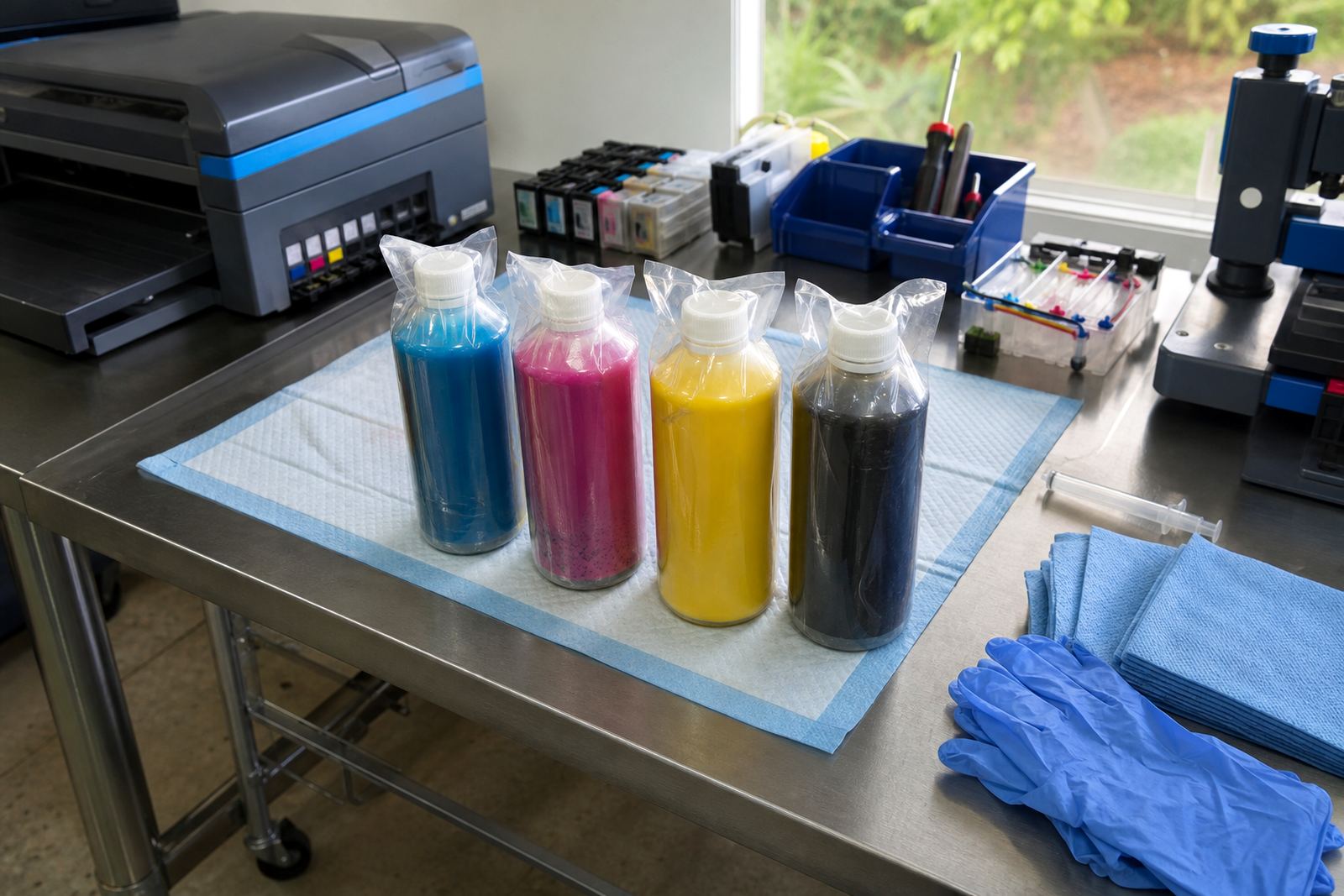
This package is built around the four process colours used in most office and studio printing: black, cyan, magenta and yellow. It supports refill continuity for users who print reports, proofs, layout samples and colour pages without changing systems each time the level drops.
The ink is supplied for refill use in standard cartridge refill work or in continuous ink supply systems, depending on the printer setup. In practice that means less stoppage for replacement cartridges, and a cleaner route for repeat printing where the machine is already set up for bulk supply.
- Four colours supplied as a matched set
- Suitable for compatible refill work and CISS use
- Ordered for regular colour output, not occasional top-ups only
- Useful where empty cartridges are collected and returned for recycling
Ink choices, bottle sizes and printing habits
Four colour bulk ink is usually selected in dye or pigment form, depending on the printer and the kind of output required. Dye ink is often used where bright colour and smooth blending matter most, while pigment ink is preferred where sharper text and stronger page resistance are needed. The wrong match can lead to dull output, blocked nozzles or colour drift if the printer has not been set up for that ink type.
Bottle sizes are normally chosen by usage, with smaller packs for low-volume offices and larger packs for studios or shops printing daily. For wider-format work, the bottle size and feed arrangement need to suit the ink channels and the tank layout, because refilling a system built for small cartridges is not the same as topping up a tanked unit.
- Dye or pigment format, matched to the printer setup
- Small and larger bottle options available
- Better for regular colour printing than one-off emergency use
- Can be planned with stock levels for offices and production rooms
Where the set fits into day-to-day work
Offices use four colour bulk ink when documents carry charts, branded headings or mixed colour pages through the week. Design studios often rely on it for layout checks, proof sheets and test output before a final run. Wide-format print shops use it where colour consistency, nozzle health and predictable refill rhythm matter across repeated jobs.
In Durban and the surrounding areas, humidity can affect storage and open bottles if caps are left loose, so keeping the stock sealed and upright matters. The same applies in Johannesburg, Pretoria and Cape Town where the shipment may travel first and sit in a storeroom before use. Clean storage helps keep the ink usable and the fill routine neater.
- Office reports and mixed colour pages
- Studio proofs, mock-ups and internal samples
- Wide-format production where feed control matters
- Workspaces that keep empties for return or recycling
Fitting the ink into a live system
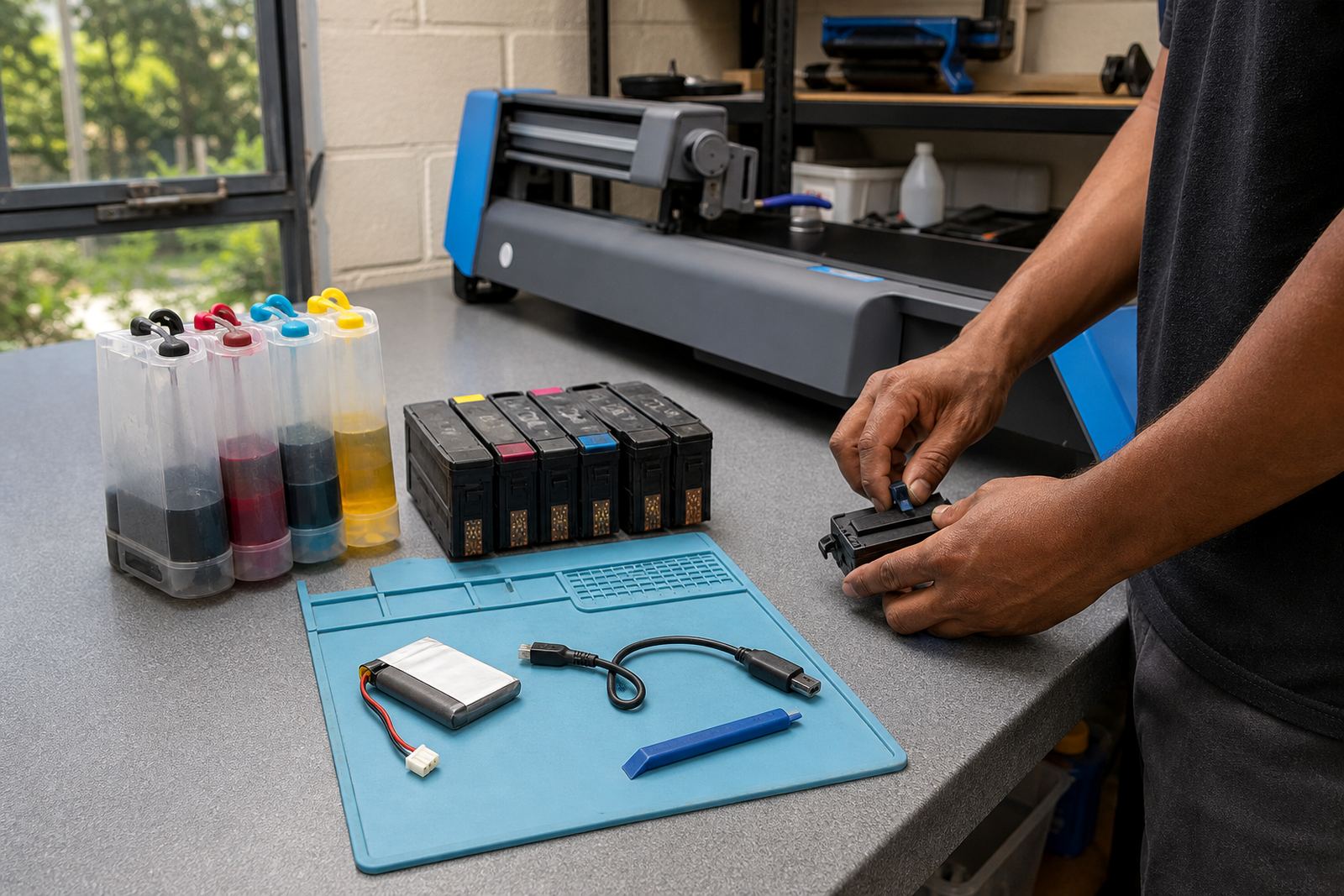
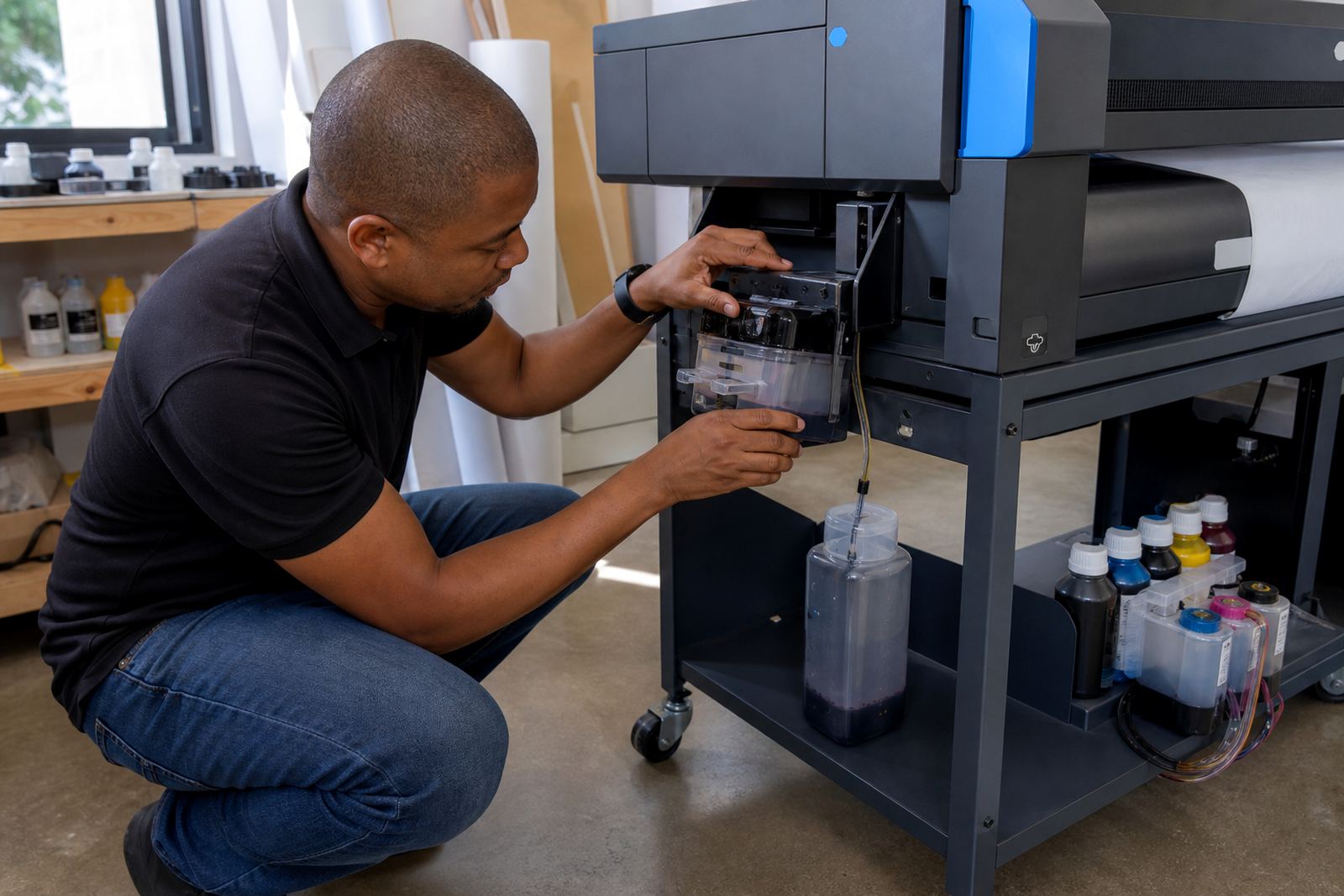
Filling a tank or compatible cartridge system needs care around air pockets, seals and the chip arrangement on the cartridge body. Some systems need a resetter or a manual chip handling step after refill, while others read the level through the tank and lines. If the filling point is forced, a small leak can spread into the carriage or tray and cause more cleaning than printing.
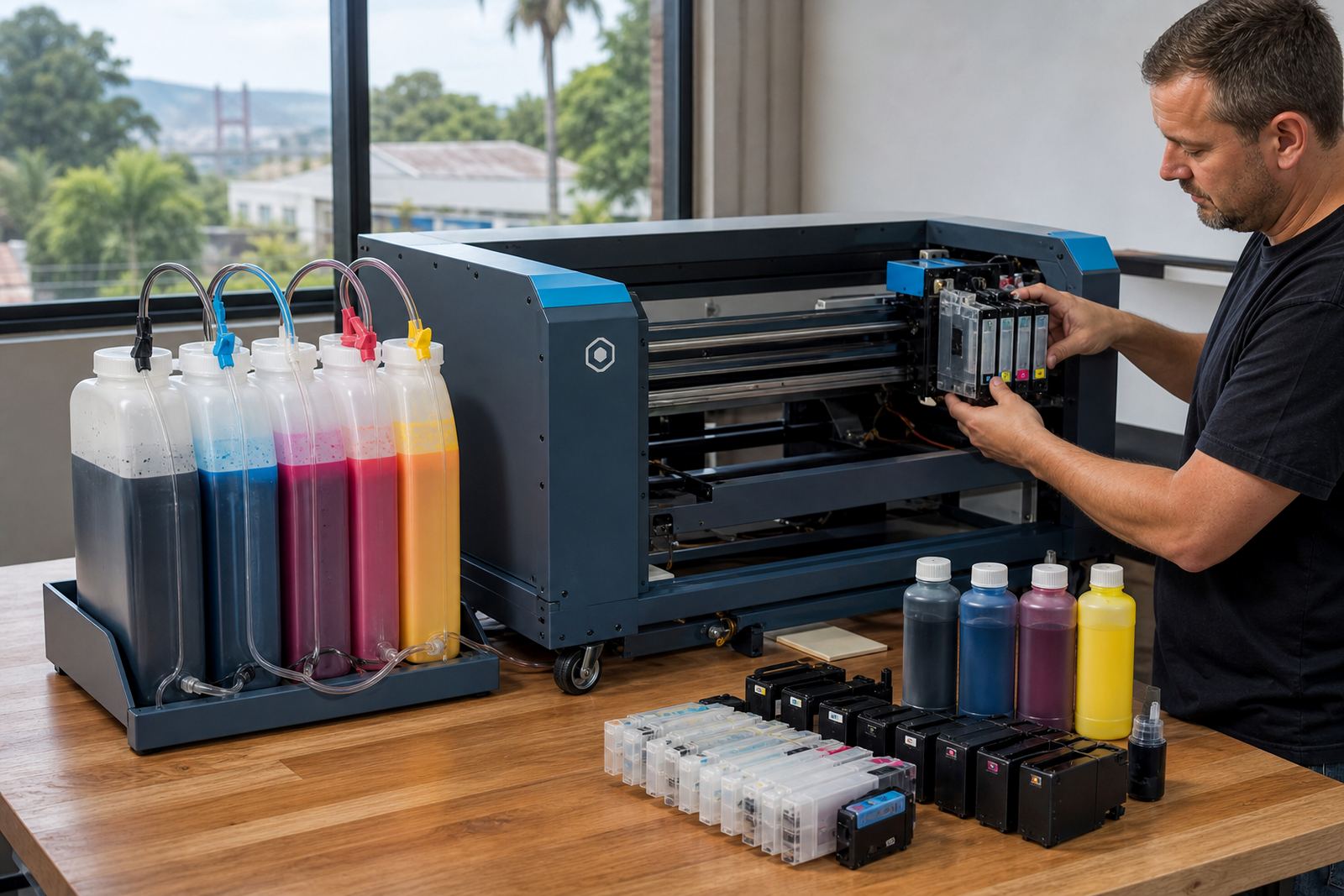
Where the printer uses a continuous supply setup, the lines must sit correctly and the ink must move through without kinks or trapped bubbles. That is where printhead care matters as much as the refill itself, because a blocked nozzle can show up as banding or a missing colour long after the bottle was opened.
- Check tank seals before first fill
- Watch for air in lines and loose caps
- Use the correct chip handling method for the cartridge style
- Test nozzle output after fitting and priming
Care, cleaning and colour stability
Four colour bulk ink performs best when the printer is used regularly and the nozzles are checked before a long run. A nozzle check, followed by a light clean only where needed, helps protect the head from drying out. If the machine sits idle for too long, the first pages may show gaps, faint colour or a line across the image and that is usually a sign to inspect the print path before carrying on.
Keep empty cartridges or bottles in a separate container for return where the office follows an empty return programme. Wipe the fill area, close caps firmly and avoid mixing ink types in the same system. Leak checking is worth doing after every refill because a slow seep can waste ink and stain paper trays or rollers.
- Run nozzle checks before longer print jobs
- Keep the fill area clean and dry
- Do not mix dye and pigment in the same path
- Store empties for recycling or return collection
Details to confirm before ordering
When ordering four colour bulk ink, the printer model, cartridge or tank style and current ink type all need to be clear. It also helps to know whether the unit uses dye or pigment, whether a chip reset step is needed, and whether the system is for office pages, studio proofs or wide-format output. That information avoids the wrong bottle choice and keeps the refill path straightforward.
For customers in Westville, Durban, Ballito, Hillcrest, Pietermaritzburg, Johannesburg, Pretoria and Cape Town, courier delivery is arranged across South Africa with the order matched to the right refill system. our contact form can be used for cartridge refill advice, CISS setup help, nozzle check support, colour balance help and stock planning help, so the right pack lands with the right printer from the start.
- Printer make and model
- Ink type in use, dye or pigment
- Cartridge or tank style and chip arrangement
- Colour workload and approximate refill frequency
Key facts
| Product type | Four colour bulk ink set for process printing |
|---|---|
| Colours | Black, cyan, magenta and yellow |
| Ink formats | Dye or pigment, depending on printer setup |
| Use cases | Office printing, studios, wide-format output |
| Compatible setup | Refill cartridges and CISS systems |
| Coverage area | Westville, Durban and courier delivery across South Africa |