



When a cartridge routine stops making sense
Some offices notice the shift after a run of draft letters, colour flyers, labels or studio proofs starts draining the consumables shelf too quickly. Others are trying to cut waste, reduce repeat buying and keep a steadier print cost across the month.
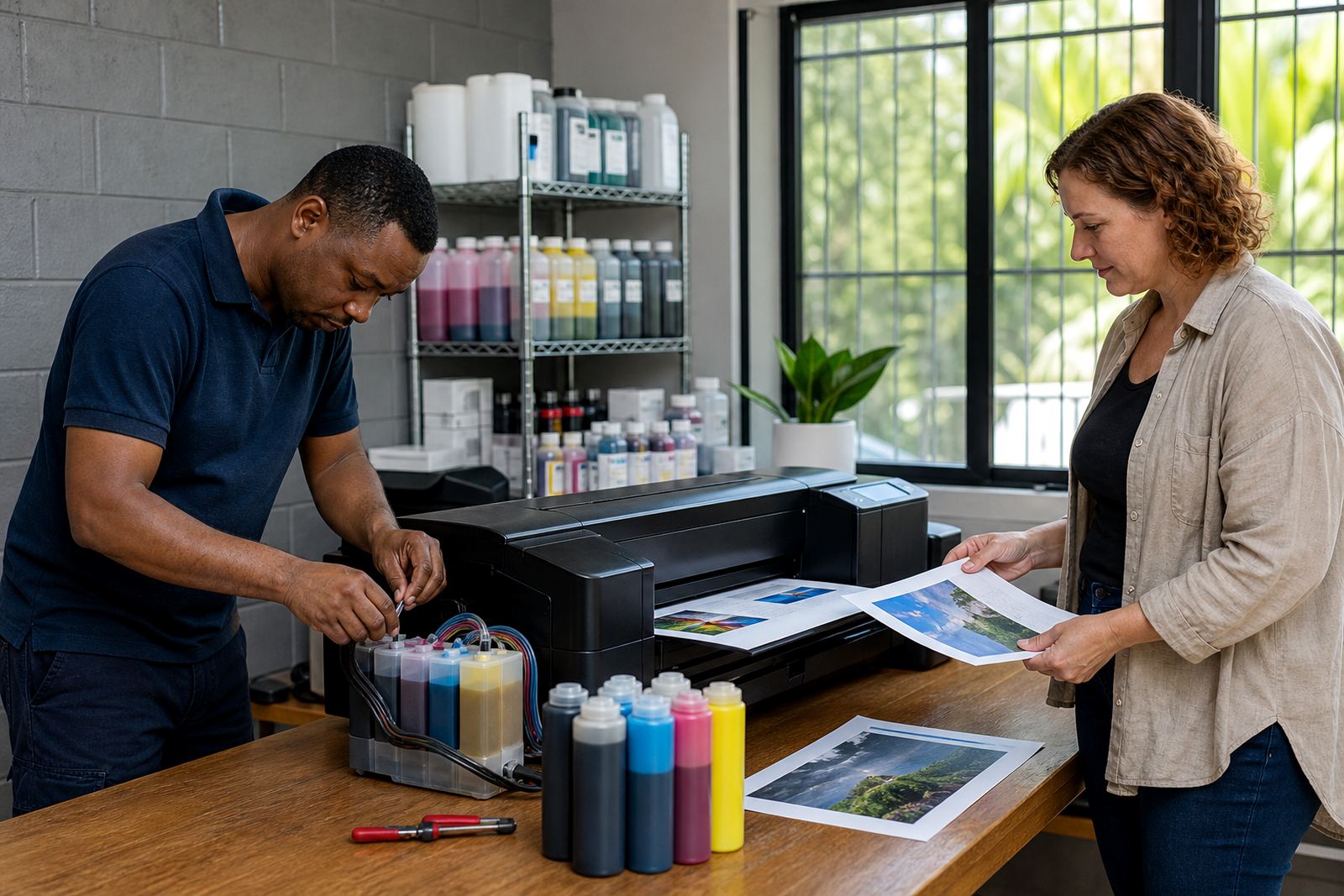
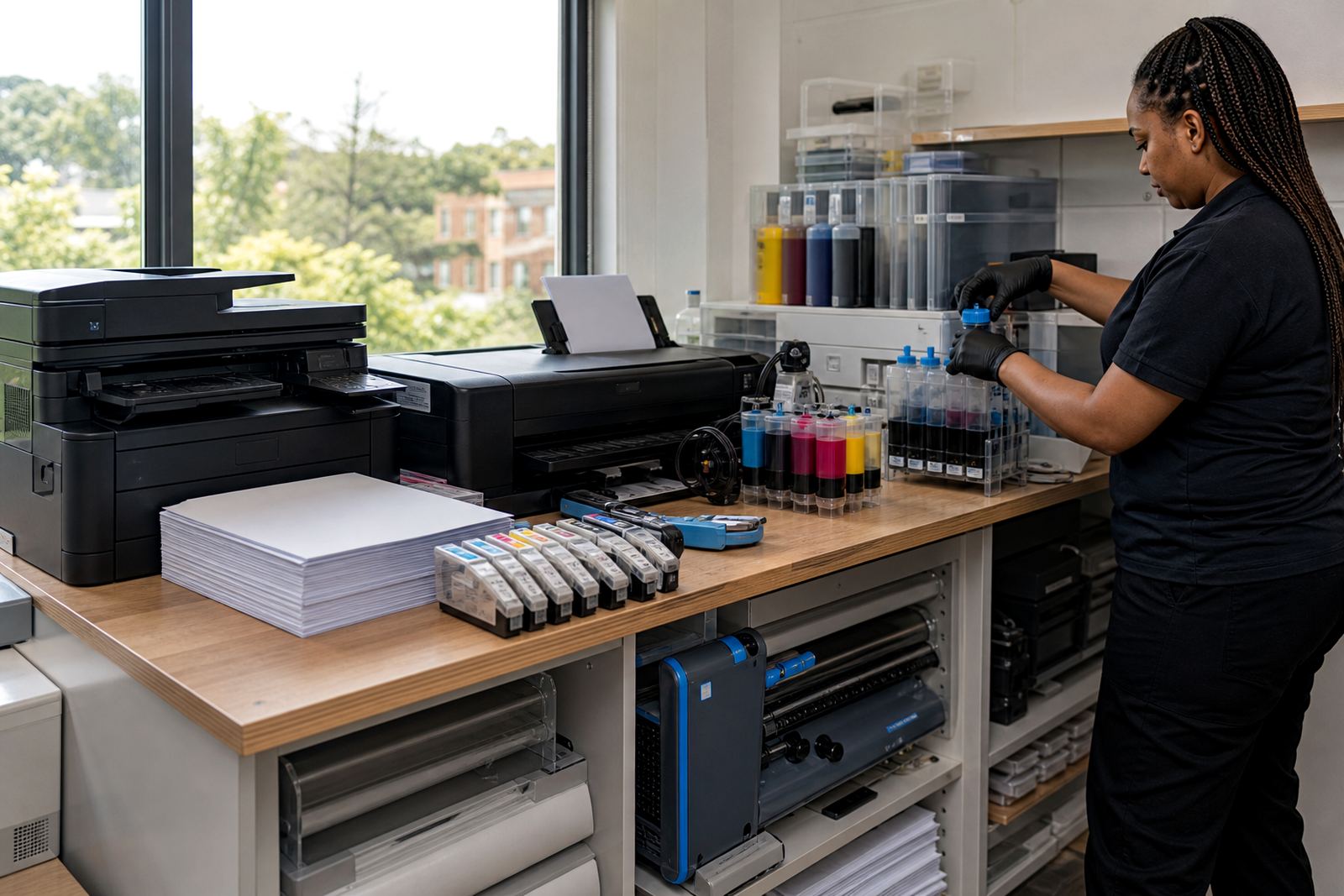
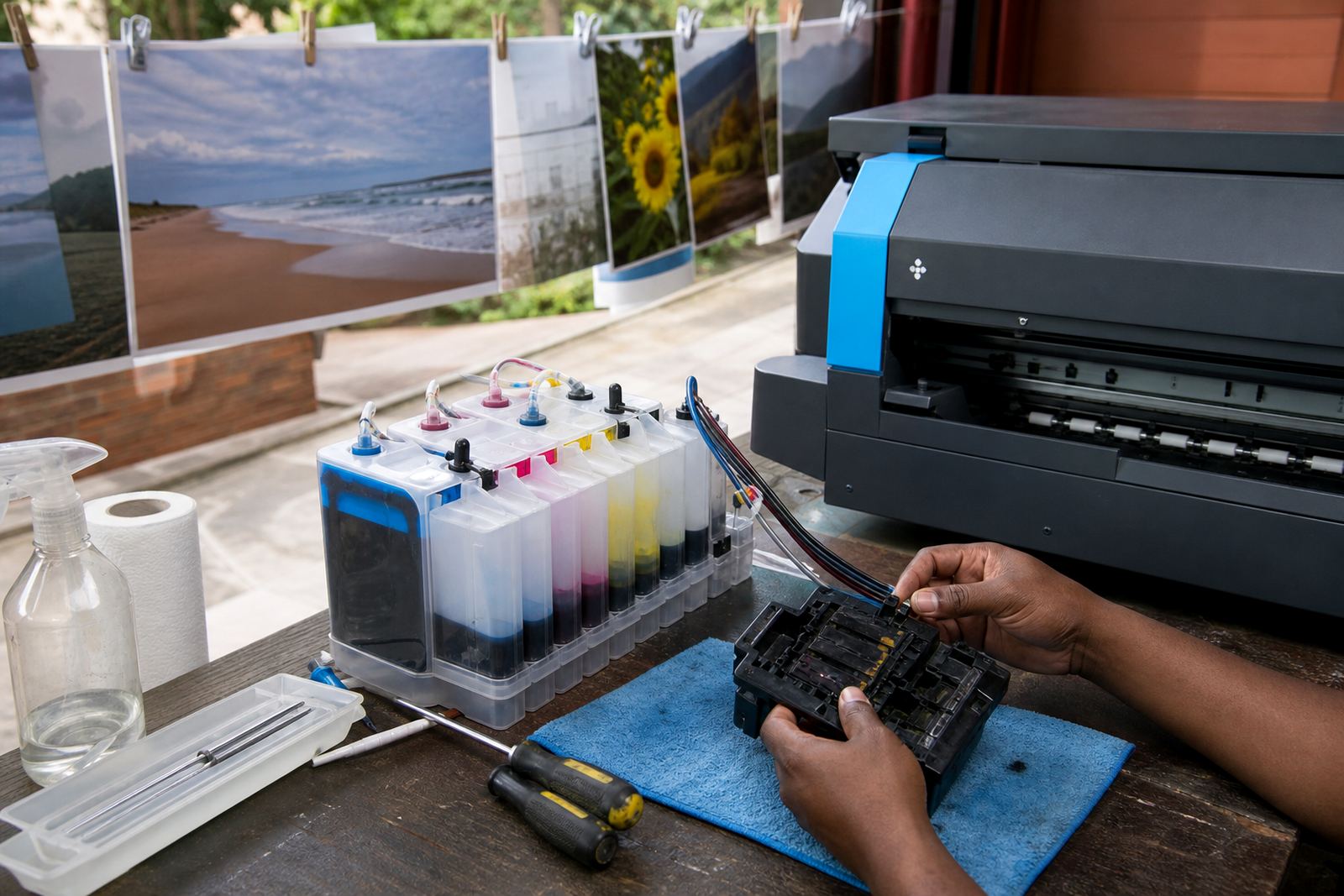
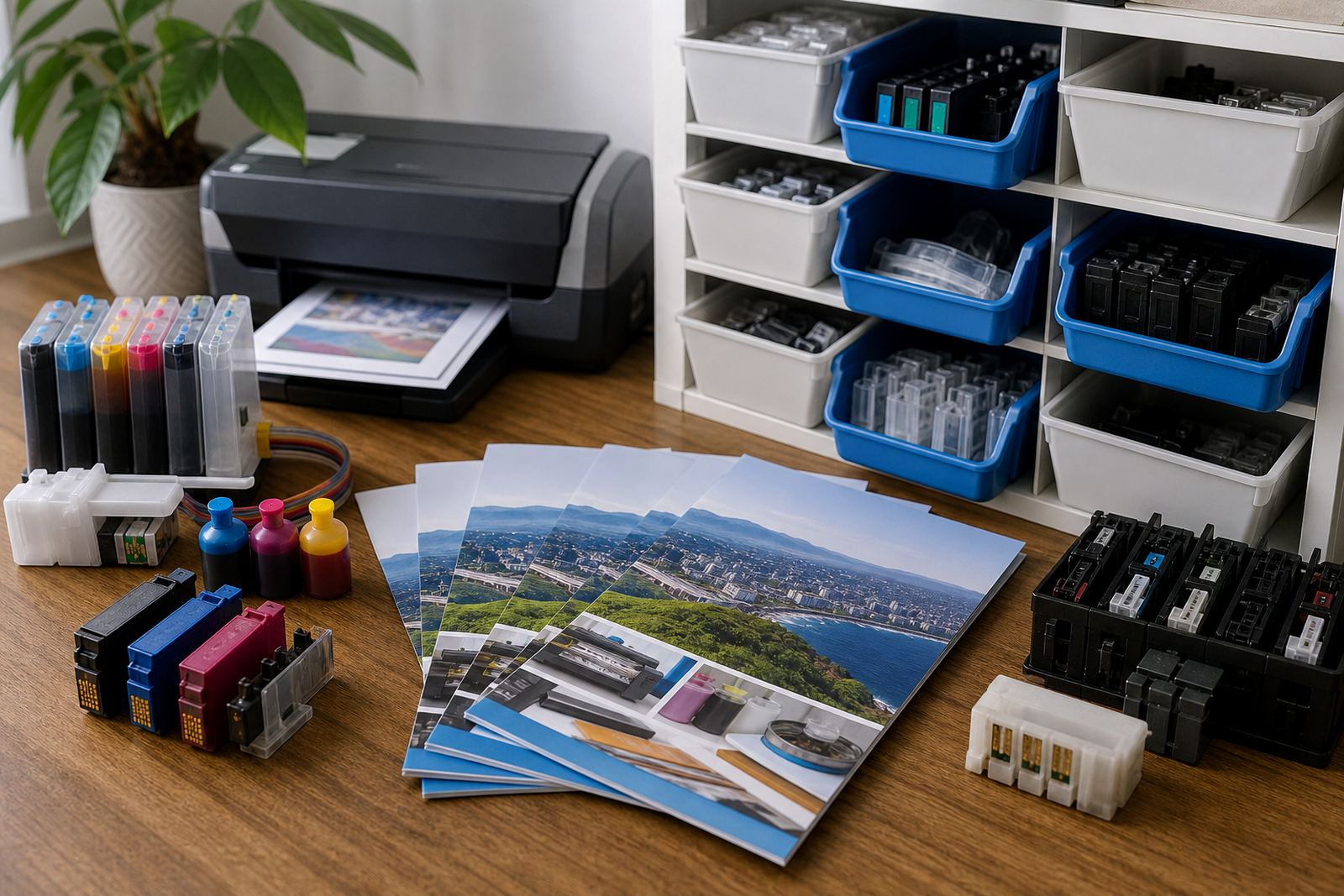
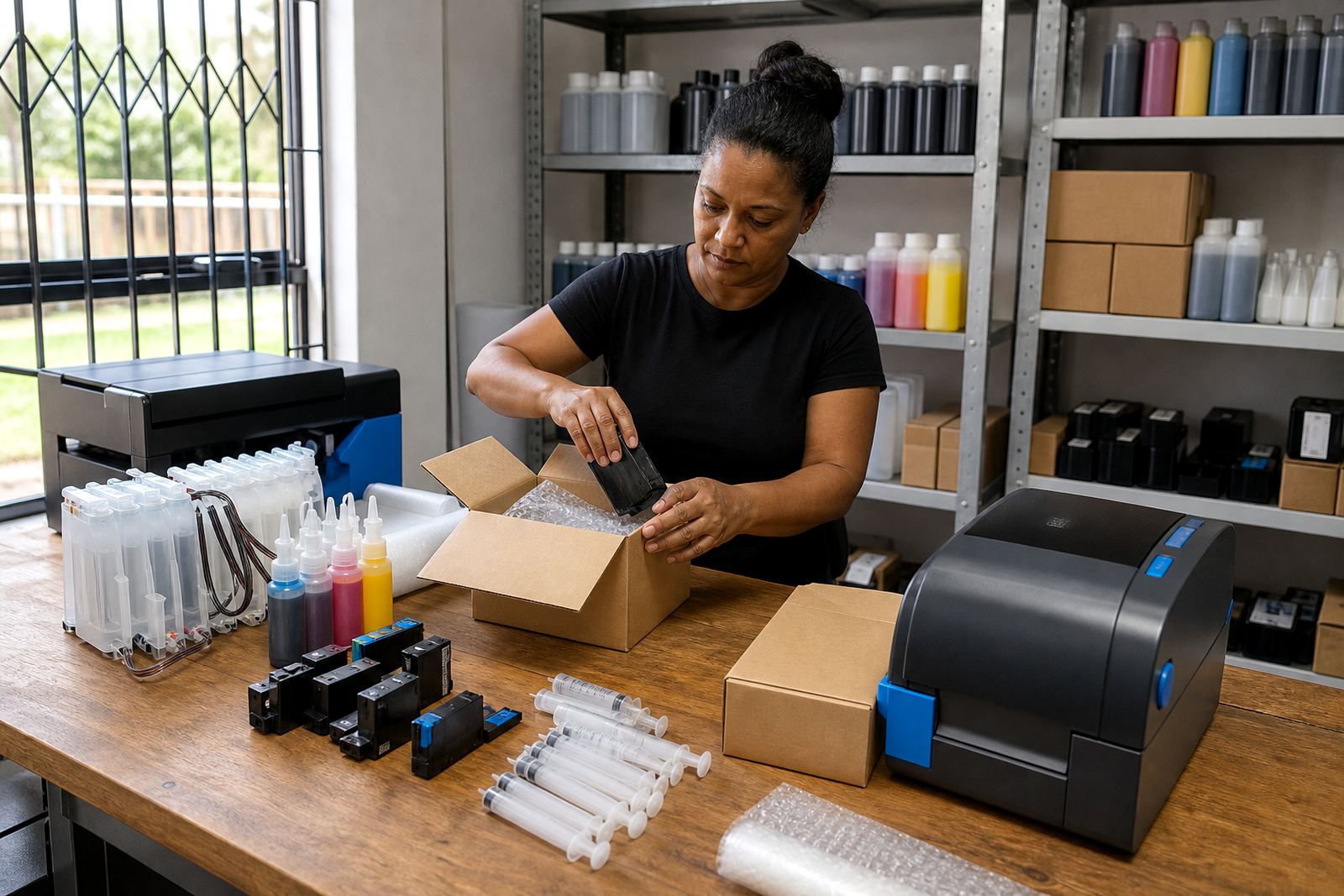
A switchover does not always mean one fixed setup. It can be a set of refurbished cartridges for a small office, a refill kit for in-house use, or a continuous ink supply system where daily printing is heavy and colour use is regular.
The main switchover paths we see
The pages in this hub are grouped by client type and place, not by a single company name. That makes it easier to compare a design studio in Durban with a school office in Pietermaritzburg, or a print room in Johannesburg with a home studio in Hillcrest.
- Refurbished cartridges for lower-volume printing
- Bulk ink systems for frequent colour output
- Refill kits for controlled top-ups
- Empty cartridge return for cleaner stock handling
Matching ink type to the job
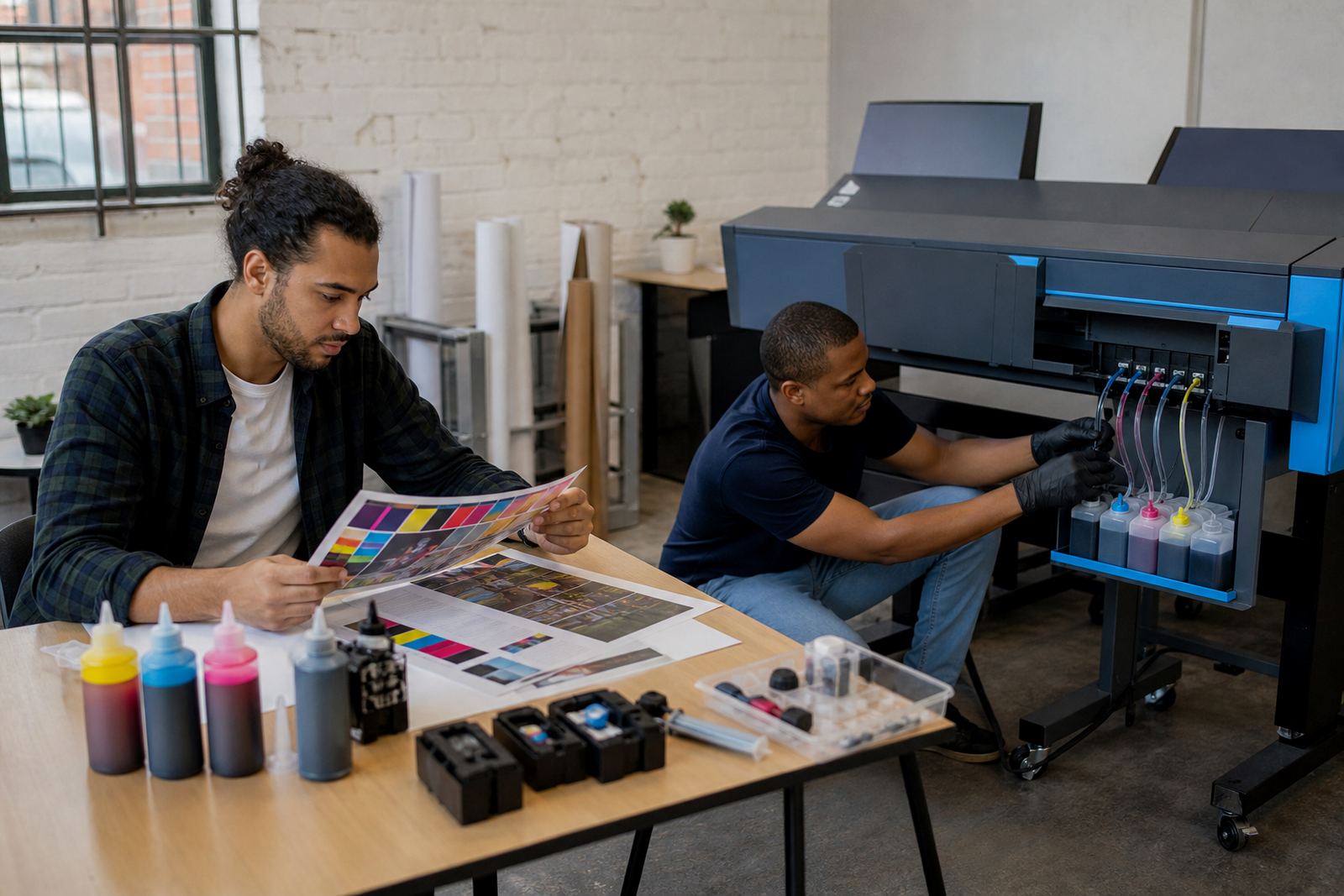
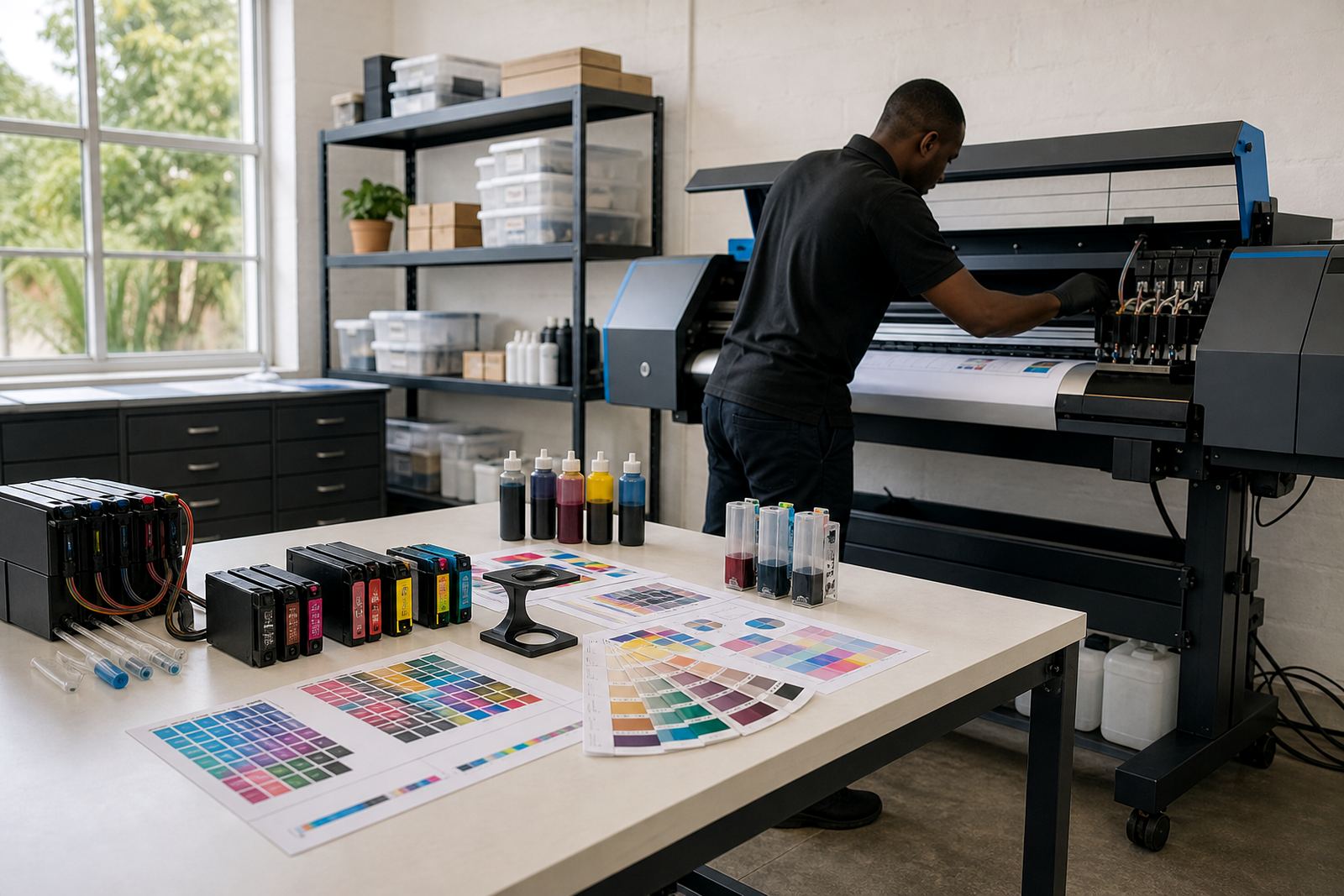
Dye ink and pigment ink do different work. Dye often gives bright colour on coated paper and photo stock, while pigment is better suited to sharper text, stronger water resistance and documents that need more staying power on plain paper.
That choice matters when a team moves from general office pages to artwork, proofs or wide-format output. Printhead care and nozzle checks also matter, because the best ink still needs a clean path through the machine, not a blocked one.
What changes in a real office or studio
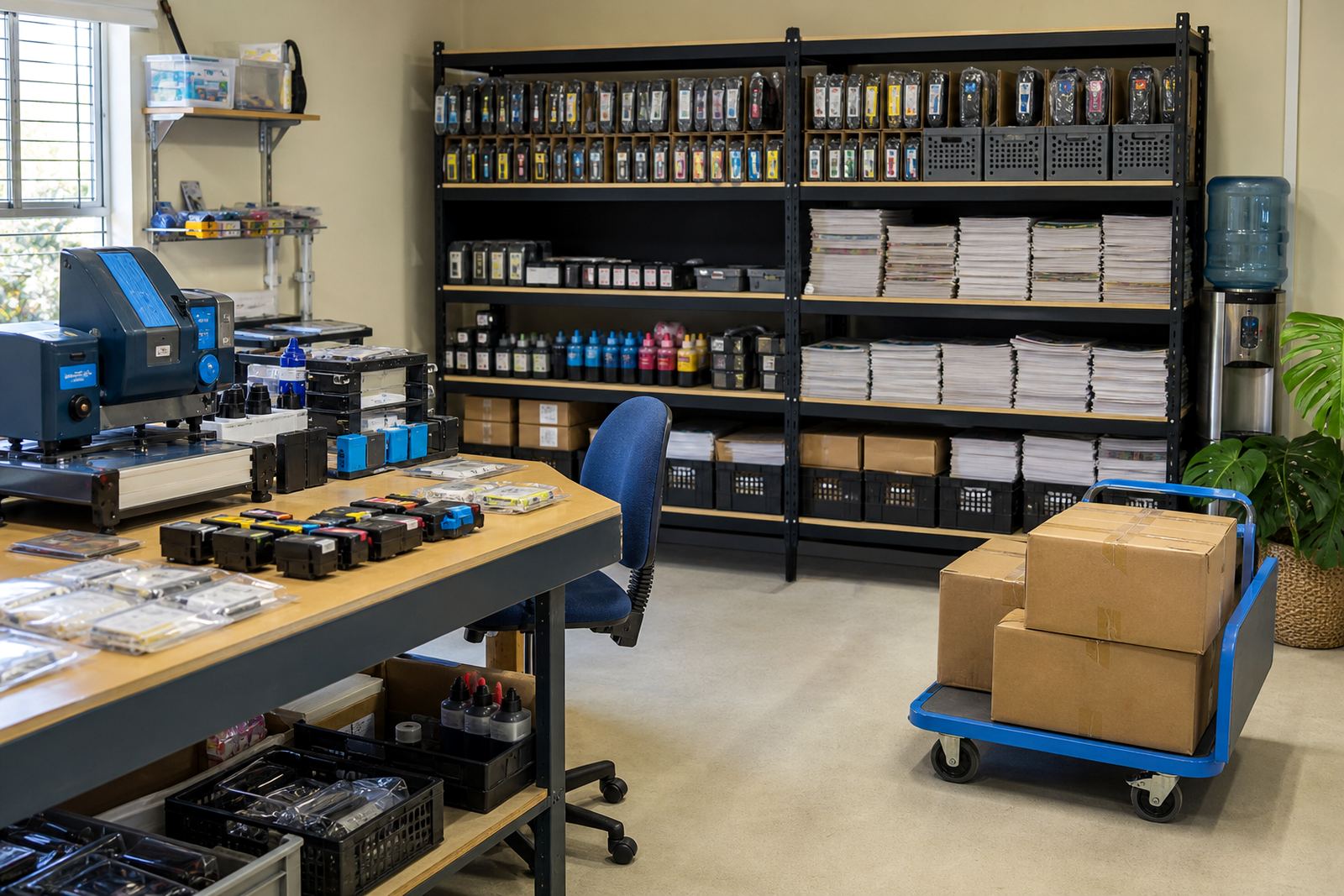
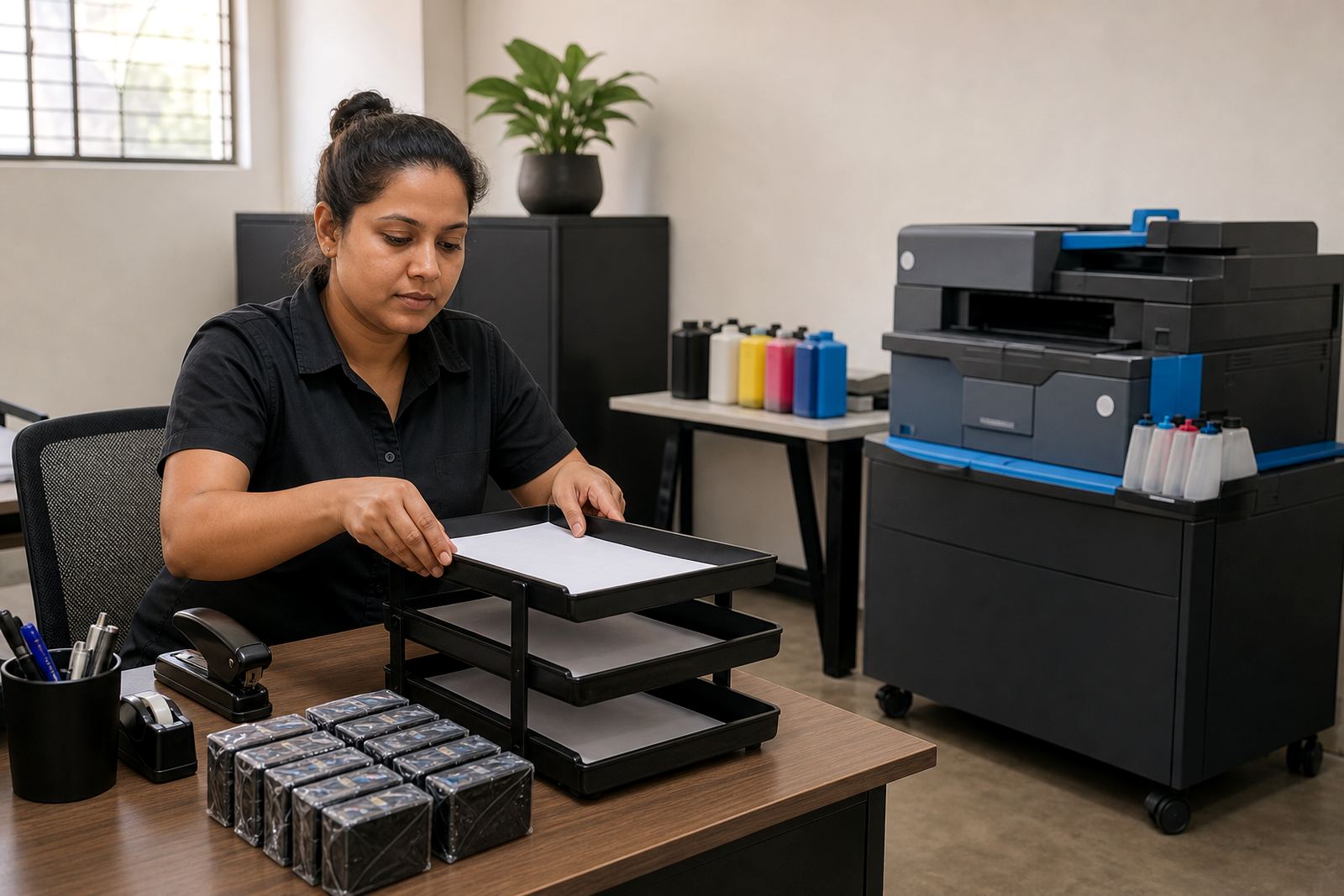
A switchover normally changes the way supplies are ordered, stored and checked. Instead of buying new cartridges every time, the team may keep refill stock, monitor chip status, and set a cleaner routine for priming, sealing and storing empties.
- Less packaging moving through the bin
- Better planning for colour and black usage
- More consistent stock control for busy print weeks
- Clearer handling of empties and refills
Wide-format jobs need a steadier hand
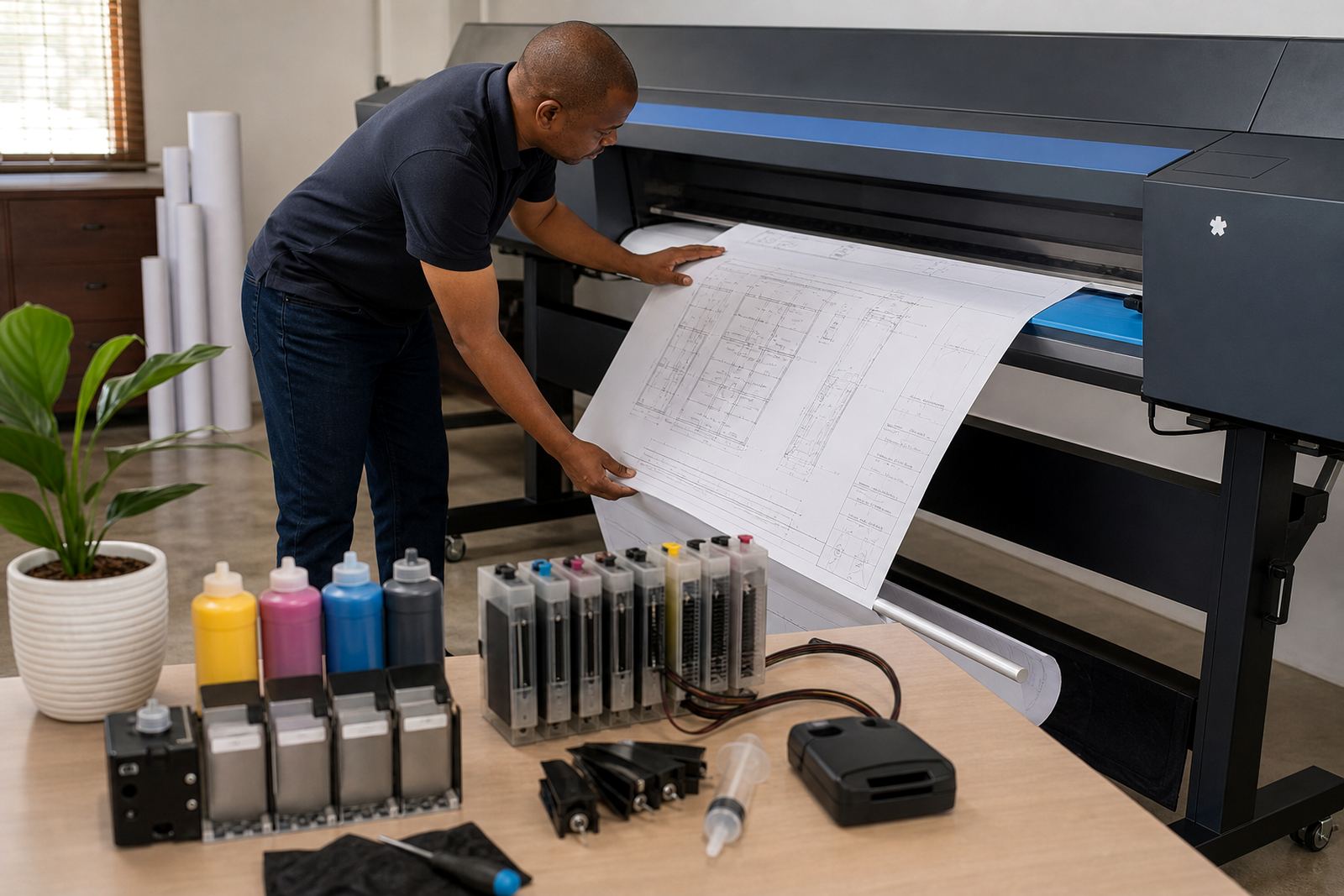
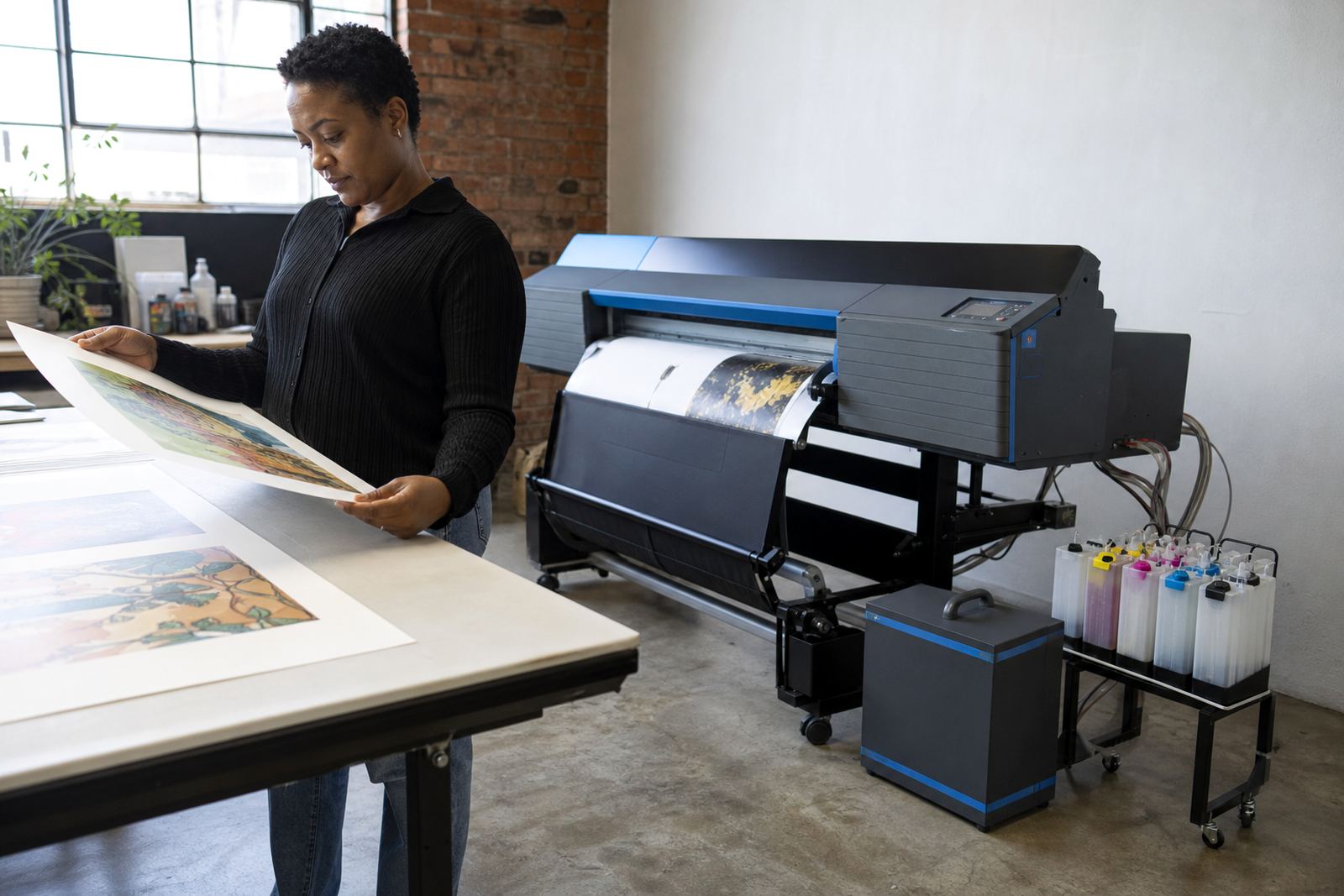
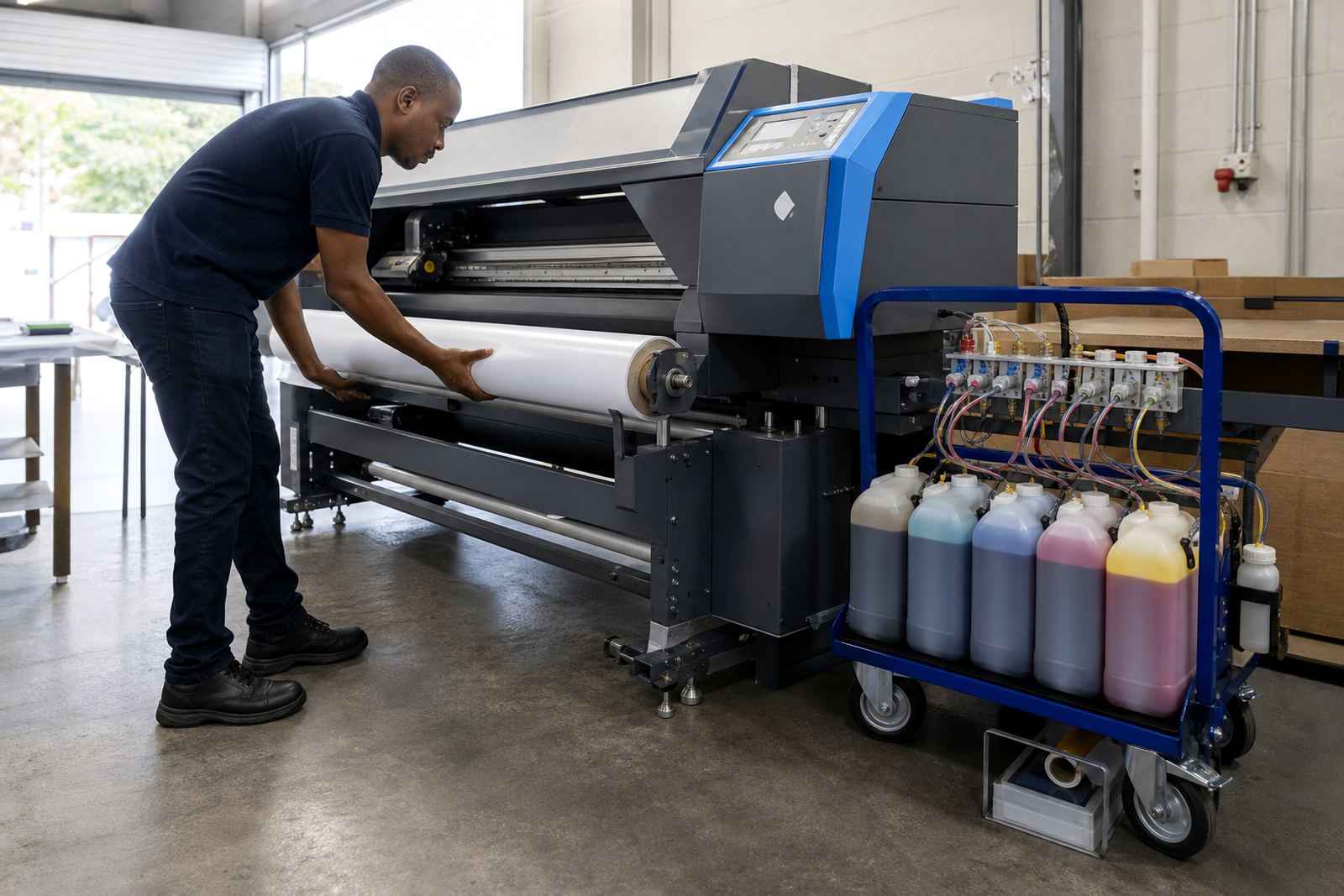
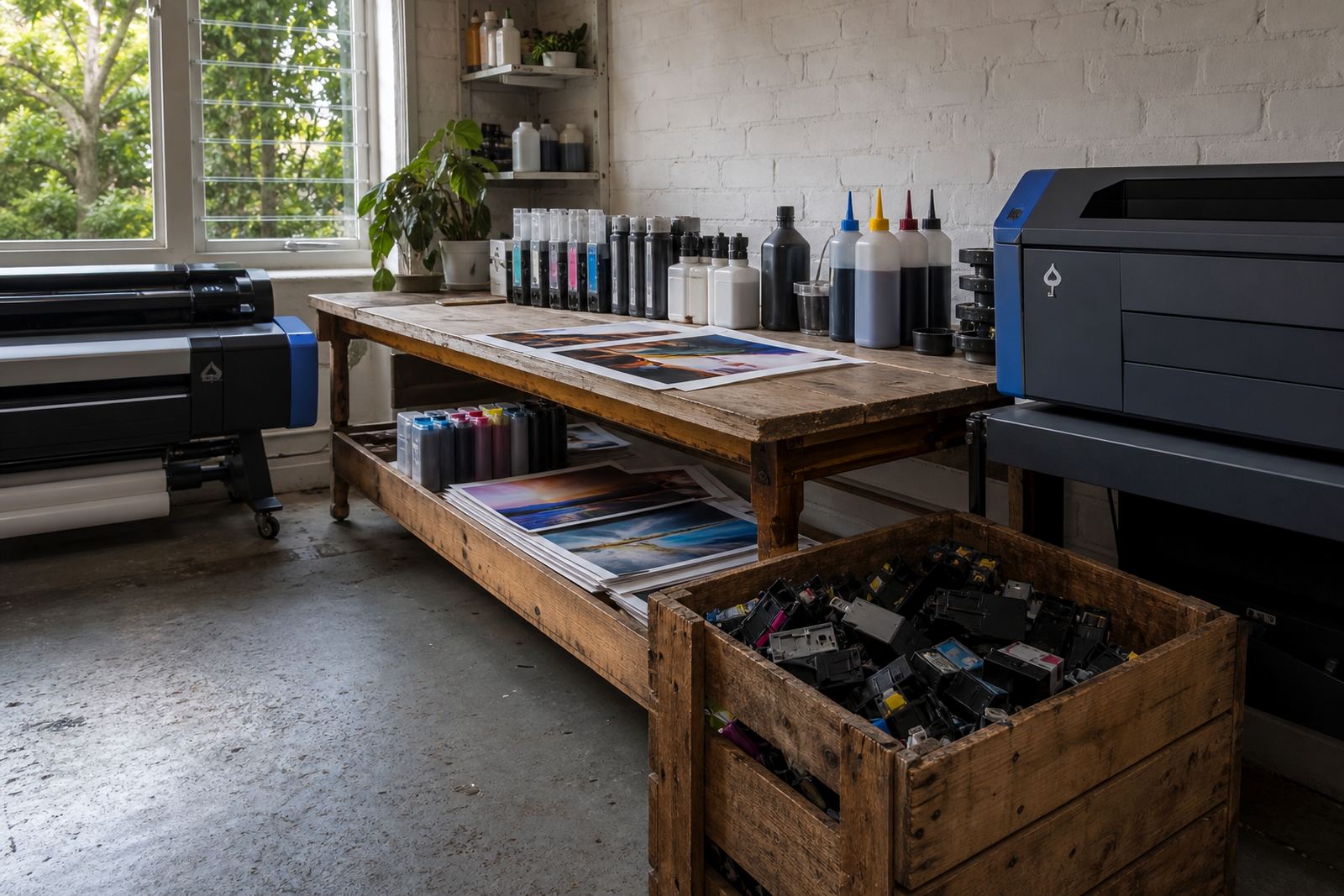
Wide-format print shops often need a different switchover conversation. Ink flow, colour balance, head health and daily usage patterns all carry more weight when the machine is pushing larger media and longer runs. A refill choice that works for an office printer may not suit a plotter or production device.
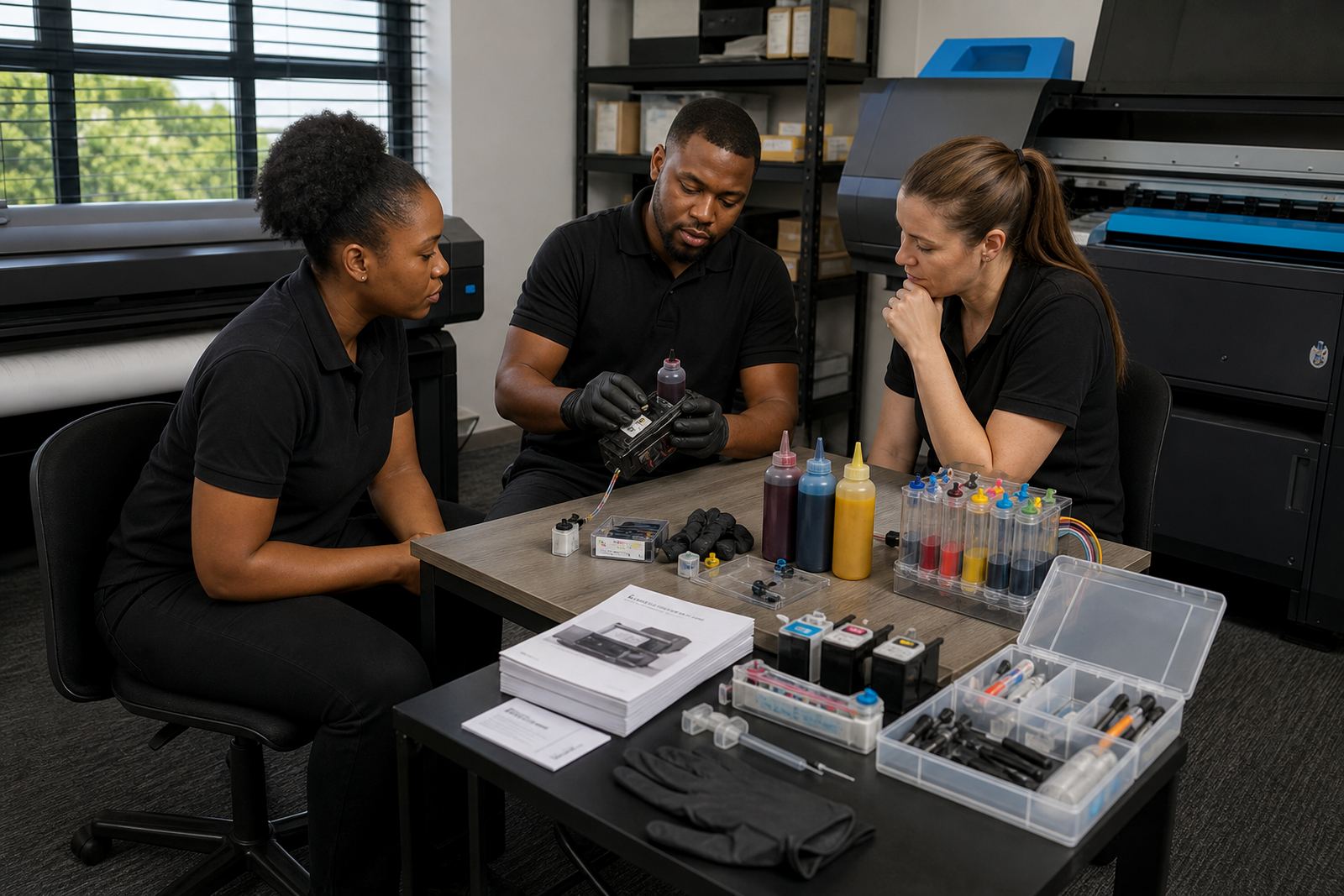
For that reason, the hub includes projects where setup help, chip reset guidance and leak checking were part of the move. The job is usually less about a single cartridge and more about keeping the whole supply path under control.
Cities, branches and courier movement
Westville is the base, but the hub covers Durban, Pietermaritzburg, Johannesburg, Pretoria, Cape Town, Ballito and Hillcrest. Some switchover work is handled through local visits in the Durban area, while other jobs move by courier when the printer, chips or empty cartridges need to travel.
That spread helps when a business wants refill advice without sending every unit through a retail queue. Our contact form is the usual starting point for the details, especially when the printer model, ink type and current cartridge setup need to be matched properly.