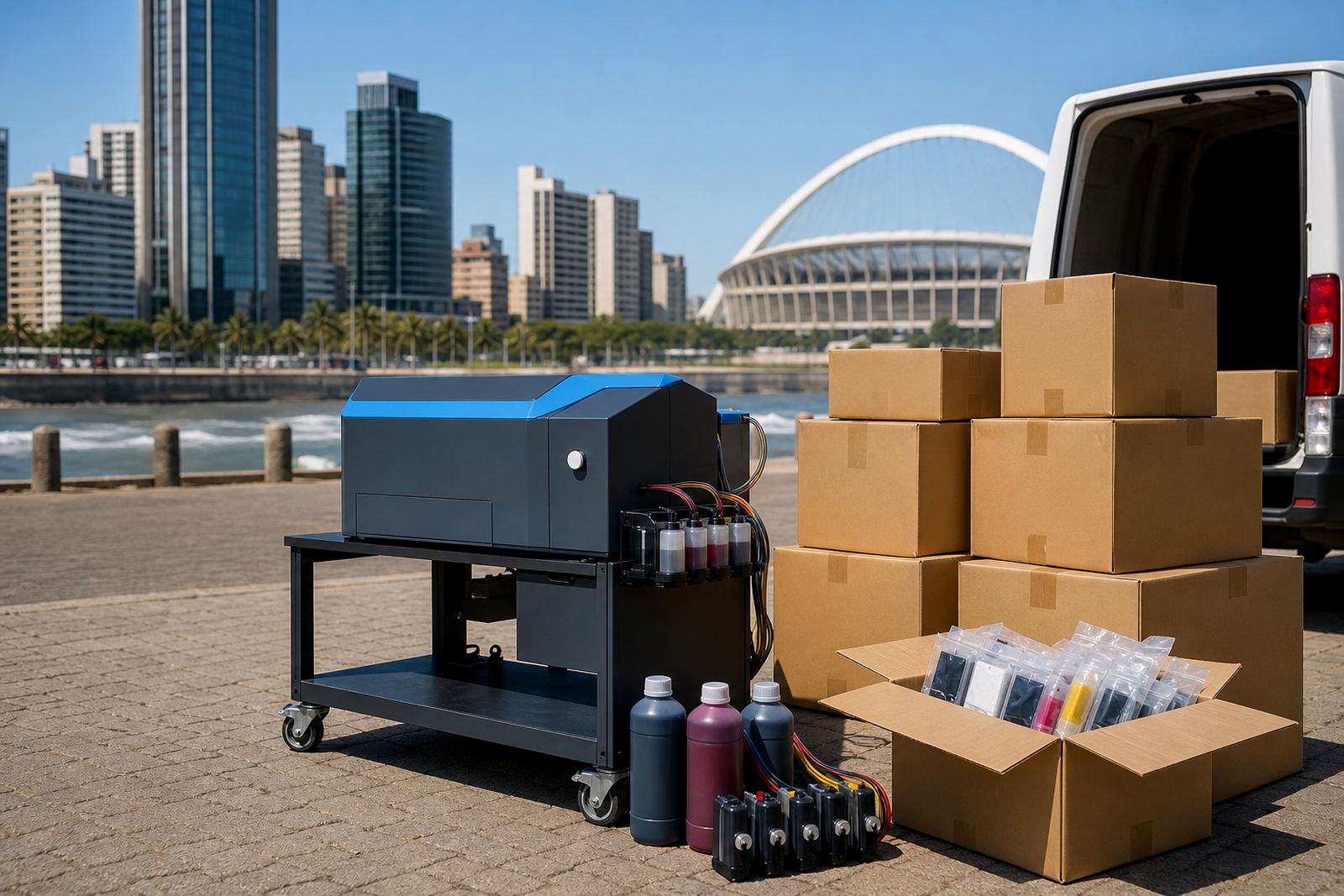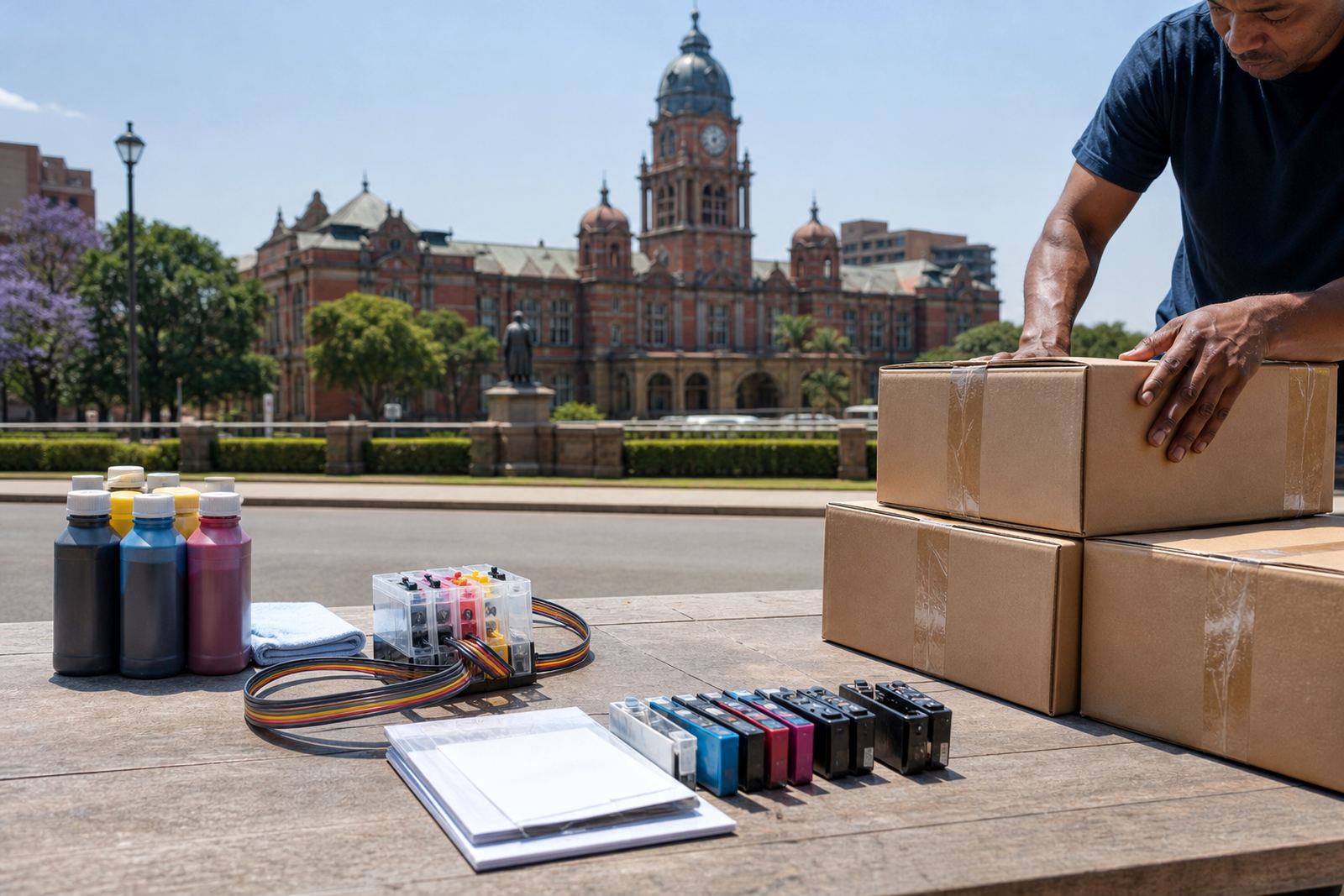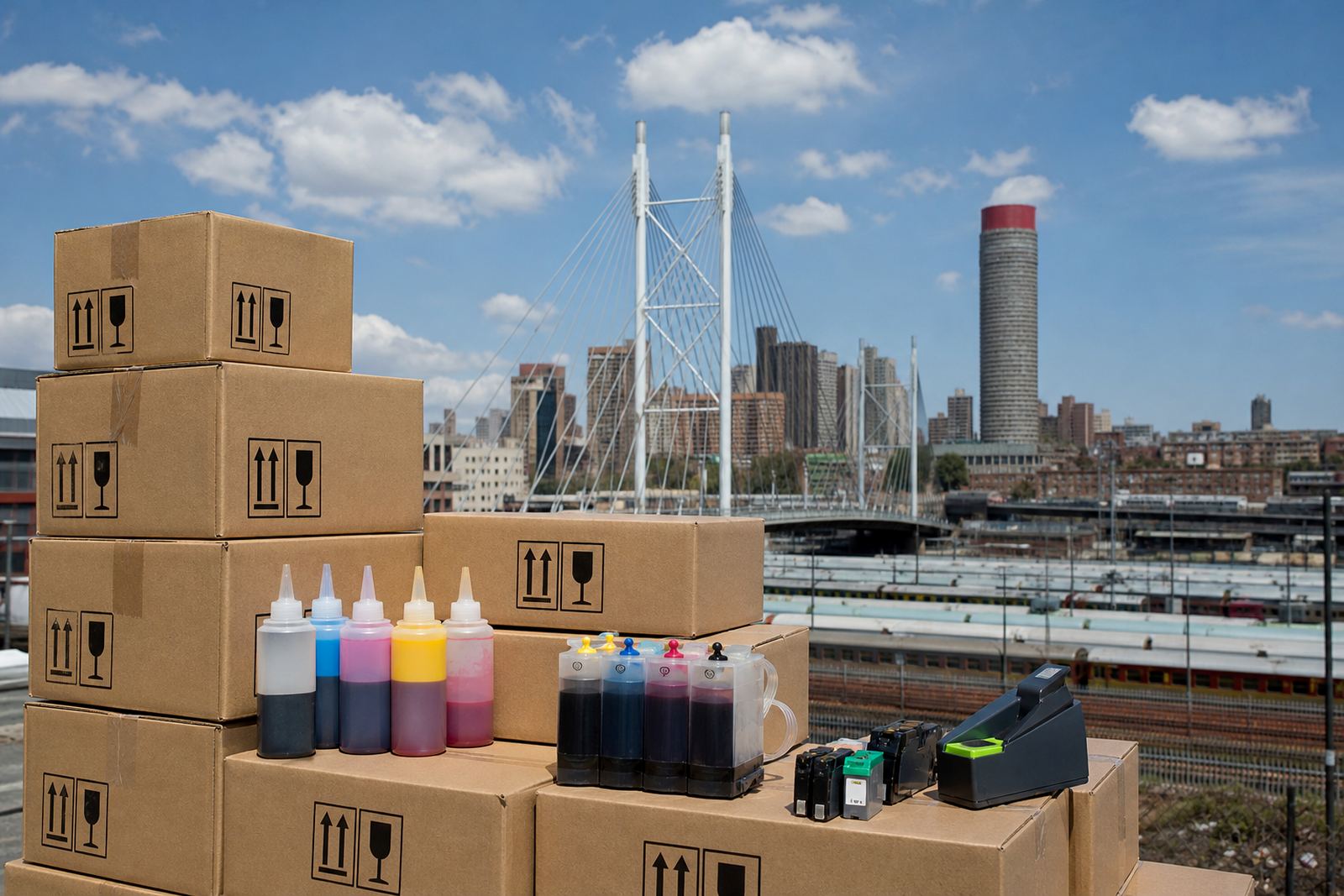

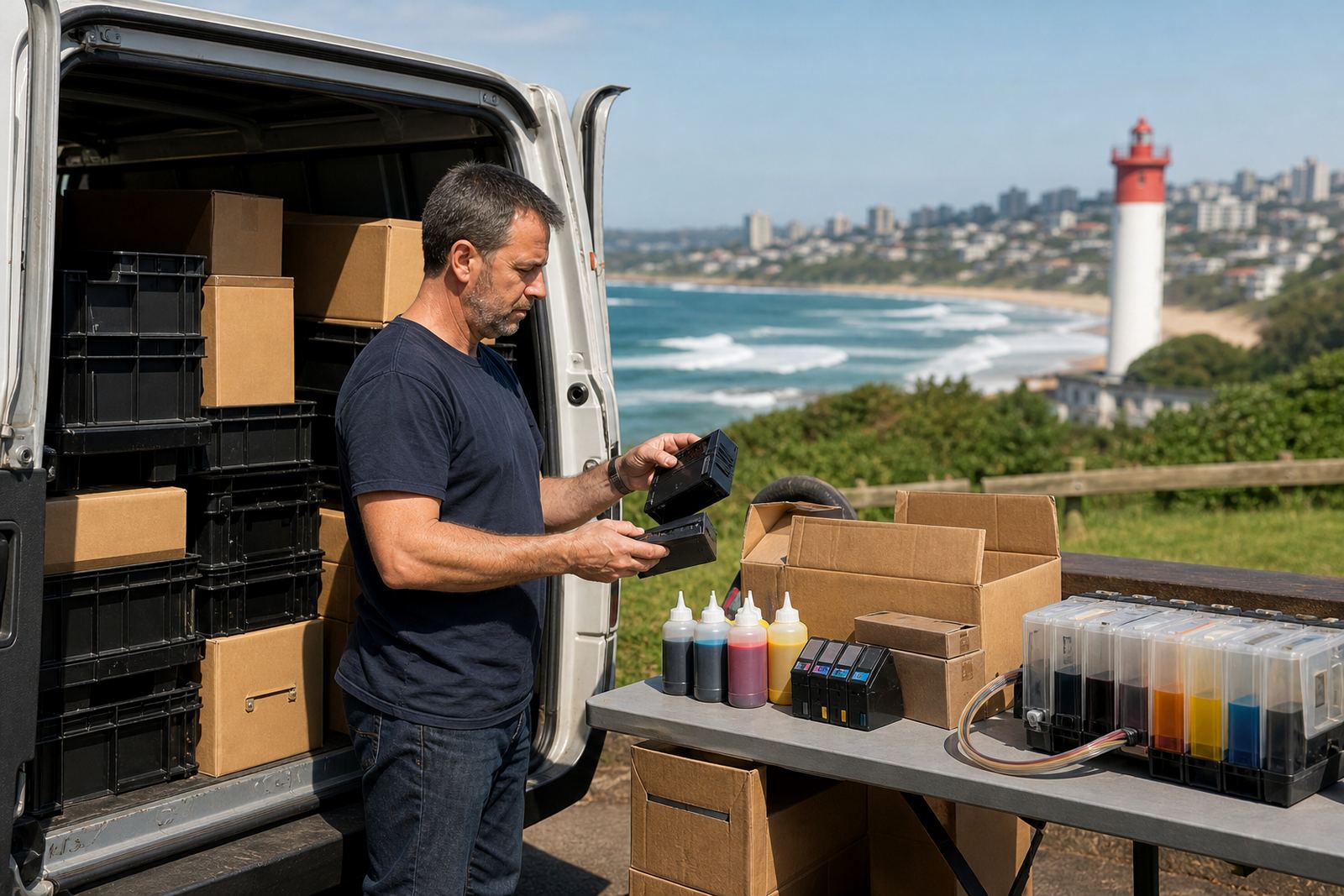
Ballito ink work that keeps stock moving
Ballito users often work between offices near the highway, smaller studios inland, and print rooms serving coastal hospitality and property work. That mix means ink has to suit both everyday office pages and sharper colour output for proofing, artwork and wide-format jobs. We cover the area with refurbished cartridges, bulk ink refill systems and practical refill advice that fits local use.
Coastal air can be hard on open ink containers and on equipment that sits idle between jobs. We keep the focus on sealed stock, sensible storage and the right ink type for the machine in front of you. For many Ballito clients, that means a mix of dye and pigment ink guidance, plus checking whether the printer head likes a lighter formulation or needs a more durable ink set for daily business use.
Our support reaches Ballito from Westville by courier and order planning, so offices do not have to treat every cartridge as a fresh purchase. That helps where usage changes from week to week, or where a studio wants to hold spare empties and refill them through a controlled routine instead of replacing the whole set every time.
Refill systems for counters, studios and print rooms
Continuous ink supply systems suit places that print often and dislike running out halfway through a run. Refilling can work well for in-house teams, design counters and operators who need lower running cost without throwing away a full cartridge body each time. We help with refill kits, tubing checks, bottle handling and the set-up questions that usually come up when a system is new to the site.
- CISS setup help for offices and creative teams
- Refill kits for supported benchtop printers and some larger units
- Ink type guidance for dye, pigment and mixed-use work
- Chip reset help in general terms where the printer asks for it
- Leak checking around tanks, caps and cartridge seals
Some users need brighter colour for artwork, while others want text that holds better on office paper or labels. The right choice depends on the job, the paper and how often the machine runs. We do not push one filling method for every printer, because the better answer usually depends on how the unit is used day to day.
What Ballito clients usually ask us to cover
Ballito orders often come from people who already know the printer model and simply need a better consumable path. That can be a small office replacing worn cartridges, a design studio running proof sheets, or a wide-format shop managing colour output and stock flow. The useful part is keeping the supply pattern steady enough for the team to work without last-minute scrambles.
Typical support for the area includes refill advice, colour balance help, printhead care and nozzle check support. We also handle empty return planning for offices that want to keep used cartridges out of general waste where possible. If a machine is being stubborn after a refill, we can talk through the likely cause, whether that is air in the line, a chip issue, dry heads or the wrong ink for that print job.
- Office cartridge refills and replacement planning
- Studio support for colour work and proof output
- Wide-format ink guidance for bigger machines
- Empty return programme for used cartridges
- Operator training for new staff or rotating teams
Coastal conditions and how they affect ink
Ballito is close enough to the coast that humidity matters, especially for stock kept in a cupboard, storeroom or back office. Ink bottles need to stay sealed and upright, and cartridges should not sit in heat or direct sun. A busy room with dust, salty air and frequent handling can shorten the life of fittings or leave printheads needing extra care.
We usually suggest a calmer storage routine: keep consumables in the box until needed, close refill ports properly and avoid leaving open ink near windows or fans. Pigment ink is often considered where the print has to hold better on paper or resist handling, while dye ink is still common for bright colour work and general office use. The machine, paper and purpose should decide that choice, not habit alone.
For Ballito teams that run printers through a slow week and a fast one in the same month, stock planning matters. A good inventory includes active cartridges, a backup set, refill bottles and a record of which empties are worth reusing. That keeps the business from wasting workable parts while still avoiding risky top-ups on the wrong cartridge body.
Courier delivery from Westville into the north coast
Our Westville, Durban base supports Ballito orders through courier delivery and dispatch planning. That suits offices that want refill stock brought in with the rest of their consumables, rather than sending staff out to hunt for a compatible cartridge at short notice. We also support surrounding areas such as Hillcrest and Pietermaritzburg, while Ballito remains a regular north coast point for delivery and follow-up stock work.
Dispatch notes are handled with care because ink jobs are usually specific. The team may need the printer model, the cartridge reference, the count of colours, or a note on whether the machine uses a chip, a tank or a refill path. Our contact form is the cleanest way to pass those details through, especially when the order includes a mix of cartridges, bottles and spare empties.
Empty cartridges, care checks and a cleaner stock cycle
Used cartridges should not be treated as dead stock every time. Some can be refilled, some can be reset, and some are better sent into an empty return programme once they are no longer reliable. That decision depends on the casing, the chip, the seal and the condition of the print head path. Reusing what still performs well keeps the waste stream smaller and gives the office a more controlled supply loop.
We can also help with the quiet maintenance side: nozzle checks, cleaning cycles, leak checks and advice on when a cartridge is no longer worth salvaging. If a studio or office has operators changing over, short training can reduce spills and avoid the usual errors around overfilling, mixed ink or loose caps. The goal is practical use of the consumables already in circulation, not squeezing every last drop from a part that has already failed.