When drawing sets start multiplying
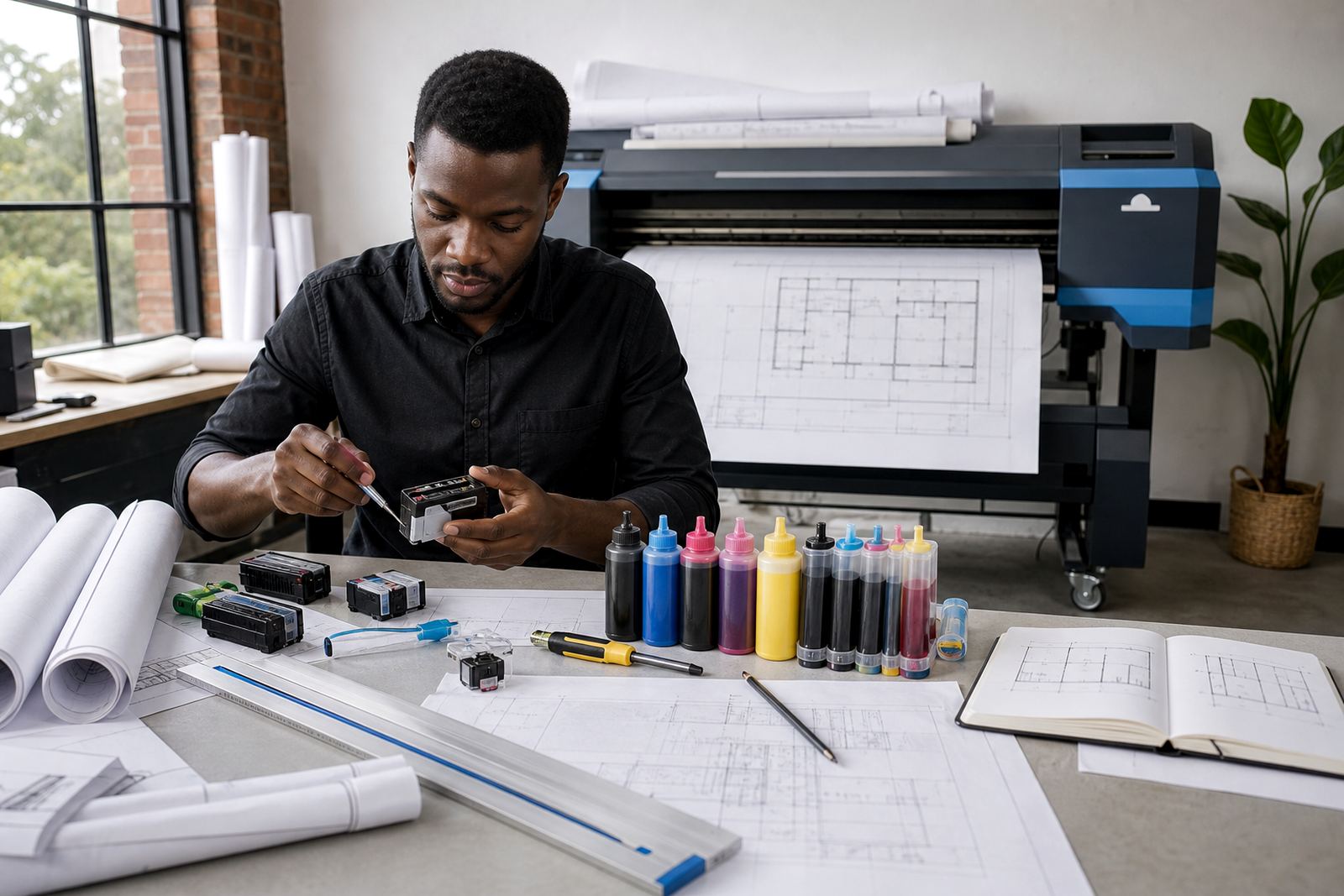
In an architectural studio, print use is rarely flat. One week can be a handful of marked-up plans, then a client meeting brings revised sheets, colour renders and half-size copies for a site visit. Refurbished cartridges help keep that rhythm moving without sending every empty unit straight to landfill, while bulk ink systems suit teams that print often and want fewer cartridge changes.
We work with studios that run standard office printers as well as larger-format machines for A1 and A0 output. The usual aim is clear line work, dependable blacks and colour that stays steady across a full batch. That matters when the first and last sheet in a set must read the same on site or in front of a client, not just on a screen.
Typical equipment in a studio room
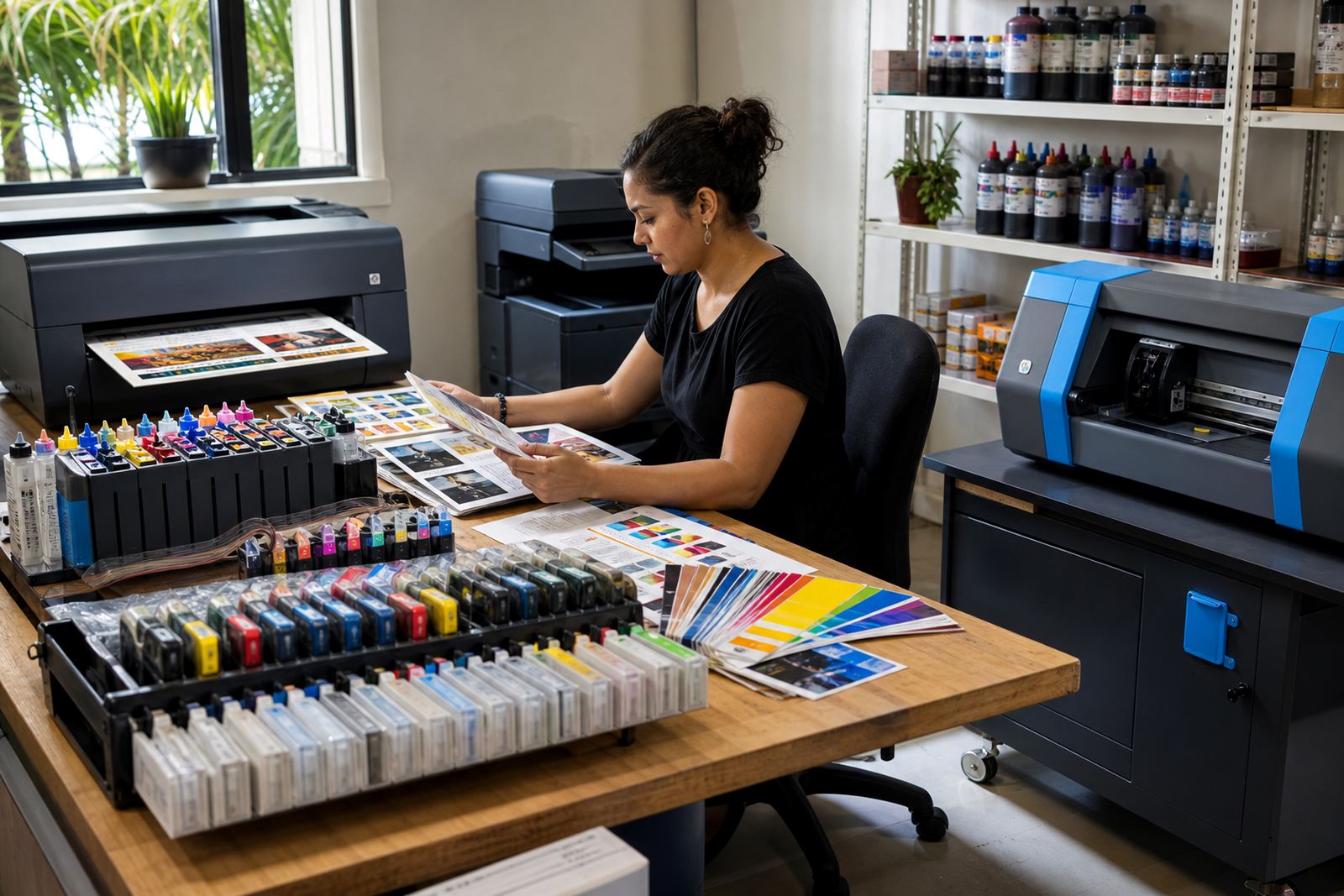
Most studios use a mix of benchtop printers, multifunction office units and wide-format printers for posters, elevations and presentation boards. Refurbished cartridges suit the everyday machines used for letters, specs and internal notes. Bulk ink setups suit higher-volume work, especially where a studio prints daily and the same machine handles many sheets in one run.
- Benchtop and multifunction printers for office drawings, cover sheets and mark-ups
- Wide-format printers for plan sets, colour layouts and presentation panels
- Refill kits for teams that keep compatible cartridges in regular rotation
- Chip reset help where a cartridge or system needs recognition after refilling
- Waste-ink and empty return handling to keep old consumables from piling up
When pigment ink is needed for sharper line work and better water resistance, it is best matched to the printer and paper type. Dye ink still has its place for presentation colour and smoother tonal work, but the wrong ink in the wrong machine can leave streaks, clogged nozzles or dull output. That is where ink type guidance saves a lot of trial and error.
Layout choices that save time in the print corner
A tidy print point makes a studio easier to run. Keep refills, spares and cleaning cloths together in one cupboard or shelf near the printer, not spread across counters and plan tables. Label each bottle or cartridge set clearly by machine type, because mixing units is one of the fastest ways to waste time and ink.
If the printer sits near a window or in a warm corner, keep ink sealed and out of direct sun. Coastal humidity in Durban can affect paper and storage too, so plan to keep paper flat in a dry cupboard rather than beside open windows or damp floors. For larger studios, one person should own stock checks while another handles printer care, otherwise nobody sees the low-ink warning until a job is already in motion.
- Store ink upright and sealed until it is needed
- Keep spare cartridges grouped by printer model
- Separate presentation ink from black line-work stock
- Place cleaning cloths and gloves next to the refill point
- Keep empties in a marked box for recycling or return
Small mistakes that grow into messy reprints
Architectural output looks simple until a colour drifts or a nozzle blocks mid-set. The common errors are usually practical ones: filling the wrong chamber, shaking a cartridge too hard, ignoring a nozzle check, or using the wrong ink type for the printer. A clean printhead is worth more than a full bottle sitting unopened in the cupboard.
Another regular problem is running too close to empty on a job day. A studio can save money by planning usage around known print bursts rather than waiting for warning lights to become urgent. Empty cartridges should be kept for the return programme, since careless disposal means more waste and less control over the refill cycle. If a cartridge has been refilled several times, a chip reset or recognition check may be needed so the printer reads it properly.
What the budget usually looks like in Rand
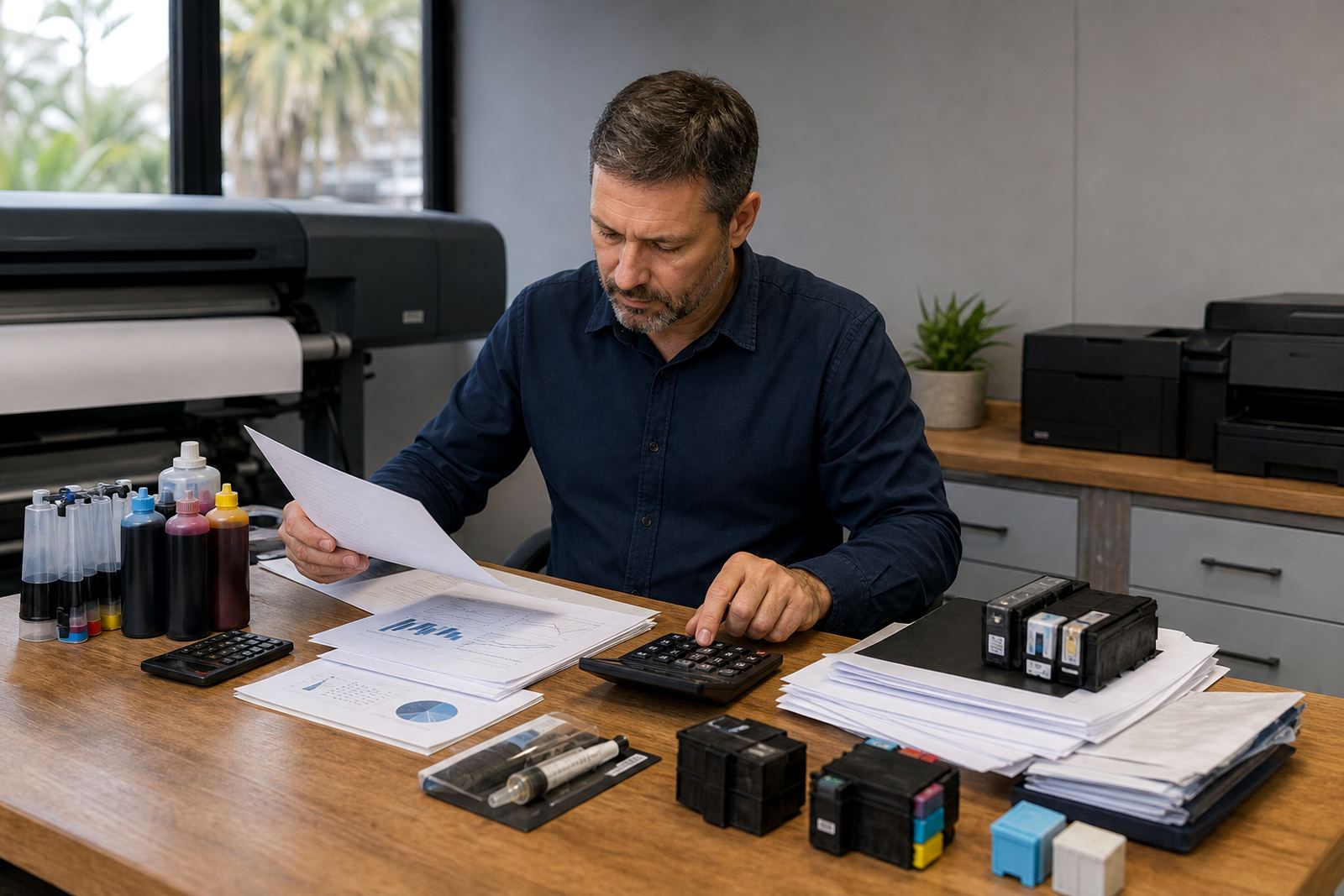
Budgeting for studio ink is easier when you split it into everyday office printing and larger-format work. Refurbished cartridges usually cost less than buying new units every time, while bulk ink systems spread the spend over many prints. The exact figure depends on printer model, cartridge size, colour mix and how often the studio outputs presentation boards rather than plain line drawings.
For a smaller architectural office, a basic stock plan might sit in the low hundreds of Rand for a few spare cartridges and cleaning items. A studio with regular colour presentation work can move into the mid hundreds or higher once refill bottles, spare cartridges and maintenance supplies are included. Wide-format rooms need a separate allowance again, because larger machines consume ink in a different pattern and may need more careful stock planning.
- Refurbished cartridges for daily office printing
- Refill kits for compatible machines in steady use
- Cleaning items for nozzle checks and printhead care
- Allowance for chip reset help and leak checking where needed
- Reserve stock for set submissions and presentation runs
Working with drawings, renders and courier drops
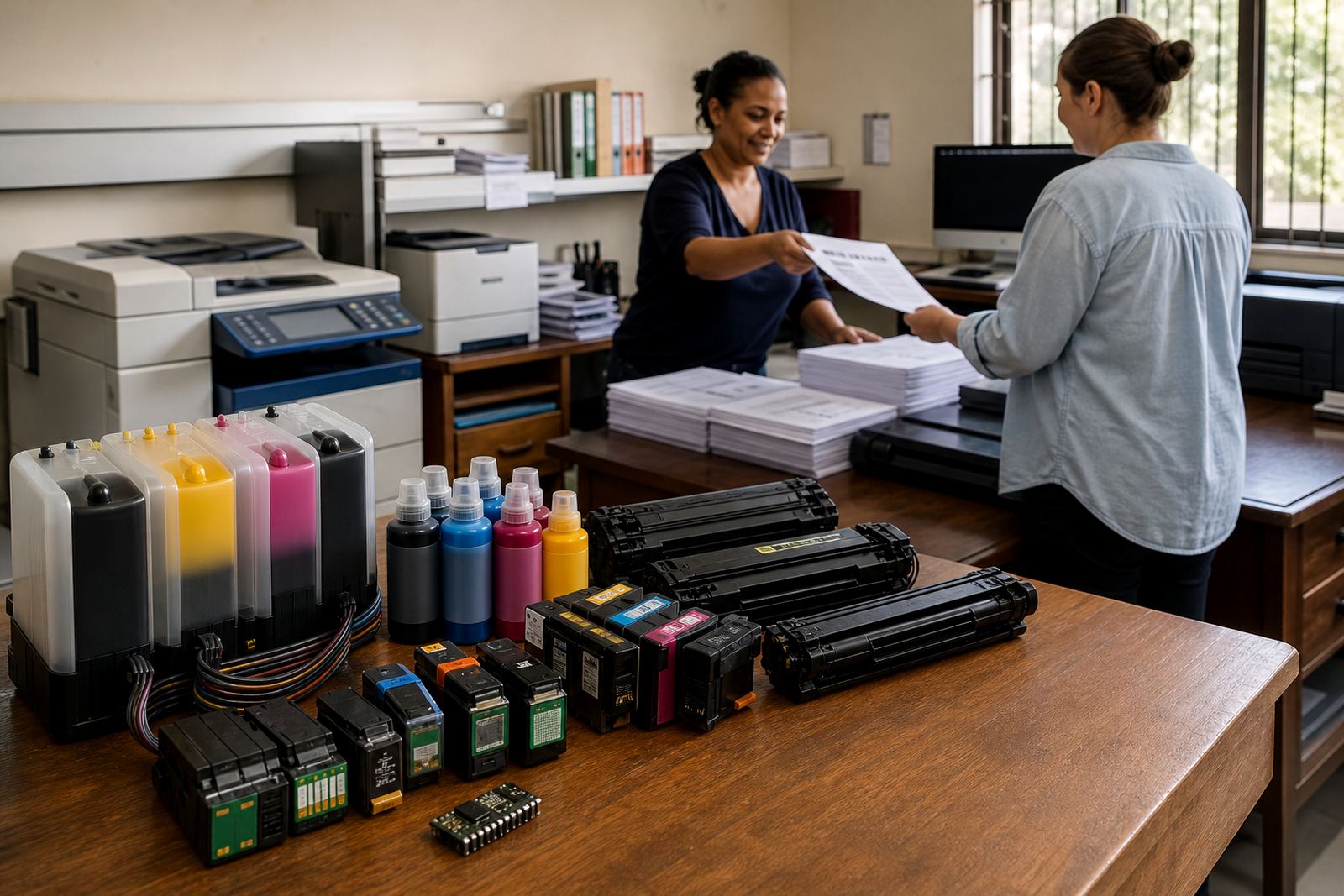
Our Westville, Durban base supports studios across Durban, Pietermaritzburg, Johannesburg, Pretoria, Cape Town, Ballito and Hillcrest, with courier delivery across South Africa. That helps when a studio needs stock for a set due in another branch or on a different site. The goal is to keep the right consumables moving to the right printer, without building a pile of loose cartridges that never get used.
Refill advice can cover cartridge handling, colour balance help, remote troubleshooting and operator training for teams that want fewer interruptions around print time. For studios that send back empties, the return process keeps old units moving into a cleaner cycle. It is a practical way to keep plan printing, presentation sheets and wide-format line work in hand, while cutting waste where it does not need to grow.