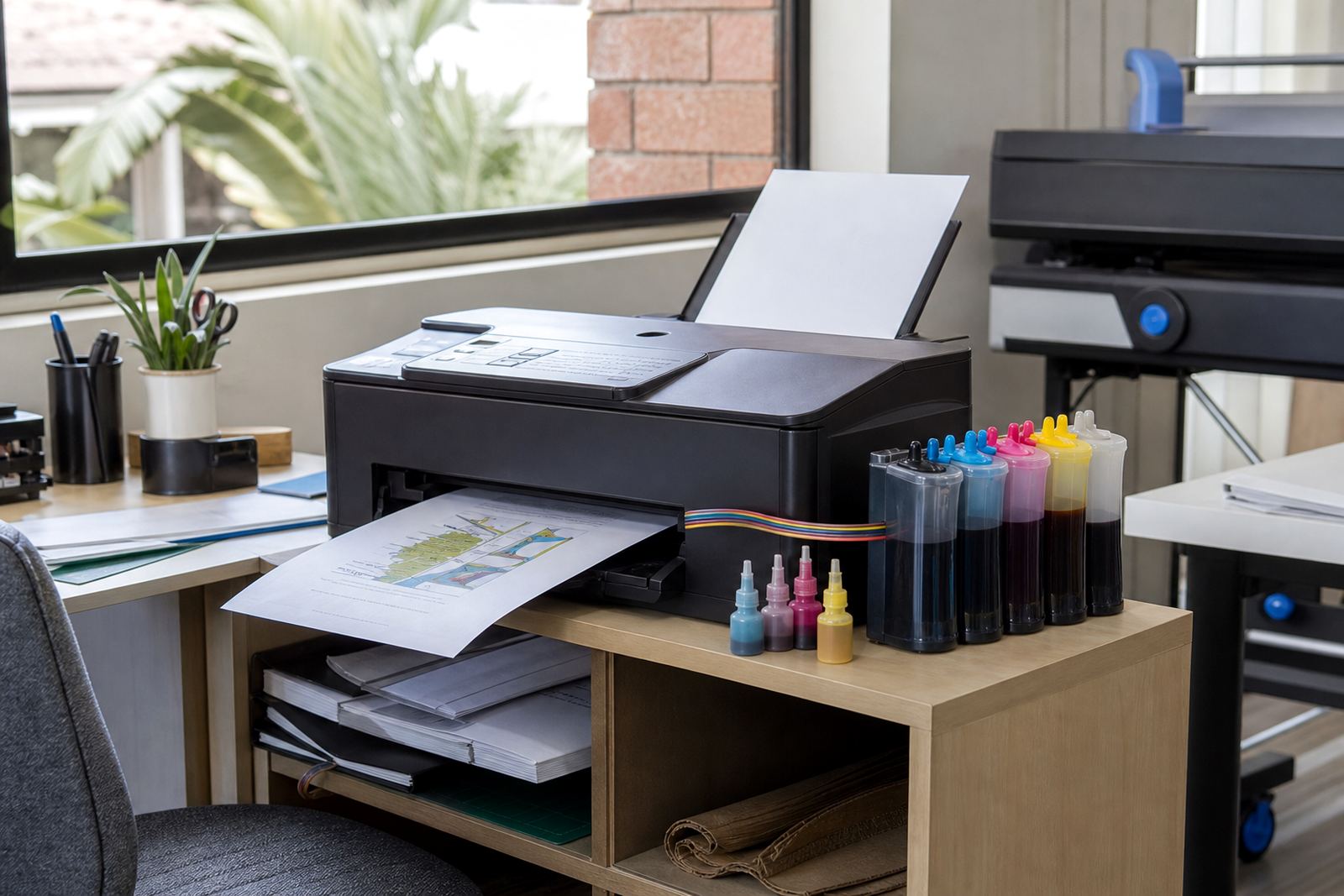
What sits inside an Office CISS Set
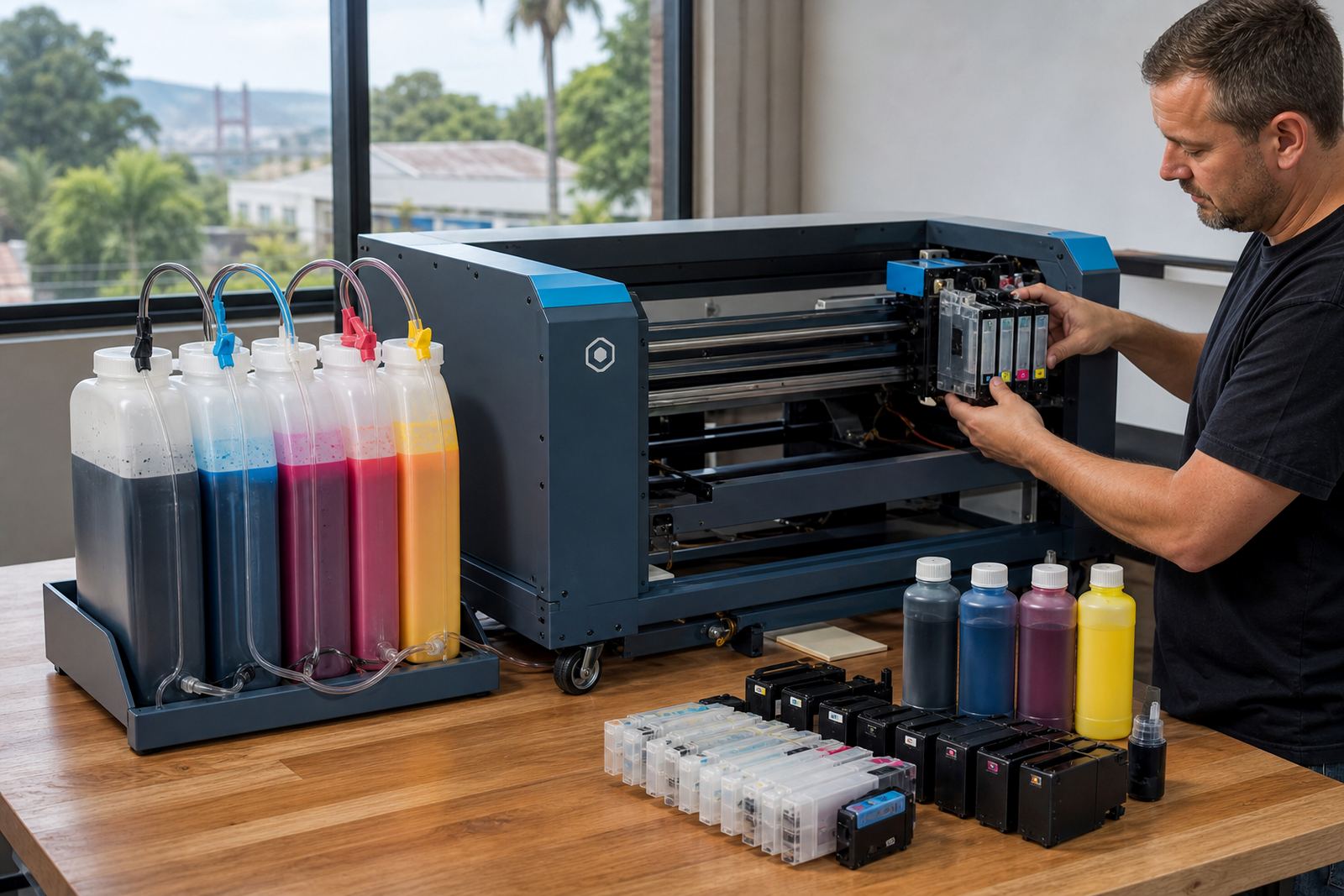
An office continuous ink supply system uses external ink reservoirs, flexible tubing and refillable cartridges or adapters to feed the printer from larger tanks. The aim is steady supply for work that moves through reports, invoices, brochures and colour drafts without constant cartridge swaps.
Most office sets are arranged for CMYK use, with black, cyan, magenta and yellow carried in separate tanks. The format is useful for smaller office printers, shared print stations and studios that produce a lot of proofing work, where a cleaner ink flow matters and print cost per page needs to stay sensible.
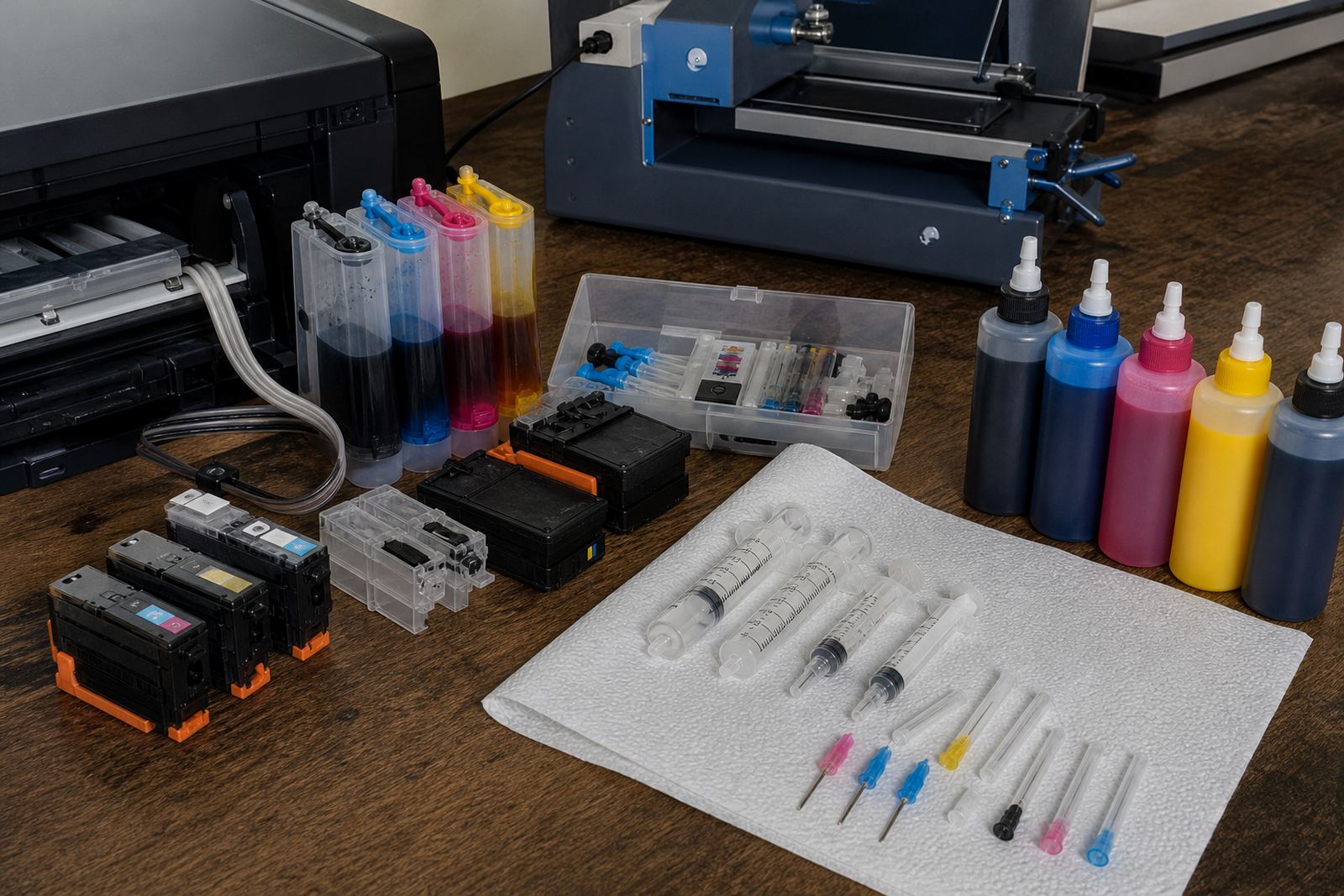
- External ink tanks matched to the printer model
- Ink lines cut to suit the carriage path
- Fill bottles or refill ports for topping up
- Cartridge housings or conversion parts where required
- Chip reset support in general terms for compatible units
Where this setup earns its keep
The Office CISS Set suits Durban offices, Ballito admin teams and Hillcrest studios that print every week, not just now and then. It also helps satellite teams in Pietermaritzburg, Johannesburg, Pretoria and Cape Town that need couriered stock and a clearer way to plan refills.
It works well where a printer must handle regular text pages mixed with colour charts, internal notices and draft artwork. A good fit is often a machine that already uses compatible refillable cartridges or has a known CISS conversion path, because the tank layout and chip handling must match the printer properly.
- Office printers with steady weekly output
- Design studios printing proofs and colour samples
- Small teams sharing one printer across counters
- Wide-format workspaces that manage proof devices alongside larger units
- Sites that want less empty cartridge waste leaving the office
Choosing tank size, ink type and layout
Tank size depends on how hard the printer is worked and how much space is open beside the machine. Smaller sets keep the footprint neat on a counter or side table, while larger bottles are better for teams that refill often and do not want to top up too frequently.
Ink choice matters just as much. Dye ink usually gives bright colour and smooth office graphics, while pigment ink is better suited to text-heavy pages and documents that need sharper edges or stronger resistance to smudging. Some printers use one type in black and another in the colours, so the set must follow the printer's own ink path and not a loose guess.
- 4-colour CMYK office packs are common
- Mixed black and colour configurations can be arranged
- Shorter tubing helps keep the route tidy
- Longer tubing may suit larger printer bodies or side cabinets
- Tank housings should sit level and easy to inspect
Fitting, alignment and the first fill
Installation needs careful priming, clean handling and the right chip or cartridge arrangement for the printer family. The tubes must move freely with the carriage, not snag at the edge of the machine or pull on the heads when the printer runs across the page.
Before the first print, the system is usually filled, bled of air and checked for equal flow. A clean nozzle check helps show whether the heads are drawing ink properly, while a test page shows if one colour is lagging or if a line needs attention. If the printer is very sensitive, a technician may need to watch the first few cycles and adjust the set-up, because a rushed fit can lead to leaks or starved nozzles.
- Prime the lines before the first job
- Keep the reservoirs at the correct level
- Leave enough slack for carriage travel
- Check the first nozzle pattern and colour block
- Secure the tubing so it does not rub on moving parts
Care that keeps the printer behaving
Office CISS systems need regular visual checks, especially in humid coastal conditions where dust and moisture can gather around the tanks and fittings. The reservoirs should stay upright, caps should be kept sealed when not filling, and the ink path should be checked for bubbles if print quality drops.
Printhead care is part of the routine. If a printer sits idle too long, nozzles can dry or start missing lines, especially with pigment-heavy use. A short test print now and then helps move ink through the head. If colour balance drifts, the answer is often in the supply path, not the software setting alone.
- Watch for air in the lines after moving the printer
- Keep refill ports clean before topping up
- Do a nozzle check before long print runs
- Replace worn tubes or seals before they split
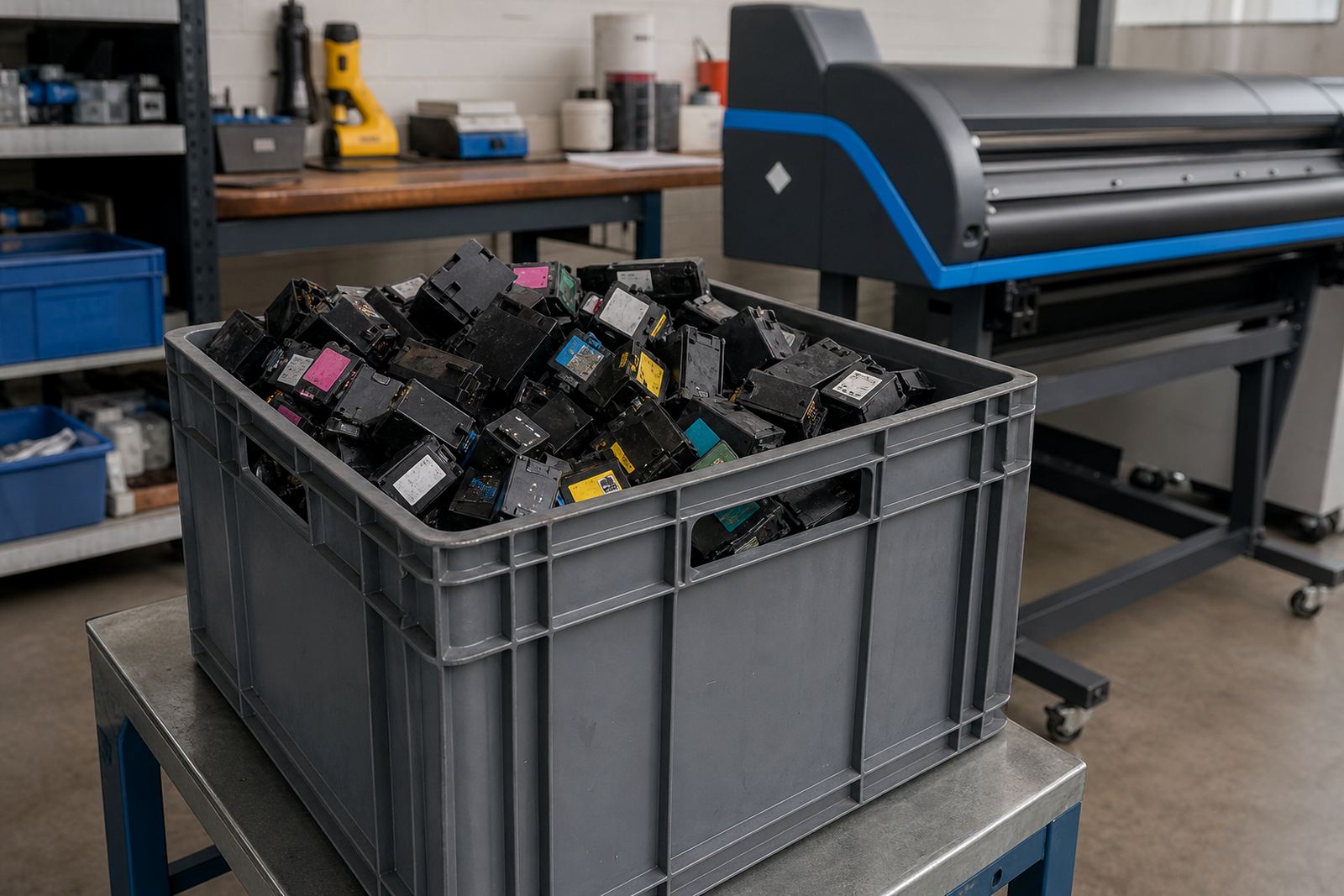
- Recycle empties through the return programme where possible
Details to confirm before the order leaves Westville
To supply the right Office CISS Set, the printer model, cartridge code and colour count need to be matched carefully. The physical space beside the printer matters too, because some sets need a side mount or extra room for the tank bank to sit level.
It also helps to know whether the office needs dye ink, pigment ink or a mixed layout, and whether the printer currently uses standard cartridges, refillable cartridges or a conversion already in place. If the machine has been through cleaning cycles, had head issues or shown chip errors, that should be mentioned too so the correct advice is given before fitting. our contact form is the best place to send those details when ordering from Westville, Durban or any other delivery area.
- Printer make and exact model
- Current cartridge code or set type
- Black only, CMYK, or mixed ink layout
- Office volume and whether the printer stays on one site
- Room available beside or behind the printer
- Any nozzle, chip, leak or colour balance concern
Key facts
| Product type | Continuous ink supply system package for selected office printers |
|---|---|
| Ink format | CMYK office set, with dye or pigment options depending on model |
| Use case | Regular office printing, studio proofs and shared admin work |
| Fitment | Requires model match, priming and tubing alignment |
| Support | CISS setup help, nozzle check support and printhead care guidance |
| Delivery | Courier delivery across South Africa from Westville, Durban |