
External ink feed for long production runs
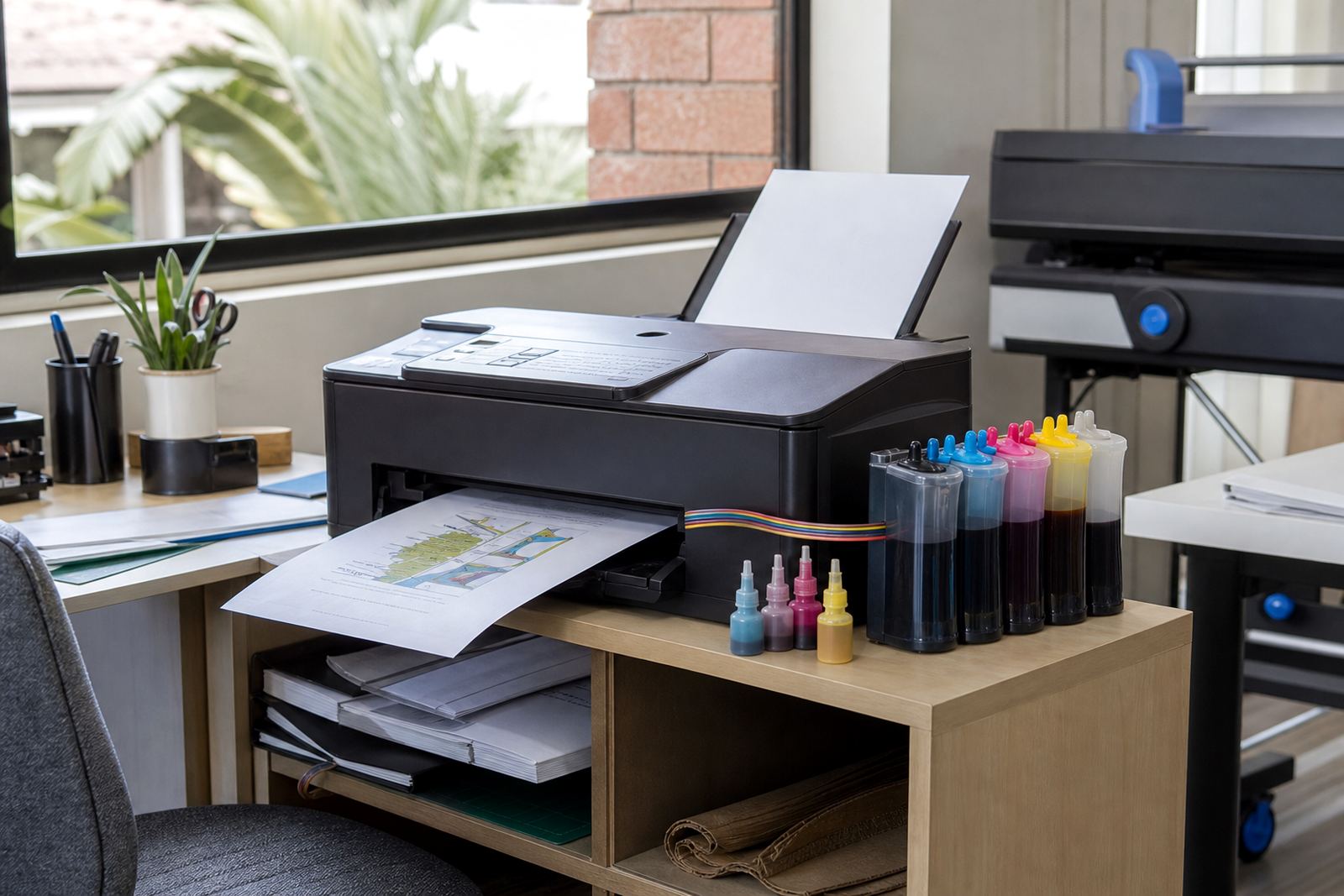
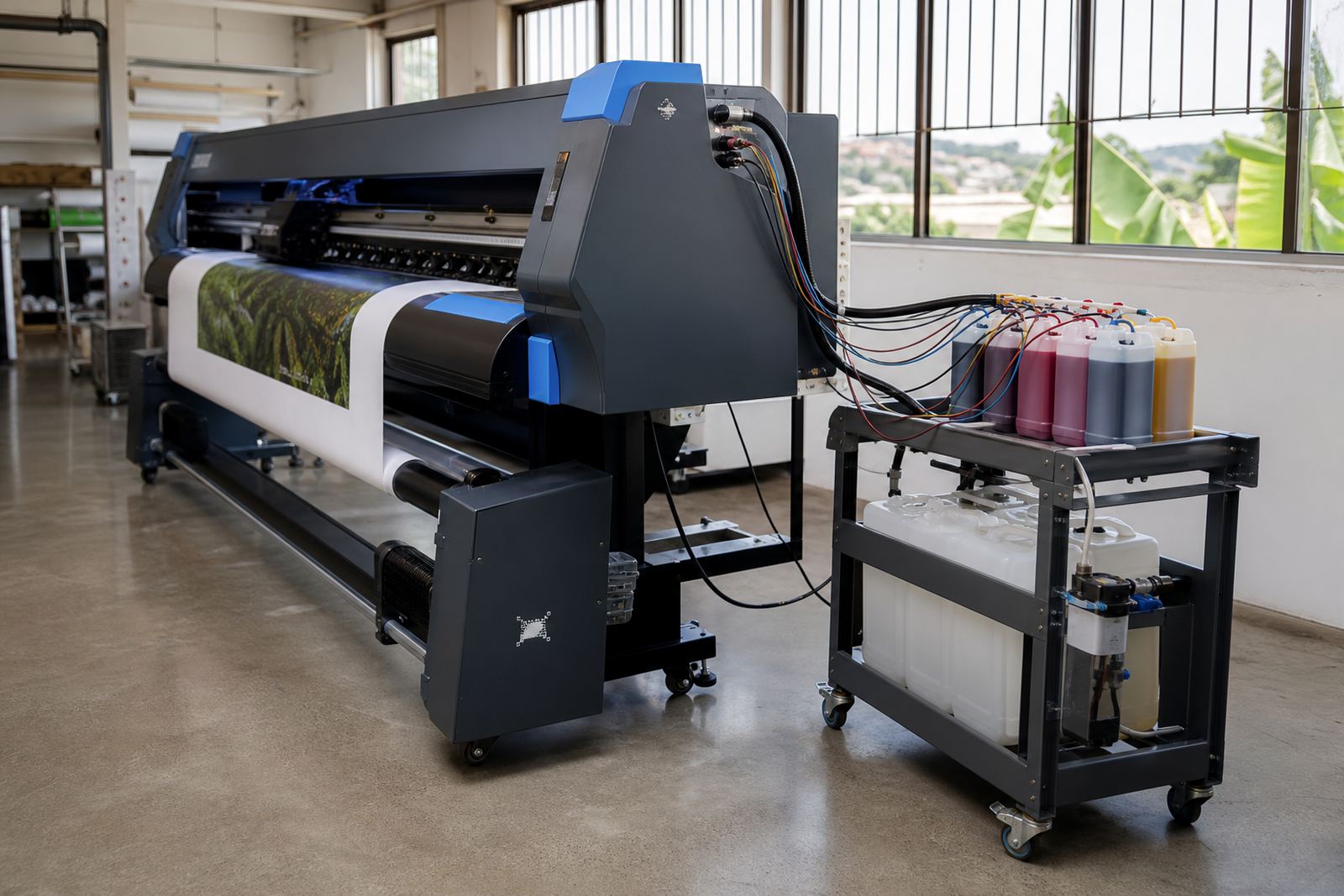
A wide format CISS, or continuous ink supply system, moves ink from larger bottles or tanks through tubing to the printhead carriage. It suits printers that run posters, drawings, signage panels, proof sheets and other repeat work where stopping to change cartridges wastes time and leaves messy gaps in the day.
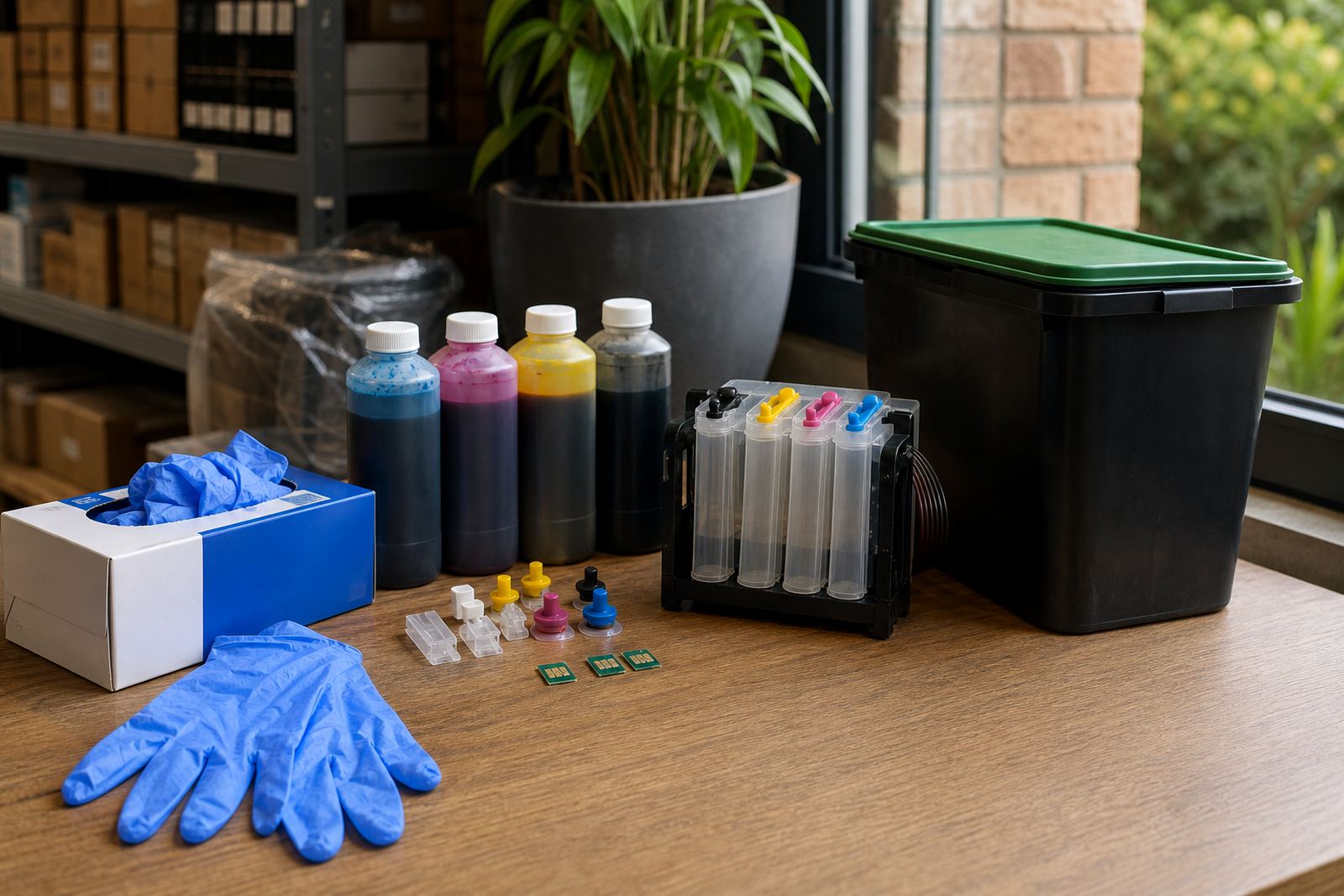
The setup usually includes refillable reservoirs, flexible tubes, cartridge housings or adapters, fittings, clamps and a reset method for the chip side of the system. On some models the carriage moves with the hoses tucked neatly along the rail, so the layout matters more than people expect, especially where the printer runs full width sheets or heavier media.
Formats, tank sizes and ink choices
Wide format systems are matched to the printer family and to the way the machine is used. A compact studio setup may only need a modest set of reservoirs, while a busy print room can need larger tanks with enough volume to keep pace with long proofing sessions and repeated colour work.
- Tank and bottle sizes are selected for the printer width and daily output.
- Dye ink is often used for bright indoor colour and smooth gradients.
- Pigment ink is favoured where sharper text, more water resistance and better handling on coated media matter.
- Single-colour refill kits are used where one channel needs topping up more often than the others.
- Multiple channel sets suit full process colour printers that need balanced feeding across all heads.
The exact ink family must match the printer’s normal use, or the result can be dull colour, clogged channels or uneven flow. That part is worth checking properly, because a wide format machine can be fussy about chemistry and it shows up fast.
Where the system fits neatly into daily work
Offices with in-house presentation printing use these systems to keep wide plots moving without hunting for replacement cartridges. Design studios use them for mock-ups, colour bars and artwork proofs, while artists often want steady access to strong colour on larger sheets. Print shops use them for banners, POS panels, classroom graphics and other jobs that pass through the machine in batches.
They also make sense where empty cartridges pile up, or where the job list keeps changing from one format to another. A well set bulk feed unit reduces cartridge swapping and gives a clearer view of stock levels, which helps with planning and with keeping the room tidy.
- Suited to medium and high-volume colour output.
- Useful where the same printer handles many repeat jobs.
- Helpful for teams that want fewer interruptions during production.
- Works well where empty cartridges are collected for return or recycling.
Fitting, priming and first checks on the printer
Fitting a CISS on a wide format printer is not only a matter of pouring ink into bottles. The hoses need the right route, the reservoirs must sit level, and the printhead path has to move without snagging. A small kink or loose clip can cause poor flow, air in the line or ink imbalance, so the first fit deserves proper attention.
We look at nozzle checks, carriage movement, chip reset method, seal points and the way the printer parks between jobs. If a printer already shows a weak channel or intermittent lines, the system should be set with that in mind, not pushed in as if every model behaves the same. That saves waste and keeps the flow cleaner from the start.
- Check carriage clearance before final hose placement.
- Prime lines carefully so each channel starts cleanly.
- Watch for air pockets after transport or after a long idle period.
- Confirm the reset method before the first refill cycle.
Keeping heads clean and flow steady
Bulk feed systems still need normal printer care. Printheads like regular use, clean nozzle checks and the right ink for the job. Letting one colour sit idle for too long can lead to dropouts, and thick pigment channels may need more attention where the work is stop-start or the room is dusty.
We normally speak about the habits that protect the printer over time: gentle cleaning where needed, careful handling of empties, and no rough topping up that leaves ink on the contacts or around the seals. If a bottle is overfilled or a cap is left loose, the mess spreads fast and the operator ends up cleaning more than printing. That is never worth it, in practice.
- Run nozzle checks before long jobs and after storage.
- Keep caps sealed and reservoirs upright in storage.
- Wipe any spill at once, especially near contacts and seals.
- Use the correct ink grade for the media and the channel set.
Details to confirm before the order goes out
For a wide format CISS, the model number matters first, then the carriage style, chip format and the ink type already in use. The printer width is not enough on its own, because two machines with the same paper size can take very different reservoirs and hose runs. We also need to know whether the unit will be used for colour artwork, proofing, signage, or a mix of all three.
It helps to confirm these points clearly so the right kit goes out the first time, with less back-and-forth and less risk of a mismatch.
- Printer make and exact model.
- Number of colour channels in use.
- Dye or pigment ink already loaded, if any.
- Whether the printer uses standard cartridges, refills or a prior bulk feed setup.
- Typical sheet size and daily print volume.
- Need for chip reset help, leak checking or operator training.
We also note the delivery town and whether the job is going to Westville, Durban, Ballito, Hillcrest, Pietermaritzburg, Johannesburg, Pretoria or Cape Town, because courier packing and dispatch details must line up with the order. That part sounds small, but it keeps the whole process neater.
Key facts
| Product type | Wide format continuous ink supply system |
|---|---|
| Ink options | Dye ink or pigment ink, matched to the printer and media |
| Typical use | Long runs, proofing, signage, artwork and repeated colour output |
| Core parts | Reservoirs, tubing, cartridge housings, fittings and reset support |
| Support included | Setup help, nozzle check support, leak checking and colour balance help |
| Service area | Westville, Durban, with courier delivery across South Africa |