
Reception printers that work through the morning rush
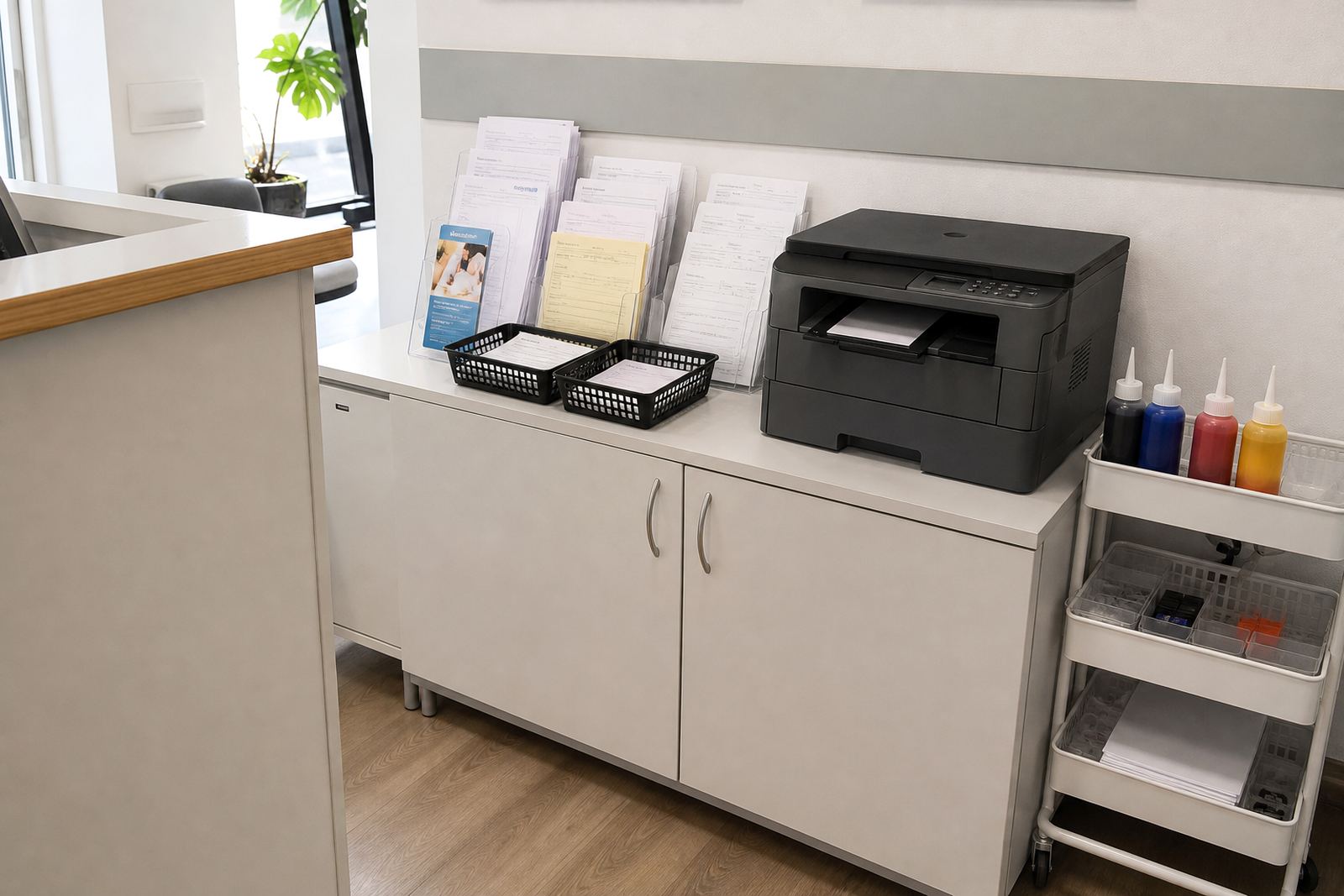
In a practice, the printer is usually busiest at reception, not in a back office. Forms, consent pages, referral letters and account slips tend to land in short bursts, then stop and start all day. That pattern suits refurbished cartridges and bulk ink systems when the equipment is matched to the actual page count and paper size in use.
Many medical rooms in Westville, Durban and nearby areas run a compact benchtop printer for general administration, while a second unit handles labels or heavier daily volumes. A small laser unit may be used for black text, while inkjet units are often kept for colour headers, patient notices and scanning copies. We help with the type of cartridge, the ink choice and the cleaning routine so the machine keeps producing clear text and readable barcodes.
- Single-site practices often need one black-heavy printer and one colour unit.
- Shared reception areas benefit from tidy cable placement and easy cartridge access.
- Where pages are printed in bursts, nozzle checks matter more than glossy speed claims.
What medical offices usually print, and what that means for ink
Clinical paperwork asks more from a printer than a casual office memo. Forms need dark text that stays readable, labels need sharp edges, and copies of patient-facing documents should not smear when handled. When colour is used, it is often for headings, warning boxes or practice branding rather than full-page images.
Dye ink and pigment ink serve different jobs. Dye ink can suit brighter colour work on plain paper, while pigment ink is often preferred for sharper black text and better resistance to light or moisture on the page. For a practice that prints records, prescriptions copies or admin notes, pigment black is often the steadier choice. If the office also prints information sheets with colour blocks, the colour ink type needs to be matched to the paper and the expected handling.
- Pigment black is often used where text must stay crisp.
- Dye colour inks can suit notices and headings on plain paper.
- Paper quality affects smudging, feathering and drying on the page.
Bulk ink systems for rooms that print every day
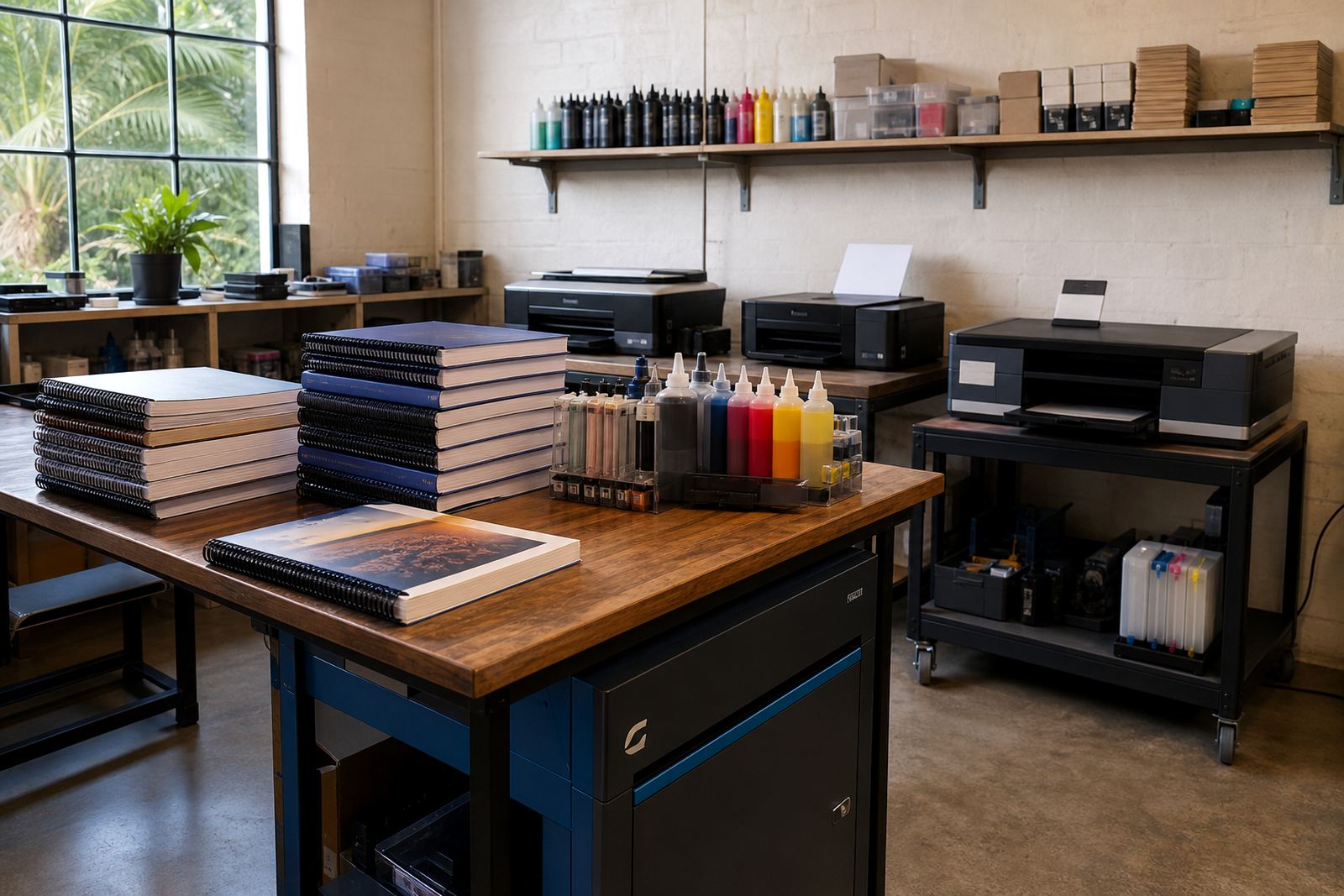
Bulk ink refill systems can reduce the stop-start cycle of replacing small cartridges in a busy practice. A continuous ink supply system keeps larger reservoirs connected to the printer, which helps when forms, letters and internal admin pages are printed in regular batches. Refills also become easier to track, especially where one person manages stationery and another handles front-counter printing.
The setup must sit neatly on the counter or beside the printer, with the ink bottles placed where they will not be knocked over. Tubing should not be pinched behind the unit, and the printer needs periodic nozzle checks so one colour does not dry out. Chip reset help, where the machine needs to recognise a refilled cartridge, is part of the practical side of the work. It keeps the printer from showing false low-ink warnings when the cartridge body is still usable.
- Keep refill bottles away from patient areas and open paperwork.
- Use the correct black and colour set for the machine model.
- Do a nozzle check before the practice gets busy for the day.
Layout choices for reception, records and back rooms
A medical practice layout affects how ink behaves in real use. A printer parked too near a sunny window may dry faster than one kept in a shaded corner. A machine placed on a wobbly trolley can shift alignment over time, especially when cartridges are changed often. In humid Durban weather, paper storage also matters because damp paper can curl and cause feeding trouble.
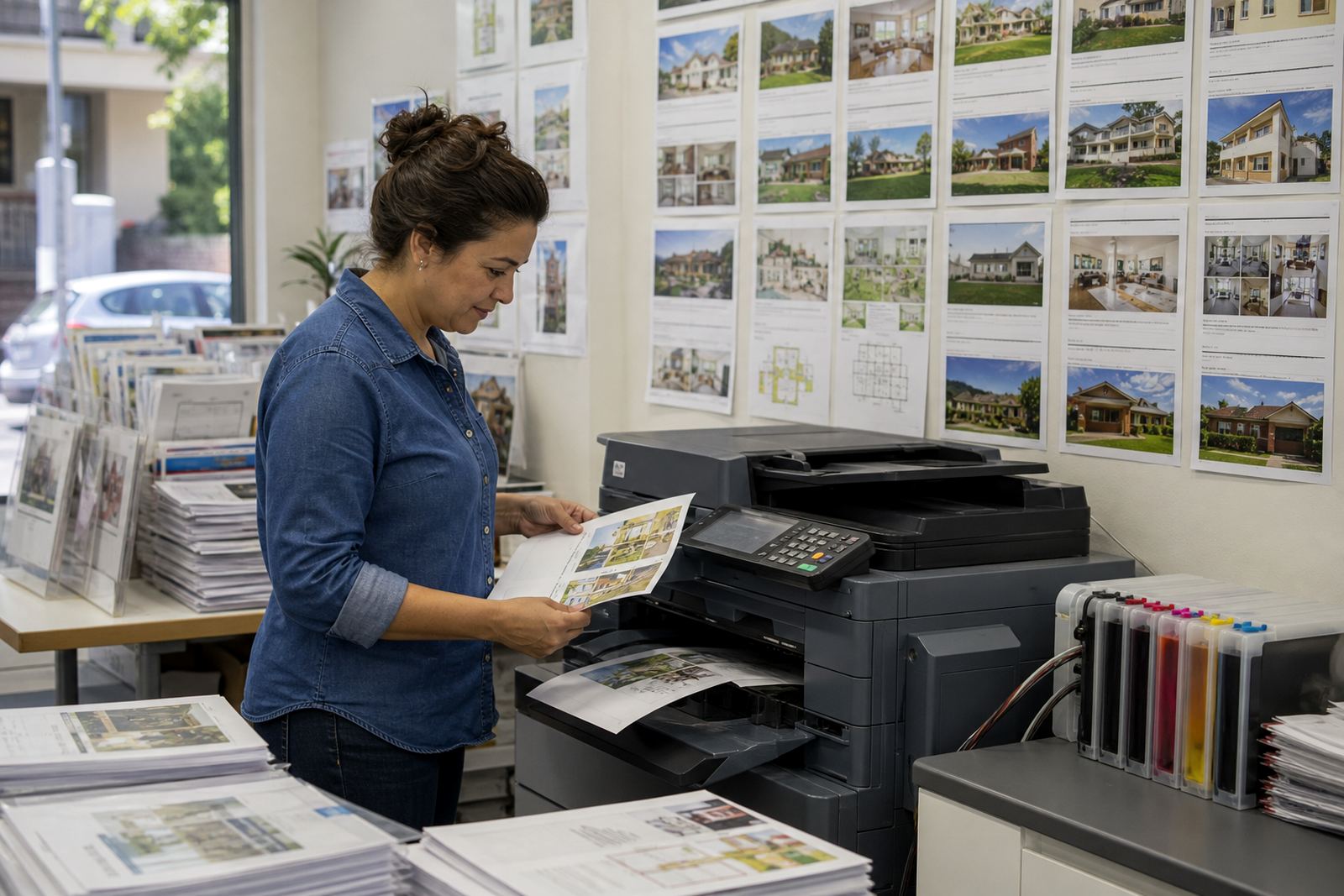
For practices with several consulting rooms, we usually look at who prints what. Reception may need quick black text and labels. A back office may need copies of letters, lists and stock sheets. If a practice handles wide-format print jobs for internal posters or larger notices, the printer set-up changes again and needs more careful colour handling. We also look at access for staff who refill, clear jams and replace empties, because awkward placement causes avoidable mistakes.
- Keep cartridges and refill bottles in a dry cupboard, not beside sinks.
- Leave enough space to open lids, change tanks and clean spills.
- Store paper flat in sealed packs when the air is damp.
Empty cartridges, waste control and the real budget range
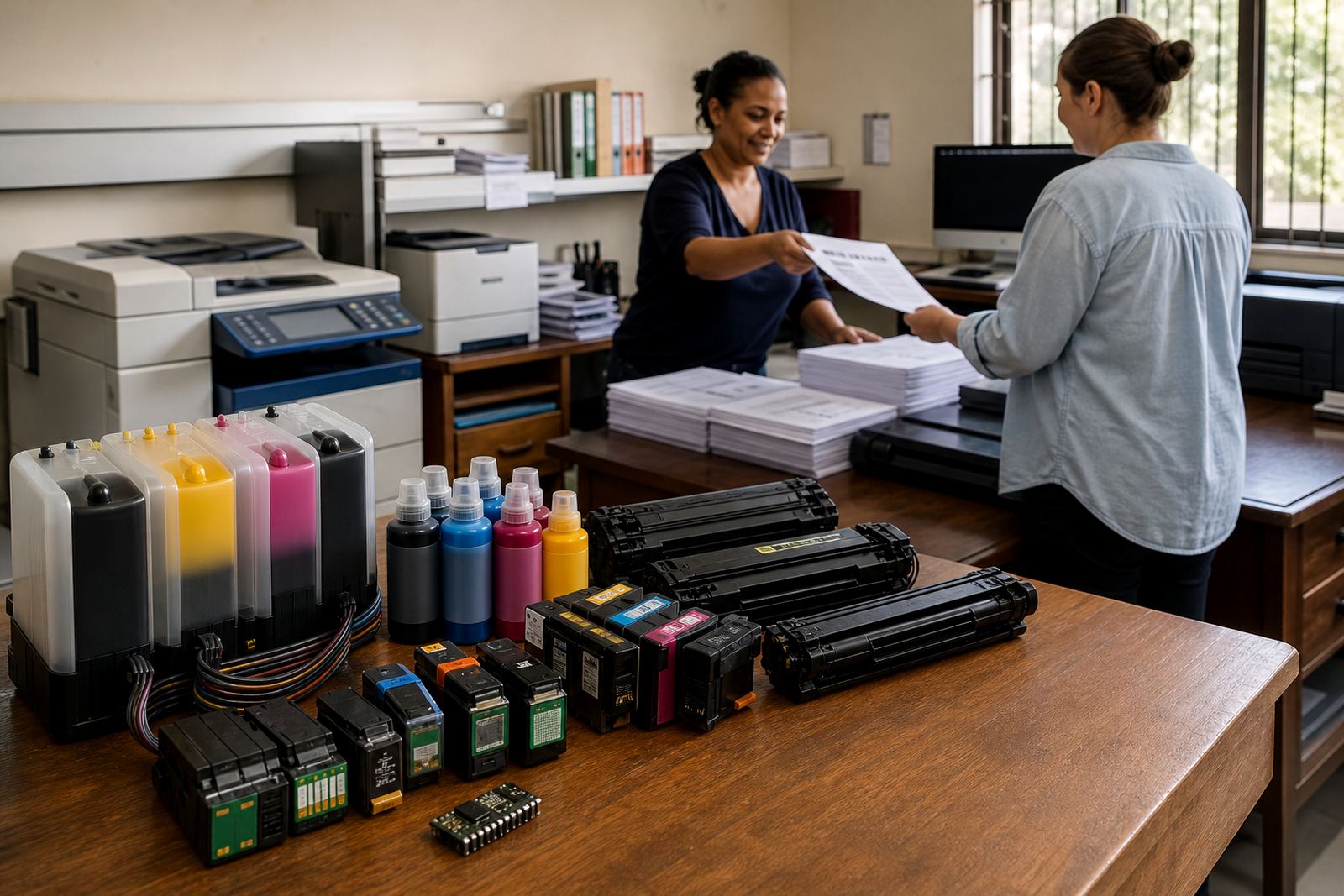
Most practices want lower running costs without turning the printer into a maintenance headache. Refurbished cartridges and refill systems help when the office prints enough pages to justify the change, but not enough to require a full commercial print contract. The budget depends on page volume, the type of printer, whether colour is needed and how many units sit in the building.
For small consulting rooms, a sensible monthly supply budget can start around Rand 600 to Rand 1 500 for mixed admin printing. A busier practice with several rooms, stock labels and patient handouts may sit between Rand 1 500 and Rand 4 000. Wider setups with multiple printers or a wide-format unit can move above that, especially where colour balance checks and extra maintenance are part of the work. Recycled empties should be kept in a clean return box so they can be handled properly instead of getting mixed into general waste.
- Budget more for colour, labels and wide-format documents.
- Keep a small reserve for replacement cartridges and cleaning items.
- Separate empty cartridges from ordinary office waste.
Common mistakes in busy practices
The most common problem is mixing the wrong ink with the wrong cartridge body. Another is letting one colour sit unused for weeks, then expecting it to print cleanly without a nozzle check. Practices also run into trouble when staff shake a cartridge roughly, overfill a tank or ignore small leaks until the tray under the printer is stained.
Remote troubleshooting helps when the printer reports a chip issue, a blocked nozzle or a colour shift that shows up on patient documents. Training matters as well, because reception staff are often the people who notice the first warning light. Clear routines for refill timing, leak checking and printhead care reduce wasted paper and save repeated reprints, which matters when records need to be neat and readable.
- Do not leave open ink bottles near forms or prescription pads.
- Avoid forcing a cartridge into a slot that does not match.
- Check alignment after any refill or cartridge change.
Working with the practice team and the courier route
InkEx works from Westville, Durban and supports practices across Durban, Pietermaritzburg, Johannesburg, Pretoria and Cape Town through courier delivery. That suits medical offices that need supply planning across several branches, or a single site that wants a steady stock run without overbuying cartridges. We also assist with operator training, so the people handling the printer know how to do the refill, the check print and the first look at a fault.
Our team includes Sibusiso Kotze, Ayesha Majola, Mandla Zondi, Lauren Naidoo, Johan Mabena and Nokuthula Mabuza, covering stock planning, dispatch, refill support and order handling. Practices in Westville, Hillcrest, Ballito and nearby areas often need a mix of cartridge refills, ink guidance and empty return planning. The aim is plain enough: keep the printer ready for patient forms, internal records and the small but important pieces of paper that move a practice through the day.
- Useful for single practices and multi-room offices alike.
- Courier delivery suits branch networks and central ordering.
- Refill planning helps avoid last-minute shortages at reception.