
Print rooms that carry a lot of photocopy-grade work
Training centres usually run harder on print output than they expect. Registration packs, learner notes, answer sheets, laminated dividers and classroom labels all land on the same queue. The result is less about one large order and more about constant top-ups, colour checks and a steady need for working cartridges.
Our work with offices, studios and learning spaces in Westville, Durban, and across South Africa focuses on keeping that stream moving with lower-cost ink choices. Refurbished cartridges suit centres that want an easier replacement cycle, while bulk ink systems fit sites that print in larger volumes and want to manage colour ink a bit more closely. Both options can cut waste where staff are throwing out empties that still have recoverable parts inside.
Typical equipment mix in a training centre
A training room often has one general office printer near reception, a second unit in the admin area and a higher-volume machine for class packs. Some centres also use wide-format printers for posters, wall charts and room signage. The older the fleet, the more useful it is to separate machines by task rather than pushing every job through one unit.
- Benchtop laser or inkjet printers for attendance sheets, notices and internal forms
- Refurbished cartridge printers for admin counters and tutor offices
- Continuous ink supply systems for bulk learner packs and repeated handouts
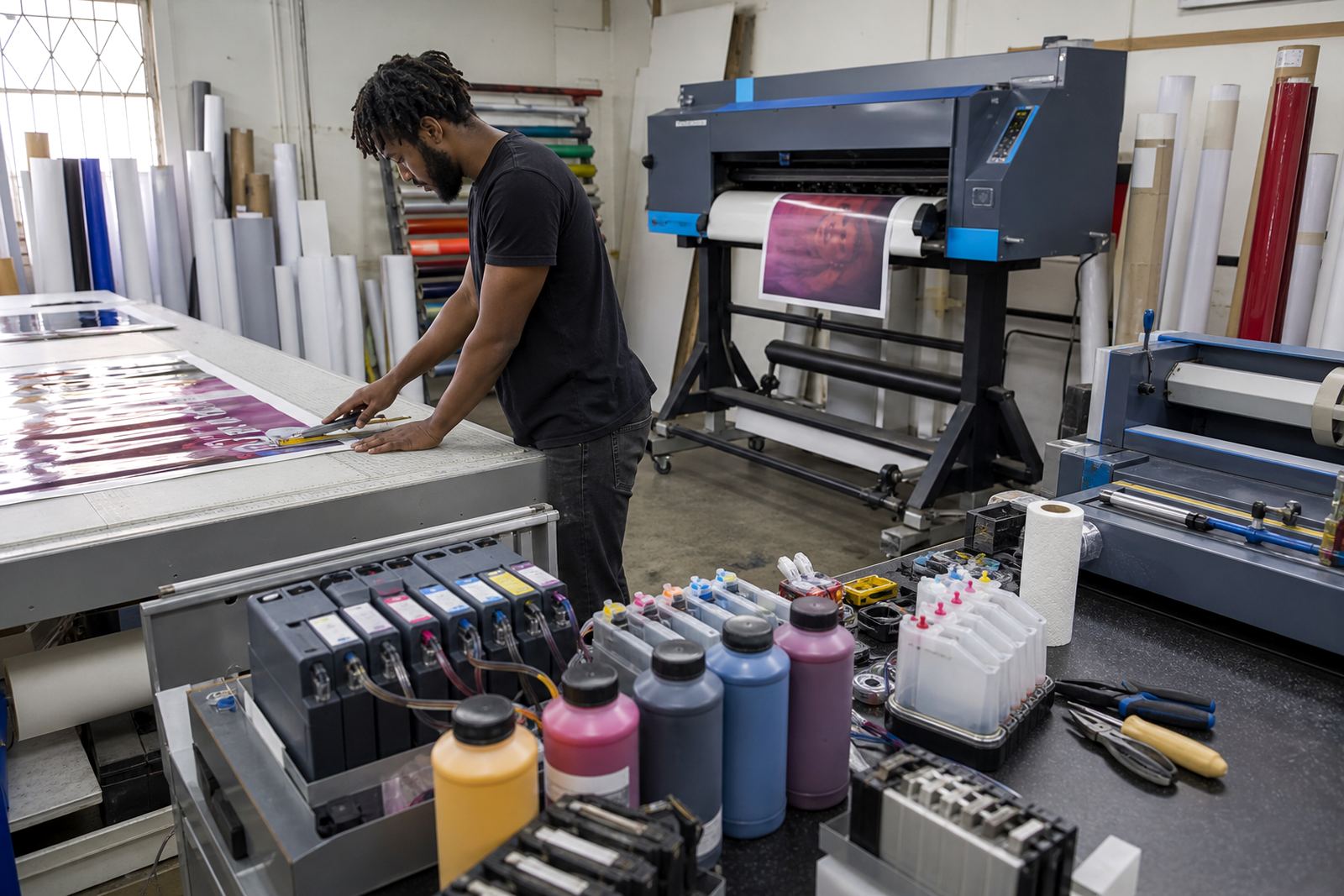
- Wide-format ink systems for posters, banners and presentation boards
- Colour units where charts, diagrams and badges must stay legible
For centres in humid coastal areas like Durban and Ballito, storage matters too. Cartridges and bottled ink should be kept sealed, upright and away from heat. If stock sits open in a cupboard near the window, dust and moisture can create clogs, weak colour or leakage around the contacts.
Layout and stock planning for busy term cycles
Training centres often have peaks at the start of a course, mid-term assessment blocks and the final print sprint before exams or portfolio hand-ins. A small stock plan helps avoid emergency changes when queues build. It also helps to keep black ink separate from colour stock, because many centres use black much faster than cyan, magenta or yellow.
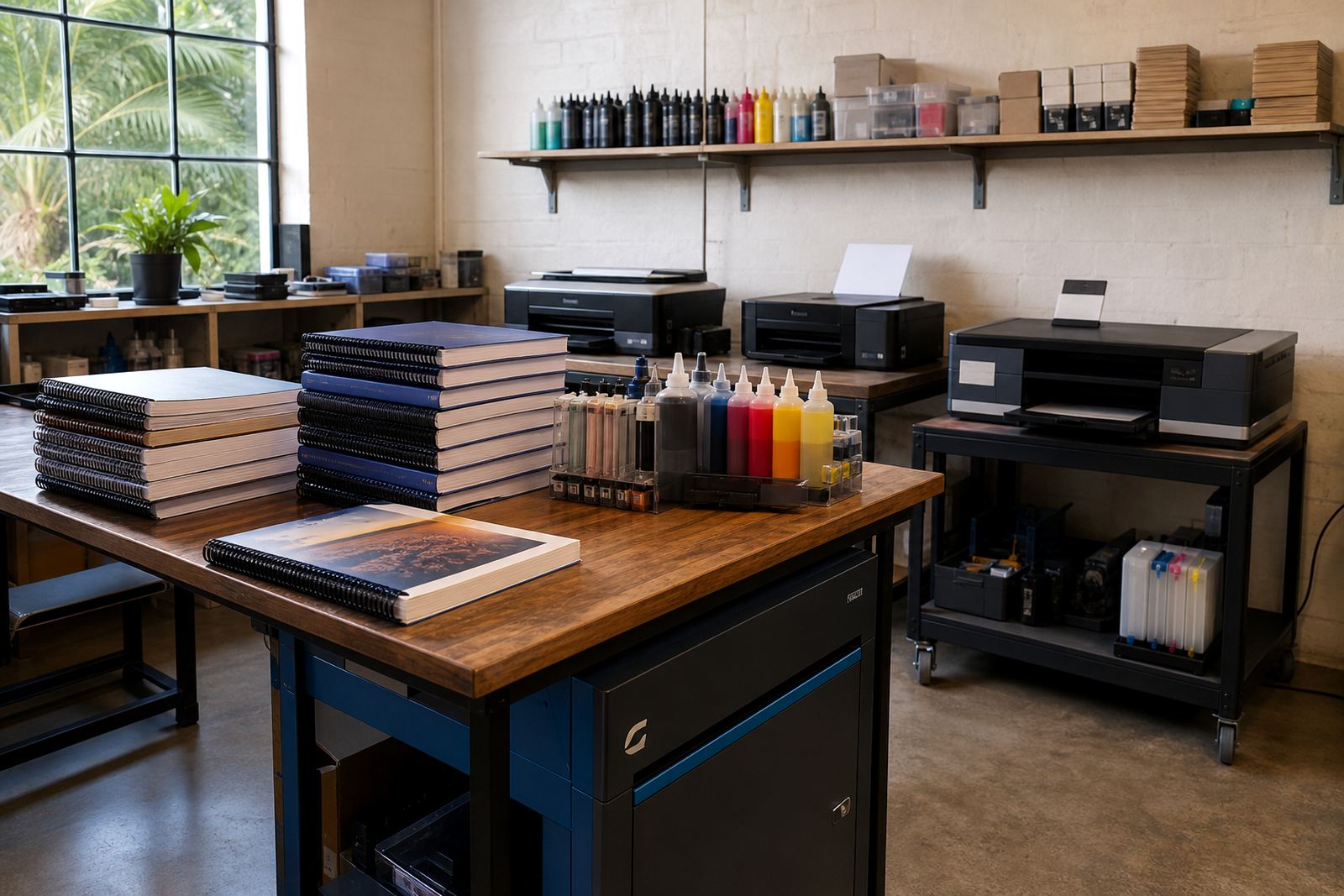
We normally suggest a simple layout: one area for live machines, one shelf for sealed spares, and one place for empties waiting to be returned or refilled. That separation keeps the work area cleaner and makes it easier to spot a leaking cartridge before it stains paper trays or a counter surface. Chip reset help can also be part of the plan where the printer flags a cartridge as empty before the actual ink is fully used.
- Keep one spare cartridge set per important machine
- Store refill bottles with caps tightened and labels facing forward
- Log which printer uses dye ink and which uses pigment ink
- Keep a nozzle check page near the printer for quick fault spotting
- Collect empties in a marked box for return or refilling
Common mistakes that waste ink and time
Training centres often lose money in small ways. A staff member swaps the wrong ink type into a machine, then the colour sits off or the printhead starts blocking. Another common issue is letting cartridges sit unused for months, which can dry ink in the nozzles and leave the machine needing extra cleaning. Repeated cleaning cycles use more ink than many people expect.
Some centres also mix up refill kits and cartridges meant for different print duties. Dye ink is often used for brighter colour work and internal sheets, while pigment ink is better suited to sharper text and pages that must hold up better to handling. The right choice depends on the printer and the documents being produced, not just the lower price on the bottle. If staff are unsure, a short operator training session usually saves more than it costs.
Leak checking matters as well. A cartridge that looks fine on the shelf can still leave smudges in the tray if the seals are loose or the carriage is not seated properly. A small issue handled early is usually cheaper than replacing paper, cleaning rollers and reprinting a full class set.
Budget ranges that make sense in Rand
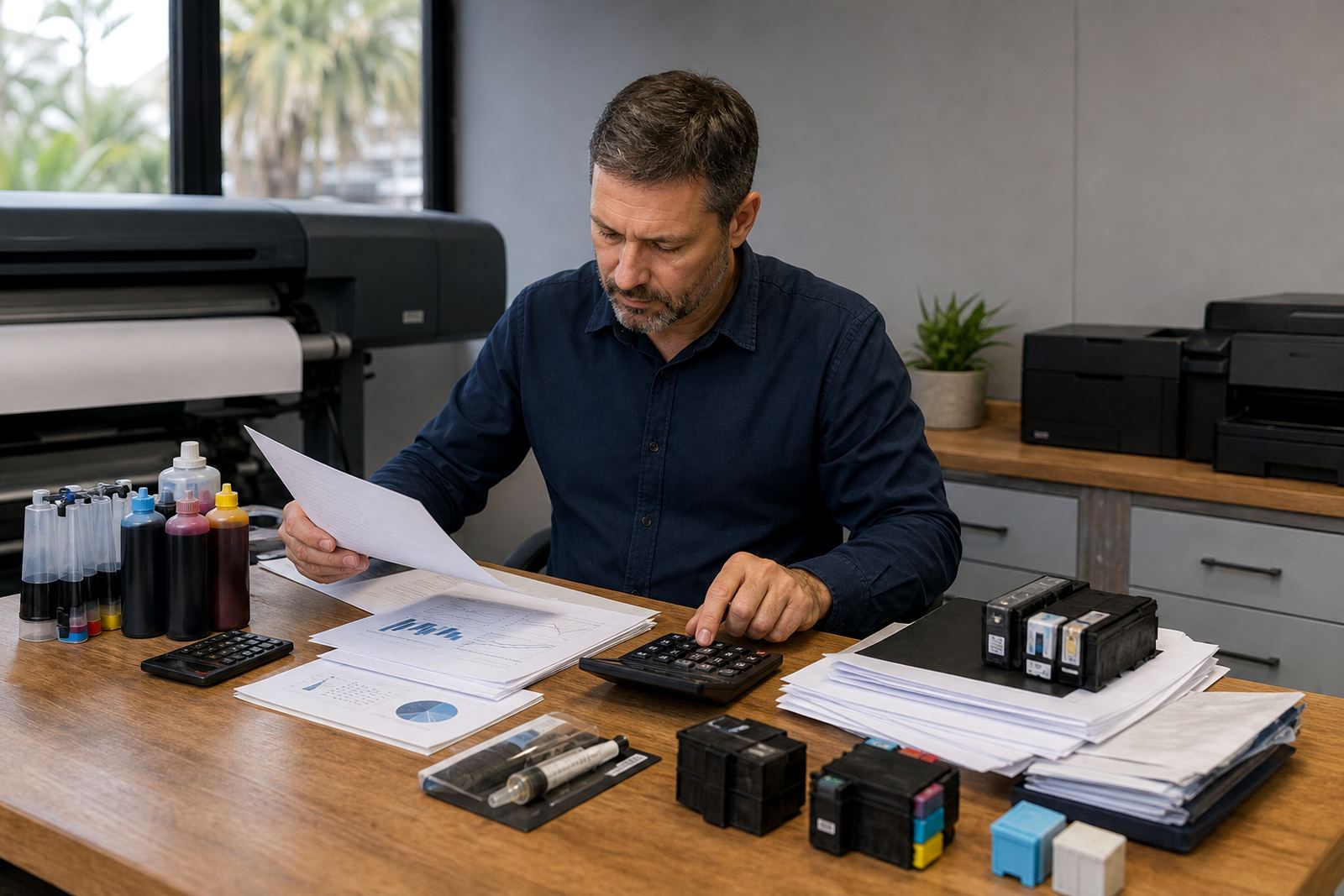
Budgeting for a training centre should be tied to usage, not guesswork. A small admin setup with one or two printers may only need an occasional refurbished cartridge order and a few bottles of ink for basic colour work. A larger training floor with multiple rooms, admin counters and poster printing will need more stock and a better refill schedule.
As a practical guide, entry-level cartridge refill or replacement work may sit in the lower hundreds of Rand per unit, while fuller bulk ink setups for a more active printer can move into the higher hundreds or low thousands depending on the machine, colour set and whether chip support is needed. Wide-format refill work usually sits higher again because the cartridges and ink volumes are larger.
Courier delivery across Durban, Pietermaritzburg, Johannesburg, Pretoria and Cape Town helps when branch managers need stock moved without sending someone across town. For centres with several branches, it often makes sense to standardise the ink plan so staff are not learning a different cartridge system at every site.
Refill advice that keeps the print room steady
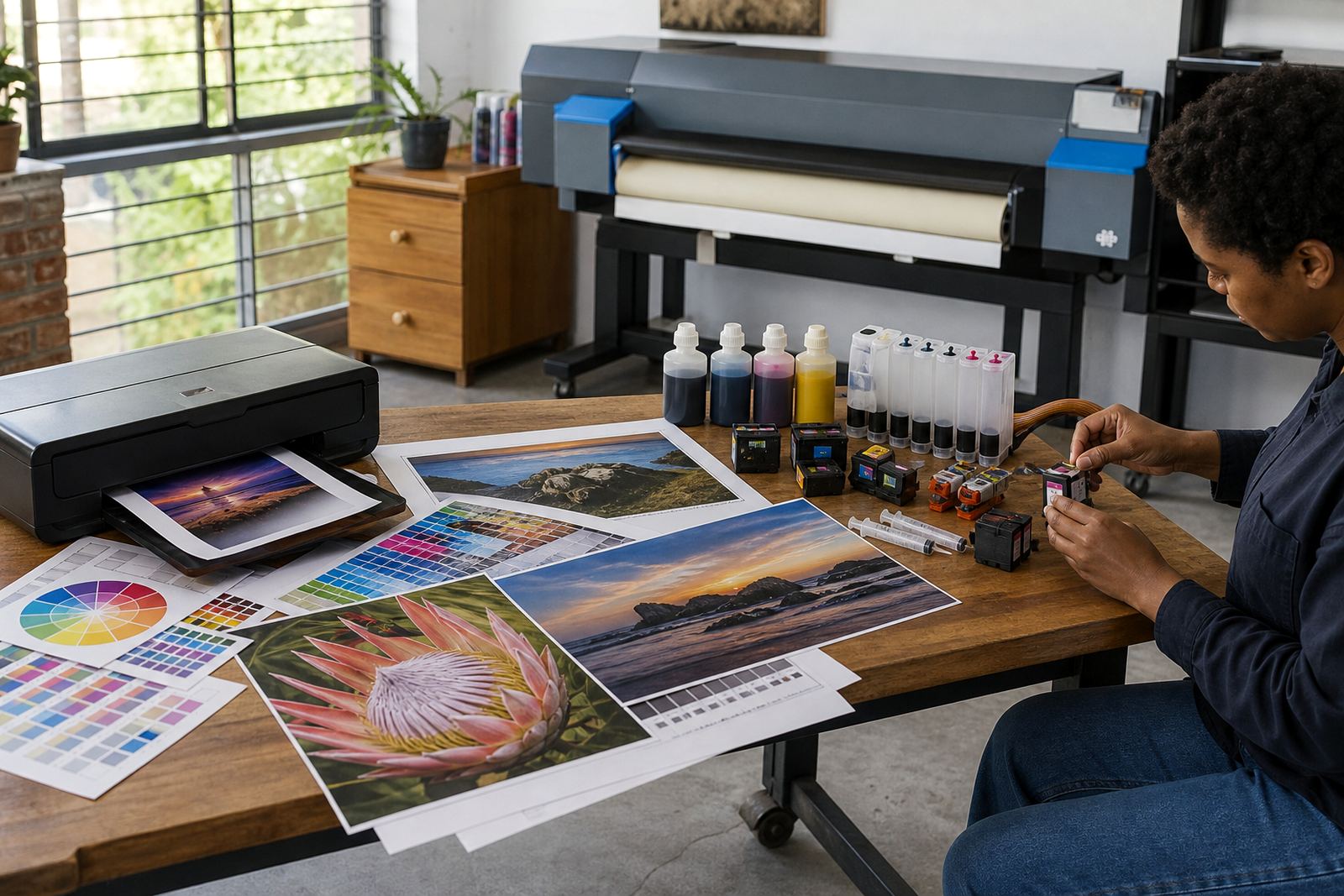
We support centres with cartridge refill advice, CISS setup help, printhead care, nozzle check support, ink type guidance, chip reset help, leak checking, colour balance help and empty return programmes. That support is useful where one printer is doing the heavy lifting for class packs and another handles colour handouts or signage.
Remote troubleshooting is often enough for routine issues such as faded lines, blocked nozzles, a cartridge not reading, or colour shifting after a long break in use. If the team understands how to test a nozzle pattern and when to stop cleaning cycles, the machine usually lasts better and the pages look cleaner. Our contact form is the easiest way for your team to share the printer model, the type of work being printed and the layout of the room.
For training centres, the aim is not fancy equipment. It is a sensible print setup that keeps learners supplied, keeps waste lower and keeps the admin side from getting buried under failed prints and half-used cartridges.