When the lab floor needs colour that behaves
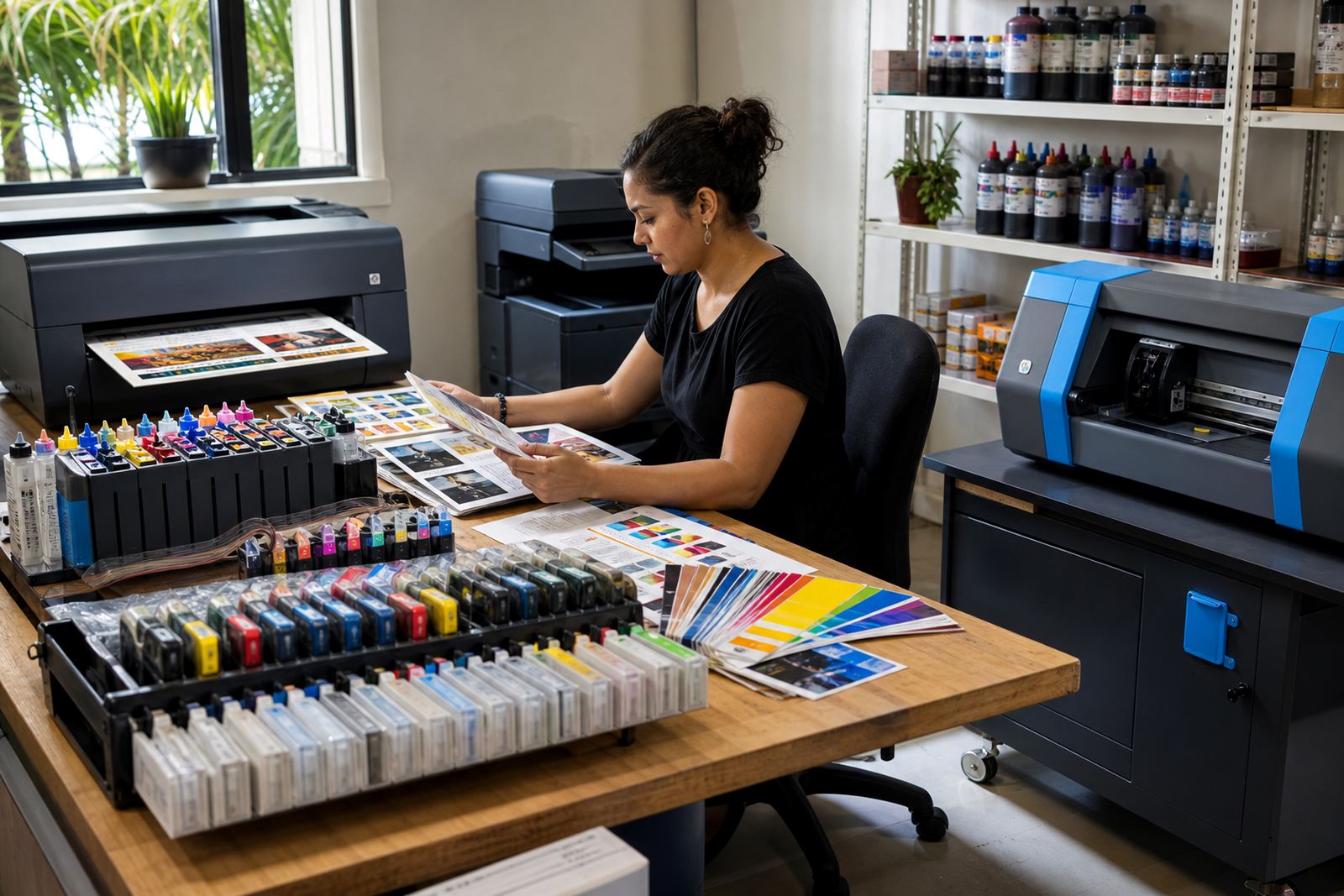
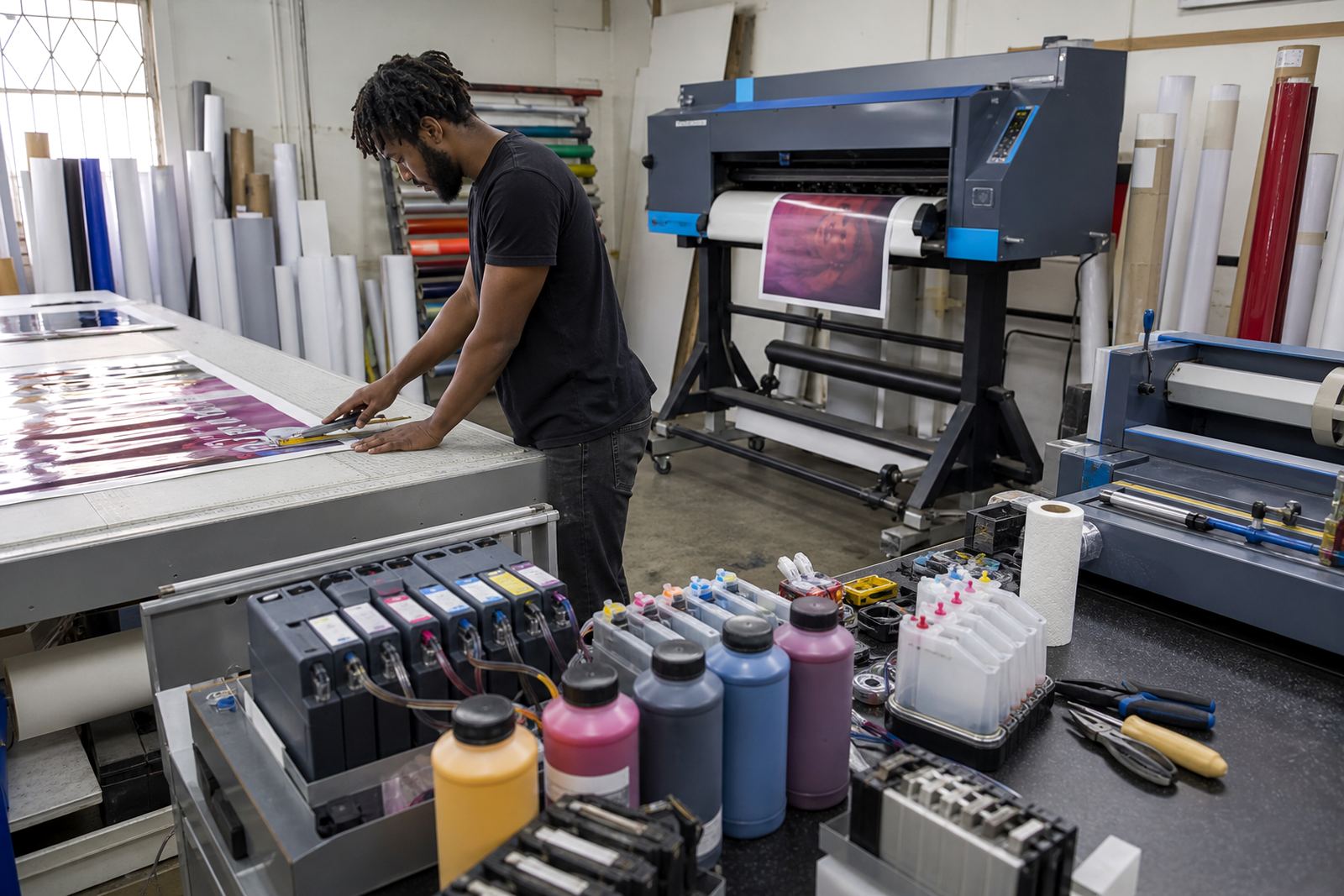
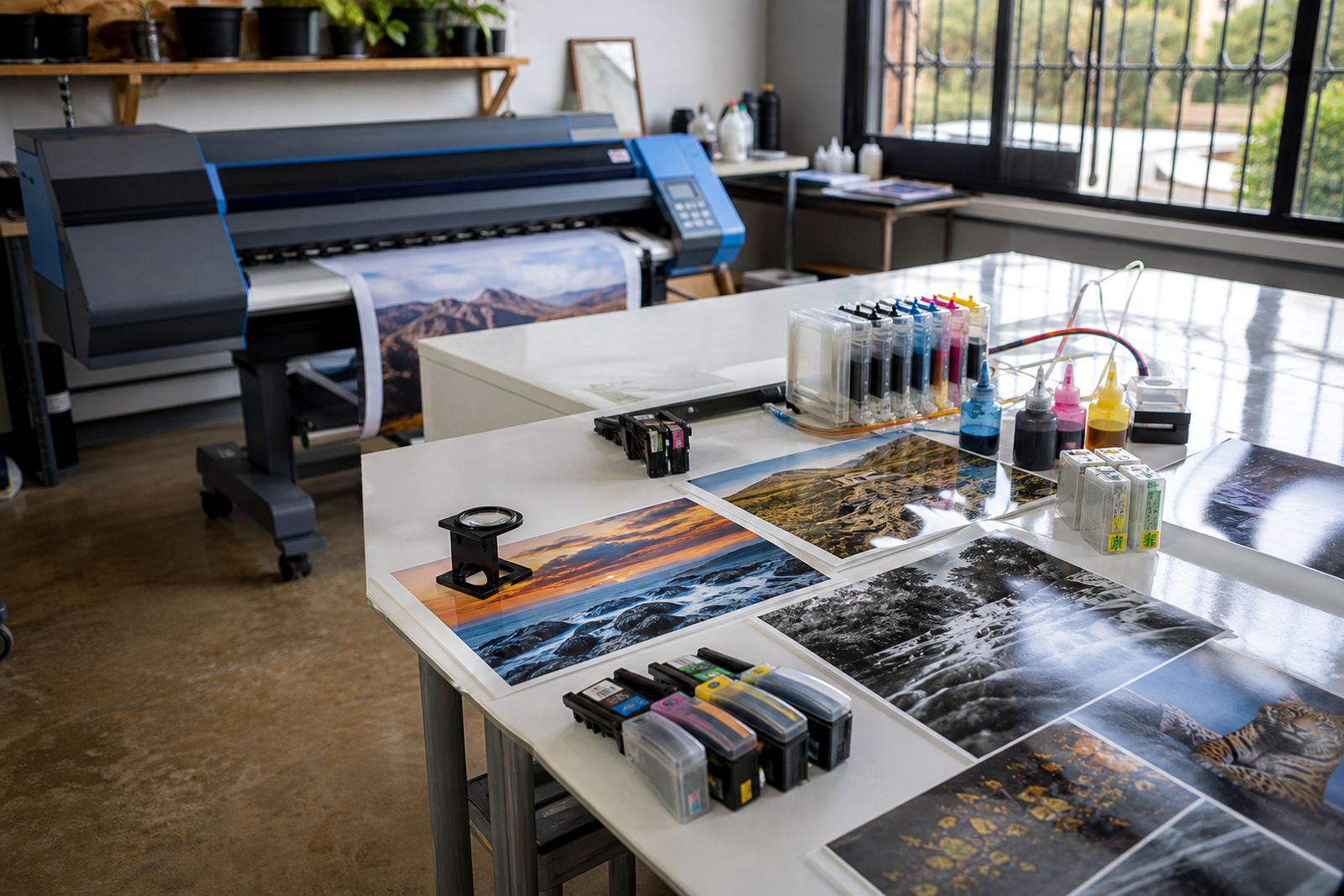
Photo labs usually work with a mix of benchtop photo printers, wide-format units for enlargements, and proofing devices sitting near finishing tables. The pressure comes when a job needs the same skin tone, shadow depth and paper response across several prints, not just one nice sample.
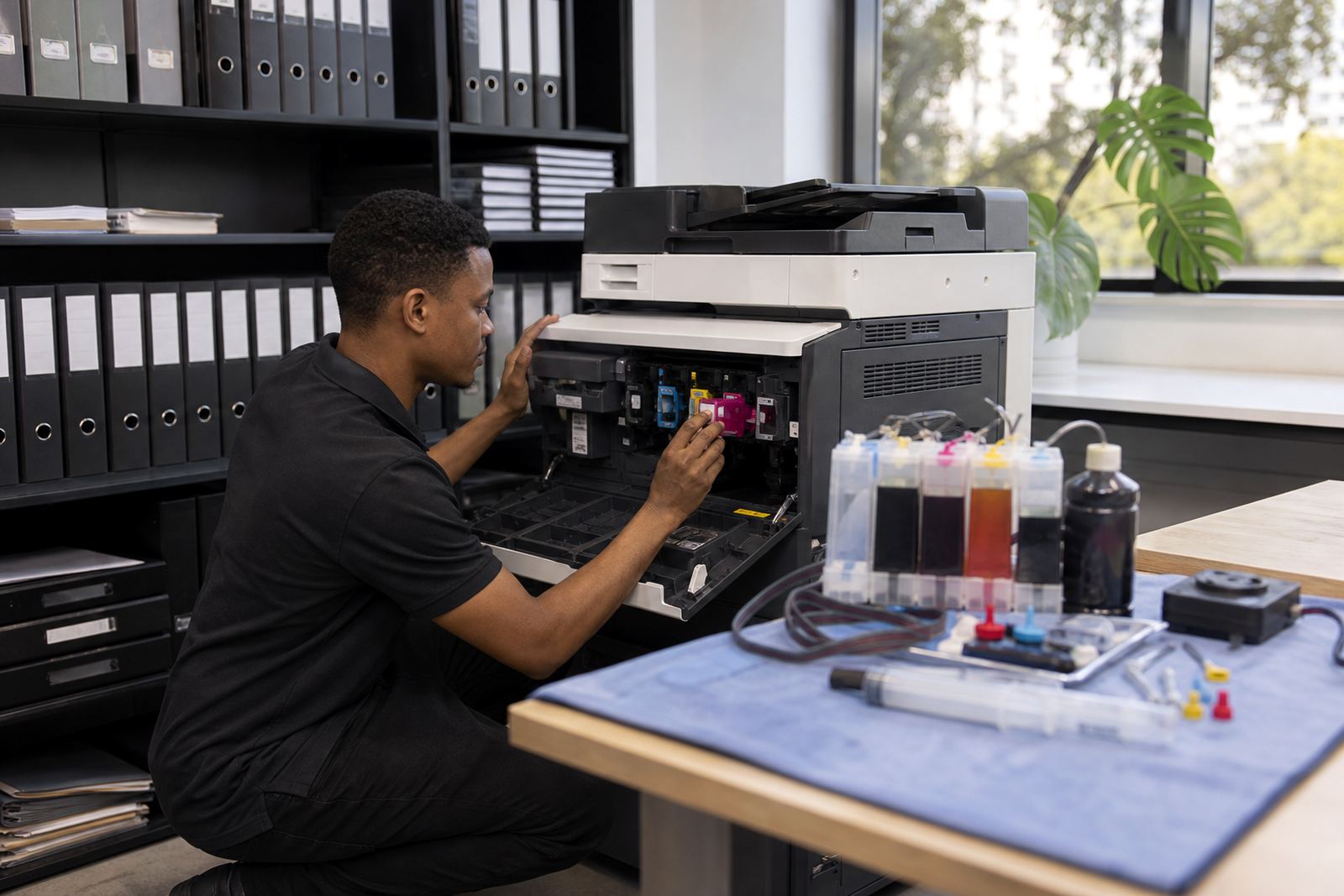
In that setting, refurbished cartridges can be a sensible way to keep a printer in service without buying a fresh set every time. They suit labs that print often, track waste closely, and want a lower-cost route for routine output. Bulk ink systems can also help where the printer runs daily and the operator needs larger fill volumes for proofing, contact sheets or poster work.
- Single-photo printers for orders at the counter
- Wide-format units for A3, A2 and roll-fed work
- Dedicated machines for matte and gloss stock
- Back-up printers used when a main unit is under cleaning or maintenance
Ink choices that affect the final print
Ink type matters more than many labs expect. Dye ink often gives bright colour and strong saturation on the right coated papers, while pigment ink is usually preferred where longevity, sharper text edges and better water resistance are part of the brief. The paper, the print setting and the printer model all play a part, so the same file can look slightly different from one setup to another.
For image-heavy work, the main task is matching the ink to the paper and the job type. A portrait printer used for albums may need a different approach from a machine that handles proof sheets, art reproductions or exhibition prints. Refilling only works well when the head stays clean and the ink path is handled properly, otherwise colour shifts and banding start showing up. A little care here saves a lot of paper.
Where a continuous ink supply system is fitted, the tanks must sit level and the tubes need enough slack for normal carriage movement. When that part is rushed, bubbles enter the line and the printer starts missing colours or pulling uneven blocks across the page.
A useful equipment mix for a busy photo counter
Many labs run a small group of machines rather than one all-purpose printer. That gives better control over turnaround and reduces the risk of every job waiting behind the same fault. It also helps when one unit uses pigment black for sharp labels or notes while another handles colour-heavy output on coated stock.
- Refurbished cartridges for office-style photo printers
- Refill kits for high-use benchtop units
- CISS setups for repeat printing on one model
- Chip reset help where the cartridge system allows it
- Nozzle check support before larger runs
- Leak checking around tanks, caps and tubes
For labs in Westville, Durban and across Pietermaritzburg, Johannesburg, Pretoria and Cape Town, courier delivery keeps stock moving without having to send staff across town for one missing colour. That matters when a single empty cyan or magenta cartridge can stall a whole day of printing.
Planning the layout so refills stay tidy
A photo lab needs clear movement between printing, checking and packing. Ink storage should stay away from direct sun, open windows and loose solvent bottles, especially in coastal air where humidity can make packaging soft and labels peel. Keep the refill area close to the printer but separate from dry paper stock, because one spill on coated sheets can ruin a stack fast.
Operators also need a stable place for bottles, funnels, syringes or filling tools, plus waste containers for used seals and empties. When empty cartridges are returned through an empty return programme, the lab cuts down on clutter and avoids mixing reusable items with general refuse. That is helpful in a tight studio where every shelf already has paper, mounts and proof books on it.
A practical layout also leaves room for colour notes, job slips and cleaning cloths. If the refill point is cramped, people work too close to the machine and start nudging damp parts or knocking dust into exposed openings.
Common mistakes that show up in the print tray
The most common trouble starts with the wrong ink in the wrong cartridge body. A dye blend in a system meant for pigment can upset colour balance, while a poor-quality refill can leave the nozzle pattern uneven. Another mistake is overfilling, which often leads to leaks inside the carriage or onto paper guides.
Some labs also skip printhead care until the machine begins missing lines on key jobs. By then, the cleaning cycle is doing more work than it should and the ink bill climbs. It is better to check the nozzle pattern regularly, especially after a quiet period or after changing ink. Small habits matter in a lab where colour accuracy is measured against customer expectations, not theory.
- Do not mix incompatible inks in one system
- Keep refill tools clean and clearly marked
- Watch for air in tubes after transport
- Check cartridges for cracked seals or warped bodies
- Run a nozzle check before important runs
Budget ranges that make sense in rand terms
Budgeting for a photo lab usually starts with the printer count, the ink type and how hard the machines are worked. A set of refurbished cartridges for a benchtop printer sits in a very different range from a full CISS conversion or a refill programme for several wide-format units. The best spend is often the one that keeps the printer running cleanly without constant emergency purchases.
For planning purposes, small refill kits and cartridge services may sit in the lower hundreds of Rand, while a more involved setup with tanks, tubing and fitting support can move into the low thousands depending on the machine. Larger photo and wide-format workflows need a separate stock plan for black, cyan, magenta and yellow, plus any speciality inks the lab uses for proofs or art prints. That avoids the false economy of running out mid-job and paying extra to patch the order.
Operators who print daily often do better with a planned stock cycle than with ad hoc buying. It keeps the shelf organised, reduces panic orders and gives the team a clearer view of what is used by month end.
Training the people who actually touch the ink
Good equipment still needs steady hands. Operator training helps staff handle refill steps, recognise a blocked nozzle pattern, and spot when colour balance is drifting. It is also useful for teams that split duties between counter work, printing and dispatch, because the person filling a cartridge is not always the same person who checks the final print.
InkEx supports photo labs with cartridge refill advice, CISS setup help, printhead care, nozzle check support, ink type guidance, chip reset help, leak checking, colour balance help, stock planning help, remote troubleshooting and operator training. Those services suit office photo counters, studios and wide-format print rooms that need practical guidance rather than guesswork.
Our Westville, Durban base supports local collection planning and courier delivery across South Africa, with teams in Durban, Ballito and Hillcrest often needing the same kind of day-to-day stock control as larger city labs. The work is less about big promises and more about keeping colour steady, paper clean and the printer ready for the next batch.