
When the shop is printing for a busy floor
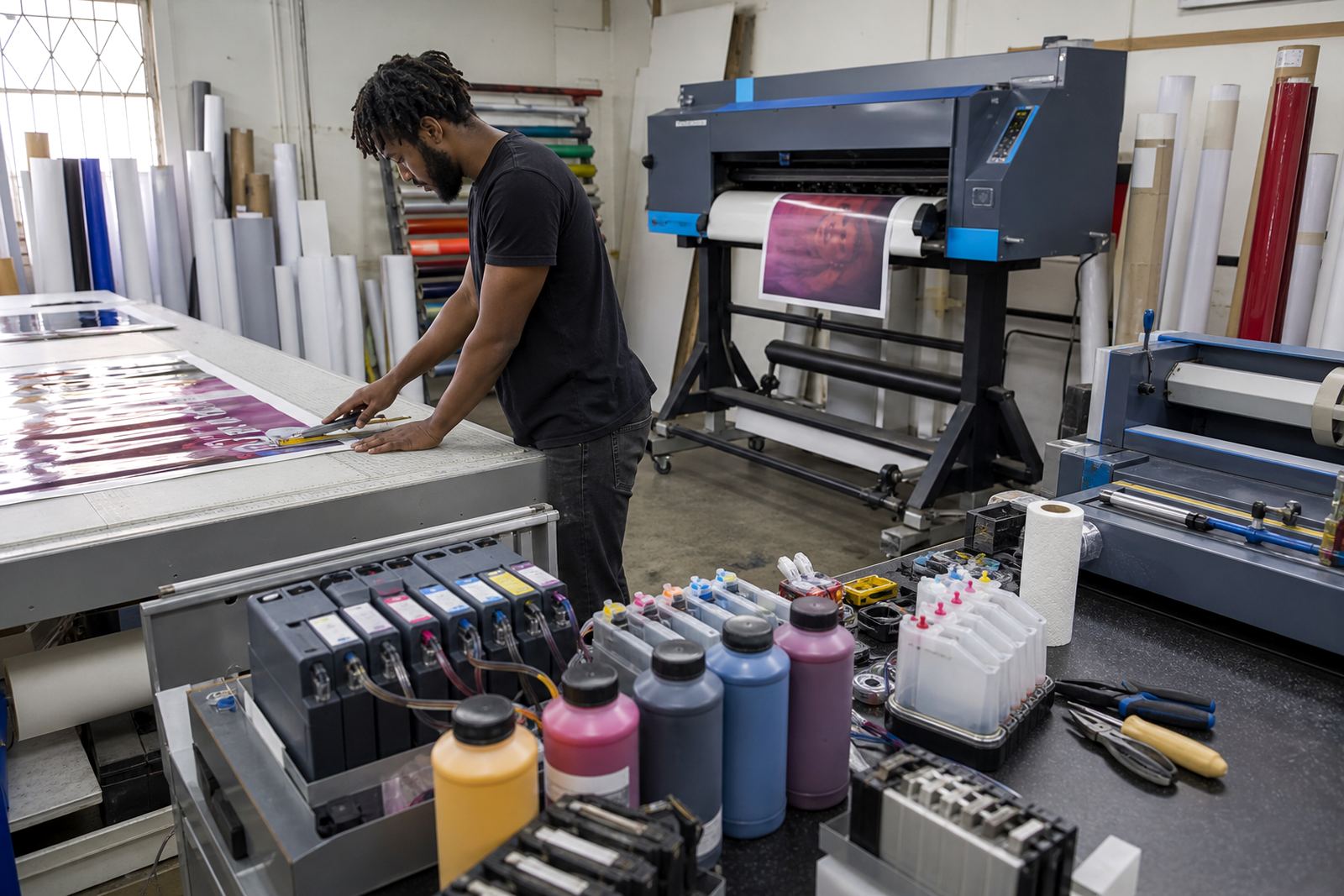
Signage shops do not run like casual home printing. A week can include short poster runs, window graphics, menu boards, mounted display sheets and last minute reprints when a colour does not match the brief. That means ink needs to stay steady across long sessions, not just look fine on a sample page.
Our work with signage teams usually starts with the machine already in use, the paper or vinyl being printed, and the colour finish expected by the client. Some shops rely on refurbished cartridges for mixed office and print output, while others move to bulk ink refill systems where the same printer handles repeated jobs through the day. Both paths can keep running costs lower if the ink type and care routine suit the machine.
- Refurbished cartridges suit smaller to medium output where quick swaps matter.
- Bulk ink systems suit repeat printing, especially where one machine stays busy.
- Colour work needs clean nozzles, stable ink flow and the right ink family.
- Waste builds up fast when empties are not returned or reused properly.
The machine mix that shows up in signage rooms
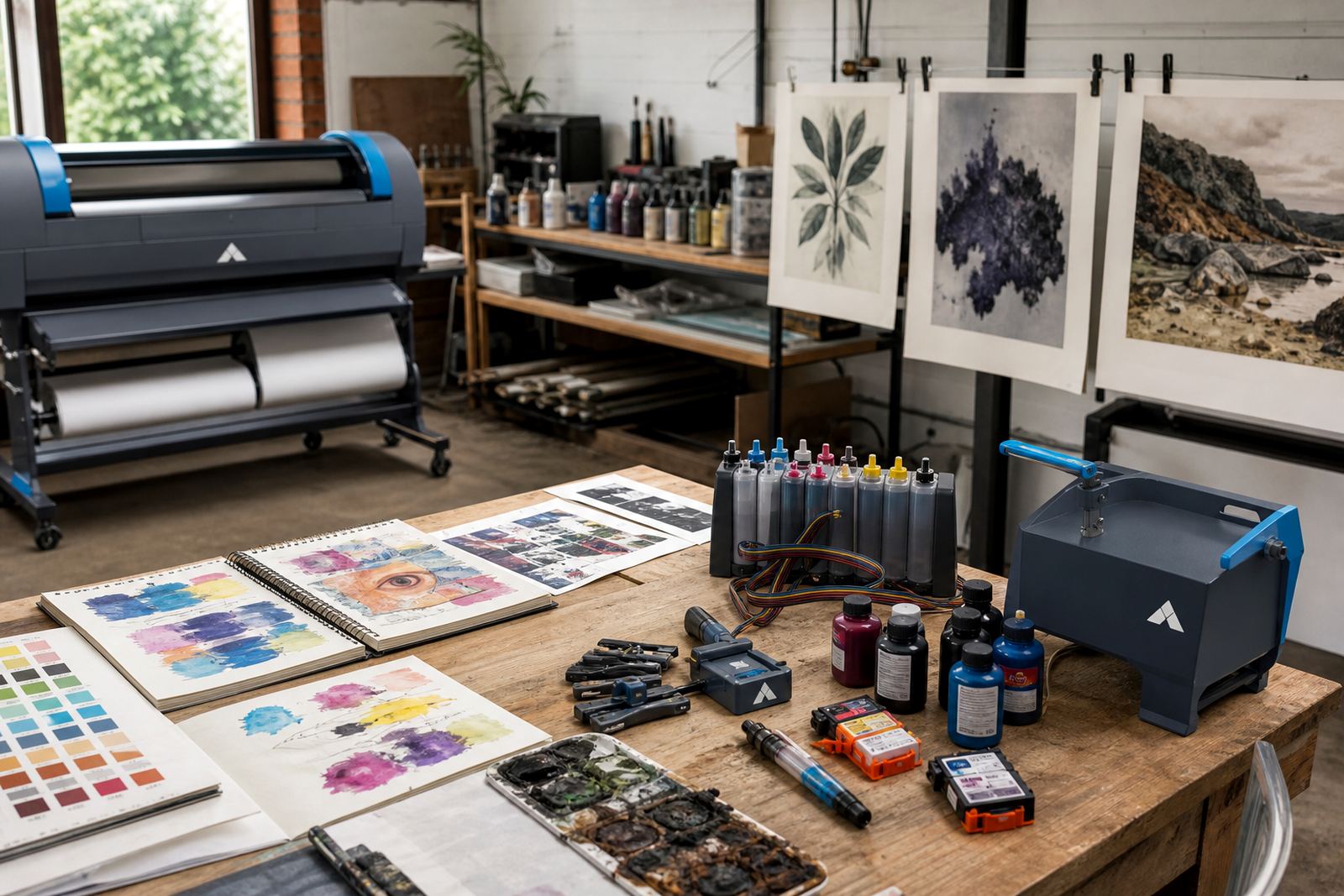
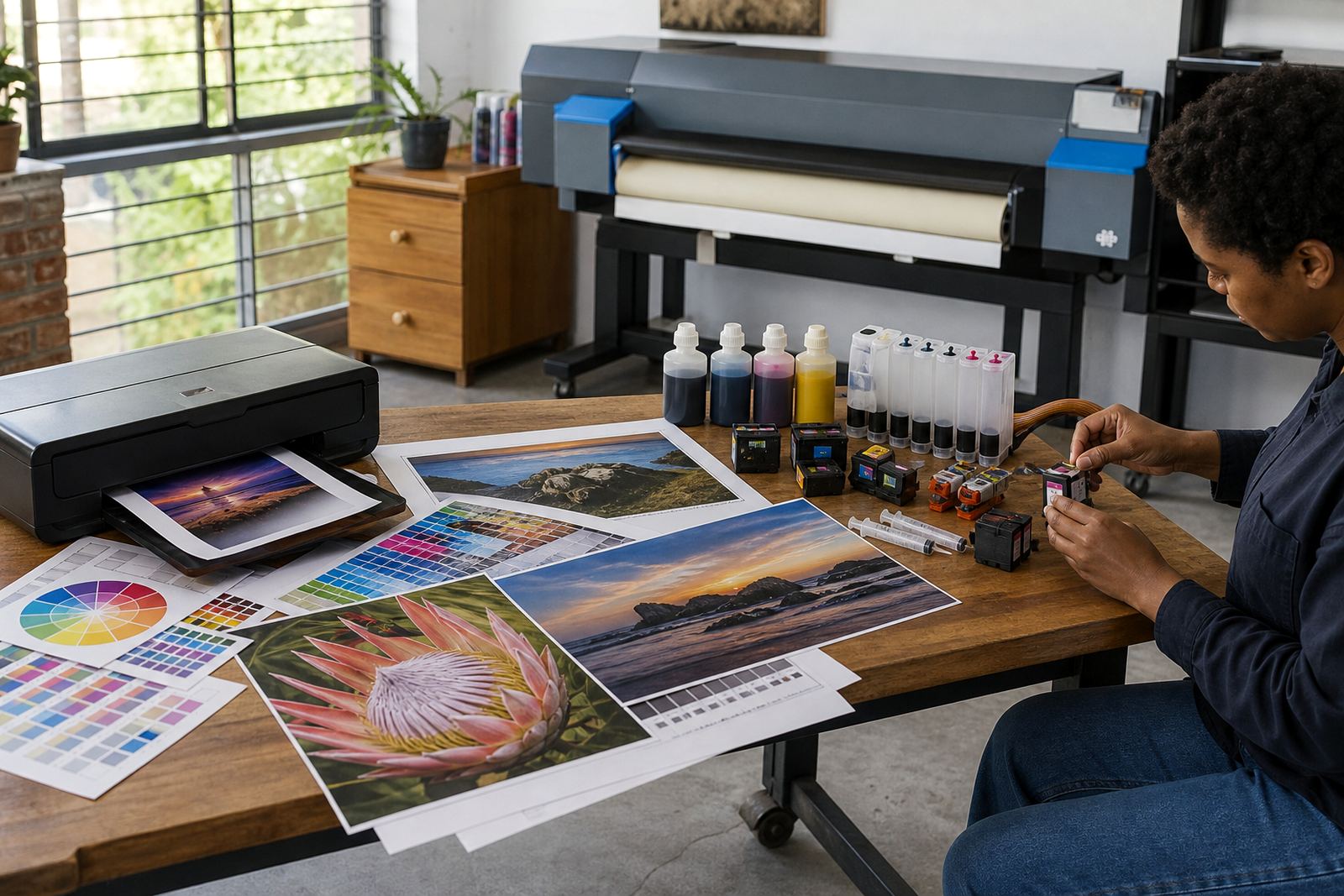
In a signage shop the equipment list often includes benchtop inkjet printers for proofs, wider format printers for posters and display graphics, and a separate machine for admin printouts. Some teams print on coated paper, others on matt stock or photo paper, and that changes how ink lays down. Pigment ink is often preferred where sharper text and stronger water resistance matter, while dye ink can be used where brighter colour and smoother blending are more useful.
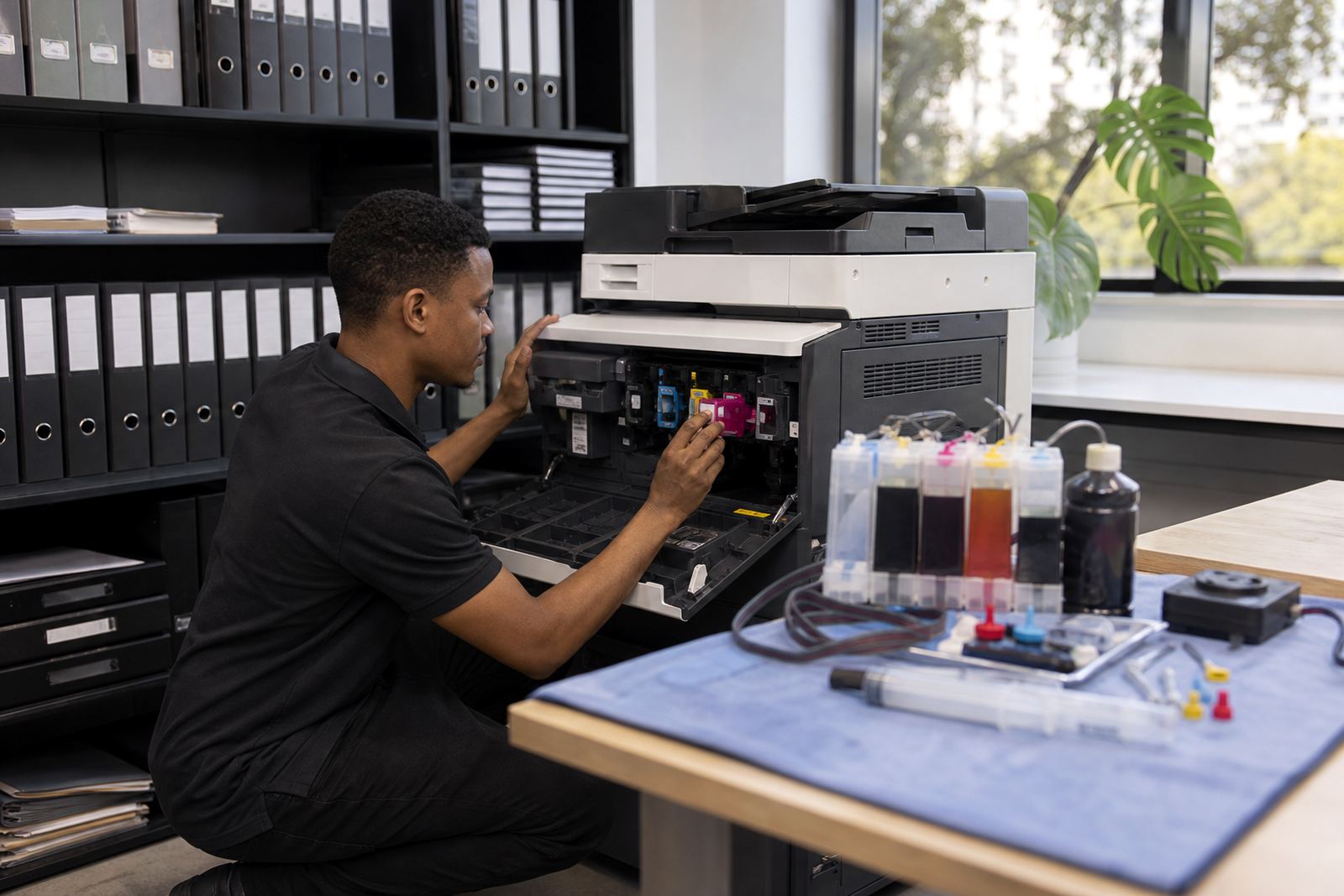
We also see cartridge chips, resetters, ink lines, dampers and printheads needing attention in different combinations. A refill system that looks neat on day one can still misbehave if the tubing is kinked, the bottles sit at the wrong height, or the printer is left idle long enough for ink to thicken at the nozzles.
- Wide-format work needs stable feed lines and clean priming habits.
- Proof printers need consistent colour, not only low running cost.
- Mixed use rooms should separate daily print stock from the main production machine.
- Chip resets and cartridge recognition must be handled without forcing the system.
Layout habits that save a shop from mess
Good layout matters because signage work is usually done in a tight room with cutters, rolls, blades, laminating tables and paperwork all sharing the same space. Ink bottles should stay upright and labelled, with a clear shelf away from cutting dust and solvent fumes. Empty cartridges and used bottles should also have a set return point, so they do not end up scattered near the printer or in the packing area.
For Westville and surrounding Durban shops, humidity can affect how paper stock behaves and how long open consumables stay tidy. That makes printhead care a normal part of the day rather than a rescue job after damage has already happened. A quick nozzle check, a short clean where needed, and the habit of capping refills properly can keep the output more even.
- Keep refill bottles away from direct sun and cutting debris.
- Store empties in a marked tray for collection or return.
- Do nozzle checks before long poster runs, not only after faults appear.
- Leave room for clean hands, labels and a rag, because spills happen.
Common mistakes that turn into extra cost
One of the biggest mistakes is treating every cartridge or bottle as if it behaves the same. A wrong ink type can leave colour flat or weak, and a rushed refill can introduce bubbles that interrupt flow. Another common issue is ignoring the first warning signs, such as banding, missing lines or a colour cast that keeps drifting from one run to the next.
We also see shops overfilling cartridges, using the wrong reset method, or leaving a printer unused until the nozzles dry out. When that happens, the cost is not just the ink. There is also wasted paper, time spent reprinting, and sometimes a head clean that should never have been needed in the first place. A little operator training usually cuts those mistakes down fast enough to notice in the month.
- Do not mix ink types unless the printer path is made for it.
- Do not top up to the brim if the cartridge needs air space.
- Do not ignore streaks that appear on the first few sheets.
- Do not store refills loose in the same drawer as blades and tools.
Budget lines that make sense in Rand
For signage shops, budget planning usually falls into a few clear bands. Refurbished cartridges are often the lower entry point when a printer is used for mixed tasks and stock needs to stay flexible. Bulk ink systems take a bigger first step, but they can reduce the cost per print where output is steady and the machine is used often. The right call depends on how many posters, proof sheets and indoor display jobs move through the room each week.
As a working guide, many smaller shops plan for a few hundred Rand at a time for cartridge refreshes or refill supplies, while a fuller bulk ink setup can move into the low thousands depending on the printer and line arrangement. Wide-format work can sit higher because the machine size, ink volume and support parts are different. We keep the discussion tied to the actual printer, the daily print load and the type of signage being produced, not to a one-size-fits-all figure.
- Small proofing setups often start with lower Rand spend and lighter stock needs.
- Busy poster rooms usually need a larger ink reserve and better monitoring.
- Wide-format printers can justify a bigger setup where runs are constant.
- Empty return and recycling habits help reduce waste, and save shelf space.
How the Westville team handles the moving parts
InkEx works from Westville, Durban with support for offices, studios and print rooms that need help beyond a simple cartridge swap. Sibusiso Kotze oversees the business, with Ayesha Majola on operations, Mandla Zondi on refill work, Lauren Naidoo handling customer support, Johan Mabena coordinating courier dispatch, and Nokuthula Mabuza managing accounts and orders. That structure helps when a signage shop needs stock planning, chip reset help, colour balance guidance or remote troubleshooting for a machine that has started acting up.
Courier delivery reaches Durban, Pietermaritzburg, Johannesburg, Pretoria and Cape Town, with support also available for nearby areas such as Ballito and Hillcrest. When a shop needs to compare refurbished cartridges with a bulk ink route, or wants refill advice for a printer already in use, our contact form is the easiest place to send the printer model and the problem description. The aim is to keep the supply line practical, tidy and suited to real signage work.
- Refill advice helps match the ink to the job and printer path.
- Printhead care and nozzle checks protect output quality.
- Leak checking matters when bottles, tubing or cartridges have been moved.
- Operator training helps the whole room work from the same routine.