
Six channels, more control over the print
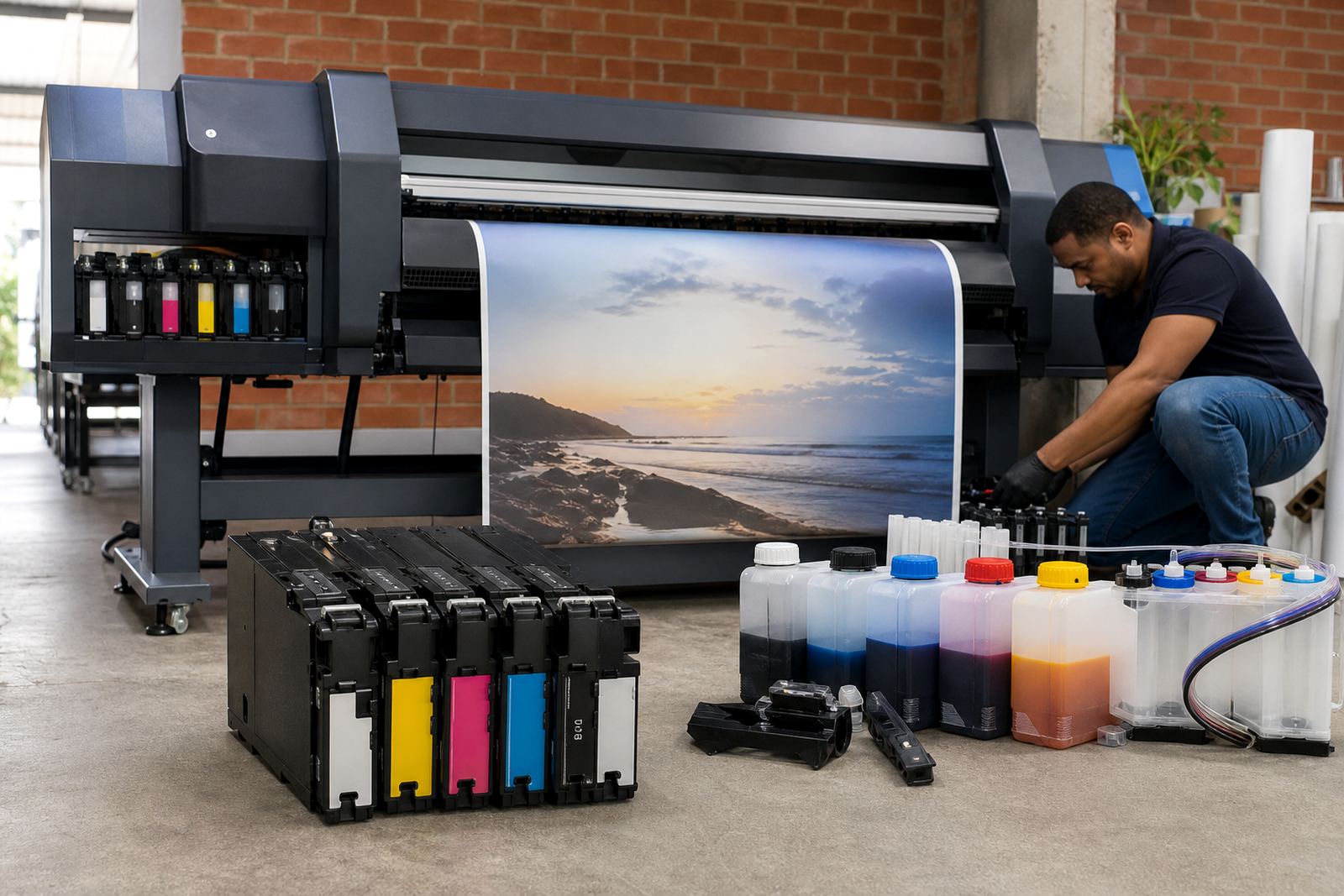
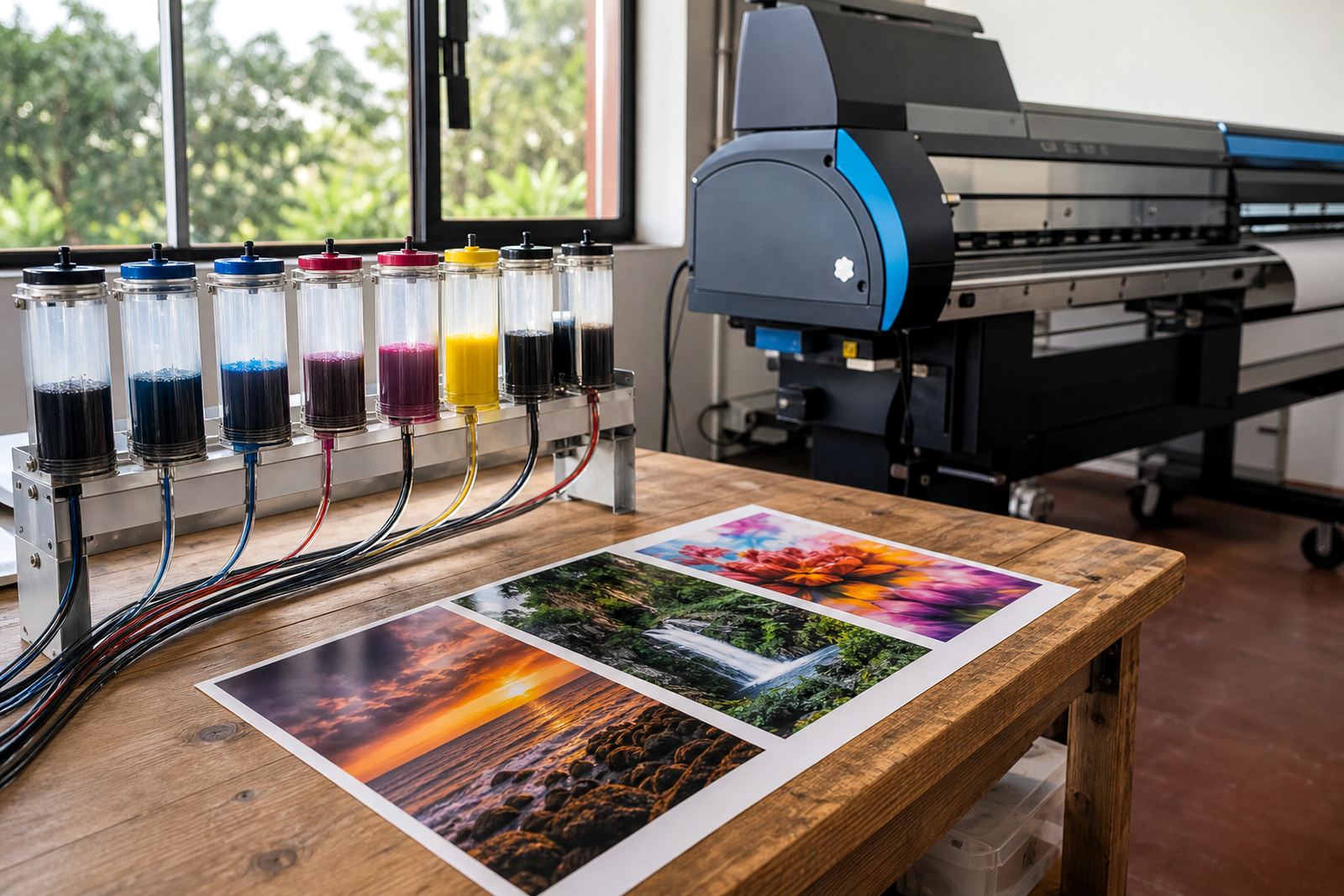
A six-colour bulk ink setup feeds six separate tanks or refill points, usually for cyan, magenta, yellow, black and two extra light or photo tones depending on the printer family. That extra pair helps soften banding and gives smoother gradations in posters, proofing sheets, art prints and photographic output.
For offices and studios in Durban, the main benefit is control. You are not pushing one dark mix to do all the work. The printer can build colour with smaller steps, which is useful on faces, pale skies, soft packaging artwork and fine detail where heavy ink can look harsh.
We supply six-colour ink for compatible continuous ink supply systems and refill-based cartridges. The ink type must match the machine and the kind of work being printed. Dye ink tends to suit bright indoor graphics and photo work, while pigment ink is often selected where sharper text, better edge hold and stronger water resistance are needed. The wrong fill can clog a line or leave colour looking off, so the fit matters as much as the bottle.
Pack sizes and setup choices that matter
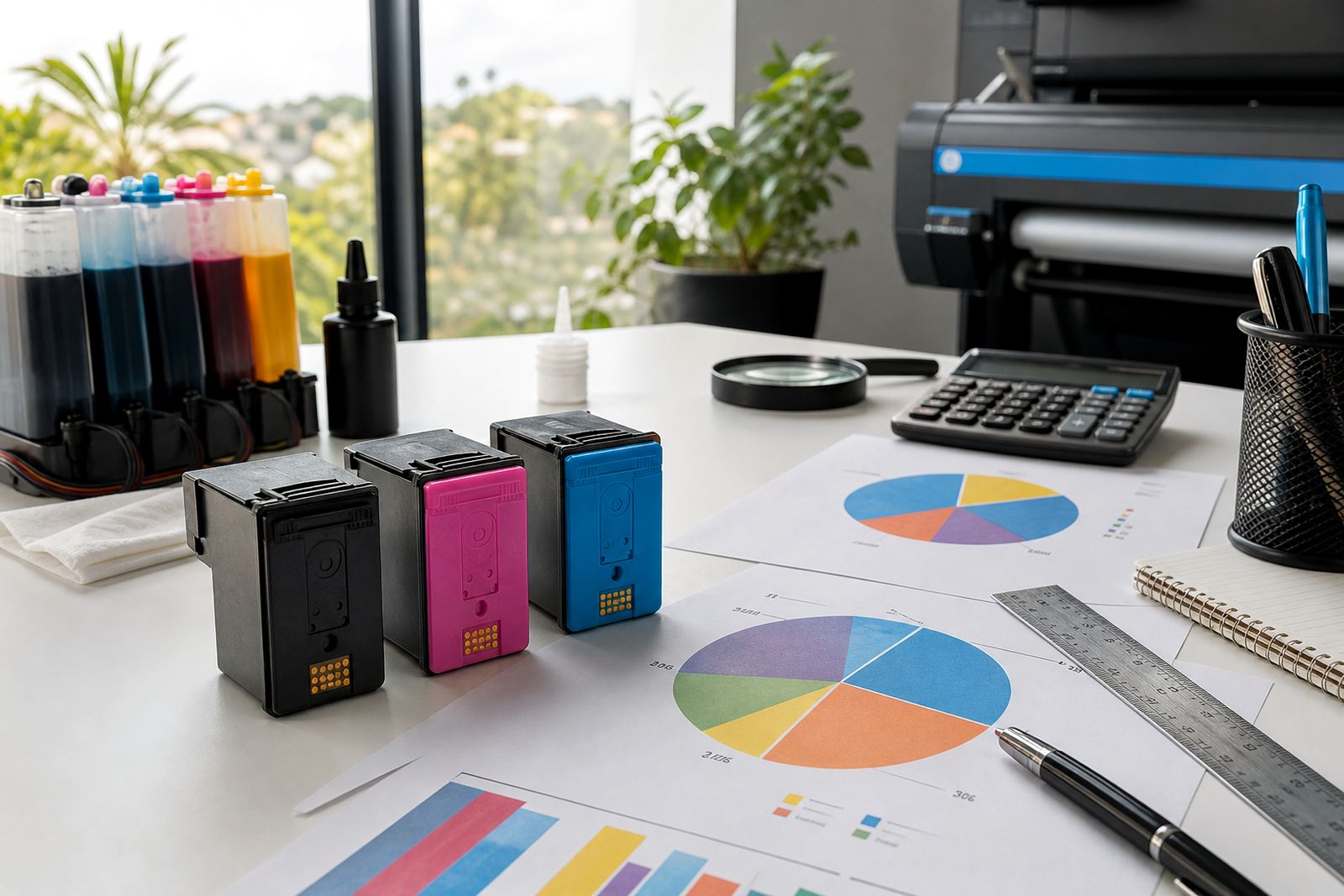
The right size depends on the printer, how often it runs and whether you are keeping backup stock for a busy room. Bulk ink is commonly supplied in bottles for refilling a tank system, or as refill packs matched to cartridge sets. Some users keep one working set in the machine and another on the shelf for repeat jobs, especially where wide-format work moves in bursts.
When planning stock, check the following before ordering:
- Printer model and the exact six-colour configuration
- Whether the unit uses dye or pigment ink
- Tank size or cartridge capacity in millilitres
- Colour sequence required by the machine
- Chip style or reset method, if the cartridges use one
- Whether the work is indoor graphics, proofing, photo or mixed office output
We also help with stock planning for teams in Pietermaritzburg, Johannesburg, Pretoria and Cape Town that keep more than one printer online. That usually means matching the ink to the machine and keeping the spare bottles labelled by colour, because a wrong swap in a shared room wastes time and can cross-contaminate a fill line.
Where six-colour ink earns its keep
Six-colour systems suit design studios, photo labs, signage rooms and wide-format print shops where colour detail is part of the job. They also suit offices that print client artwork, event boards, presentation sheets or image-heavy reports and need cleaner colour separation than a basic four-colour set gives.
The extra tones help in work that shows skin, shadow transitions, subtle gradients and deep blues. In a coastal town like Durban, humidity can affect how paper behaves and how long freshly printed sheets sit before handling. That makes ink choice, drying habits and storage matter more than many users expect.
If your machine is used by several operators, six-colour ink also helps maintain a more repeatable result when the printer settings are kept consistent. The room still needs discipline though. Mixed stock, vague labels and overfilled tanks can cause leaks or colour drift, and that is where good handling matters more than the bottle itself.
- Graphic design proofs with light tonal shifts
- Photographic prints with smoother skin tones
- Wide-format artwork that needs cleaner gradients
- Office presentation work with strong image content
- Short-run client samples and mock-ups
Fitting a refill system without upsetting the printer
Some six-colour printers use a continuous ink supply system with external tanks and feed tubes, while others run on cartridges that are refilled by hand. Either way, the installation has to respect the fill path, chip layout and venting. A tube pinched behind the casing can starve one colour and show up as missing lines on the page.
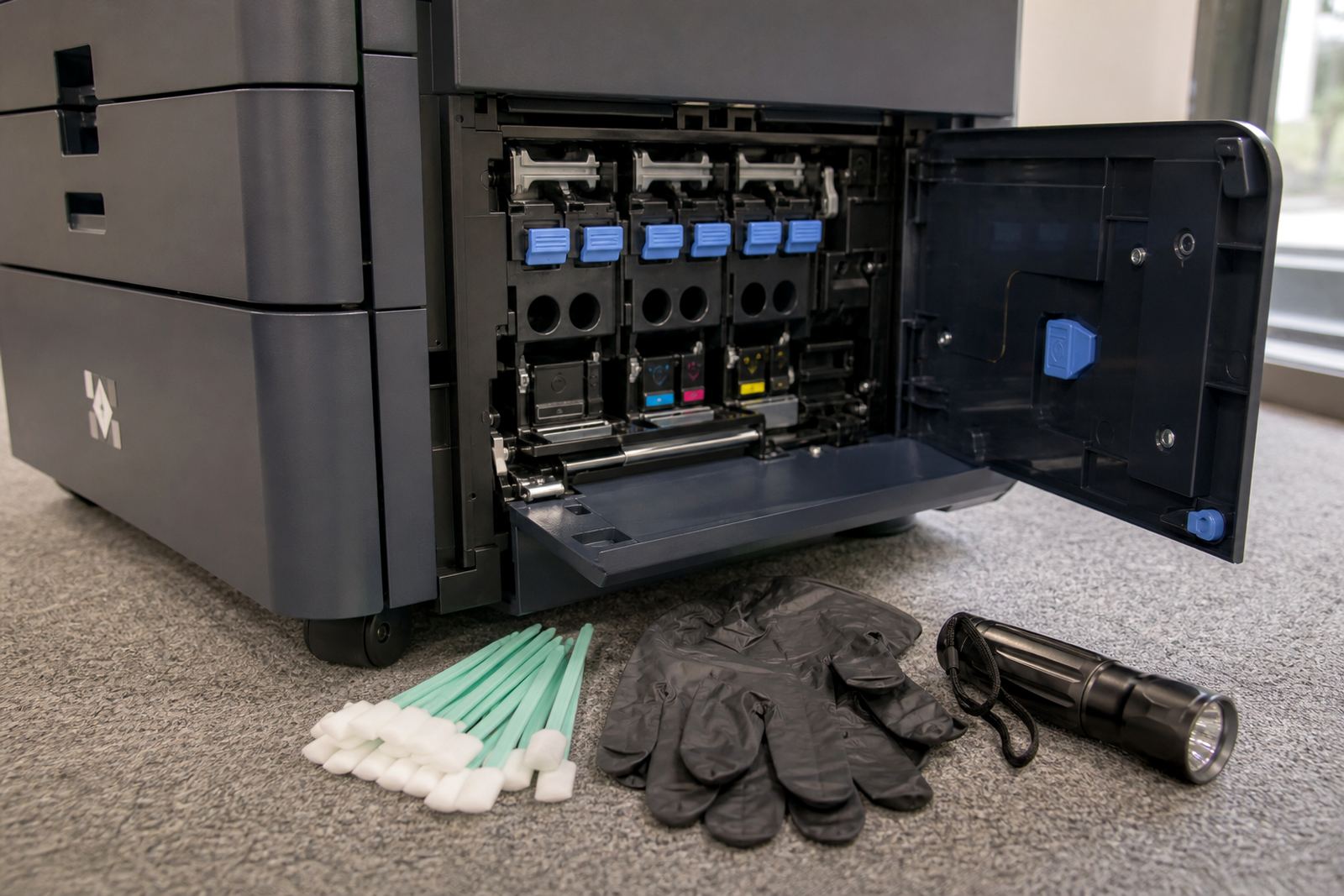
We check for leaks, confirm the order of the tanks and make sure the cartridges seat properly before a machine goes back to work. Chip reset help is often part of the process on refill cartridges, especially where the printer expects an electronic signal before it accepts the next fill. On some models the resetter is a small hand tool, on others the procedure is built into the cartridge cycle.
Printhead care is part of the setup too. The printer should be primed, nozzles checked and test patterns reviewed before full production starts. If a line is left dry for too long, the head can begin to misfire and the output turns patchy. A careful first fill saves ink later.
- Keep the tank level even across all six colours
- Use the correct cap or vent position during storage
- Prime lines before the first production run
- Watch for drips around the cartridge seal
- Run a nozzle check after installation
Care in daily use and empty handling
Six-colour ink works best when the printer runs regularly and the storage is tidy. Leave bottles sealed, keep them out of direct sun and store them upright in a cool room. If a printer sits unused, the head can dry at the nozzles and the first print out may need cleaning cycles before it settles.
For teams that print across the week, nozzle checks should become part of the routine. That is especially important where pigment ink is used, because settled particles can build up if the system is left idle for too long. A short maintenance print is cheaper than clearing a blocked line later.
Empty returns also matter. We support an empty return programme so used bottles and spent cartridges do not gather in drawers or end up mixed with office waste. Keep empties clean, capped where possible and separate by type. That makes recycling easier and avoids contaminating fresh stock with dust or old ink.
Leak checking is worth a quick look whenever a tank is moved, a cartridge is swapped or a printer has been transported between sites. A tiny seep at the seal can stain paper, soil rollers and waste a sheet stack before anyone notices.
Westville supply, courier delivery and ordering details
InkEx works from Westville, Durban and supplies six-colour bulk ink across South Africa with courier delivery into Durban, Pietermaritzburg, Johannesburg, Pretoria and Cape Town. We also work with offices and studios in Ballito and Hillcrest where printers are often shared between client work and internal production.
When you place an order, the useful details are the printer model, the six-colour layout, whether the unit uses dye or pigment ink, the tank or cartridge format, and whether you need help with refill setup or chip reset support. If the job includes wide-format output, mention the media used and the kind of colour work you are chasing, because that changes the ink choice and the care notes.
Our team includes Sibusiso Kotze, Ayesha Majola, Mandla Zondi, Lauren Naidoo, Johan Mabena and Nokuthula Mabuza, covering refill advice, dispatch, accounts and order handling. Clients reach us through our contact form on our contact page. For repeat use, keep the colour sequence and system type on file so the next batch matches the same machine without guesswork.
- Printer make and model
- Six-colour channel order
- Dye or pigment requirement
- Tank, cartridge or CISS format
- Any chip reset or refill help needed
Key facts
| Product type | Six-colour bulk ink for refill systems and compatible cartridge setups |
|---|---|
| Ink options | Dye ink or pigment ink, matched to printer model and print use |
| Formats | Bottle refill packs, tank-fed systems and cartridge refill supply |
| Use case | Photo output, graphics, proofing and wide-format colour work |
| Support | Refill advice, chip reset help, nozzle checks and leak checking |
| Delivery area | Westville, Durban and courier delivery across South Africa |