
Colour output for posters, plans and display panels
Wide-format colour work asks a lot from every cartridge. A poster for a retail window, an event board in a foyer or a plan set for site use all need even colour, clean edges and no sudden banding across long runs. Our refurbished large-format colour cartridge options are set up for that kind of work, where ink coverage has to stay steady across broader page widths and longer print jobs.
These cartridges are suited to offices, design studios and print rooms that produce graphics in colour on a regular basis. They also work well where the same device handles drawings one day and presentation visuals the next, because the supply has to stay predictable and easy to check.
- Refurbished colour cartridges for wide-format printers used in business and creative work
- Options for process colour jobs, display graphics and mixed technical printing
- Useful where print volume is steady and the device must stay supplied without wasteful swapping
Formats and fill types that sit with the job
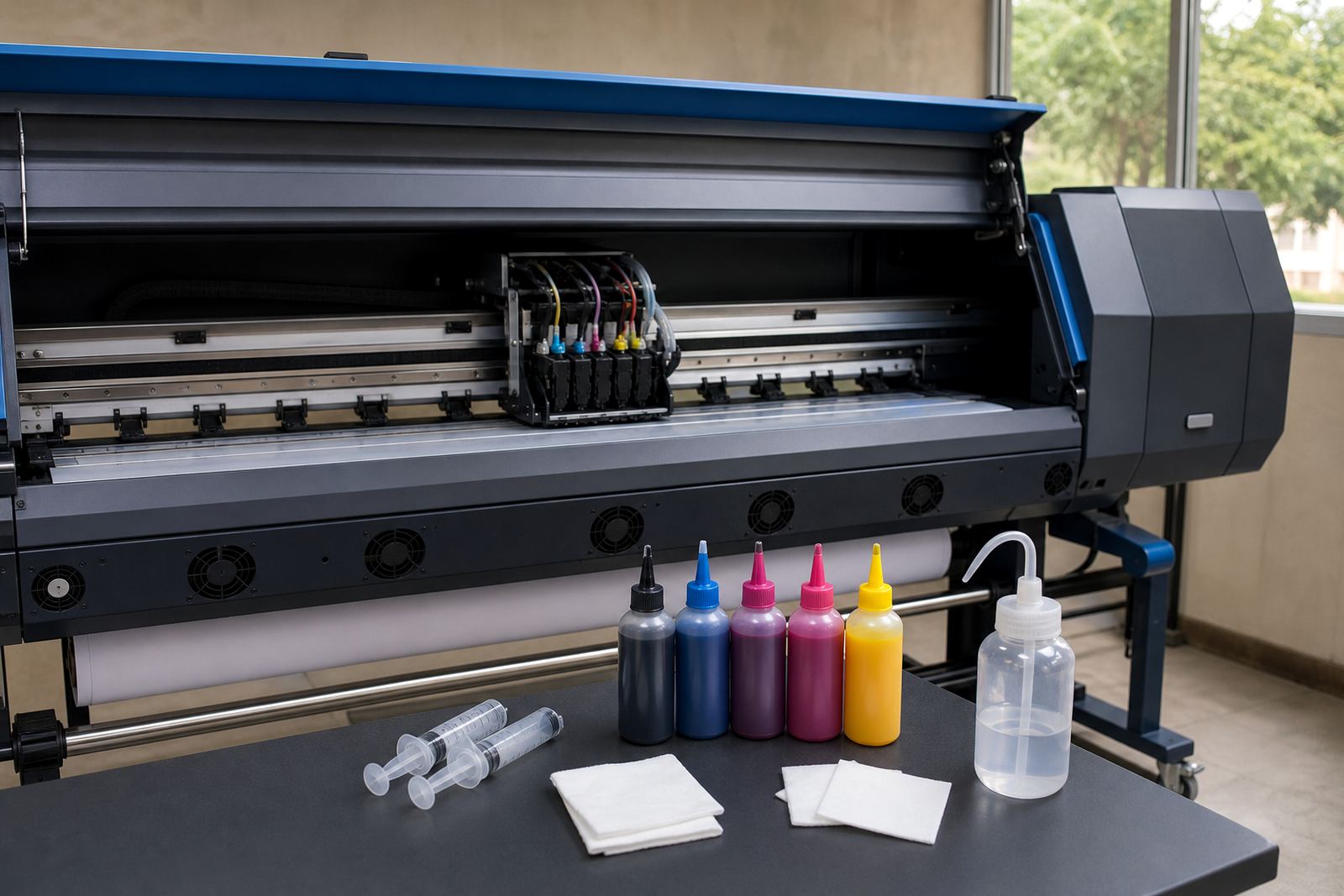
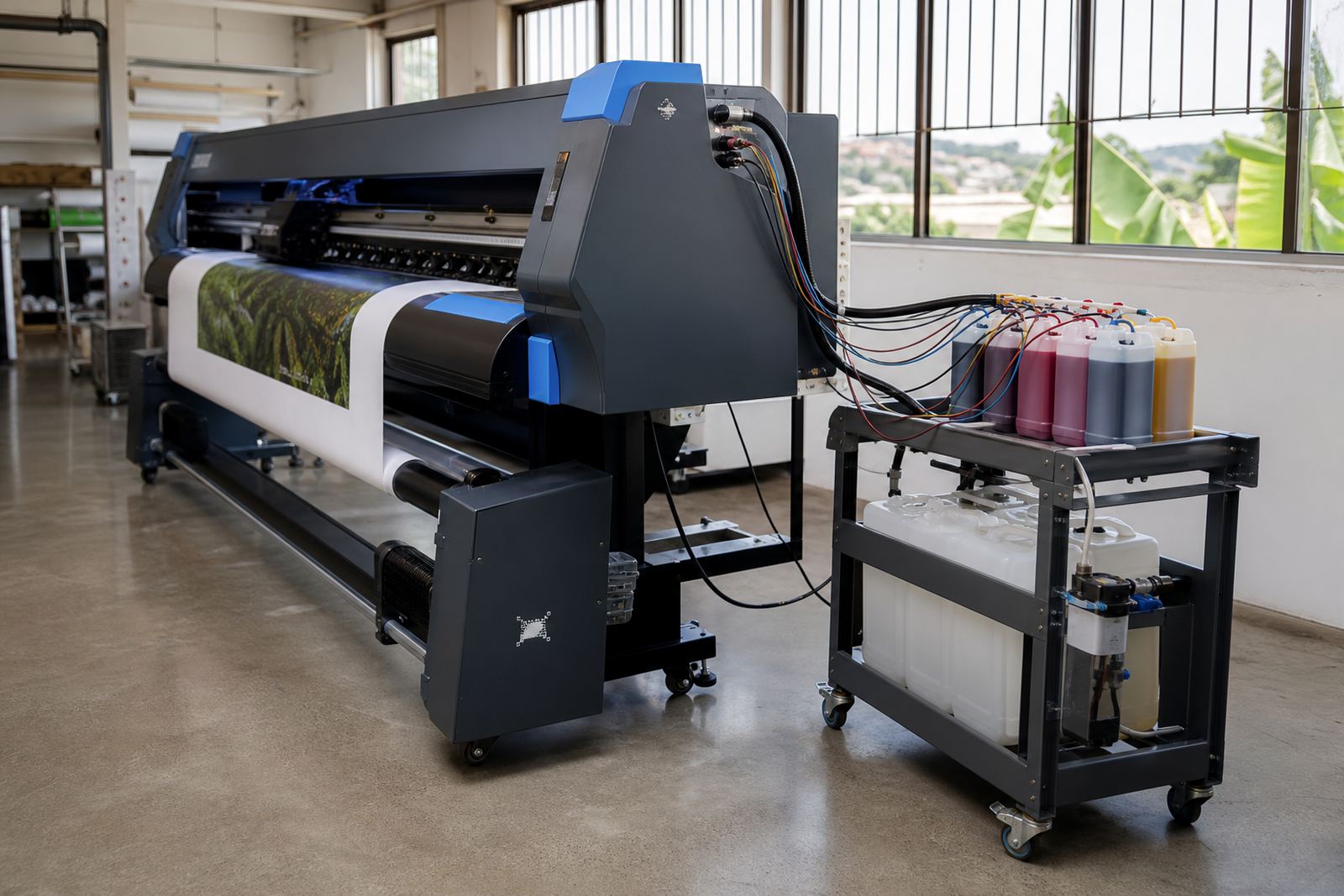
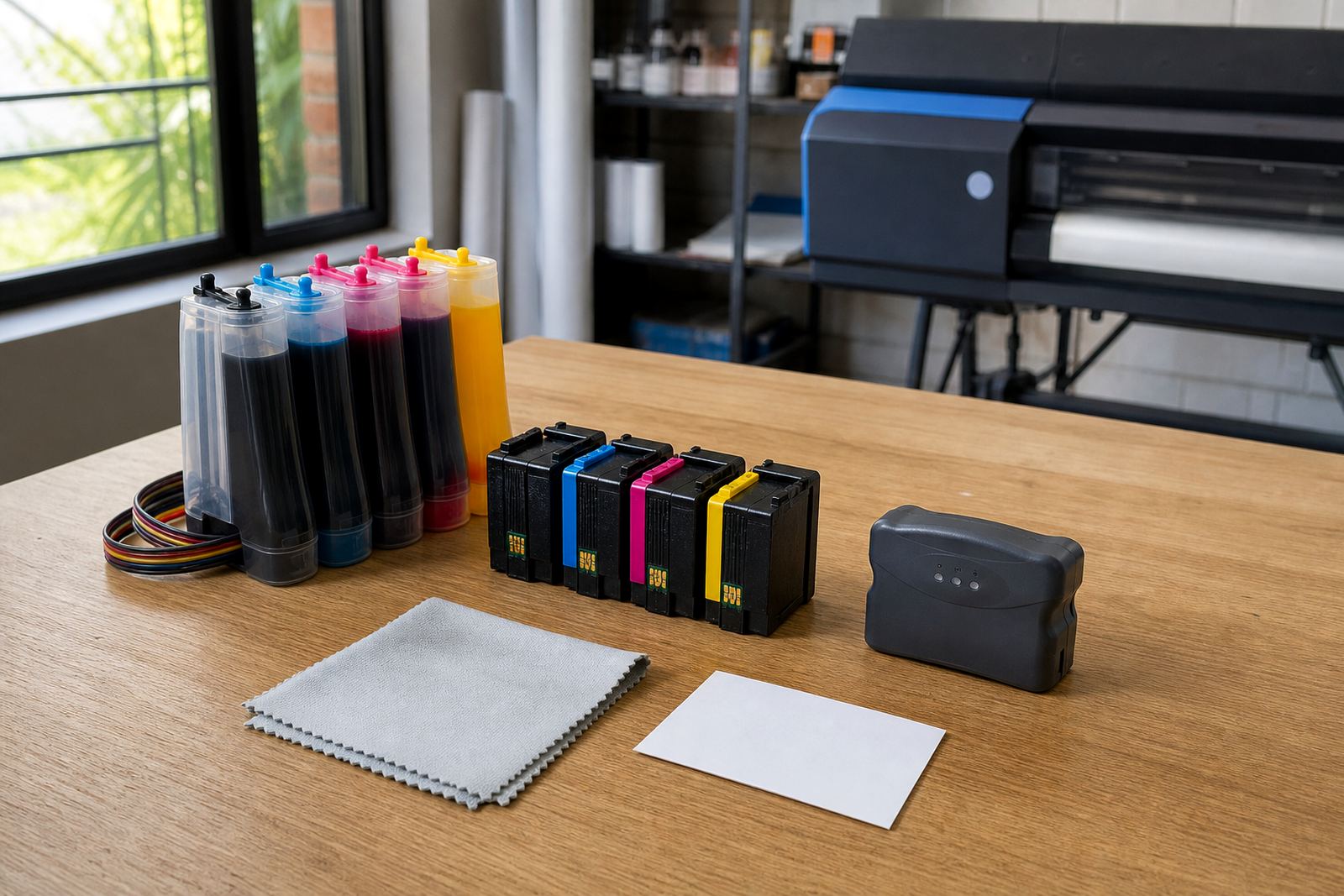
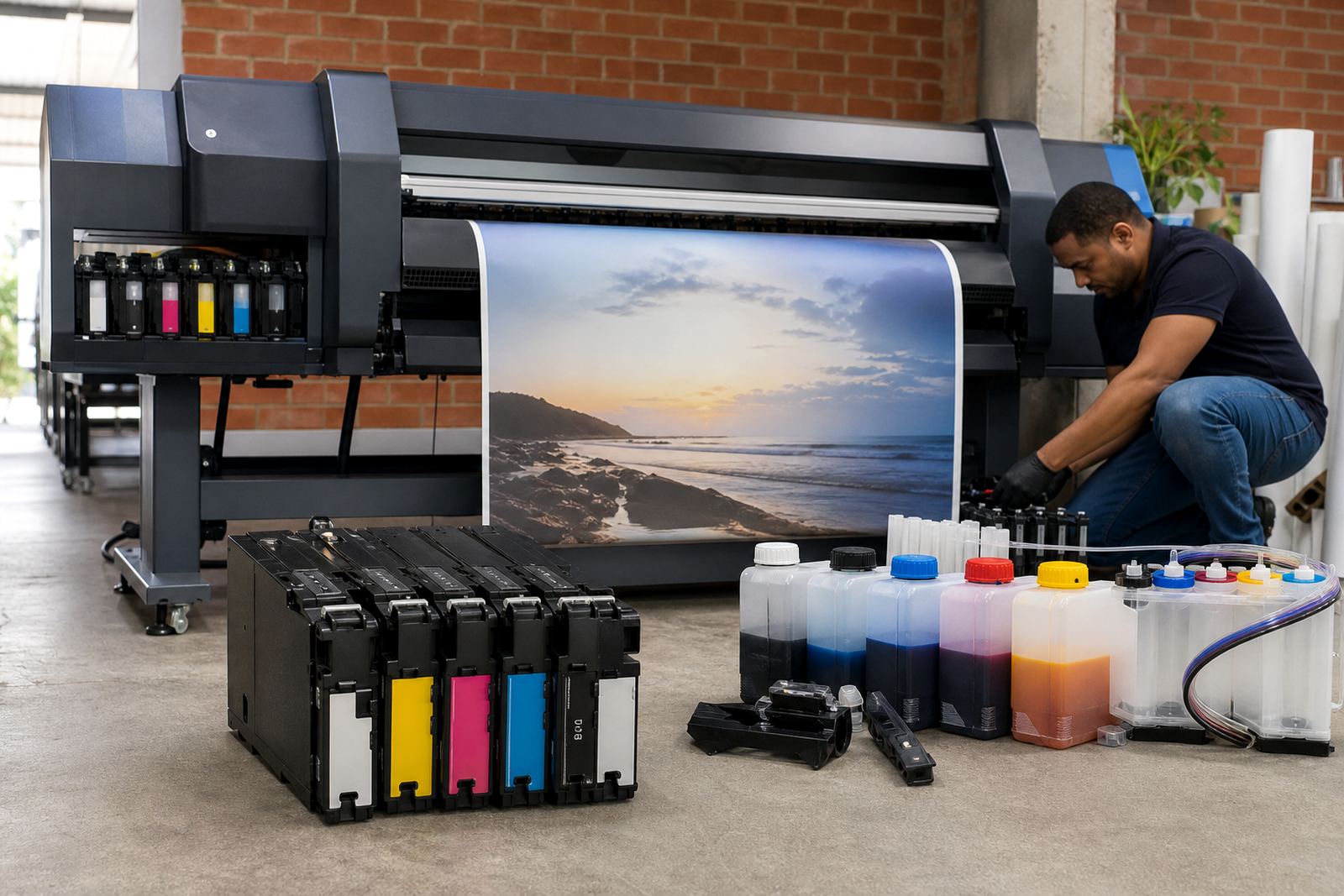
Wide-format colour supplies are not all the same. Some devices use individual cartridges for each colour while others work better with bulk ink systems that feed from external reservoirs. We also help with refill kits where the printer takes a controlled top-up from bottle or syringe style filling, depending on the carriage and cartridge shape.
For colour accuracy and media choice, the ink type matters. Dye ink is often used where bright colour and smooth blending matter on coated stock and presentation media. Pigment ink is generally favoured where sharper text, stronger line work and better resistance on certain papers are needed. The right choice depends on the printer model, the media and how the output is handled after printing.
- Common colour sets include CMYK in standard office and studio printers
- Bulk ink systems suit higher volume teams that print often through the week
- Refill kits are useful for controlled top-ups and lower cartridge spend
- Ink type guidance helps match the output to coated paper, bond or display media
When this supply suits your print room
This product range suits teams that cannot afford uneven output halfway through a run. Architectural practices, repro counters, marketing studios and signage shops often need colour pages that stay consistent from the first sheet to the last. Wide-format colour work also needs dependable handling on larger paper sizes, where a weak cartridge can show up as pale bands, blocked nozzles or colour drift.
In Durban's coastal air, ink storage and cartridge handling deserve care. Seal open bottles well, keep cartridges clean and avoid leaving refills exposed to dust or humidity. Where the printer sits in a warm, busy room, a bit of routine checking goes a long way and it keeps the heads from drying after a quiet stretch.
- Poster production on coated sheets and display stock
- Plan printing for offices that need readable colour marks and overlays
- Retail graphics, point-of-sale boards and exhibition panels
- Technical rooms that run colour output alongside line drawings
Fitting, setup and checks before the first run
Some cartridges slot in directly, while other systems need a little more attention during fitting. Bulk ink setups may need tubing positioned correctly, ink paths primed and reservoirs placed level with the printer. Cartridge refills can call for chip reset help, leak checking and a nozzle check before a proper job starts. If the printer uses a cartridge carriage that tracks chip data, the reset method has to match the model and the fill stage.
We also look at printhead care during setup. A clean nozzle check tells you if a colour is flowing properly or if one channel needs attention before a long run starts. When a printer has sat idle, a short purge or test pattern often helps show whether the heads need cleaning or the cartridges need reseating.
- Check the exact printer model and colour slot pattern
- Confirm whether the unit uses refillable cartridges or a continuous ink supply system
- Look at chip status, carriage fit and tubing route where a bulk system is used
- Run a nozzle check before full-size output on valuable media
Care that keeps colour work cleaner
Care is mostly about habits. Keep caps on unopened ink, wipe spills before they dry and use the printer often enough to stop ink from settling in the heads. For colour work, a blocked yellow or a weak magenta can throw off an entire page, even when the black channel still looks fine. That is why nozzle checks and light maintenance matter in studios that print in bursts rather than every hour.
Empty return programmes are also useful where a room goes through many cartridges each month. Returned empties can be sorted for refurbishment or recycling, which reduces clutter and keeps used plastic out of the general waste stream. It is a practical step for firms that want less throwaway stock on hand.
- Store refills in a cool, shaded place away from dust
- Use the correct cleaning and priming method for the printer head type
- Watch for colour imbalance, streaks and dull patches on test sheets
- Return empties where the printer room runs through high volumes
Details to check before placing an order
Colour cartridge supply depends on the device, not just the page size. The model number, cartridge codes, colour count and whether the printer uses dye or pigment ink all matter. We also need to know if you are replacing individual colours, moving to a bulk system or looking for refill support on an existing setup. For wide-format units, the media width and typical job length help us match the right supply pattern to the work.
If your team prints plans in one corner of the week and presentation graphics in another, it helps to note the most common paper types and whether the machine is used daily or in bursts. That detail shapes the advice around nozzle checks, refill intervals and chip reset help. our contact form is the best place to send those details through from Westville or from anywhere else in South Africa.
- Printer make and model number
- Current cartridge code or tank configuration
- Dye or pigment requirement, if known
- Paper widths, media types and usual print volume
- Whether you need cartridges, refill kits or CISS setup help