
Clips that keep the cartridge still while ink moves
A cartridge clip set is a small holding aid used during refill work. It grips the cartridge body or the fill point so the unit sits upright while ink is added, air is managed and the outlet stays cleaner than it would on a loose bench. In day to day refill work, that extra steadiness matters when you are topping up several cartridges in one run.
These clips are used with refillable cartridges, seal caps, fill plugs and bench trays. They suit workshop handling where cartridges are filled, checked, then packed for storage or dispatch. The aim is not fancy, only to keep the cartridge from tipping while the technician works with ink and seals.
- Holds the cartridge in a fixed position during filling
- Helps reduce spills around the fill port and seal area
- Keeps cartridges upright during short storage or bench checks
- Useful for both office refill counters and wider studio setups
Sizes, fit styles and what usually changes between sets
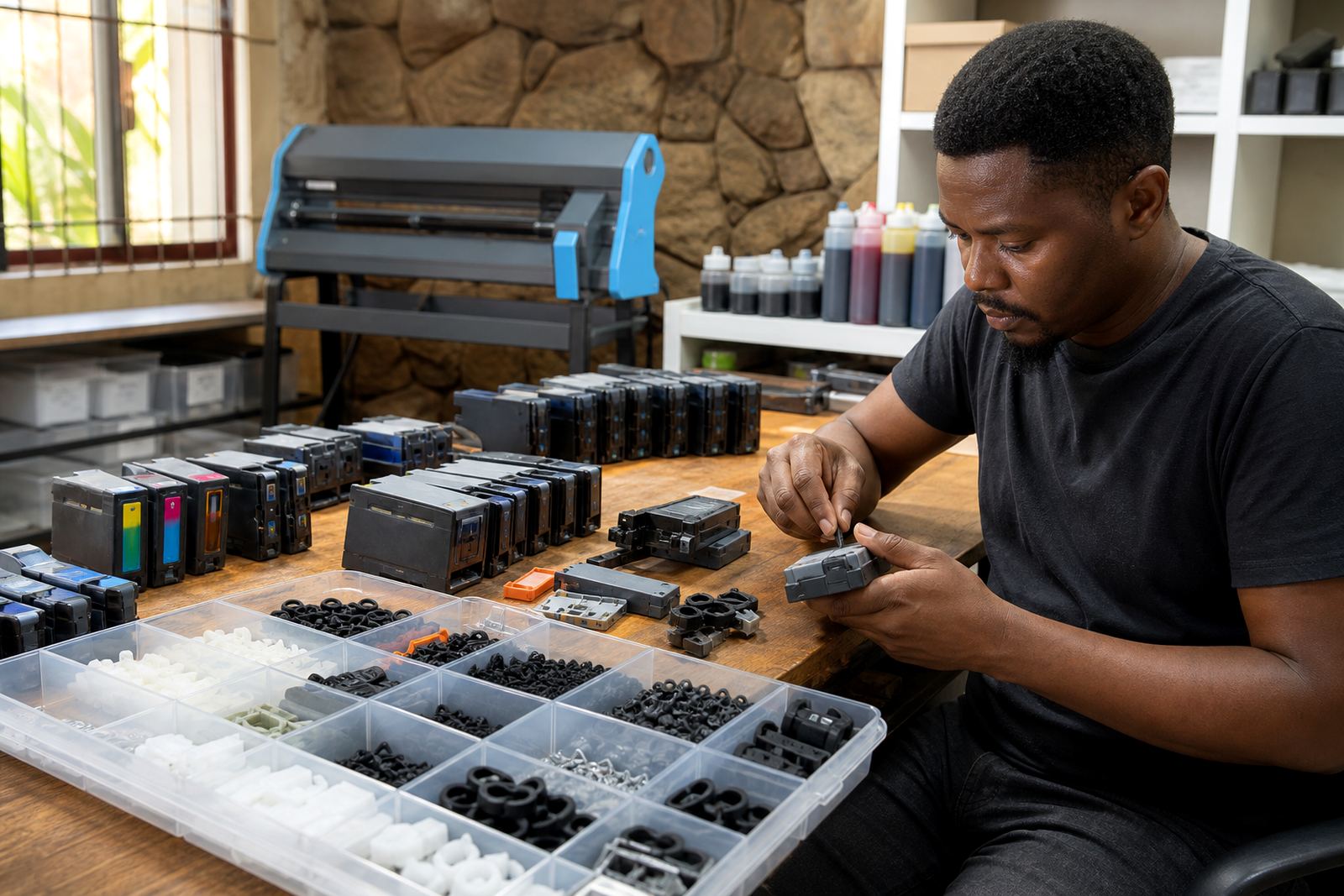
Clip sets are made in a few practical forms. Some grip a single cartridge body, while others sit across a small tray and hold more than one unit at a time. The right set depends on cartridge shape, inlet position and the kind of refill method being used. A set that suits a compact office cartridge may not suit a larger high-yield unit used for bulk printing.
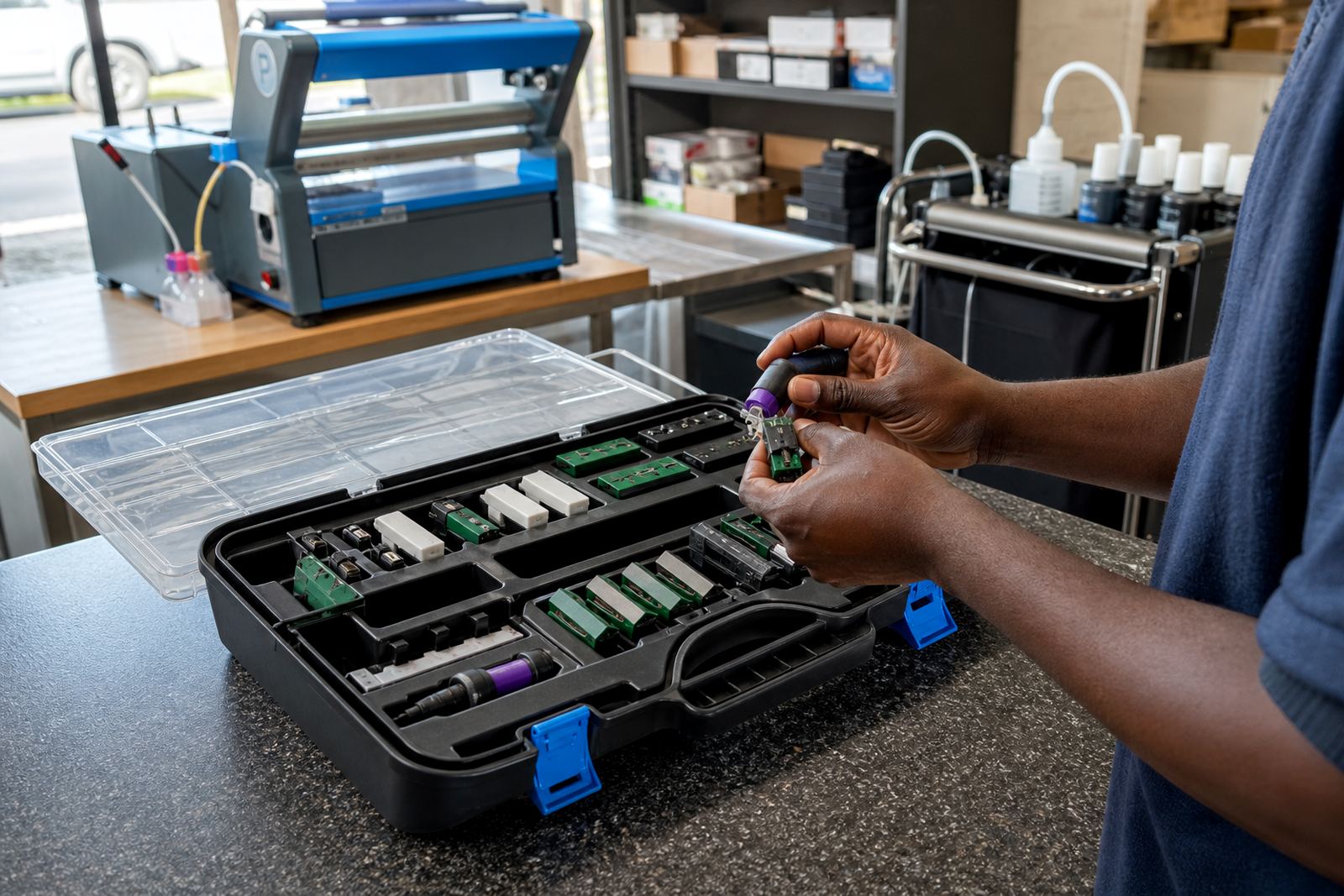
Most buyers are looking for one of three fit styles: a snug body clip, a bench clip with a wider base, or a holding frame for repeated filling. On some jobs the clip must leave space for a syringe tip or refill nozzle. On others it needs to sit low enough for a capping seal or chip access during inspection.
- Single-cartridge clips for small refill runs
- Multi-slot holders for batch filling
- Low-profile clips for tighter bench space
- Wider frames for heavier or larger cartridges
Where this set fits into real refill work
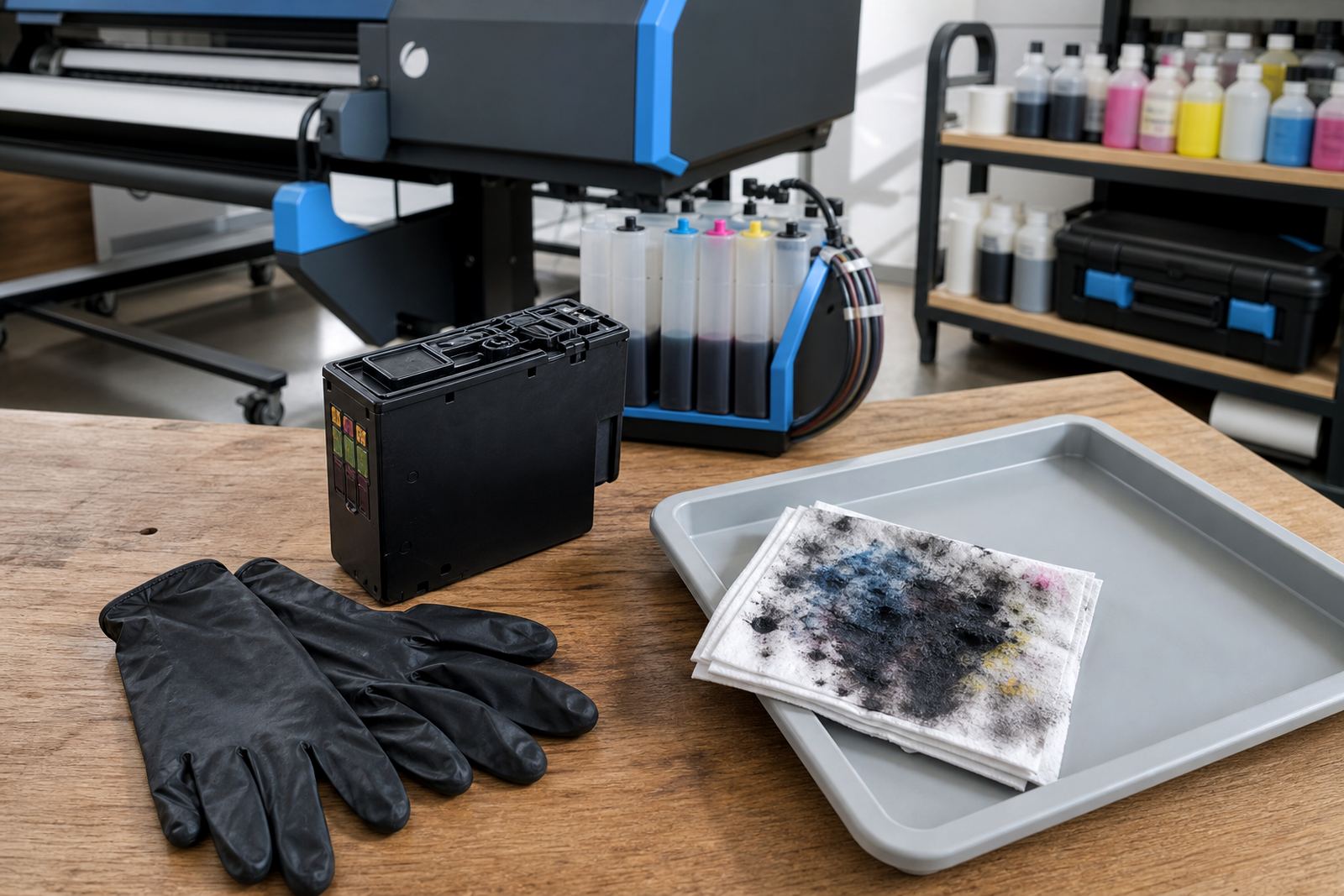
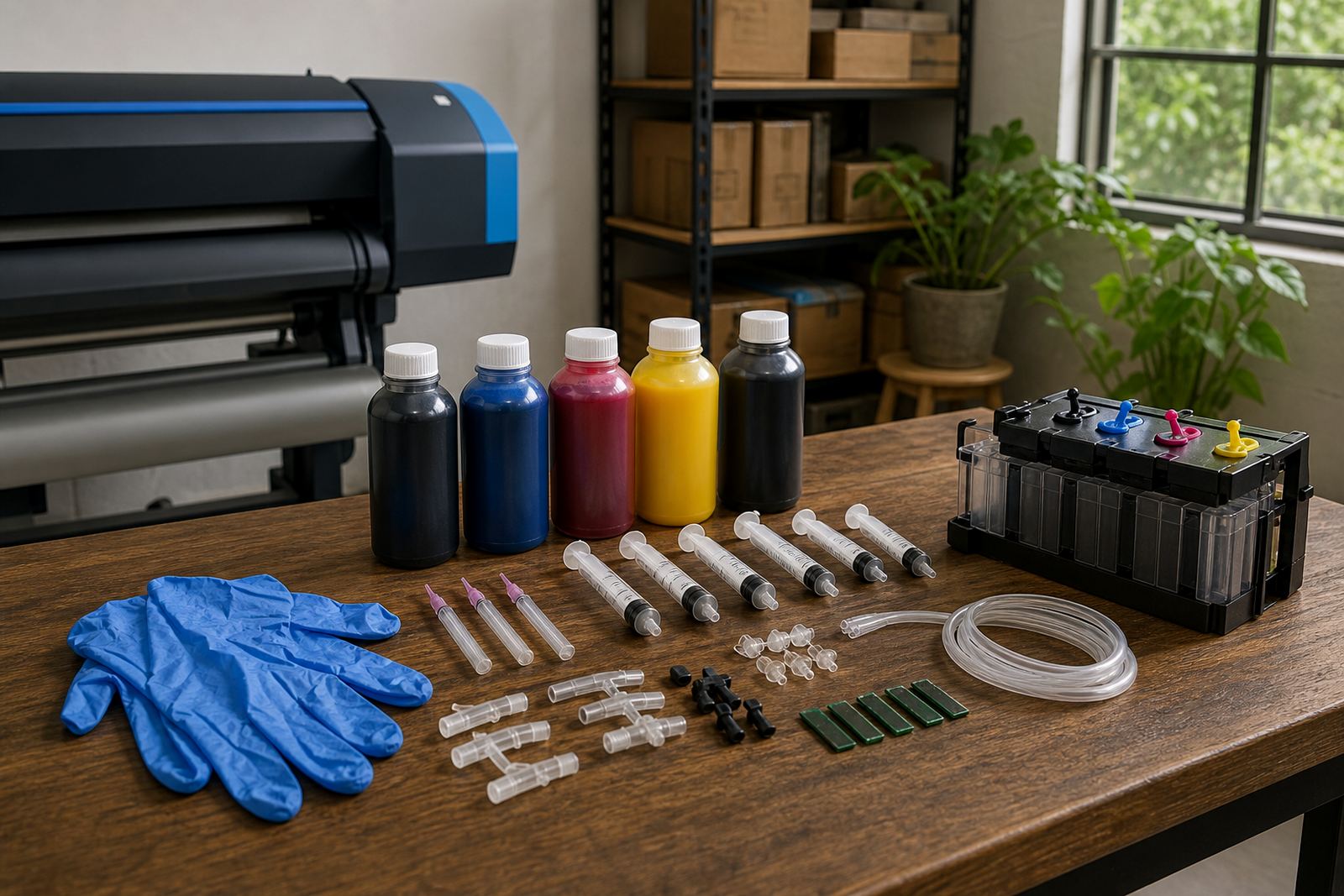
Cartridge clips suit Westville offices, Durban studios and wide-format print rooms that refill often enough to want better control over the process. They are useful when cartridges are being topped up before proofing, before a client job or before a stock check. In a busy shop, the clip can sit beside bottle ink, fill needles, cleaning cloths and empty cartridges waiting for sealing or recycling.
They also make sense where different ink types are kept apart. Dye ink and pigment ink are handled differently in many refill routines, and a stable clip makes the process neater when labels, caps and notes are being checked at the same time. For print shops that deal with mixed cartridges, it helps the technician keep each unit in place while matching the right refill path.
- Office printer refill stations
- Design studios with regular proof printing
- Artists using refillable cartridges for colour work
- Wide-format print rooms with repeated cartridge handling
Fitting notes for bench use and storage
These clips are fitted by hand and do not need wiring or plumbing, but the fit still has to be right. The cartridge should sit square, with the clip set so it does not pinch the casing or press on a chip edge. If a seal cap or plug is being used, the clip must let that part seat properly before the cartridge is moved.
For stored cartridges, keep the clip clean and dry and avoid leaving heavy pressure on the body for long periods. Ink residue around the mouth or seal can make the grip slippery, so a light wipe is worth doing before the unit goes back into storage. When the clip is part of a refill bench, it should be checked for wear at the hinge points and any split plastic that could let the cartridge slip.
- Check that the cartridge sits level before filling
- Keep the clip clear of dried ink and lint
- Use only light hand pressure on the body shell
- Store clips away from direct sun and hot tool areas
Working care that keeps clips useful for longer
A clip set lasts better when it is cleaned regularly and not forced onto the wrong cartridge shape. Ink, paper dust and solvent traces can build up around the contact points, which makes the hold less dependable. A quick wipe with a soft cloth is usually enough for daily care, while stubborn residue may need a mild cleaner that is safe for workshop plastics.
Do not leave a wet cartridge clamped in a dirty clip for long periods. That can transfer residue back onto the shell and leave marks on the refill area. If the clip includes a seal ring or foam pad, check that it still presses evenly and has not gone hard from age or chemical contact.
- Wipe after each refill run
- Inspect hinge tension and grip points
- Keep out of strong heat and direct sun
- Replace worn pads or cracked holders before they slip
Details to check before ordering
When ordering a cartridge clip set, confirm the cartridge family, the number of slots needed and whether the clip is for bench work or storage. It also helps to note whether the set must suit standard cartridges, refillable shells or larger units used in wide-format printing. A wrong fit here can waste time and leave the cartridge wobbling during filling.
Give the team the shape of the cartridge base, the fill point position and whether the clip must leave room for chip access, seal caps or a reset tool. If you already use a continuous ink supply system, mention that too, because some refill areas need more clearance than a basic office cartridge. Empty return handling can also matter if you are running a separate recycling path for used units.
- Cartridge model or shell shape
- Single, double or multi-slot holder needed
- Bench use, storage use or dispatch use
- Need for chip access, seal cap space or reset clearance
Key facts
| Product type | Cartridge holding clip set for refill and storage work |
|---|---|
| Use case | Stabilising cartridges during filling, sealing and short-term storage |
| Common fit styles | Single-slot clips, multi-slot holders and low-profile bench frames |
| Compatible work areas | Office refill stations, studios and wide-format print rooms |
| Material | Workshop plastic and grip components suited to repeated handling |
| Care | Wipe clean, inspect grip points and keep dry between uses |