
Feed line tubing that keeps ink moving cleanly
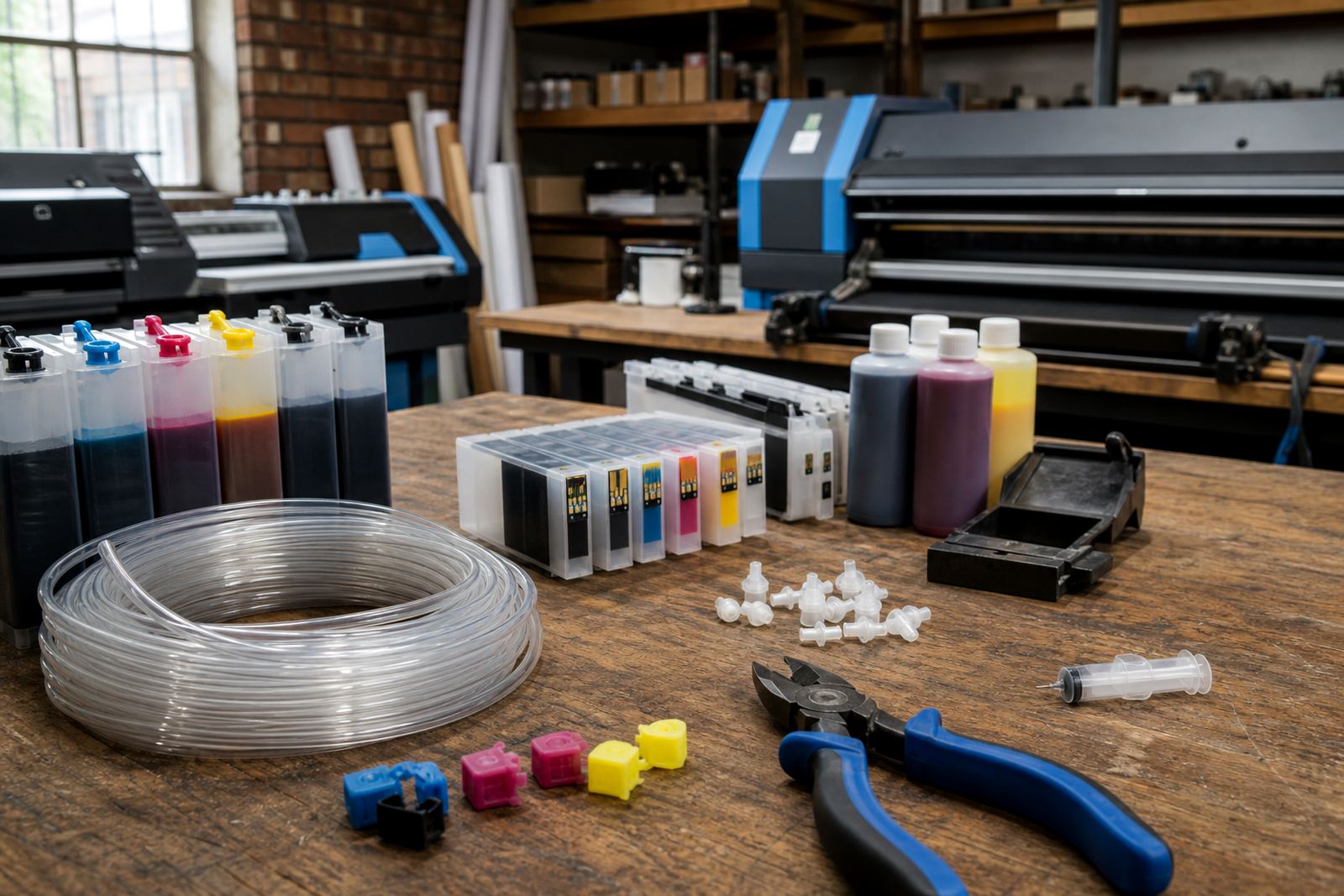
An ink tubing roll is the flexible line that carries ink from a reservoir or refill bottle to the cartridges or dampers in a continuous ink supply system. In practical terms it is the part that links the ink source to the print side, so the line has to stay supple, resist kinks and keep a steady internal bore. When tubing goes cloudy, hard or split, ink flow can become uneven and the system starts to show pale bands, air gaps or repeated priming. That is when a clean replacement line makes sense.
For Westville, Durban users and clients further afield, this product suits refurbishment work where the rest of the system is still serviceable. It is often used during a full tube change, a line flush or a reset after repeated wear from movement, heat or old ink residue. In coastal conditions around Durban, humidity can also affect how neatly tubing routes and seals, so the fit needs a tidy finish and proper seating at each connector.
- Flexible tubing for continuous ink systems and refill lines
- Used to replace hardened, split or discoloured feed lines
- Helps maintain steady ink flow to cartridges or dampers
- Suitable for service work on benchtop and wide-format refill setups
Sizes and line options we stock for refill work
Ink tubing is usually chosen by internal diameter, outer diameter and the way it mates to the system fittings. A line that is too tight can restrict flow, while a loose line can draw air or seep at the join. For that reason the bore and wall thickness matter just as much as the overall length. Some systems use a single line per colour, while others route paired lines or longer runs for larger machines.
We supply tubing for common refill layouts used in office printers, art studios and wide-format print shops. Clear tubing helps with visual checks on bubbles and flow, while darker tubing can be used where light exposure is a concern. Where the ink path is longer, the roll format lets the line be cut to length rather than forcing a fixed piece into a setup that was never meant for it.
- Clear tubing for visual ink-flow checks
- Cut-to-length roll format for custom routing
- Common small-bore lines for cartridge feed use
- Longer runs for larger refill systems and wide-format units
Where this tubing suits the workbench
This product suits refill systems where tubing has become a wear item rather than a one-time part. In an office environment, it may be fitted to keep a cartridge bank running cleanly between service intervals. In a studio, it is useful where colour changes are frequent and the line sees regular handling. For wide-format printers, the tubing has to handle longer routes, more ink volume and a neater anchor point through the cabinet or service bay.
Ink type also matters. Dye ink usually flows with less resistance and shows colour changes clearly in the tube, while pigment ink can leave residue over time if a line is neglected. That means a setup using pigment needs tighter care around flushing and periodic inspection. If the printer has been stored for a while, or the line has sat with settled ink, a fresh tube can support a proper restart after the rest of the feed path is checked.
- Office refill systems with regular colour use
- Design studios handling frequent art and proofing work
- Wide-format print rooms with longer feed paths
- Jobs involving dye ink, pigment ink or mixed maintenance work
Fitting notes for a tidy install
Good fitting starts with the right cut and a clean route. The tube should follow a gentle path without sharp bends, especially where the printer carriage moves or where the line passes through a tight cabinet edge. If the line is kinked, ink can slow down and air can sit in the feed. Where fittings use a push-on connection, the end needs a clean square cut so it seats evenly. Where a clamp or clip is used, the grip should hold without crushing the wall of the tube.
During installation, printhead care matters just as much as the tubing itself. A worn line can drag debris into the feed path, so a nozzle check and short purge are worth doing after a tube change. If the system uses a chip resetter, the reset step should be matched to the cartridge or refill arrangement in use, not forced as a substitute for proper line maintenance. For technicians handling multiple units, a labelled spool and a measured cut save time and reduce waste.
- Cut the line square for a better seal
- Route it with smooth curves, not tight folds
- Check nozzles and prime the line after fitting
- Match the tube to the connector style already in use
Care that keeps the line usable longer
Ink tubing lasts longer when it stays clean inside and properly supported outside. Avoid leaving old ink to dry in the line for long periods, because settled pigment can narrow the bore and make the tube harder to flush later. If the printer moves around in a courier run or between rooms, secure the line so it does not rub on a panel edge or twist at the connector. A little slack is useful, but loose looping can pull on the fittings and wear them early.
For maintenance teams, a basic routine helps. Check for cloudy sections, colour staining that does not clear, or a stiff patch near the ends. If there is leaking at a join, the real problem may be the cut, the connector size or a tired seal rather than the tube body itself. Recycling empties and keeping the refill area tidy also reduces the chance of grit entering the system. When the line is serviced alongside cartridges and reservoirs, the whole feed path stays easier to manage.
- Flush dried ink before it hardens in the bore
- Support the line so it does not rub or twist
- Inspect joins for staining, seepage and air bubbles
- Keep refill areas clean to limit contamination
Details to confirm before you order
When ordering ink tubing, the important details are straightforward but specific. The internal diameter has to match the connectors in the system, and the outer diameter must suit any clips, grommets or routing guides already fitted. Length matters as well, especially for longer runs to a reservoir, a bulk bottle or a wide-format carriage. It also helps to know whether the setup uses dye or pigment ink, because the existing residue in the line can affect what replacement work is needed around it.
If the printer is part of a refill programme, send the model details, the number of colours in use and the approximate route the line must follow. For shops in Durban, Pietermaritzburg, Johannesburg, Pretoria, Cape Town, Ballito and Hillcrest, courier delivery is available across South Africa. If you are replacing more than one line, note whether the spools need to be cut into equal lengths or into separate runs for each colour channel.
- Internal diameter and outer diameter
- Required length per colour channel or feed run
- Ink type already in the system
- Connector style, clips and route constraints
Key facts
| Product type | Flexible tubing roll for continuous ink systems |
|---|---|
| Material | Ink-safe flexible polymer tubing |
| Format | Supplied as a cut-to-length roll |
| Typical use | Replacement feed lines for refill systems |
| Colour options | Clear and darker tubing options |
| Ordering details | Diameter, length, ink type and connector fit |