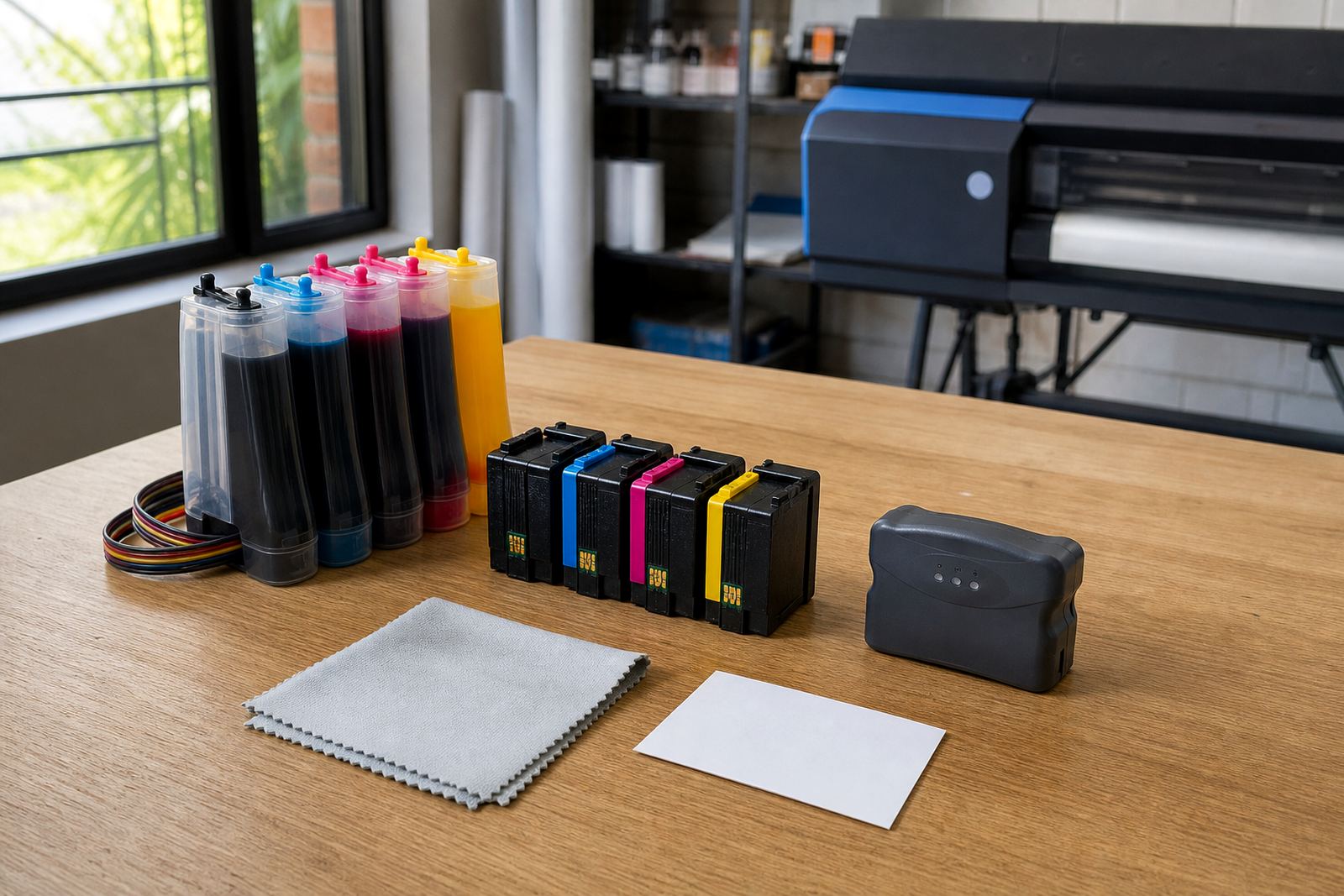

Cleaning fluid for stubborn ink residue at the nozzle line
This fluid is made for printheads and nozzle paths that are carrying dried dye, pigment or mixed residue after long idle periods, short runs, or light contamination from poor storage. In the trade, it is used as a controlled cleaner rather than a heavy flush, so the aim is to soften build-up without flooding the head or soaking sensitive seals.
It suits offices that print in bursts, studios that move between matt and gloss work, and wide-format setups that show faint banding, missing lines, or colour drop-out on a test print. If the head is already badly damaged, cleaning fluid will not rebuild worn parts, but it can clear material that is sitting in the nozzles and ink channels.
Pack sizes and handling options for different jobs
Nozzle cleaning fluid is usually sold in small service bottles for local cleaning and in larger containers for repeated maintenance work. The right size depends on the number of machines on site, how often cleaning is done, and whether the team is servicing benchtop cartridges, CISS lines, or broader wide-format ink delivery systems.
- Small bottle sizes for spot cleaning, manual flush work and occasional maintenance
- Mid-size packs for offices and studios that clean more than one machine
- Larger service containers for print rooms with regular nozzle care routines
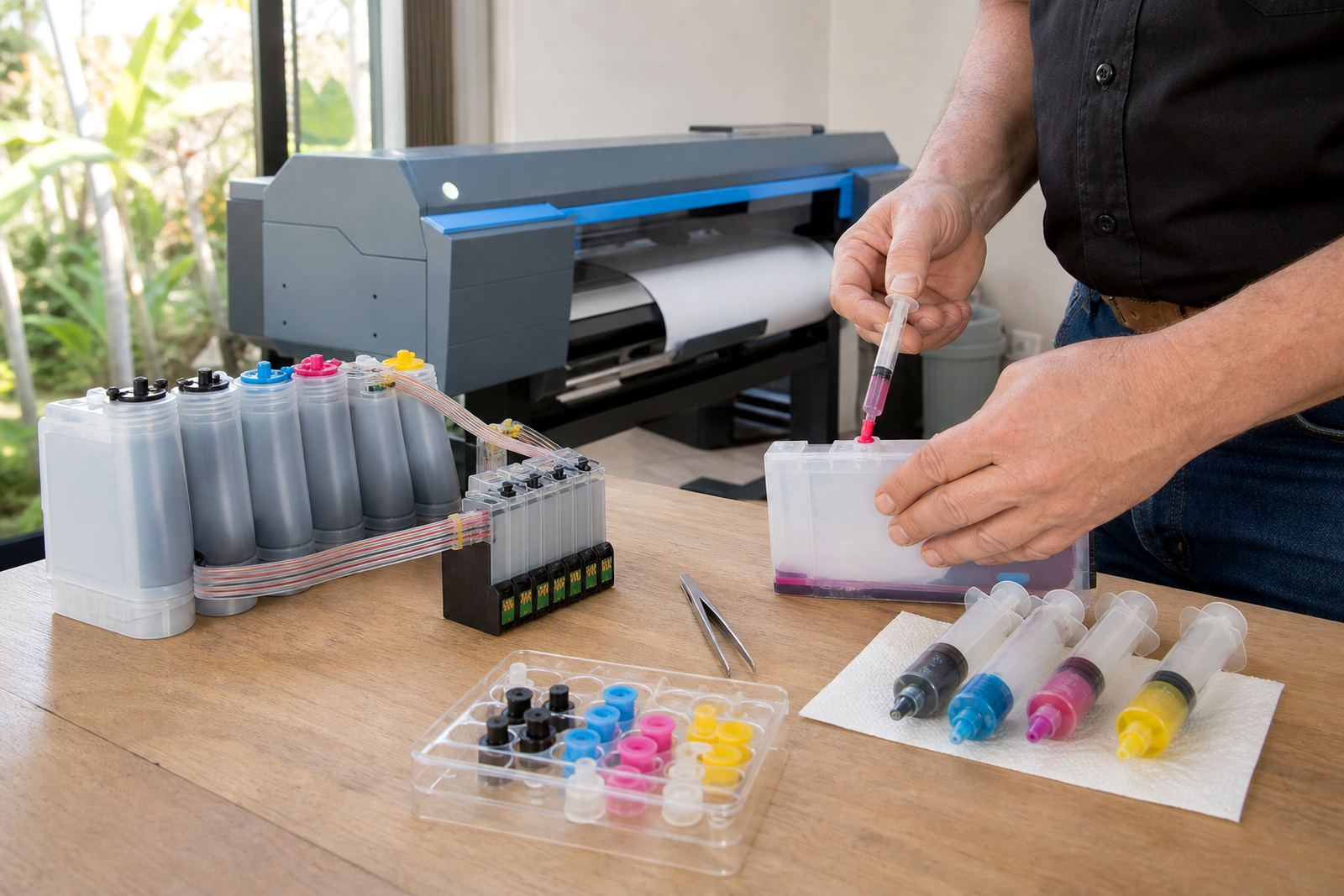
- Cap, syringe or bottle-tip options for controlled application
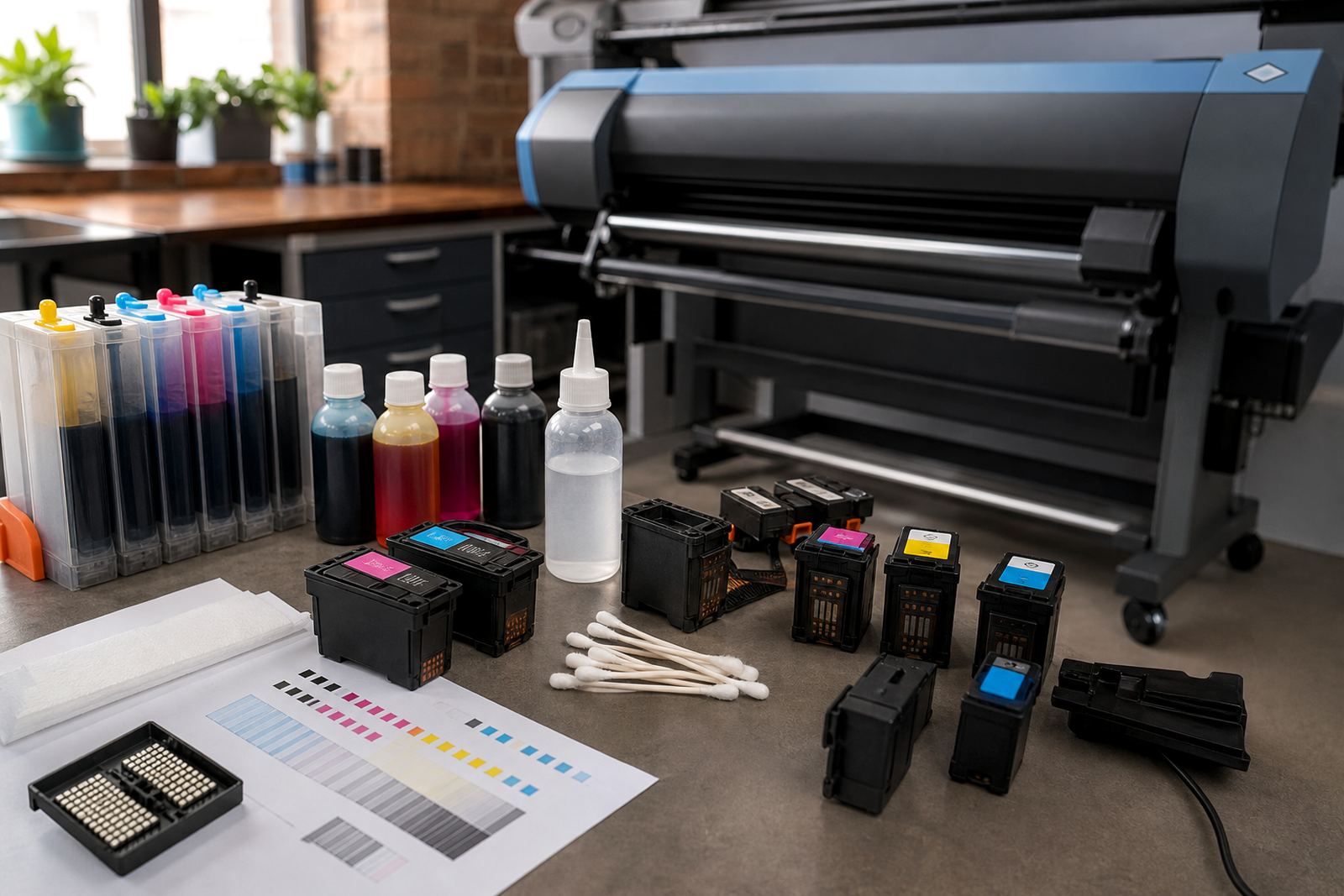
For refill counters and workshop benches, tidy dispensing matters. A narrow tip helps reduce waste and keeps the fluid where it should be, not over the carriage, rollers or surrounding plastics.
Where this fluid fits into real print work
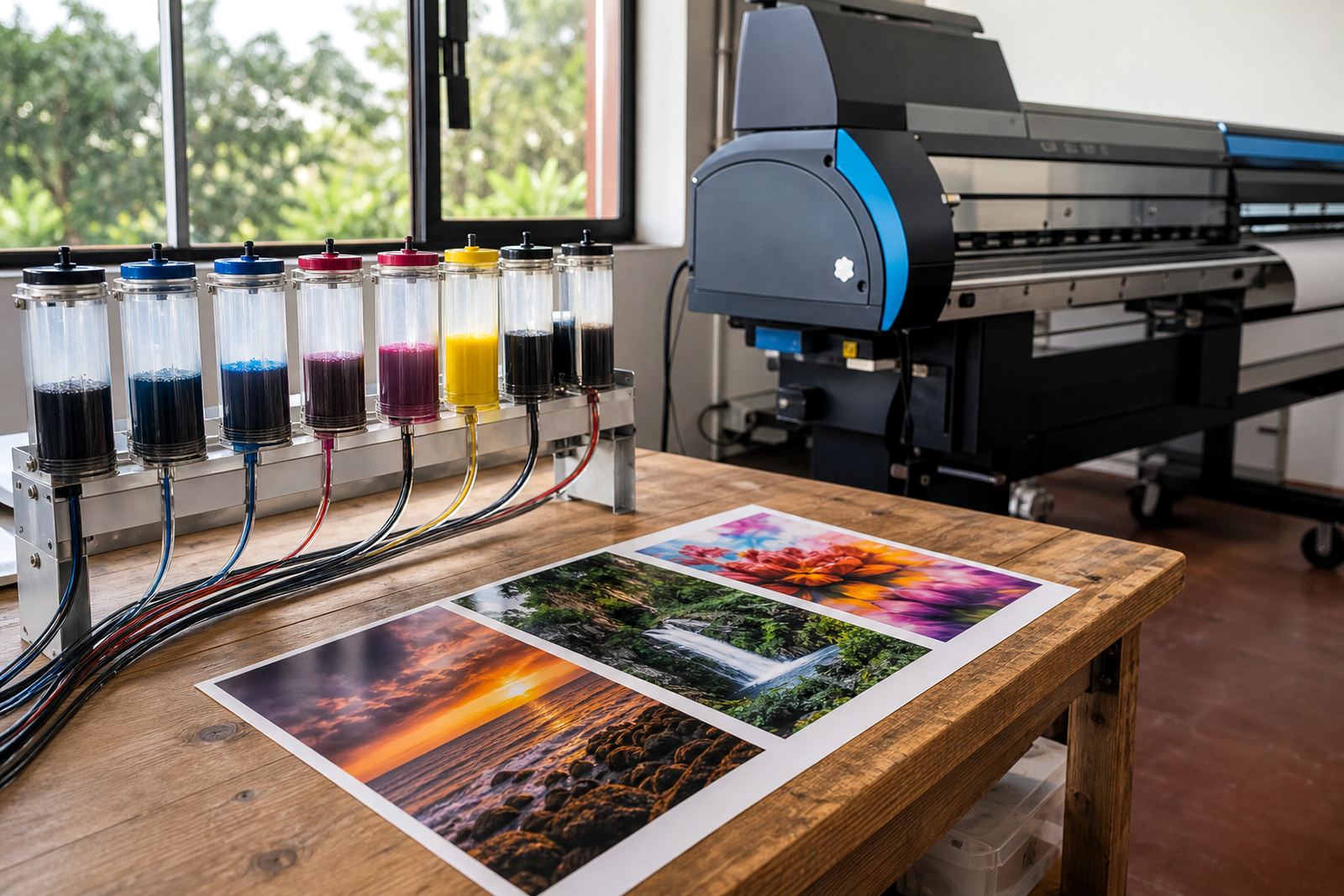
This product is useful where machines are running with dye ink for sharp text, pigment ink for stronger water resistance, or a mixed workflow that changes media often. It is also used where refill systems show poor flow after a long pause, or where a nozzle check print shows broken segments in one colour or several colours at once.
For design studios, that might mean cleaning a head before final proof output. For a print shop, it may be part of routine recovery after a weekend of light use. For artists and photographers, it can help clear a blocked line before a colour-critical run. The fluid is not for casual pouring into tanks, and it should be used with the right amount of control for the specific head type.
- Dye ink systems with light residue or dry-out at the nozzle face
- Pigment systems where fine particles have settled in the head path
- Cartridge refill work that needs gentle flushing before reuse
- Wide-format print heads showing missing lines or uneven output
Fitting and servicing notes that matter on the bench
Nozzle cleaning fluid is normally applied during servicing, not as a loose pour into everyday printing. Depending on the machine, that can mean soaking a capped head, using a small syringe, flushing a cartridge outlet, or working through a cleaning station with the carriage parked in a safe position. On some systems, a technician will also check whether the seals, wipers and cap top are still holding properly, because an air leak can keep the blockage problem alive.
Chip reset tools may be part of the broader service process on certain refill cartridges, but the fluid itself does not replace a reset or a mechanical fix. If the head is badly clogged, let the fluid work in stages rather than forcing a hard flush that might push debris deeper into the nozzles.
Care after cleaning, so the next print is not uneven
After a nozzle clean, the head should be checked with a fresh nozzle check and not left sitting dry for long stretches. Where possible, keep ink lines capped and cartridges sealed when the machine is idle. On systems that print in warm, dusty rooms, regular light maintenance is better than waiting for a full blockage, because the build-up gets harder once it has baked in.
- Run a nozzle check before and after cleaning
- Wipe overspill from the carriage area and the surrounding frame
- Keep replacement ink matched to the system already in use
- Store fluid upright with the cap closed tightly
- Use only clean tools for syringes, caps and flush points
If a machine is showing repeated blockages, the issue may sit with the ink type, the age of the cartridge, or simple dirt in the maintenance station. A cleaner helps, but the full print path should still be checked.
Confirm these details before placing an order
To supply the right nozzle cleaning fluid, the important details are the machine type, whether the setup uses cartridges or a continuous ink supply, the ink family in use, and the kind of blockage being treated. Some printers tolerate only light surface cleaning, while others can take a more involved flush through the head path. It also helps to know whether the team is cleaning one office unit or several workshop machines, because the bottle size and handling method will differ.
When you use our contact form, include the printer model, the ink type if known, the symptom on the nozzle check, and whether the work is for routine care or a blockage recovery. If you are planning a bulk order for a print room or courier delivery outside Durban, the destination town and pack size should also be clear so the order can be packed cleanly and sent without confusion.
- Printer or plotter model
- Cartridge refill system or CISS setup
- Dye ink, pigment ink, or mixed use
- Single unit, multiple units, or workshop stock
- Delivery town and preferred pack size
Key facts
| Product type | Nozzle cleaning fluid for printer and printhead maintenance |
|---|---|
| Use case | Controlled cleaning of ink build-up, light blockage and dry nozzle paths |
| Suitable systems | Refilled cartridges, CISS units and wide-format ink delivery systems |
| Common pack options | Small service bottle, mid-size maintenance pack, larger workshop container |
| Application methods | Syringe flush, capped soak, cartridge outlet clean or service-station use |
| Compatibility note | Best matched to the ink family and printhead design already in use |