
Where the colour drift usually starts
When a cartridge has been refilled or a CISS has just been set up, colour shifts can come from several small issues working together. A nearly clear nozzle check, trapped air, mixed ink residues or a driver setting left on the wrong paper type can all push output off balance. In Durban humidity, ink condition matters too, especially on machines that sit idle between jobs.
Our colour balance help looks at the printed result first, then checks the likely cause. We work with standard office printers, benchtop design units and wider format equipment used for proofing or small production runs. The aim is not a fancy correction, just steadier output that matches the job and paper better.
- Blacks that lean brown, green or blue
- Skin tones that print flat or too red
- Greys showing colour cast in light areas
- Banding that is linked to uneven ink flow
What the service covers on the bench
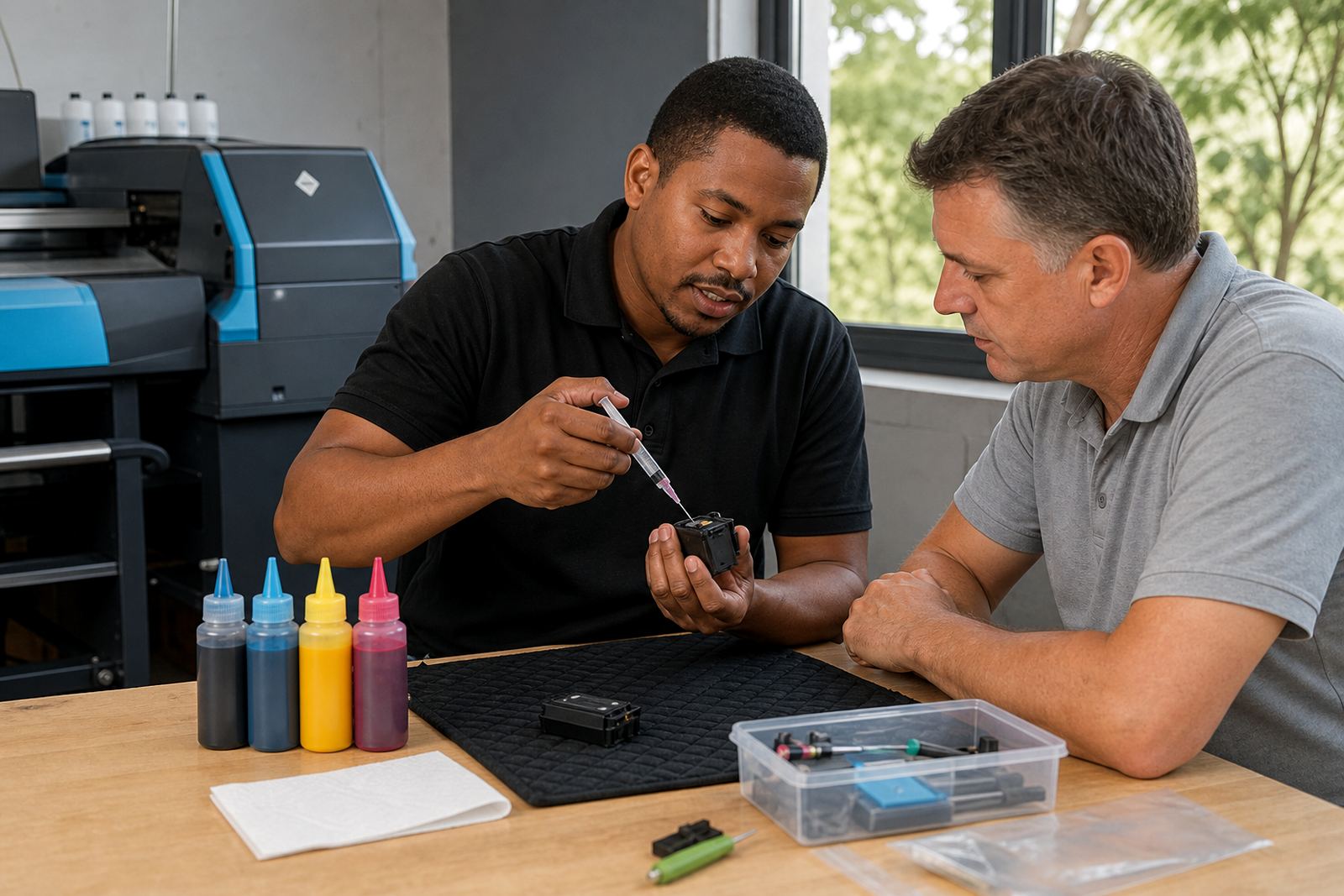
This service covers the practical steps needed to isolate balance issues after refill work. We check the cartridge or tank fill, inspect for leaks, confirm chip recognition where relevant, and review nozzle test patterns for missing channels. If the issue sits in the ink path, we look at flushing, priming and whether the current ink type suits the head and the paper being used.
For some jobs, the fix is a simple settings adjustment. For others, the print head needs a cleaner pattern, a better purge, or a change from dye to pigment ink, depending on the work being produced. We also advise on colour matching for drafts, proofs and final output so the same machine can serve more than one use without constant guesswork.
- Refill inspection and leak checking
- Nozzle pattern review and channel spotting
- Ink type guidance for dye or pigment use
- Chip reset help where the cartridge system uses one
How we work through a colour imbalance
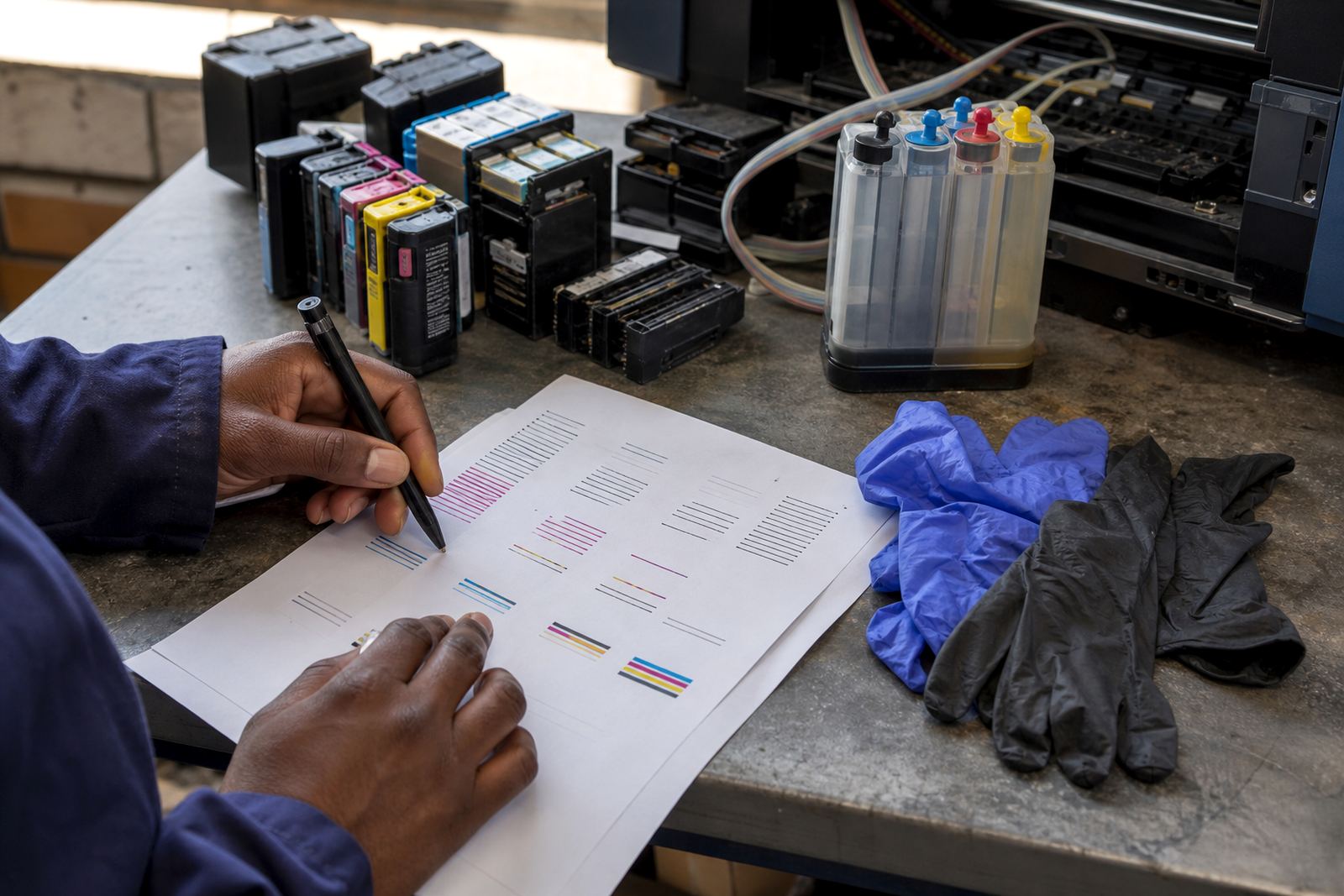
The process begins with the sample print, a nozzle check or the last page that showed the problem. From there we narrow the fault to one of three places: ink supply, print settings or the head itself. That saves time and keeps the fix tied to the actual machine condition, not a guess.
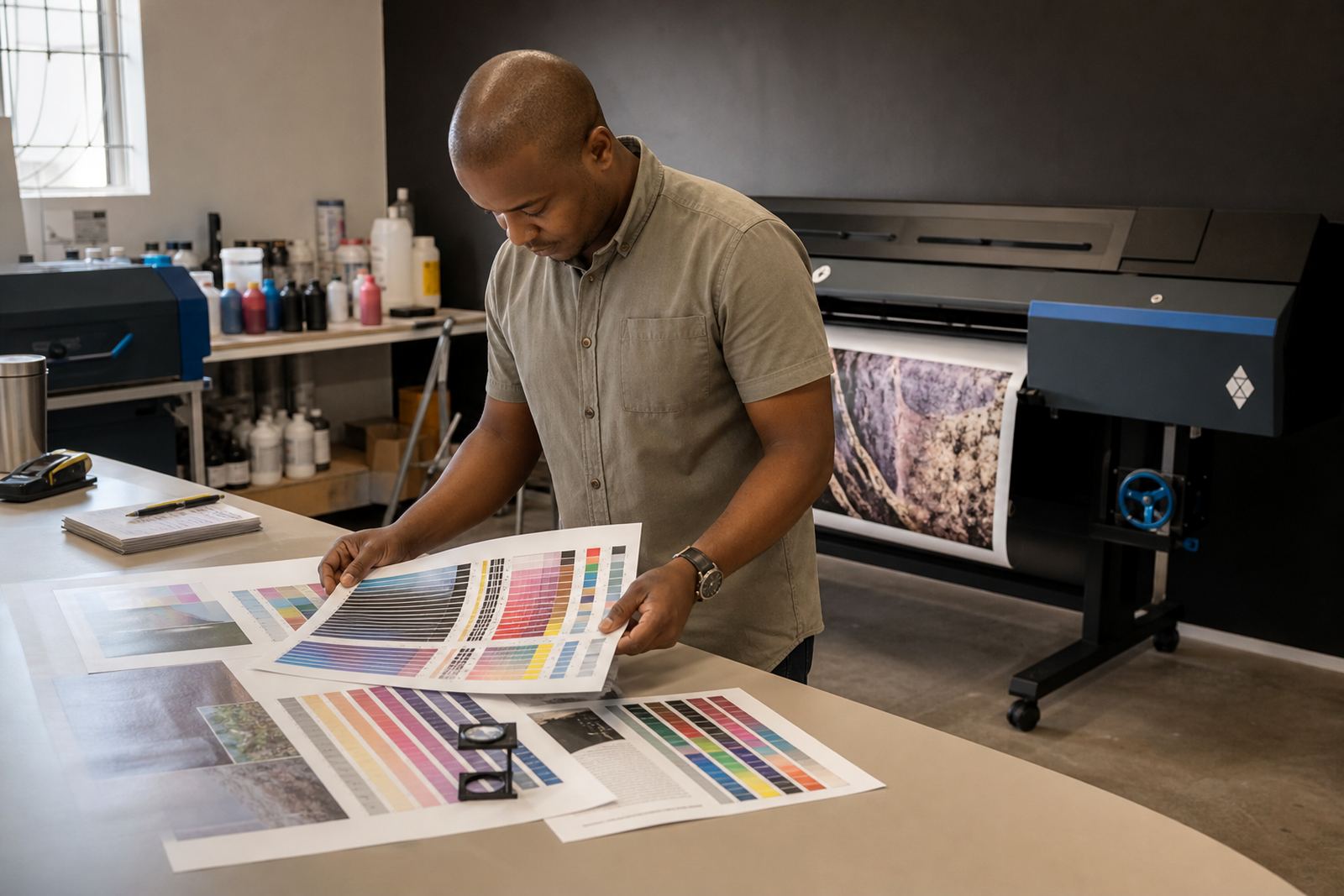
If the printer is part of a CISS setup, we look at tube flow, tank height and whether air has entered the line. For refilled cartridges, we check fill level, chip status and whether old ink has mixed with a fresh colour in a way that throws the balance off. On wide-format systems, we also look at head alignment and the effect of media choice on the final tone.
- Sample review and fault tracing
- Supply path check for air, blockage or poor priming
- Settings review for media, quality and colour mode
- Output test after the adjustment
Specs that shape the result
Colour balance work is only useful when the machine details are matched to the job. A benchtop printer used for invoices will not need the same tuning as a studio unit outputting artwork proofs, and a wide-format printer needs its own paper and ink conversation. We work from the machine’s actual setup, not a generic rule.
Useful details include cartridge type, ink family, paper surface, head condition and the age of the current refill. In practice, a good balance check also considers whether the printer has been left unused, whether the ink path has dried at the tips, and whether the current job needs richer black or cleaner neutral greys.
- Cartridge or CISS format in use
- Dye ink or pigment ink loaded
- Paper type, from plain office stock to coated sheets
- Print head condition and nozzle pattern quality
Pricing approach without guesswork
Pricing depends on the machine type, the number of channels involved and whether the issue is a light adjustment or a fuller recovery job. A single office printer with a minor cast needs less work than a wide-format unit with repeated banding and more than one colour out of line. We keep the price tied to the actual fault and the parts of the system that need attention.
Where a refill problem is only part of the issue, we separate the colour balance work from any extra cartridge or CISS support. That way the quote reflects the task in front of us, not a bundle of unrelated items. If the job needs replacement consumables, we mention the practical options and the effect each one has on print quality.
Aftercare for steadier prints
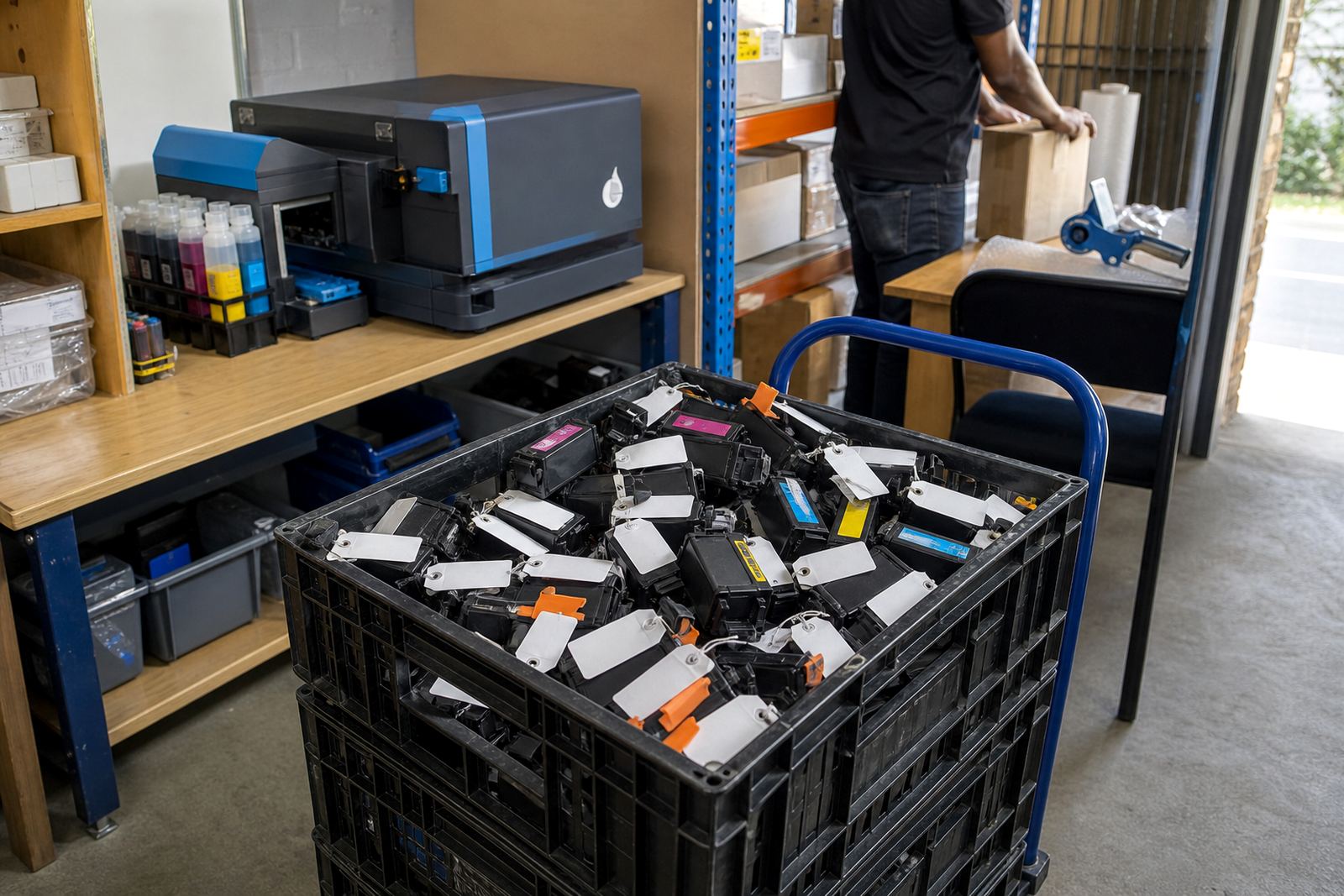
Once the colour is closer to where it should be, we explain the habits that help the printer hold that result. That usually includes better storage of refilled cartridges, sensible shake and settle routines for ink bottles, and a cleaner way to handle empty returns so old residue does not get mixed into fresh fills. Small changes matter when the job runs from a home office or a busy studio.
We also show operators how to spot an early shift before it turns into wasted paper. A quick nozzle check, a look at the first proof and a watchful eye on ink levels can keep the next run cleaner. If the machine moves between jobs or branches, the handling notes need to travel with it.
- Clear handling notes for refilled cartridges and tanks
- Basic print checks before a larger run starts
- Advice on recycling empties through the return programme
- Guidance for offices, studios and print rooms handling mixed work
Key facts
| Service area | Westville, Durban with courier support across South Africa |
|---|---|
| Working formats | Refilled cartridges, CISS units and wide-format print systems |
| Main checks | Nozzle pattern, fill condition, leaks, chip status and ink type |
| Ink guidance | Dye and pigment matching for the job and media |
| Aftercare | Print checks, handling notes and empty return guidance |
| Contact route | Contact form |