What our refill guidance covers
Our cartridge refill advice is for refillable ink cartridges used in office printers, design studios and wider print setups that need steady day to day output. We look at the cartridge body, venting points, sponge condition where relevant, chip behaviour and the ink type already in use, then map the refill steps in a practical order.
The guidance suits both dye and pigment ink systems, but the handling is not identical. Dye ink often flows more freely and gives bright colour on plain paper, while pigment ink is better for sharper text and better water resistance. If the wrong ink is put into the wrong channel, nozzle issues and colour shifts can follow.
- Cartridge inspection before topping up
- Ink selection guidance for dye and pigment systems
- Chip reset advice in general terms
- Leak spotting around seals, vents and fill ports
The refill steps we work through
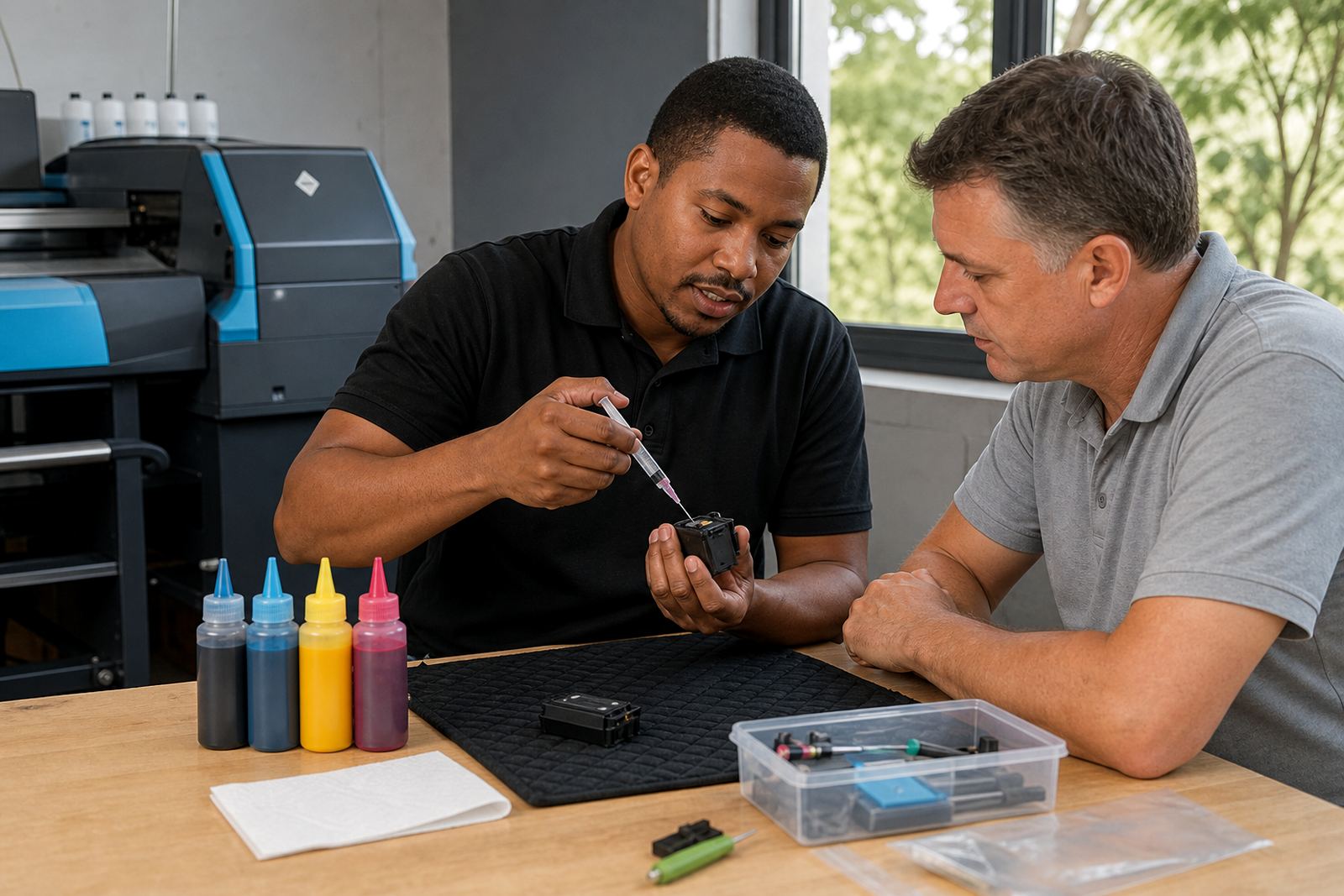
We break the job into smaller checks so the refill stays neat and predictable. That includes confirming the cartridge model, identifying the correct fill point, checking how much ink the sponge can take, and watching for trapped air that can cause weak printing or sudden drop-off on the page.
For customers in Westville, Durban and further afield, the same method applies whether the cartridge is being topped up in a small office or prepared for courier return. The point is to avoid overfilling, forceful injection and the sort of rushed refill that leaves ink on hands, paper or inside the printer.
- Identify the cartridge type and fill port
- Vent or prime only where the design allows it
- Top up in measured amounts, not guesswork
- Wipe, seal and test before the cartridge goes back in service
Mess control and printhead care
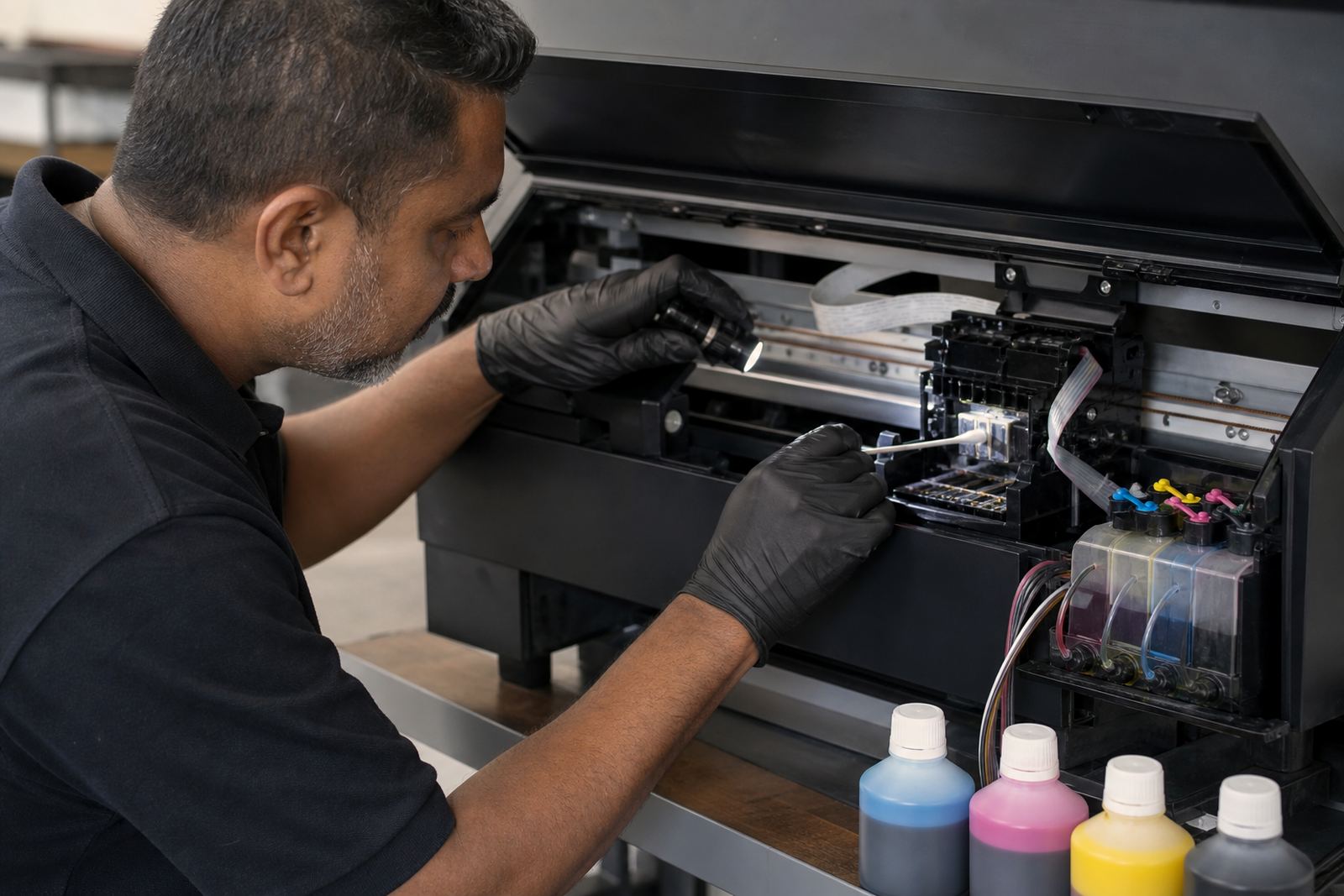
A clean refill starts before the bottle opens. We show how to prepare the work surface, keep absorbent cloths close, avoid cross-contamination between colours and stop dust getting into the cartridge opening. Small details matter more on fine-nozzle printers, where one clotted channel can affect an entire block of colour.
Printhead care is part of the same conversation because a refill is not only about adding ink. If the machine has been standing, or if the cartridge has run nearly dry, the nozzles may need a controlled check after refilling. A short nozzle check can show whether lines are missing, whether one colour is weak, or whether the cartridge needs further priming.
- Keep fill areas clean and dry
- Protect the cartridge contacts from ink stains
- Run a nozzle check after the first install
- Watch for faint banding, gaps or colour drift
CISS and refill kit guidance for larger users
Some print rooms use continuous ink supply systems or refill kits instead of standard cartridge top-ups. In those setups, advice has to cover tube routing, bottle height, ink choice and the balance between supply pressure and print quality. If the ink path is wrong, the printer can flood, starve or trap air in a line.
We also talk through chip reset help in general terms, because some cartridge and system combinations need a reset after refilling before the printer will recognise the ink level properly. Where a resetter is appropriate, it has to match the cartridge family and be used with care. Not every unit accepts the same method, and forcing the issue can damage the chip or waste a full fill.
- CISS priming and line checking
- Refill kit handling for single or multi-colour sets
- Chip recognition and reset advice
- Colour balance checks after the first test prints
When the advice session becomes a working process
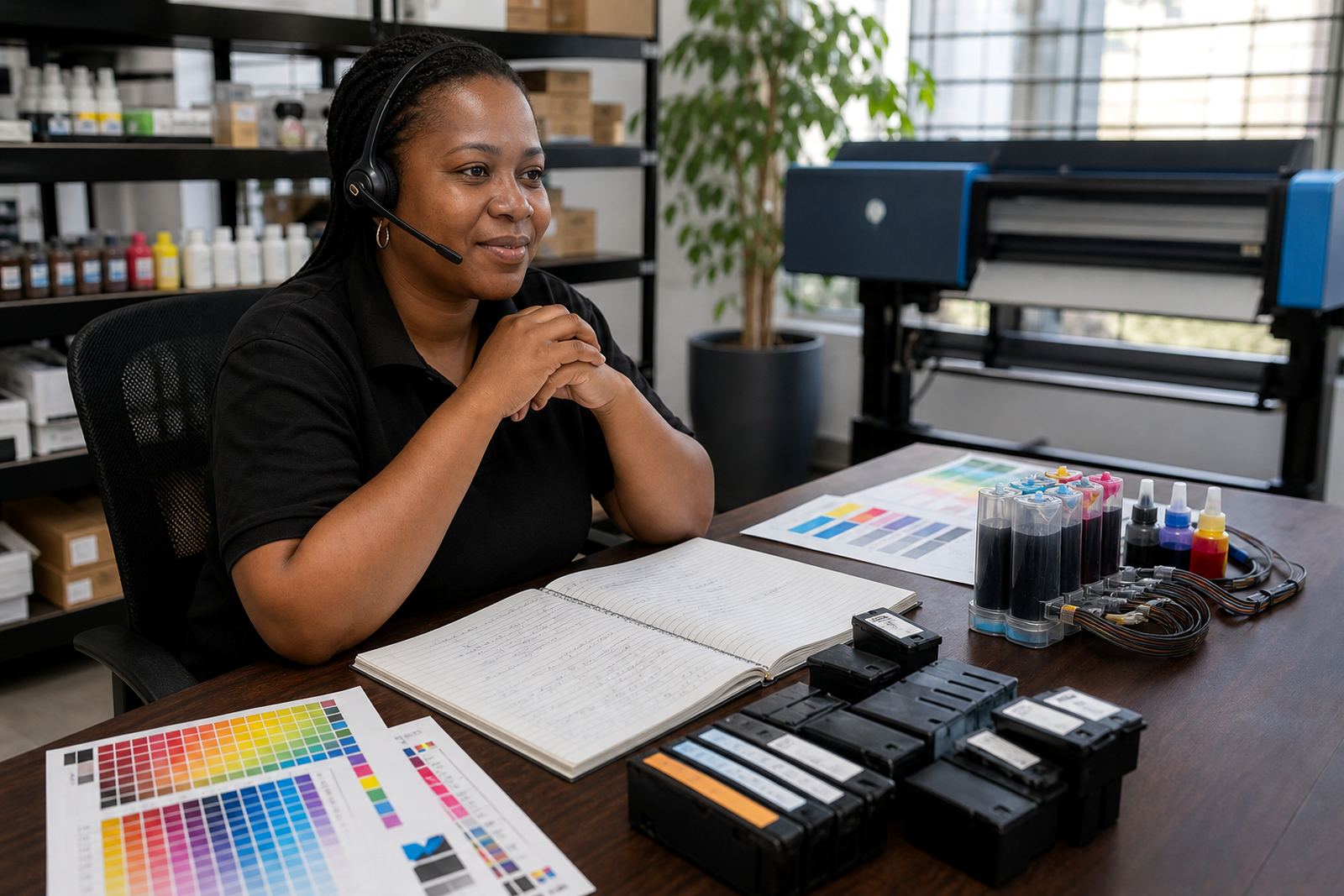
Some customers need only a short talk-through, while others want a more hands-on process that includes remote troubleshooting and stock planning help. We can map the refill routine around the printer model, the number of pages being produced, and whether the setup is used for artwork proofs, office letters or wide-format output.
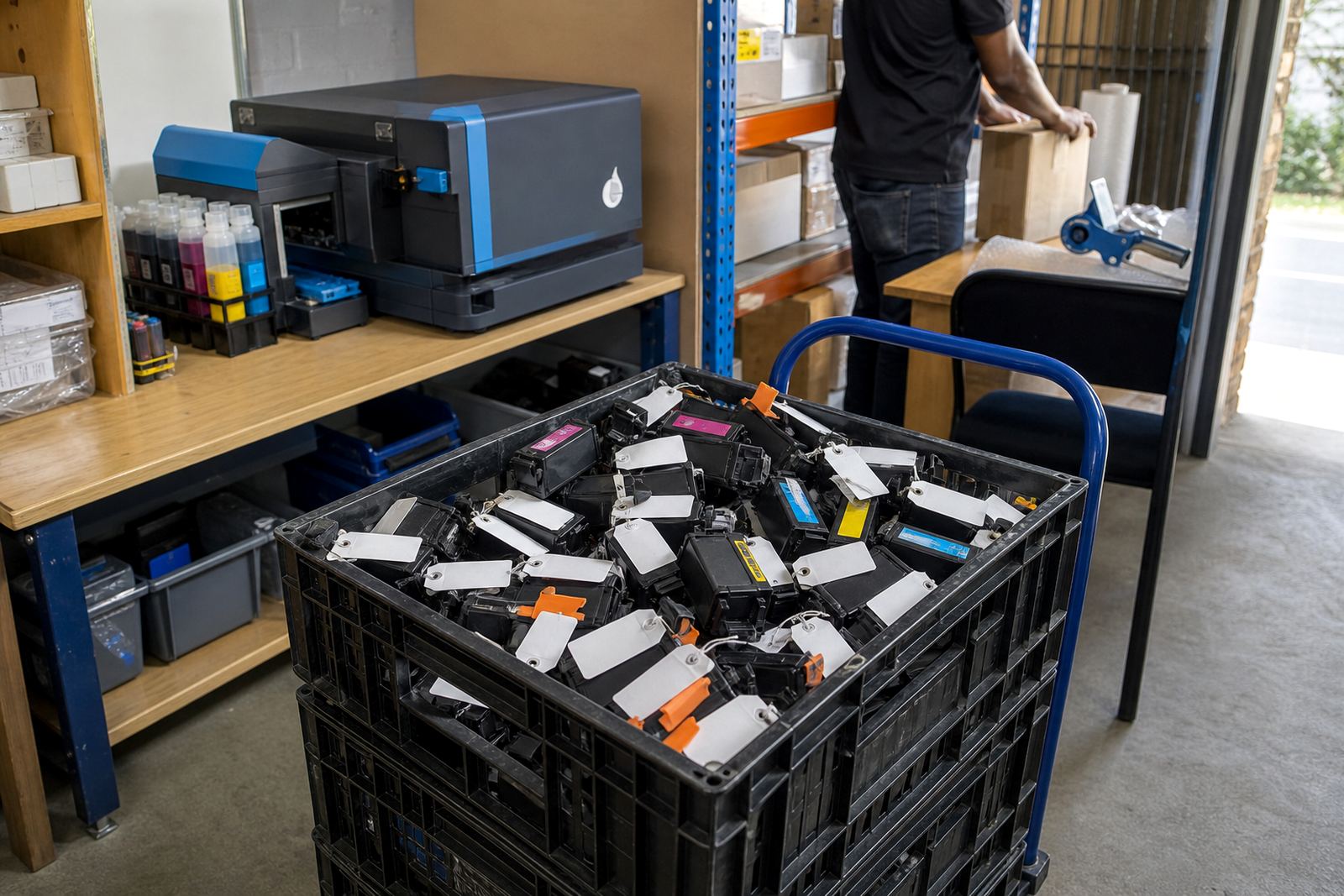
For wide-format print shops, the standards are tighter because the waste from one bad fill is higher. We look at ink storage, label control, cartridge rotation and empty return handling so the refill cycle stays organised. In a busy shop, that can spare a lot of rework and keep the empty cartridges moving instead of piling up in a corner.
- Remote guidance for home and office users
- Training for operators handling repeat refills
- Empty return programme support where suitable
- Stock planning for busy print rooms
Pricing approach, turnaround and aftercare
Our pricing approach depends on the level of support needed, the cartridge format and whether the job is a single advice session or part of a broader refill system setup. We quote around the work described, not around vague assumptions. That keeps the discussion tied to the printer family, the ink type and the number of cartridges involved.
Turnaround depends on the scope of the brief and the delivery route if parts or samples need couriering. Aftercare covers follow-up guidance on print quality, leak checks, colour balance and nozzle behaviour after the refill. If a cartridge prints unevenly after refilling, the next step is usually a check on seating, air locks or ink choice rather than another hurried top-up.
- Quoted to the cartridge type and support level
- Works for local visits and couriered jobs
- Aftercare includes leak and print checks
- Advice remains practical after the first test print
Key facts
| Service area | Westville, Durban, with courier delivery across South Africa |
|---|---|
| Typical users | Offices, design studios, artists and wide-format print shops |
| Ink types covered | Dye and pigment ink guidance |
| System types | Refillable cartridges, refill kits and CISS setups |
| Support topics | Printhead care, nozzle checks, chip reset help and leak checking |
| Aftercare | Colour balance help, test-print review and empty return guidance |