What goes into the empty return stream
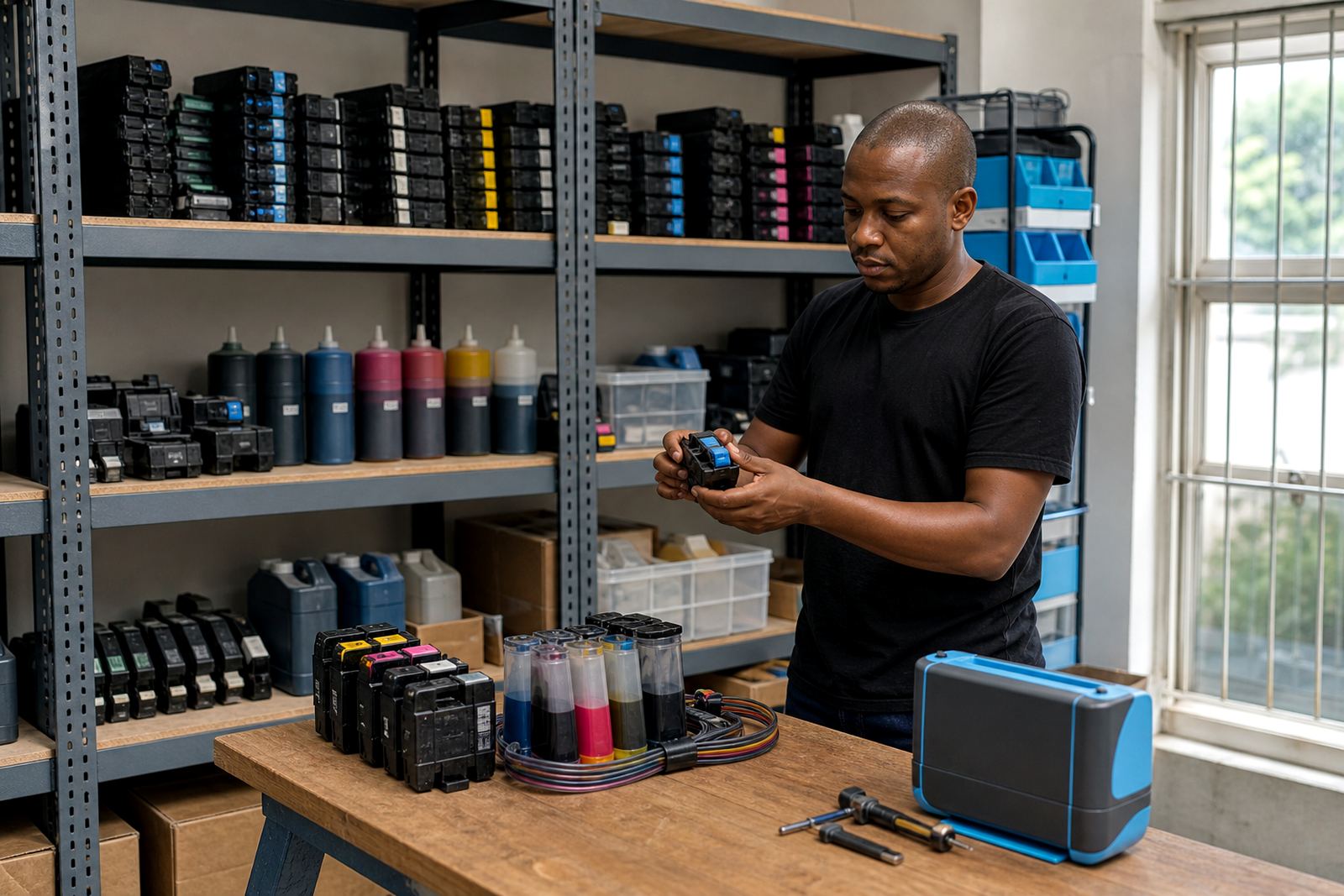
This service covers spent ink cartridges, emptied refill bottles, and other clean consumables that can be sorted for recycling or refurbishing. We work with black, colour and photo cartridges, plus wide-format units where the casing and chip track can be checked before any refill or recovery step.
The point is to separate usable plastic, metal and electronic parts from wet waste or damaged stock. A cartridge that has dried out, leaked or been left open in a drawer can still be assessed, but it needs the right handling first, and that starts with knowing what type of ink was used.
- Spent cartridges from office and studio printers
- Empty bottles from bulk ink and refill kits
- Sorted units for recycling or inspection
- Cartridges with intact casing, chip area and nozzle section
How the return process is handled
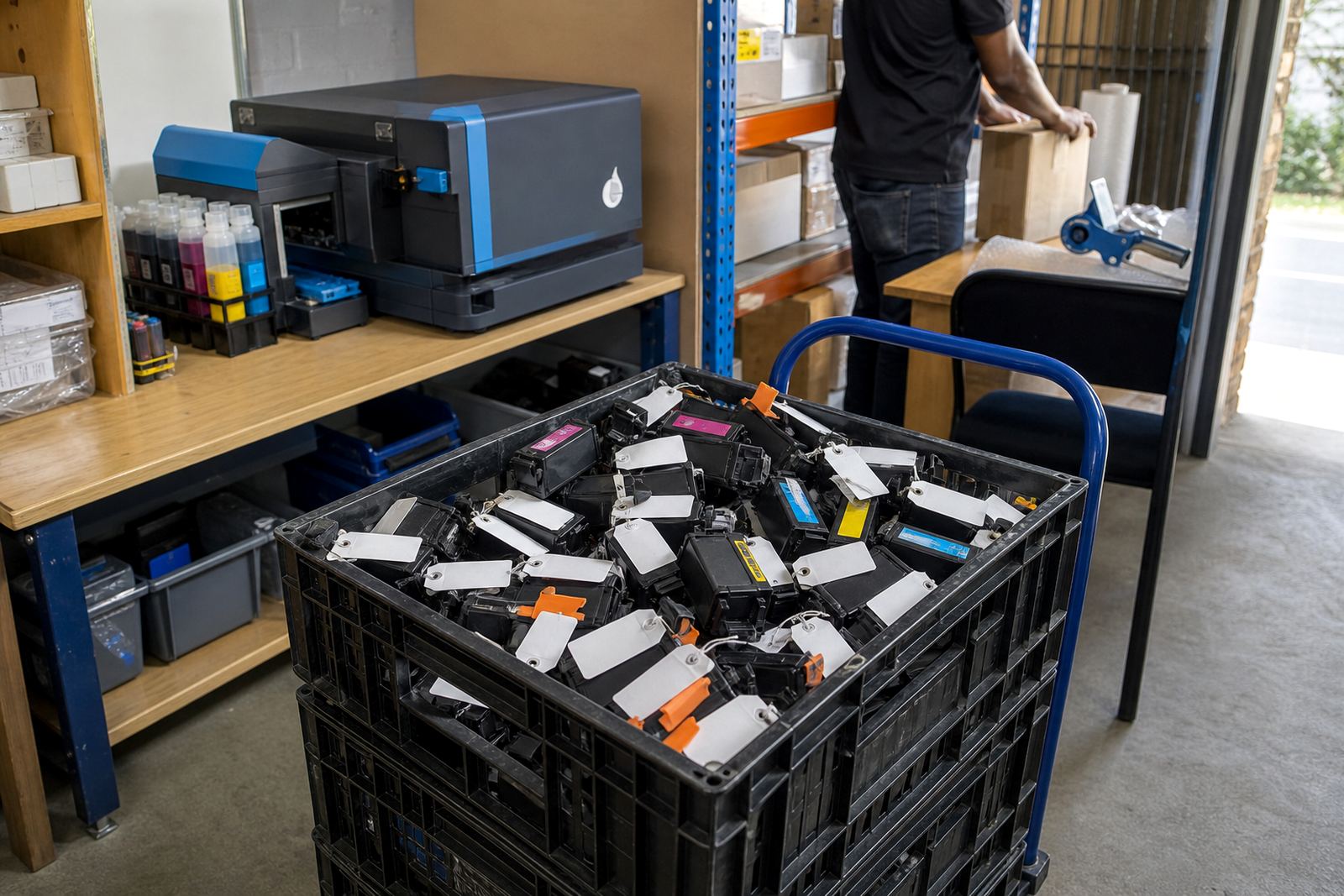
Clients can separate empties by model, colour and condition before handing them over or sending them through courier. We then check whether a unit is suitable for refill, chip reset work, parts recovery or basic recycling. If a cartridge has residue on the contacts or around the outlet, it is set aside for cleaning and inspection before any further use.
For larger offices, design studios and wide-format print shops, a labelled box system usually keeps the stream under control. It also helps when different printers run different ink families, because dye and pigment waste should not be mixed in a way that leaves the bottles or trays contaminated.
- Step 1: Sort empties by printer type and ink type
- Step 2: Seal each item so residue does not spread
- Step 3: Label damaged, leaking or mixed units separately
- Step 4: Send the batch for collection, drop-off or courier movement
What we check before anything is reused
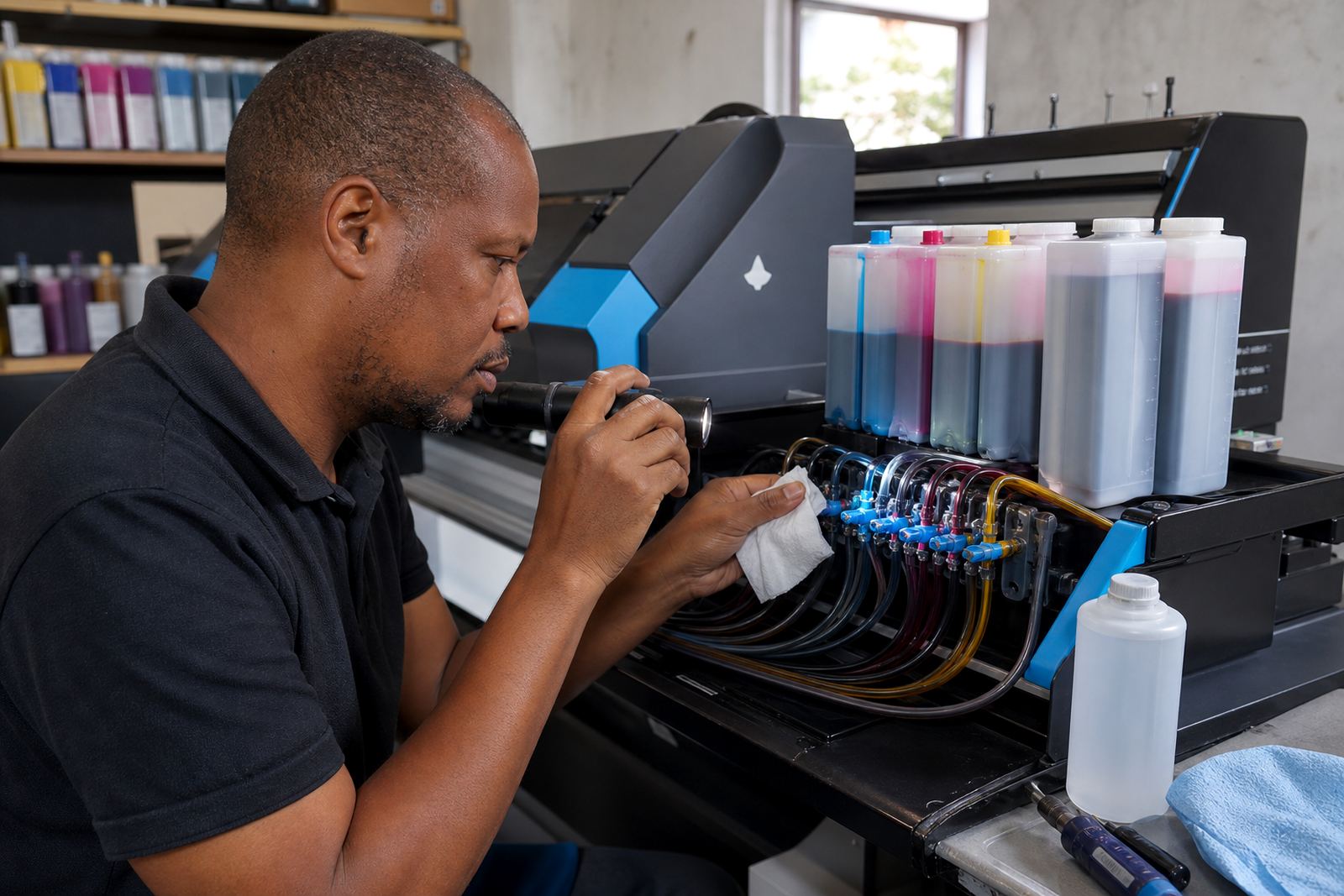
Before a cartridge goes back into a refill or recovery cycle, we look at the casing, chip contact points, sponge condition and any sign of air ingress. With refill systems, the tubing, bottles and connectors also need a close look because a small leak can affect colour output and paper handling. That matters more in humid Durban conditions, where ink can shift if storage is careless.
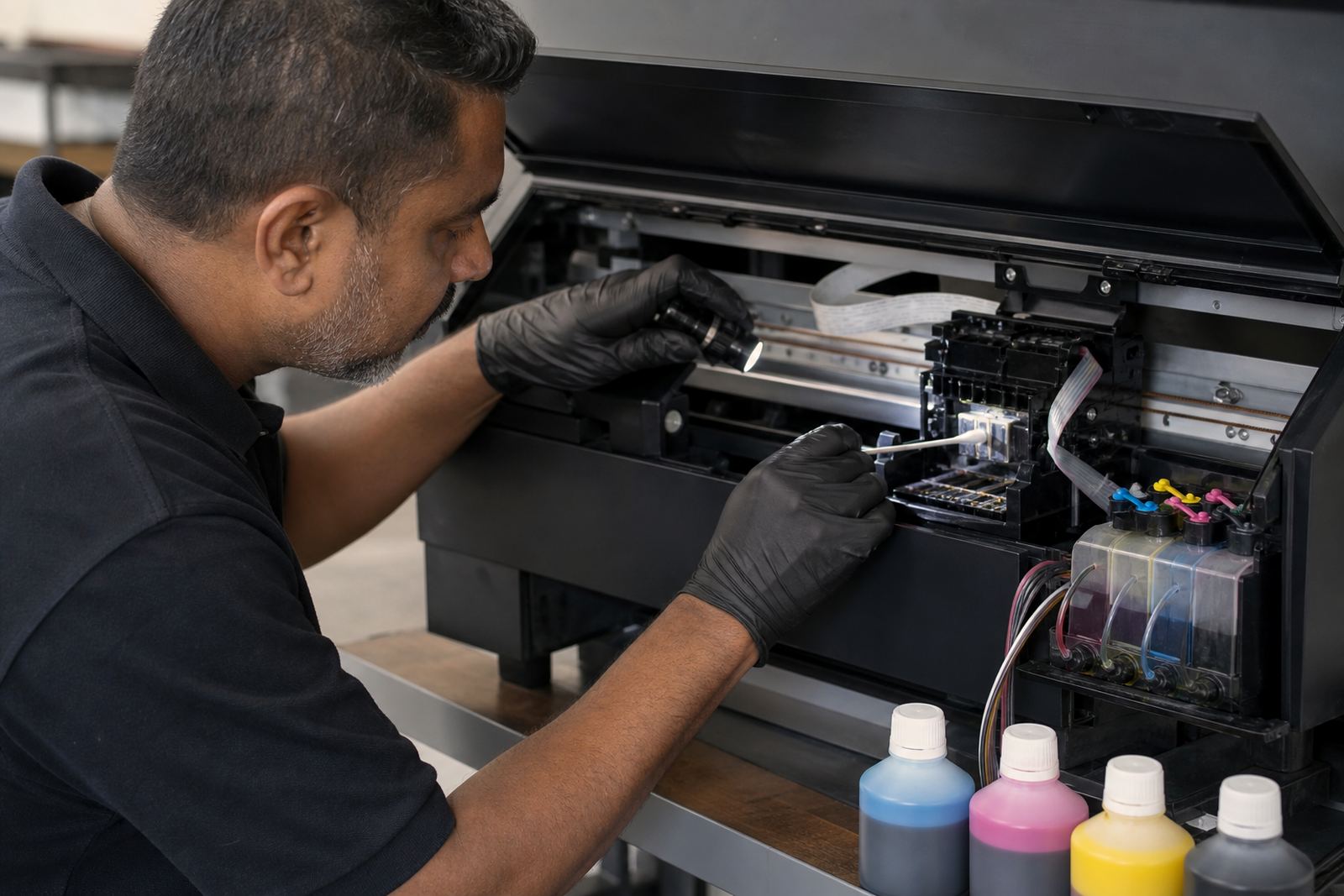
Printhead care forms part of this service too. A clean empty is easier to work with than one that has dried pigment at the outlet or a clogged nozzle path. Where needed, we advise on nozzle checks, simple flush routines and the safest way to store unused units so the next fill does not start with trouble.
- Cartridge casing and clip condition
- Chip area and contact cleanliness
- Nozzle opening and outlet residue
- Bottle, tube and connector checks for CISS units
Courier movement and local handover points
Our base is in Westville, Durban, and we assist clients across South Africa through courier movement and practical collection planning. That includes Durban, Pietermaritzburg, Johannesburg, Pretoria and Cape Town, plus nearby areas such as Ballito and Hillcrest where regular office runs may make handover simpler. Larger batches can be packed by model, while smaller jobs usually travel in a clearly marked carton with padding around the cartridges.
For return work, packaging is more than a neat touch. Loose cartridges can leak through a carton, chip contacts can bend, and mixed stock becomes harder to sort. A dry box, sealed bag and a note on the printer range usually save a lot of sorting time at the other end.
- Westville handover for Durban-based clients
- Courier collection for other major cities
- Sorted cartons for mixed printer stock
- Protective packing for leaking or fragile units
Pricing is tied to the batch, not the guesswork
The pricing approach depends on the number of empties, the condition of the stock and whether the return includes sorting, cleaning or recovery work. A clean batch of standard cartridges takes less handling than a mixed box with damaged housings, wet residue and loose chips. Wide-format units and refill system parts are assessed separately because they need different checks and more careful packing.
We keep the approach practical. Some batches are suitable for return with little more than sorting and transport, while others need inspection before anything is reused. Where refill support is involved, the work may also include ink type guidance, leak checking, chip reset help and colour balance notes so the next cycle starts on the right foot.
- Batch size affects the handling load
- Condition affects sorting and recovery steps
- Special units are quoted separately
- Refill support can be added where needed
Aftercare for offices, studios and print rooms
Once the empties have been returned, we can advise on storage, segregation and the next refill cycle. Offices often need a simple tray system for black and colour units, while studios may need a deeper split between photo, dye and pigment stock. Wide-format print shops usually benefit from clearer operator routines, especially when several machines share the same shelf space.
Aftercare also covers practical handling points: keep caps on, avoid squeezing soft cartridges, and do not leave opened ink in hot vehicles or direct sun. If you are training staff, the same routine should be used every time, because mixed habits are what usually cause leaks, air pockets and muddled stock.
- Storage advice for empty and reusable stock
- Ink type separation for mixed printer fleets
- Leak prevention and handling guidance
- Operator training for sorting and return routines
Key facts
| Service area | Westville, Durban, with courier support across South Africa |
|---|---|
| Return items | Spent cartridges, refill bottles, sorted consumables and related empties |
| Handling focus | Sorting, inspection, recycling support and refill recovery |
| Ink categories | Dye ink, pigment ink and mixed printer stock |
| Related support | Chip reset help, printhead care and leak checking |
| Client types | Offices, design studios, artists and wide-format print shops |