
What we cover when stock gets thin
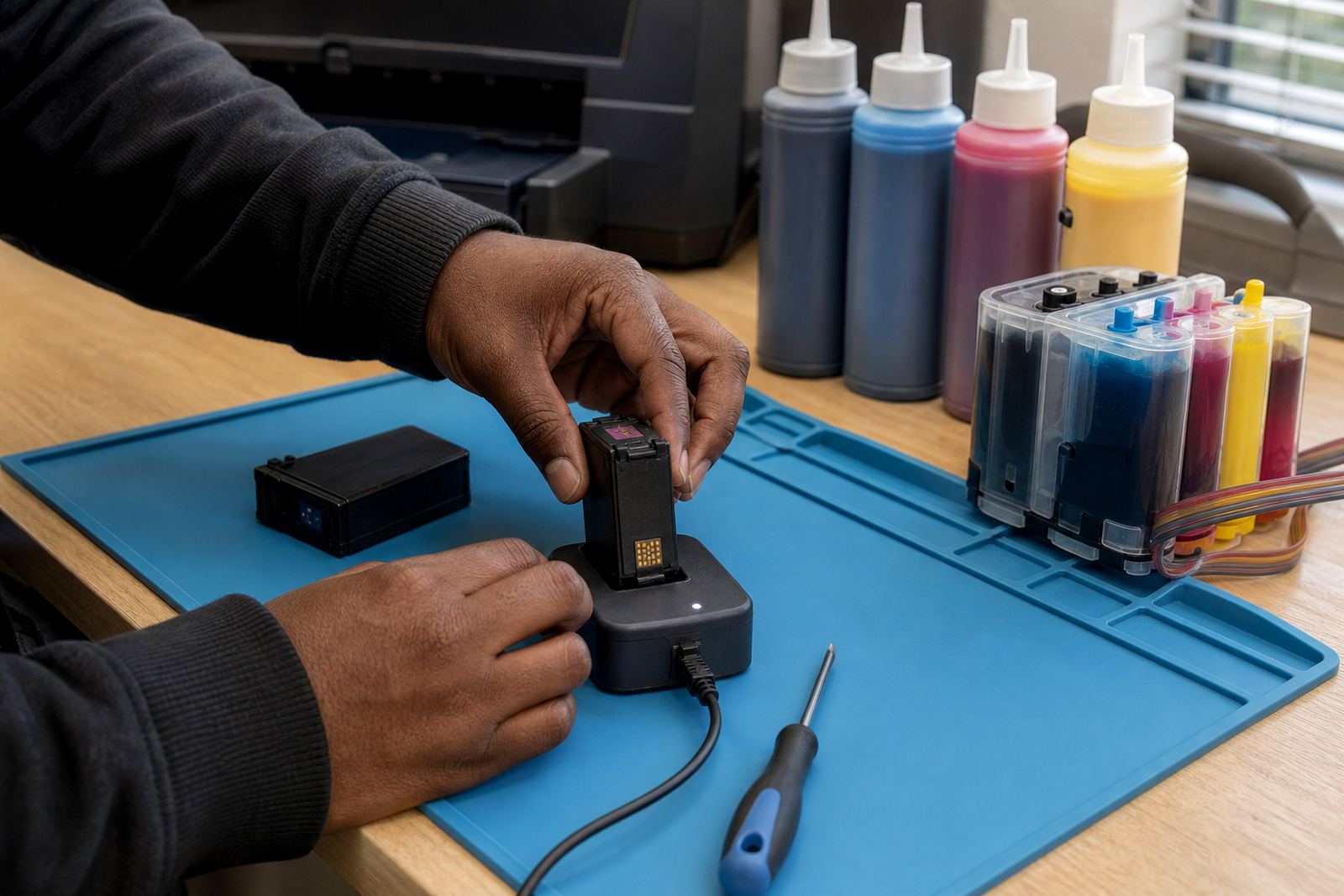
Stock planning is not only about counting boxes. It covers the items that keep printing moving day to day, from refillable cartridges and bulk ink to swabs, cleaning fluid, gloves and spare chips where those are part of the setup. We look at what you print, how often each machine runs and which colours or formats give trouble first.
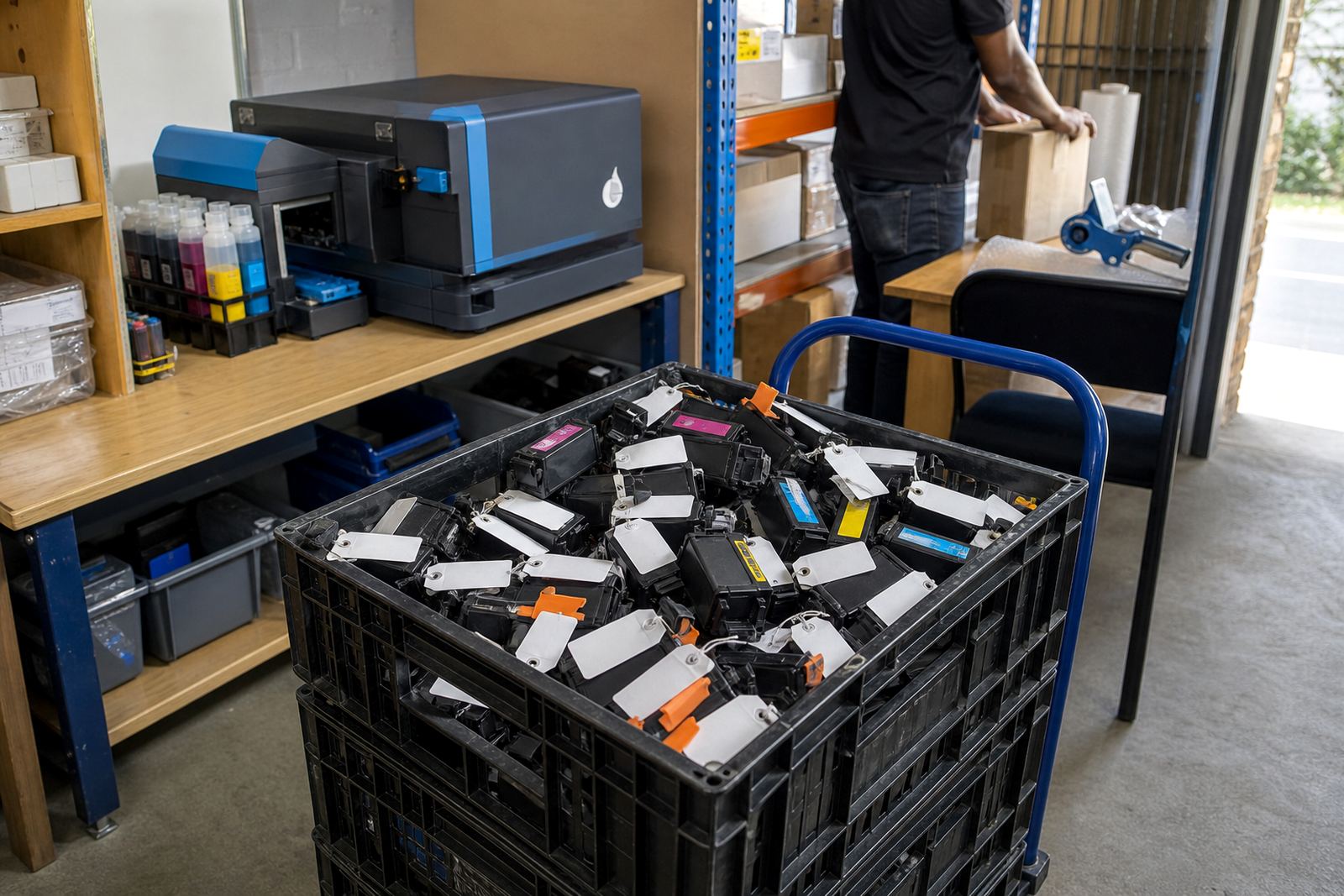
For offices in Westville or Hillcrest, that may mean a lean set of black and colour refill items with a small reserve for busy month end. For design studios and wide-format print shops, the picture is usually broader, because photo ink, dye ink, pigment ink and cleaning consumables all sit differently on the shelf. A good plan also helps with empty return sorting, so usable empties are not mixed with damaged ones.
- Refill cartridges for office and studio printers
- Bulk ink and refill kits matched to the machine type
- Cleaning liquid, swabs and nozzle care items
- Replacement chips and reset help where suitable
- Empty cartridge return planning and sorting
How we map your print load
The first step is a working view of the printers already in use. We note model families, cartridge type, whether the unit uses dye or pigment ink, and if it runs light office pages or heavier colour output. That gives a practical picture of what should sit on the shelf, and what should only be ordered when the existing stock drops low.
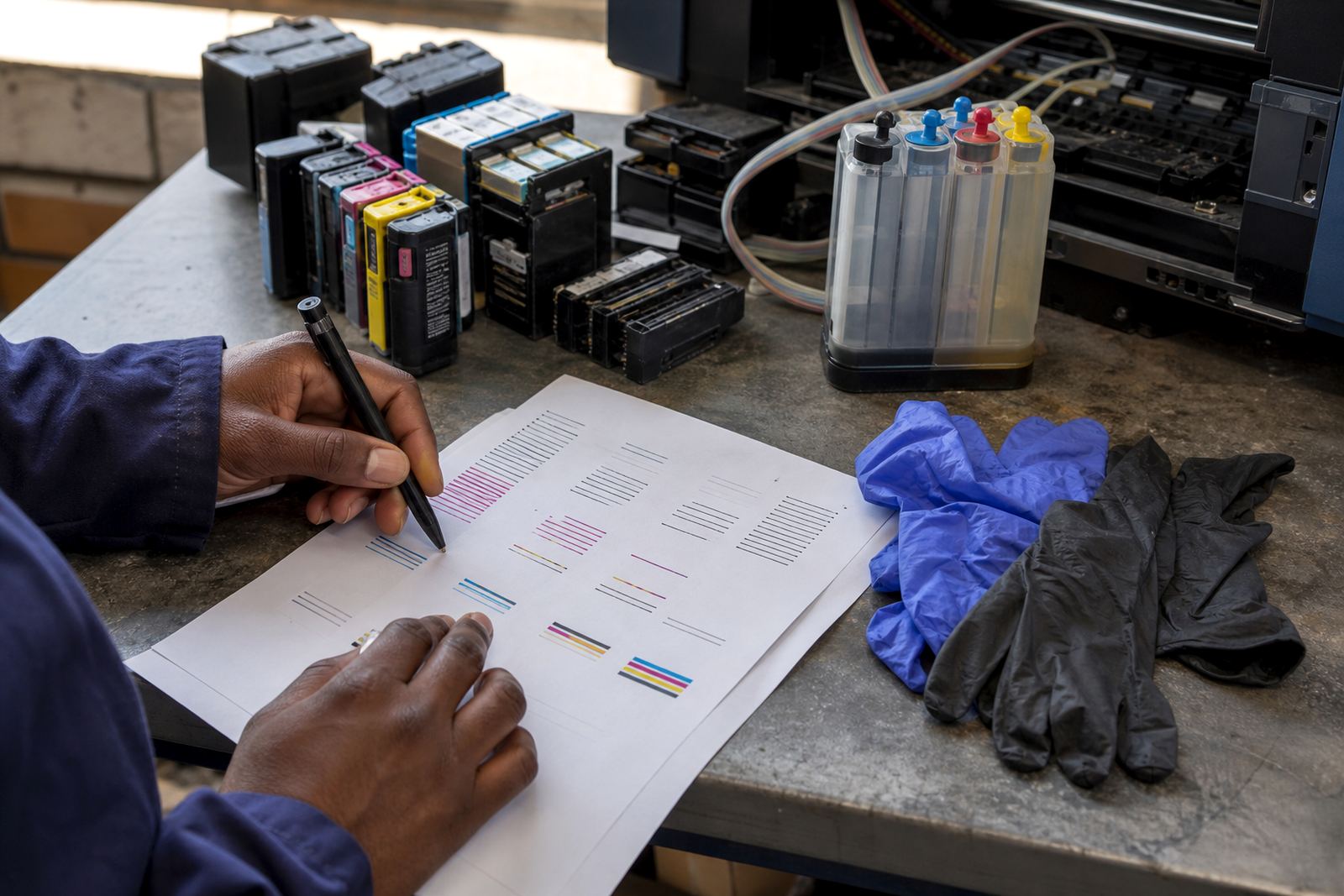
We also look at location. Durban humidity, coastal storage conditions and dusty studio spaces can affect how long opened ink and cleaning items stay clean. In some rooms a sealed cabinet is fine, in others it is better to keep cartridges upright and away from direct sun. Little details matter here, because dried nozzles and clogged lines can waste more than the original stock value.
- Printer count and model grouping
- Ink type used in each machine
- Typical monthly page or print volume
- Storage conditions on site
- Risk points such as clogging or leakage
Placing the right items in reserve
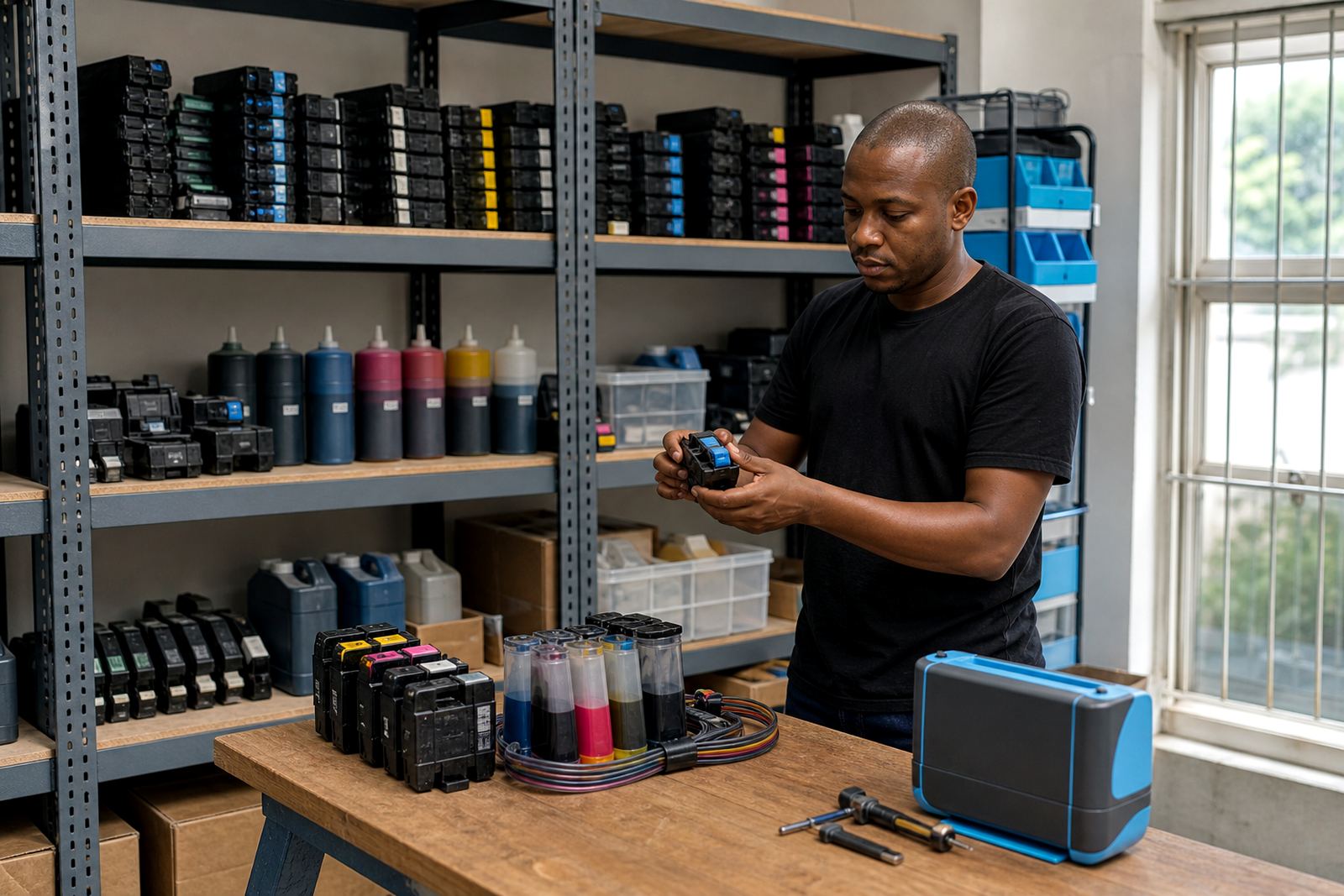
A stock plan works best when it names the right reserve items in plain terms. We help separate daily-use consumables from emergency spares, then match each item to the printer group that needs it. Offices often need a simple reserve of black cartridges, while studios may need a wider spread of colours and a few special cleaning items for ink systems that pause between jobs.
For wide-format work, the reserve list can include bulk ink bottles, refill fittings, line cleaning items and a small note on chip reset handling where that applies. We keep the advice practical. There is no value in holding too many consumables that age badly or are wrong for the machine, and there is no sense in running out of the one colour that holds the job together.
- Working reserve for active printers
- Emergency items for busy weeks
- Separate list for colour-critical work
- Clear notes on what can be shared between machines
- Rotation advice so older stock is used first
Steps from first check to stock list
We begin with the machines, the types of ink in use and the items already on hand. After that we build a stock list that shows what to keep, what to buy in smaller numbers and what should be ordered only when a job pattern changes. Where refill kits are part of the setup, we include the extras that keep the process cleaner, such as gloves, wipes and a safe place for opened bottles.
The final list is shaped around the people using the printers. An accounts office in Pretoria does not need the same reserve as a busy creative studio in Cape Town, and a courier-based print team in Johannesburg may want a tighter plan for empties and refill cycles. We can also talk through operator handling, because a good stock room still needs people who know what goes where.
- Printer list and usage review
- Ink type and cartridge format check
- Reserve quantities matched to real use
- Handling notes for refill and cleaning items
- Empty return and restock planning
Pricing shaped by the job size
Pricing depends on how many machines you have, how mixed the printer types are and whether the work is a simple office setup or a wider print room with several ink systems. Smaller stock plans are usually straightforward. Larger planning jobs, especially where dye and pigment inks are both used, take more time because the reserve list needs to be split properly and not guessed at.
We do not build the work around generic bundles. The cost follows the actual planning task, the stock depth required and whether the brief includes refill advice, chip reset guidance or empty return handling. That way the plan suits the room, not a shelf full of extras that never get opened.
Courier delivery can be arranged across South Africa, including Durban, Pietermaritzburg, Ballito, Johannesburg, Pretoria and Cape Town. When items are sent out, packing is kept firm and tidy so bottles, cartridges and consumables travel safely.
Aftercare once the shelf is set
After the stock list is in place, we stay available for practical follow-up on the same printers and consumables. That can include checking whether a colour is being used faster than expected, whether empties are being returned in good condition, or whether a refill item should move from reserve to active stock. If nozzle checks start failing, the stock plan may need a different cleaning mix or a better way of storing the cartridge set.
We also help teams keep notes that make reordering easier. A neat record of what runs out first, what sits untouched and which machines are the most demanding saves time later and cuts down on wrong purchases. For some clients the useful part is not the list itself but the way it settles the buying pattern into something calmer and easier to manage.
- Review of items that move too fast
- Notes on cartridges that should be cycled earlier
- Adjustments for humid storage or busy print rooms
- Guidance on empties, cleaning stock and spare chips
- Practical updates when printer use changes
Key facts
| Service area | Westville, Durban base with courier delivery across South Africa |
|---|---|
| Main stock types | Refurbished cartridges, bulk ink, refill kits, cleaning consumables |
| Ink guidance | Dye and pigment support for office, studio and wide-format use |
| Planning focus | Reserve quantities, rotation notes, empty return handling |
| Support methods | Remote troubleshooting, operator training, refill advice |
| Typical users | Offices, design studios, artists and wide-format print shops |