Start with the jobs that run every week
Most stock problems start with one assumption, that the next order can wait a little longer. It is better to track the jobs that print every week and treat those items as your baseline. In a Durban office that prints invoices, reports and courier labels, black cartridges usually move first. In a studio or print room, colour sets and cleaning supplies often matter just as much.
Use the last month as a guide. If your team used more ink during a campaign, exam season or a run of client proofs, do not plan from a quiet week. Reorder planning works best when it reflects real use, not wishful use.
- List the printers that are used daily.
- Separate text printing from colour or photo work.
- Keep a note of high-use months.
- Mark which machines share the same cartridge family.
Know the signals before the cartridge runs dry
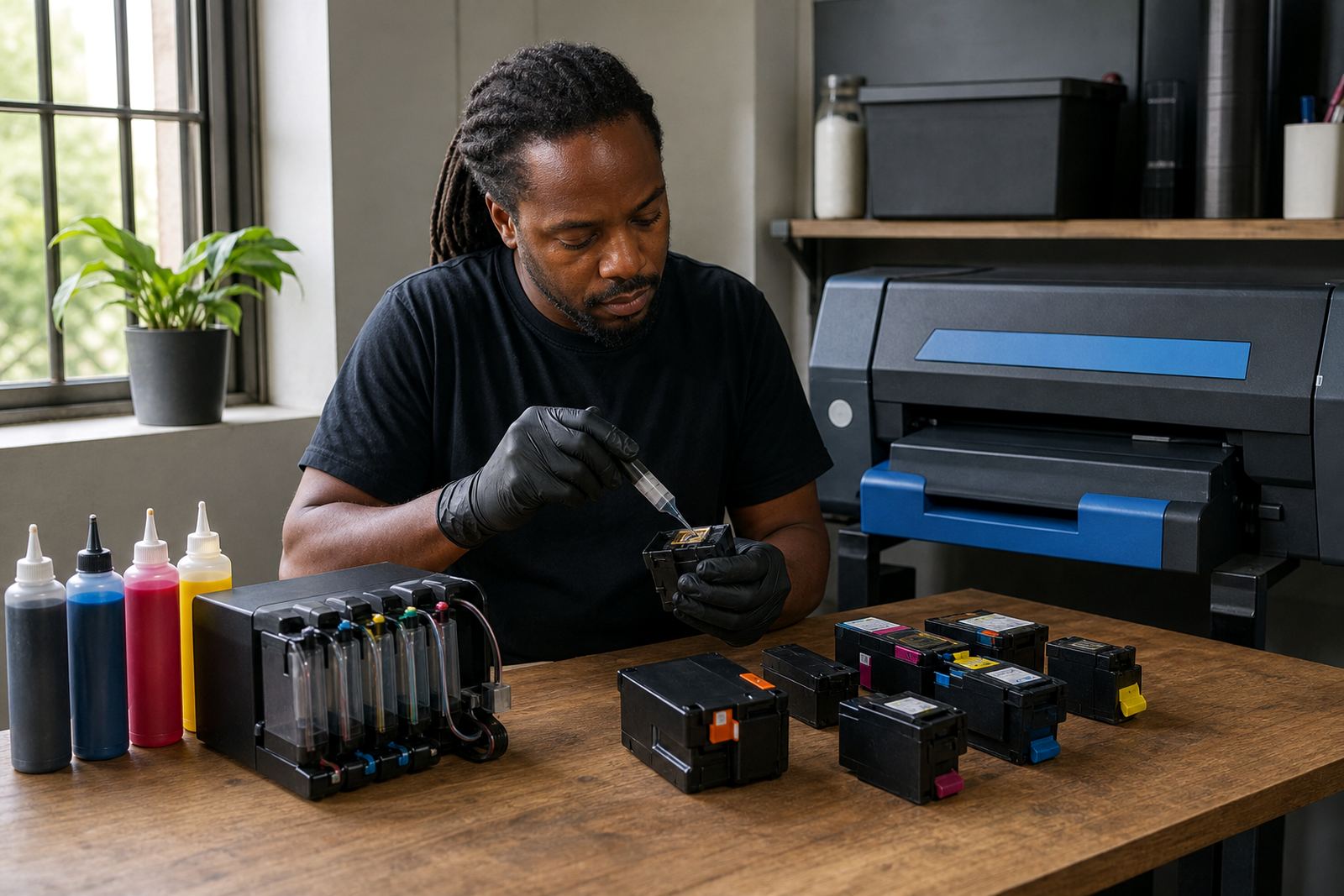
Refurbished cartridges and refill systems give useful warning signs if staff know what to look for. Faded output, streaks, missing colours and repeated nozzle checks usually mean the supply is getting low, or the printhead needs attention. If a printer starts asking for frequent cleaning cycles, that is a sign to review both ink level and maintenance stock.
Chip warnings can be confusing, especially when a cartridge still has ink inside it. A resetter or chip-related fix may help on some setups, but it is still wise to keep one spare set or bottle in reserve. That way the printer does not sit idle while everyone is guessing whether the issue is ink, the chip, or a blocked nozzle.
- Watch for pale text on normal prints.
- Check for banding in colour areas.
- Note repeated cleaning prompts on the screen.
- Keep a spare for the printer that carries urgent work.
Plan bottles and cleaning supplies together
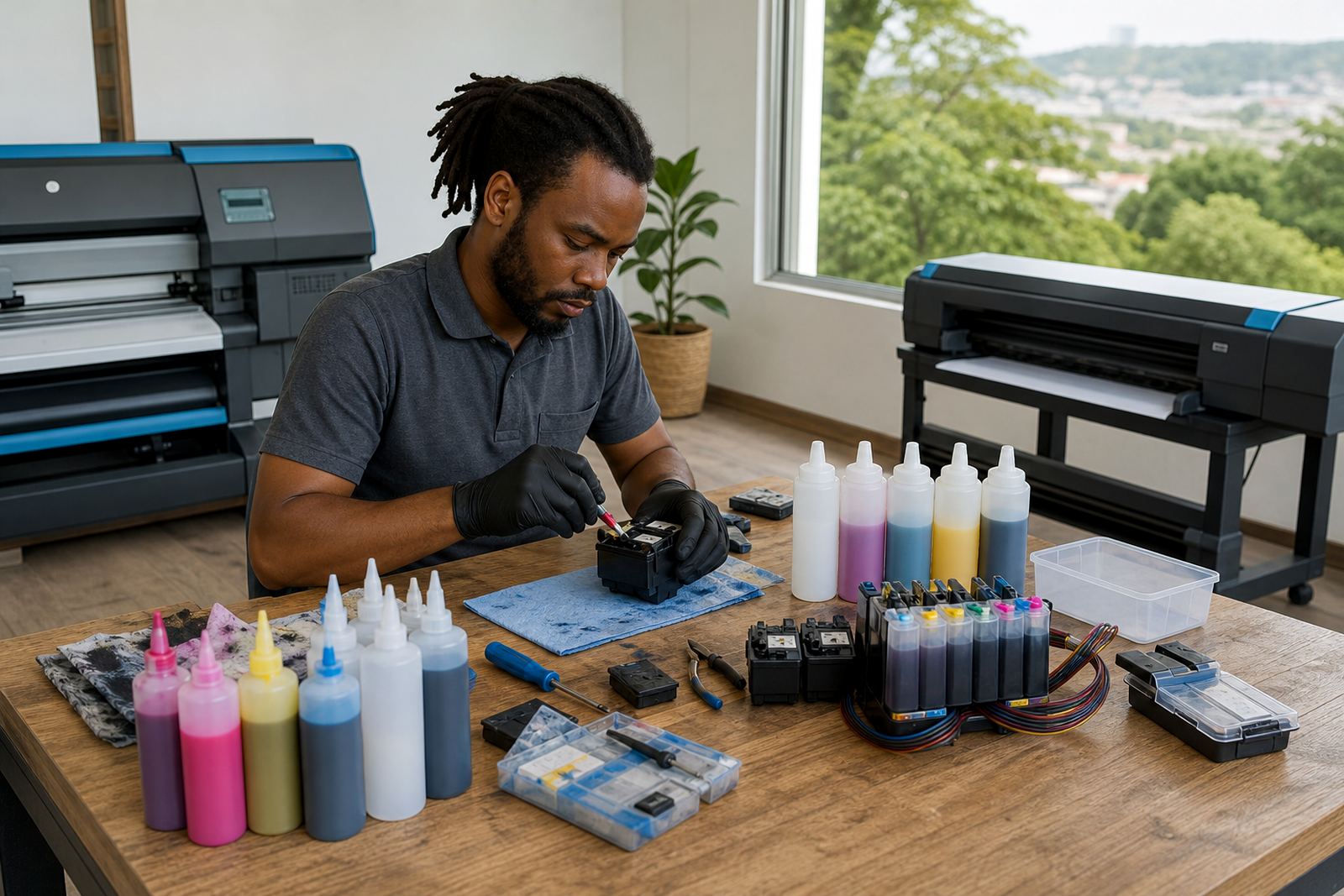
Bulk ink systems are easier to manage when bottles are counted with cleaning supplies, not separately. Dye ink is often used for sharper colour work and general office printing, while pigment ink is better suited to documents that need stronger water resistance and more stable black text on plain stock. The right mix depends on the printer and the way it is used.
Cleaning fluid, lint-free cloths and other maintenance items should be part of the same reorder note. If a system runs low on cleaning supplies, print quality often drops before the main tank is empty. For shops near the coast, humidity can also affect storage, so keep bottles sealed and out of direct sunlight.
- Store unopened bottles upright.
- Keep cleaning supplies with the printer record.
- Match ink type to the printer and the work.
- Use sealed containers for empties waiting to be returned.
Set a reorder point that fits your team
A simple reorder point is usually better than a complicated spreadsheet. Decide on a number that gives you room for normal use, then place the next order before stock drops below that line. For offices, that might mean one spare cartridge per printer. For a print shop, it may mean a deeper buffer for black, cyan, magenta and yellow, plus maintenance items for test runs.
Courier delivery across South Africa makes planning easier, but it still helps to keep your own reserve. If the team in Pietermaritzburg or Johannesburg is handling a deadline run, a late reorder can turn into a repair job, and that costs more time than a small buffer ever would.
Keep empty returns in the same plan
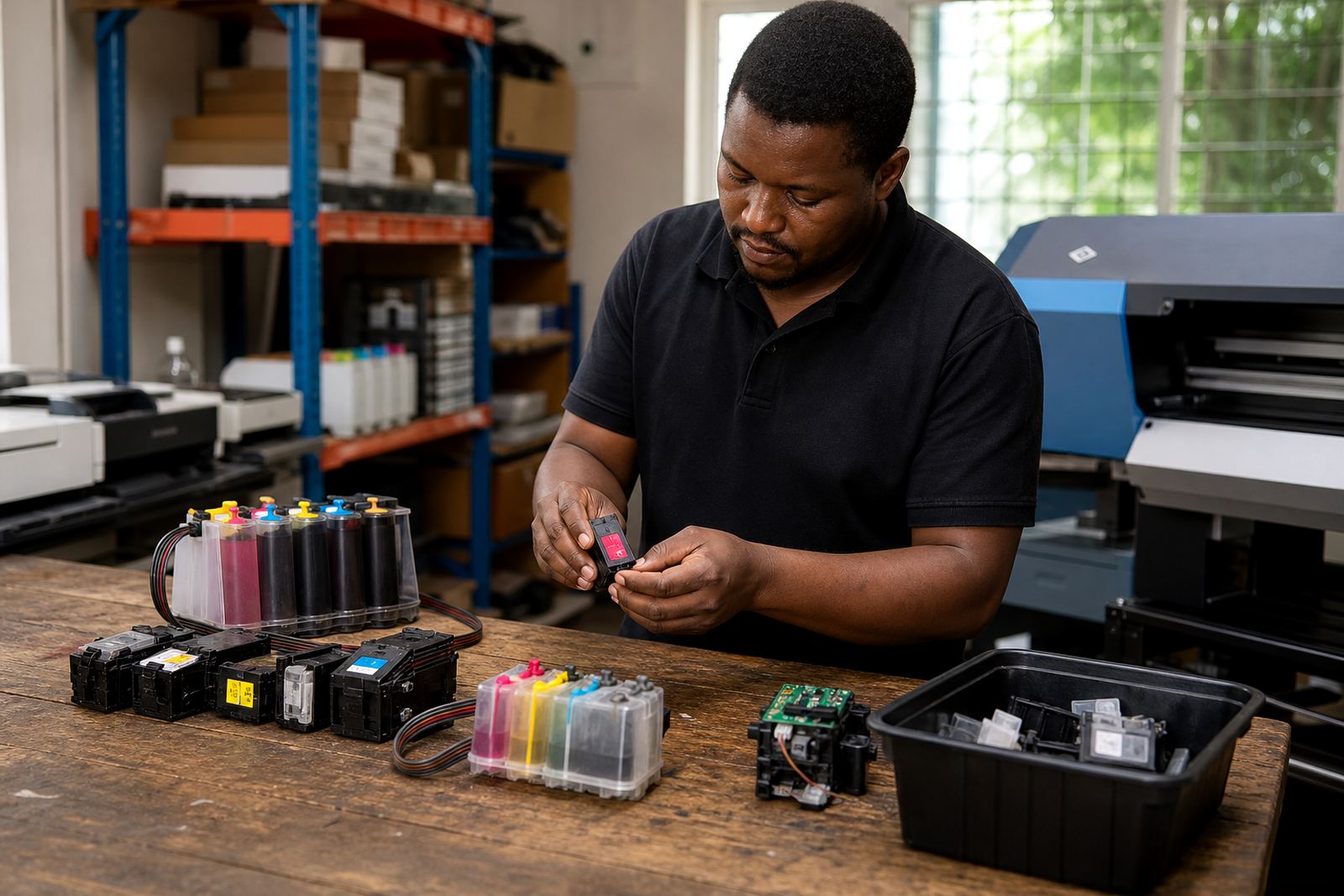
Empty return programmes work best when they are part of the stock cycle, not an afterthought. Keep a box for used cartridges near the printer, label it clearly and separate items that can be returned from general waste. This is especially useful in offices where more than one person changes cartridges during the week. It cuts confusion and keeps the workstation cleaner.
Returned empties also help the accounting side of the job. When the team knows what has been used, what has been sent off and what is still on hand, the next purchase is easier to judge. That habit matters in branches and shared studios where several operators use the same equipment.
- Keep empties in a dry carton or tub.
- Do not mix used cartridges with loose caps or bags.
- Label returned items by printer type.
- Record what was sent out before the next order is placed.
Build the order around the machine, not the panic
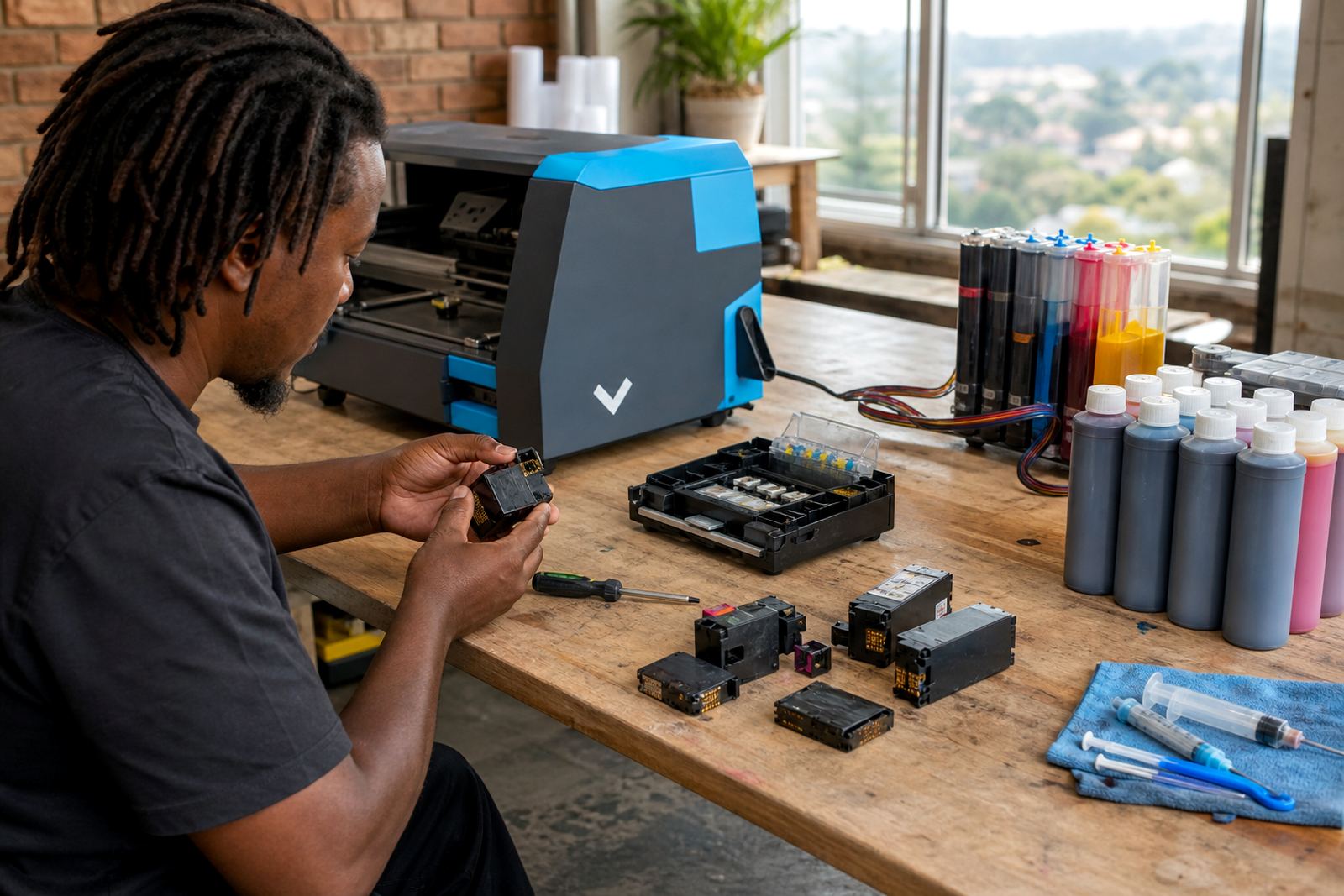
Wide-format print shops often need a different planning rhythm from a small office. A single large run can use more ink than a week of admin printing, and colour balance checks may use additional stock too. That is why reorder notes should mention the printer model, the job type and whether the machine is used for proofs, finished work or both.
If your staff also need operator training, include that in the same support note. A technician can talk through refill handling, nozzle checks, leak checking and chip reset help, but the best results still come from a team that knows how to spot low stock early. Sibusiso Kotze and the InkEx team work with offices, studios and print rooms from Westville to Cape Town, and the same rule applies everywhere: plan before the last cartridge is empty.