What to send back, and what to keep aside
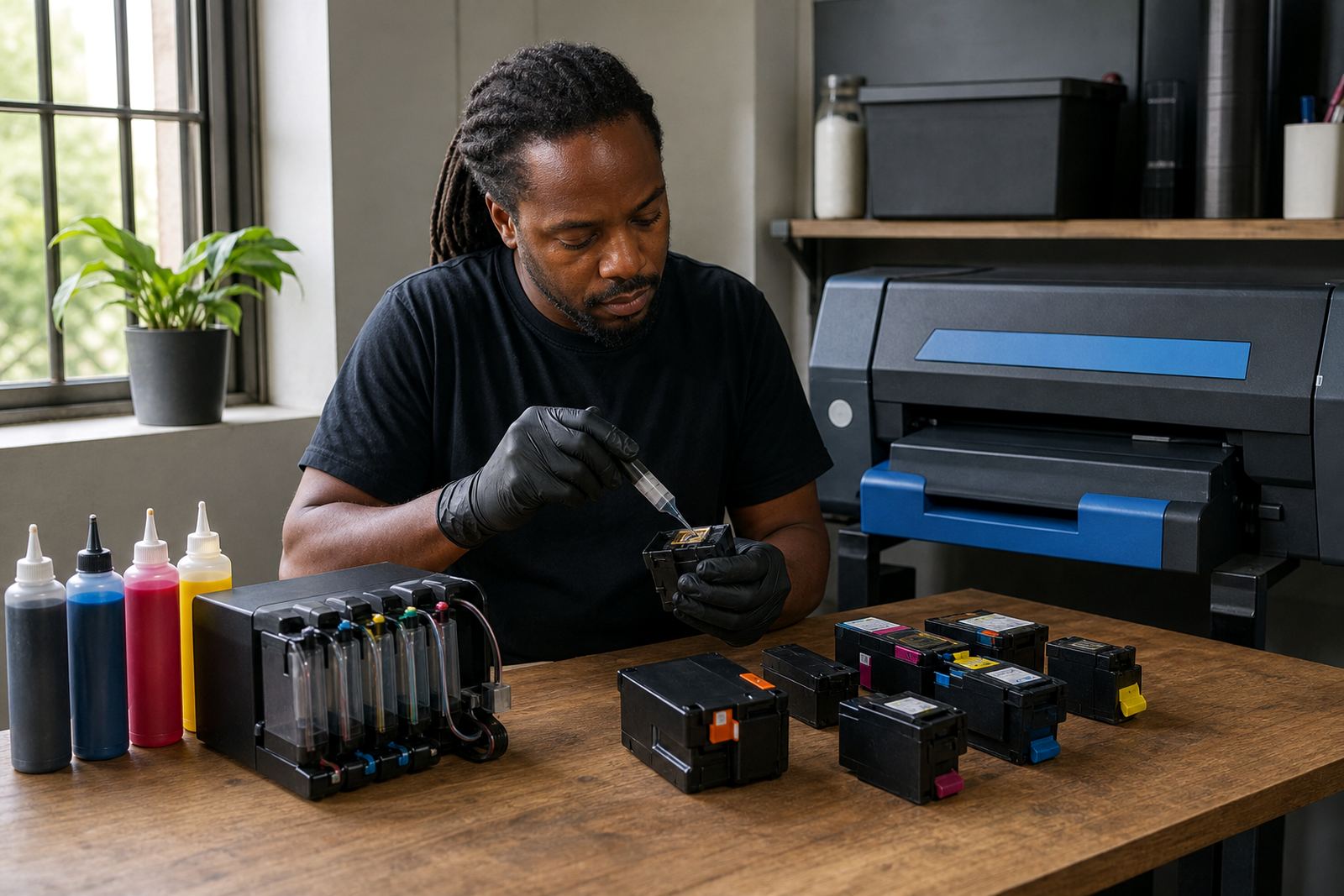
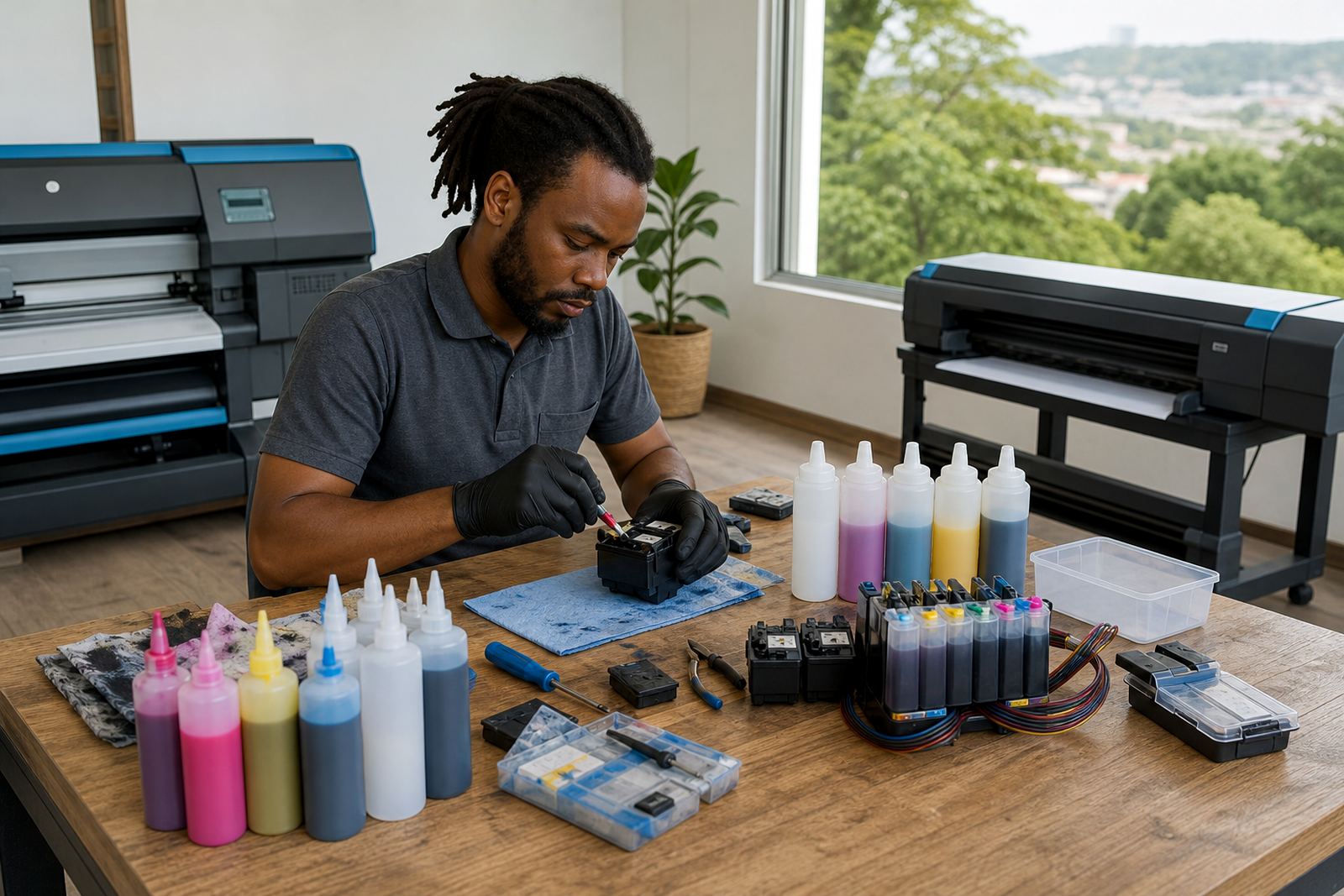
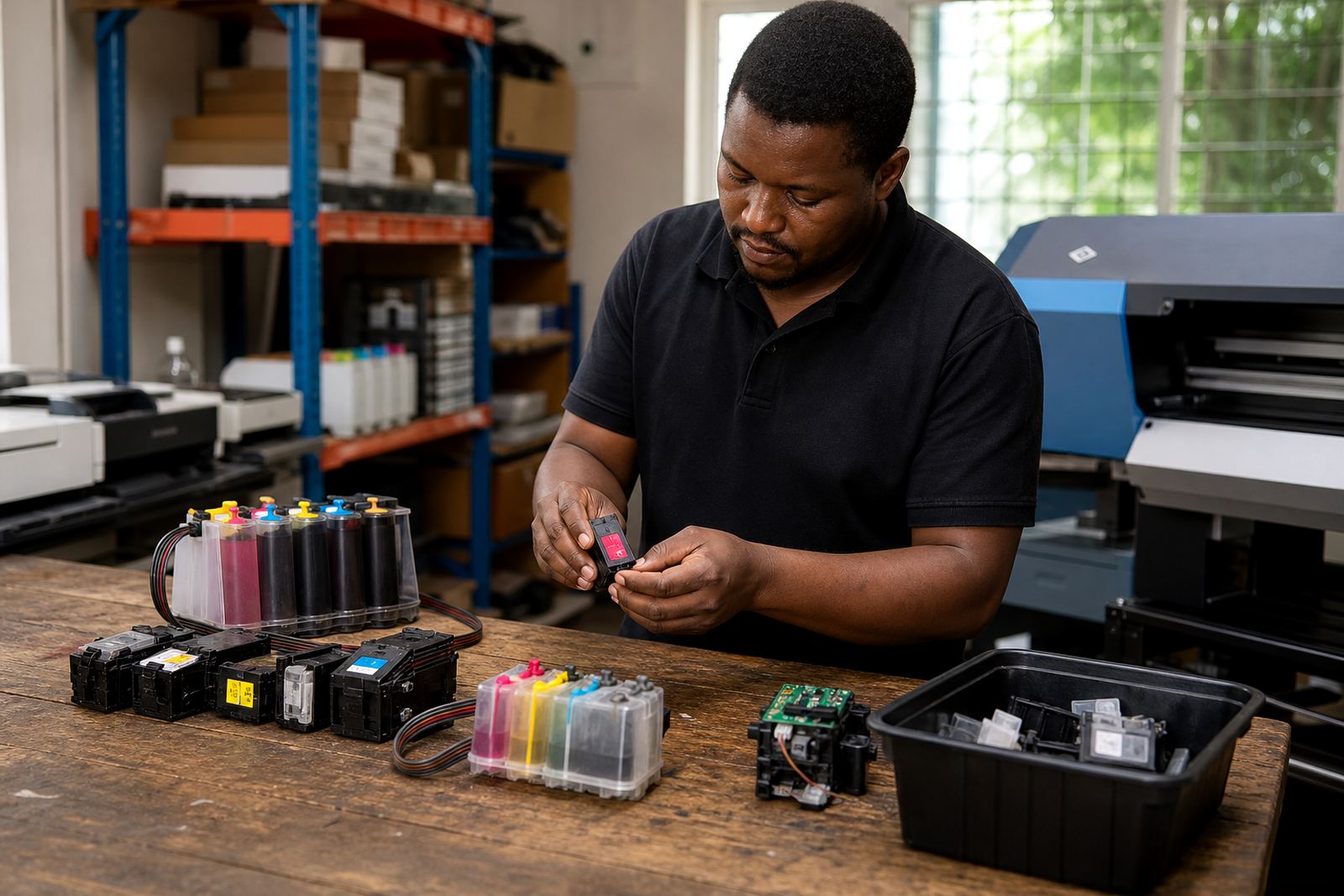
Start by separating the items you want to return from the stock you still use on site. Keep empty cartridges, faulty refilled cartridges, unopened refill kits, and any chip resetters or ink bottles in different groups, because mixed parcels slow down sorting and can leave wet parts touching clean stock.
If a cartridge has leaked, wrap it first in absorbent paper then place it inside a sealed bag. For office floors and design studios, that small step helps stop ink marks on boxes, courier sacks and shelf stock.
- Keep empty cartridges upright where possible.
- Seal lids, caps and bung points before packing.
- Separate dye ink from pigment ink if the bottles are still open.
- Do not tape over contacts or nozzles.
Pack empties so they arrive clean enough to assess
Empty cartridges often still carry residue in the sponge or reservoir, and a little ink can shift during a long road trip. Use a zip bag or a lined box, then add padding so the cartridge cannot knock against the sides. If you are sending items from Durban, Johannesburg or Cape Town, that extra padding matters on the courier leg and at handover points too.
Leave the cartridge labels visible. We use those markings to check model type, fill history and whether a reset chip is still seated properly. When labels are hidden under tape, the carton needs extra handling and that usually means more sorting on arrival.
- Use a rigid box, not a soft envelope.
- Fill empty space with paper, not loose polystyrene beads.
- Keep ink bottles sealed inside a separate bag.
- Mark the outside if there is wet ink inside.
When a refill job needs a problem note
If a cartridge prints with broken lines, dull colour or repeated streaks, add a short note before you send it in. Tell us what changed, whether the issue appeared after a refill, and if the machine has been sitting unused for a while. That gives the technician a proper starting point for nozzle check support and printhead care.
For wide-format print shops, mention the media type as well. Heavy coating, warm rooms and long idle periods can all affect ink flow and colour balance, so the small details help us separate an ink fault from a print setting issue.
- Say which machine or cartridge type was in use.
- Note any recent cleaning cycles or resets.
- Describe the fault in plain words, not guesses.
- Include whether the cartridge was new, refilled or refurbished.
Refurbished cartridge checks before it leaves your side
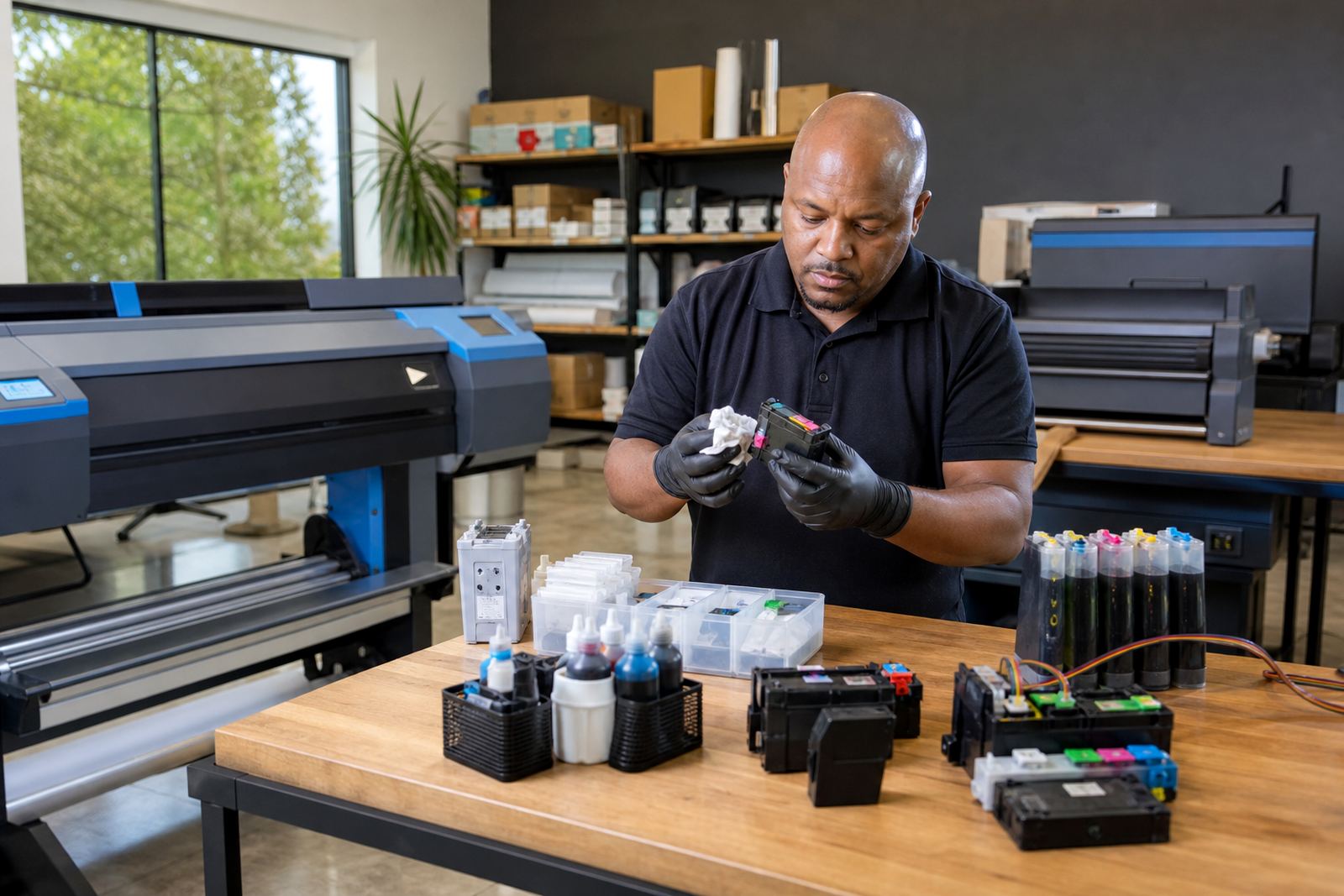
Before a return parcel leaves your shop or studio, give the cartridge a quick visual check. Look for cracked shells, loose seals, damaged contacts and ink sitting where it should not be. Refurbished cartridges can be reused only when the body, chip area and seal points are still sound enough to hold ink properly.
If you are unsure about a reset chip or a cartridge that reads as empty too early, keep it separate and note that on the form. A reset issue and a leak are not the same problem, and treating them separately helps us sort the item faster on our side.
- Check for hairline cracks near the seam.
- Look at the contact strip for scoring or ink build-up.
- Keep damaged items away from clean empties.
- Send only dry cartridges unless the fault is a leak.
Empty return work for offices, studios and print rooms
Empty return handling works best when one person gathers the stock and keeps a simple count. In offices that run a few benchtop machines, that might be one box of mixed colours. In a design studio or print room, it may be several trays of used cartridges, refill bottles and spare chips collected over a month.
We also assist with courier delivery across South Africa, so a return from Pietermaritzburg, Ballito, Hillcrest or Pretoria can follow the same packing logic as one sent from Durban. The more consistent the packing, the easier it is to sort empties for recycling or reuse.
- Bundle similar items together.
- Keep a note of how many pieces are inside.
- Separate empties from active stock.
- Use a clean outer carton with tape on all seams.
Send the form with the parcel details
our contact form is the right place to add the parcel note, item count and fault description before dispatch. Include the town, the type of stock inside and whether you need empty return support, leak checking or refill advice once the parcel is opened. That gives us the context needed to sort the return into the right workflow.
For recycling, reuse or troubleshooting, clear notes save time at the bench. They also help when cartridges from different offices arrive together, because a full return carton can include perfectly usable empties, worn parts and a few items that only need a clean reset or seal check.
- Add your company or studio name on the box.
- List the contents clearly on the outside and inside.
- Separate wet items from dry ones.
- Keep the contact name consistent with the parcel label.