
Before you fit anything into the machine
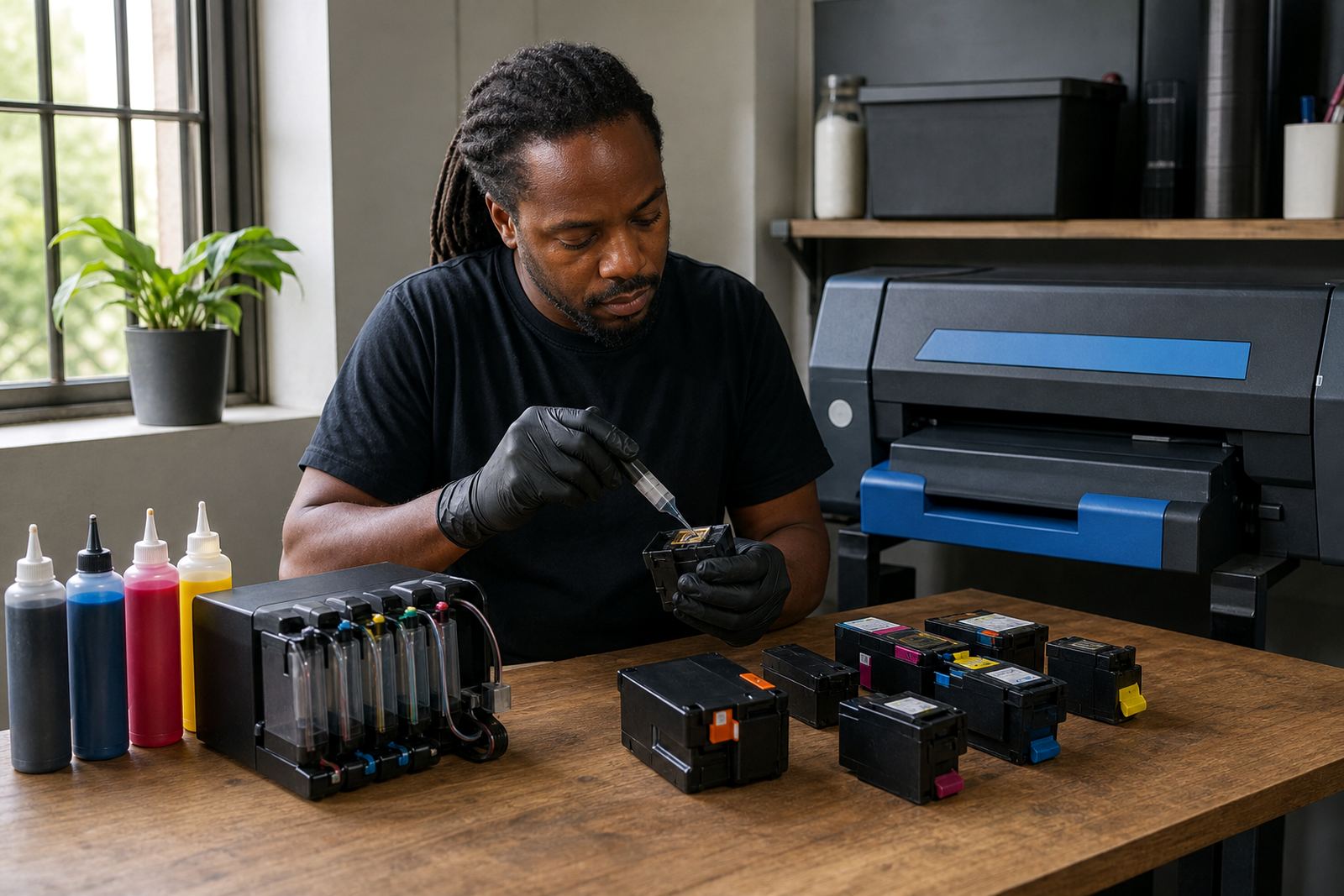
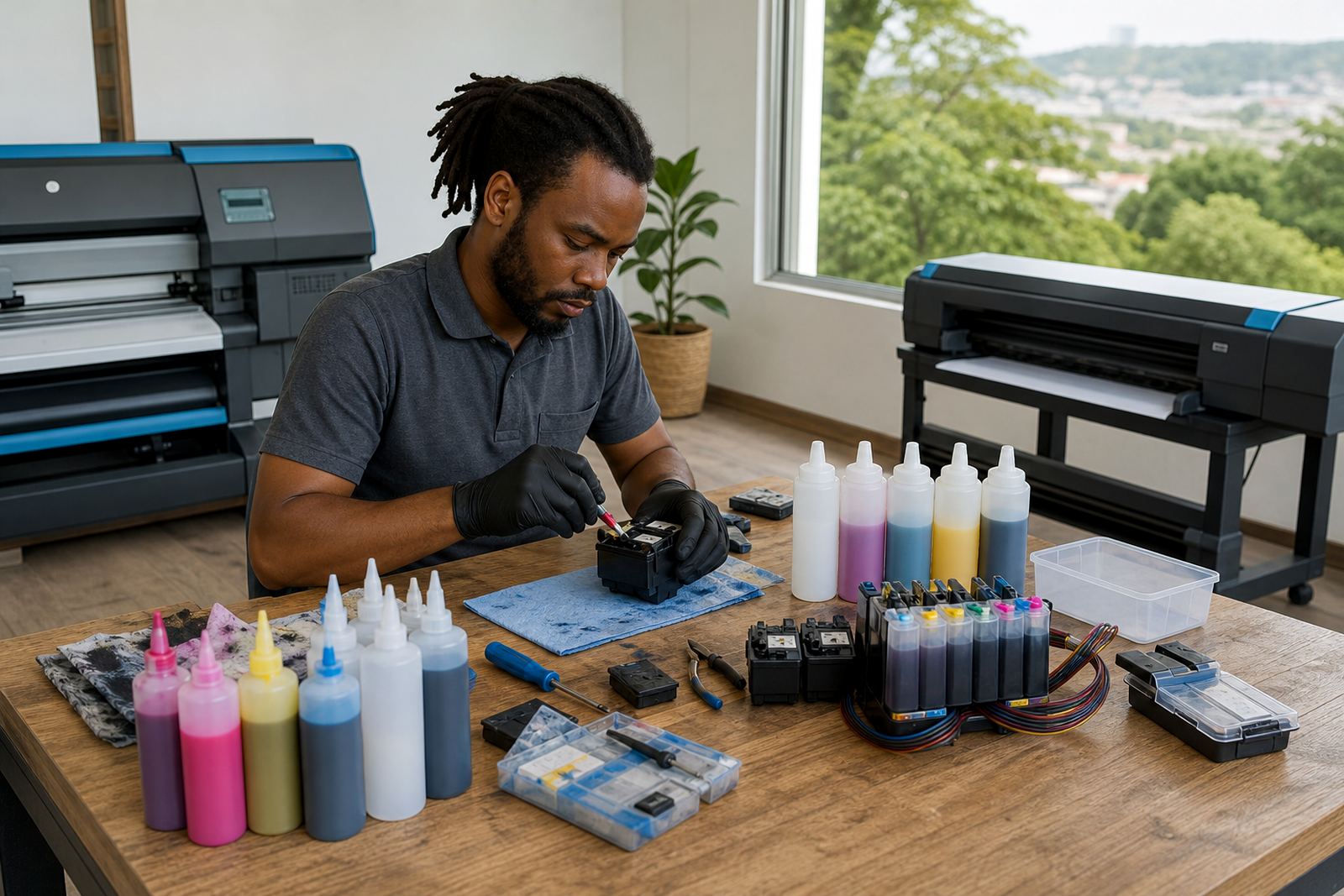
Lay the cartridges, bottles, syringes or refill kit on a clean table and keep paper towels close by. Work over a surface that can handle a small spill, because dye ink and pigment ink both stain fabric and porous tops very fast.
Check the model number on the machine and match it to the cartridge set or bulk system you are using. A wrong fit can leave the contacts out of line, the nozzle test patch uneven, or the chip unreadable after the first cycle.
- Power the machine off before removing old cartridges.
- Keep the carriage area free of torn paper and dried ink flakes.
- Wipe hands before touching chips or contacts.
- Keep the refill bottles capped until you need them.
First install notes for refurbished cartridges
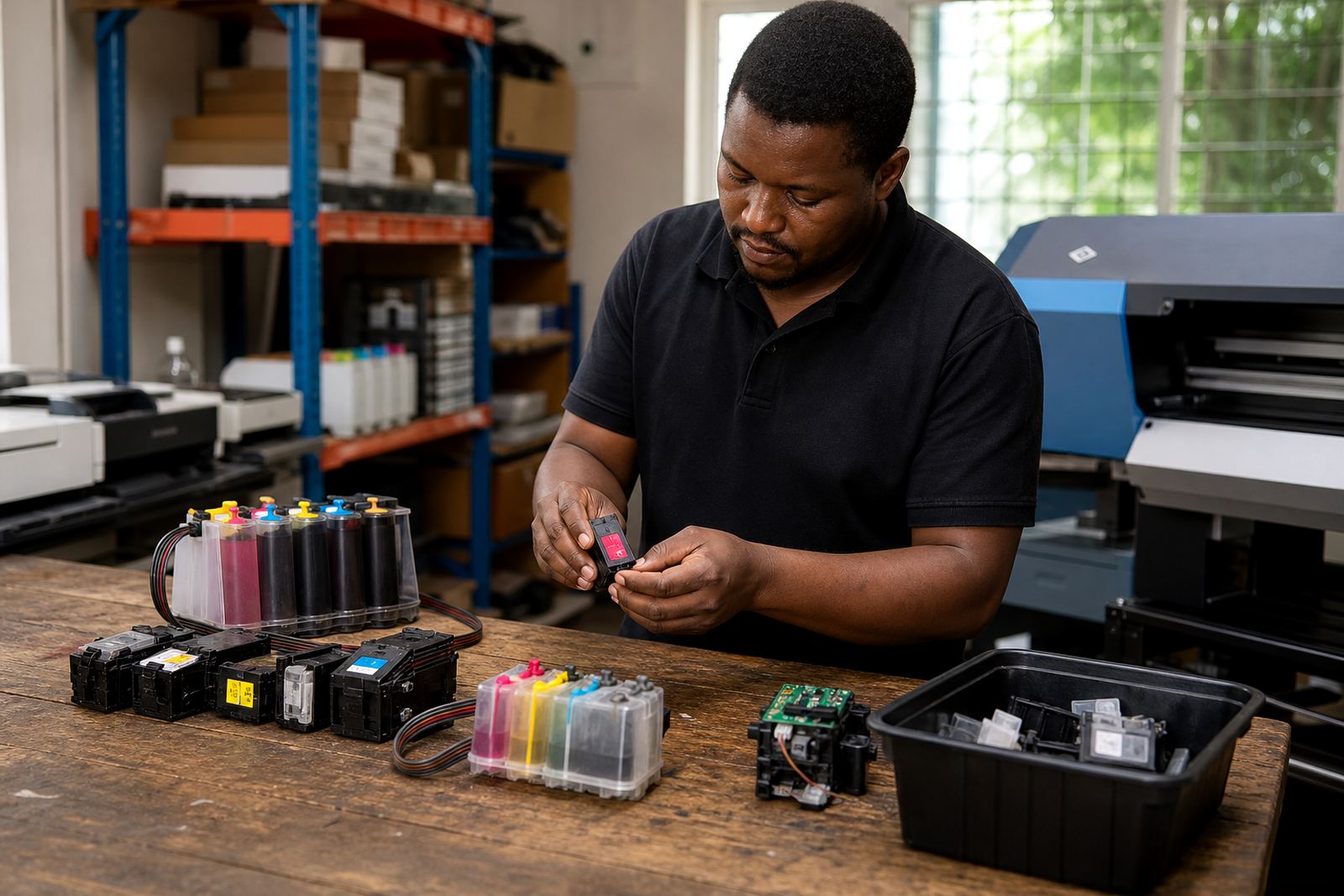
Refurbished cartridges need the same respect as new stock. Remove the seal, check the vent path and seat each unit firmly until it clicks or locks in place. If a chip is fitted, make sure it faces the contact points cleanly and not at an angle.
After installation, run a nozzle check before starting a large print. If one colour breaks up or shows missing bars, pause and clean the head only as far as needed. Over-cleaning wastes ink and can draw air through the line on some machines.
- Use the correct colour in the correct slot.
- Do not force a cartridge that resists the bay.
- Watch for slow leaks around the seal and base.
- Keep the cartridge upright until it is seated properly.
Bulk ink setup without messy shortcuts
Continuous ink supply systems work best when the bottles sit level, the tubes are not kinked and the ink path stays full. Before filling, read the bottle labels carefully and keep dye and pigment ink separate. Mixing them can change flow, settle in the lines and create rough colour output.
Prime the system slowly so air pockets move out of the line. If you rush that part, the machine may print with banding or leave faint gaps across solid areas. Wide-format print shops should watch the first metre or two closely, especially after a long idle period.
- Place bottles at the same height recommended for the unit.
- Do not overfill the reservoir chambers.
- Secure the tubing so it cannot rub on moving parts.
- Check every cap, clip and seal before moving the machine.
What to watch during the first test pages
The first test page tells you more than a stack of guesswork. Look at solid blocks, fine text and diagonal lines. If one colour looks weak, the air path may need another prime or the nozzle plate may need a careful clean.
Colour balance can shift after a refill, especially where the machine has sat unused in a warm Durban office. Yellow may look thin, black may dry unevenly, and cyan can show a slight cast if the ink level is low. A short test run usually shows the pattern before a full job starts.
- Print a nozzle check, then compare each colour bar.
- Confirm that black text is sharp at small point sizes.
- Inspect corners for smearing or feathering.
- Keep a sample page for later comparison.
Routine care for printheads and chips
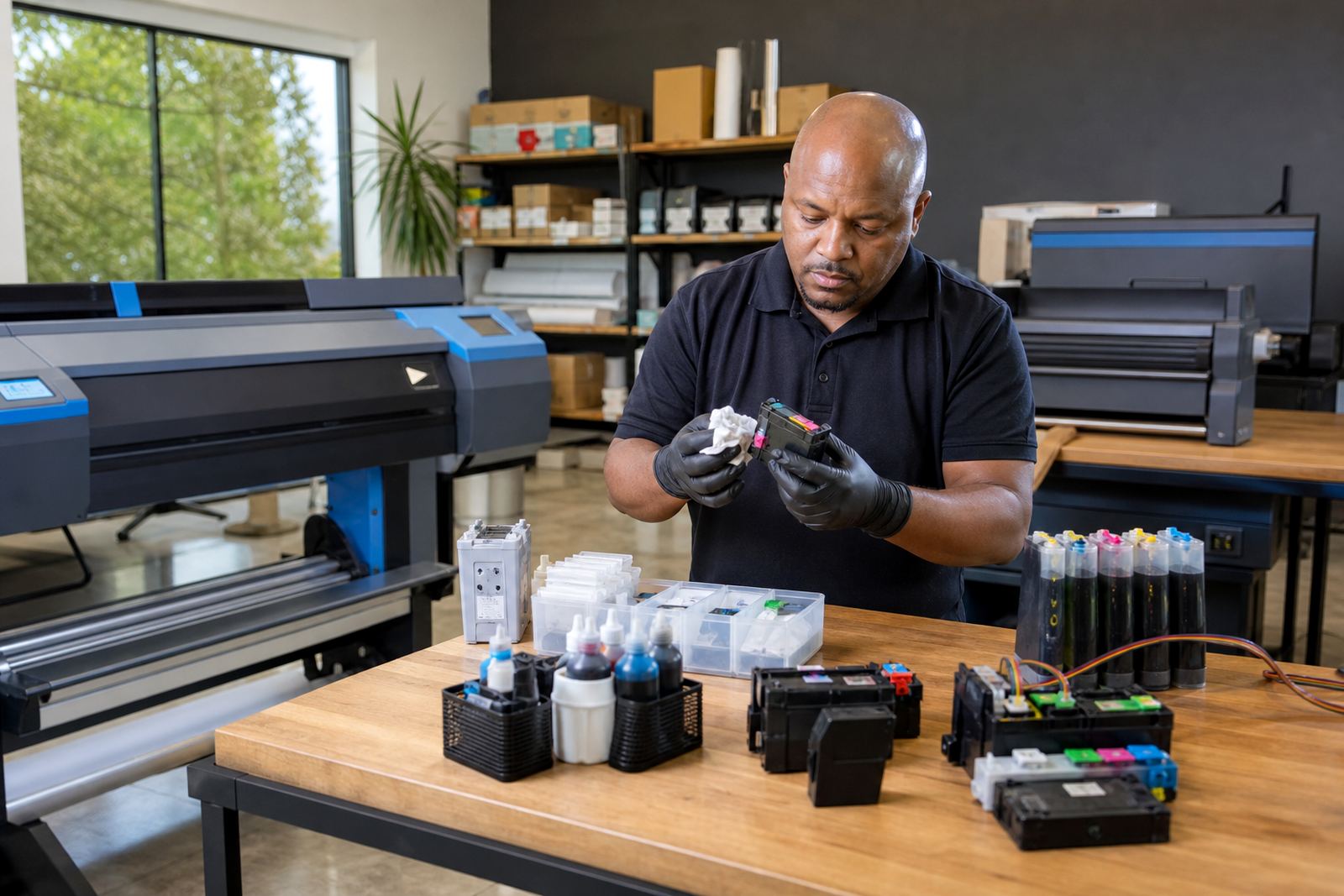
Printhead care is mostly about consistency. Let the machine sit cleanly between jobs, keep dust away from the service area and use a light cleaning cycle only when the test page asks for it. Heavy cleaning can drain cartridges and shorten the useful life of the refill.
Chip reset help is sometimes needed after a cartridge is refilled. Different units read levels in different ways, so a resetter or re-initialising step may be used where suitable. If the machine refuses a cartridge after reinsertion, check the contacts, then seat the chip again before trying anything more forceful.
- Do not touch the nozzle face with fingers or cloth fibres.
- Store spare cartridges in a cool dry cabinet.
- Keep a lint-free cloth nearby for quick wipe downs.
- Use the machine regularly enough to prevent dried ink at the head.
Packing empties, returns and the next refill cycle
Empty cartridges are worth sorting, not tossing into the nearest bin. Keep usable empties separate from damaged units and dry them before packing for return. A clean return programme helps reduce waste and keeps the refill process neater on the next round.
For offices and studios in Pietermaritzburg, Johannesburg, Pretoria, Cape Town, Ballito and Hillcrest, a simple stock note helps. Record which colours run out most often, which machine uses the most ink and whether pigment or dye gives the better result for the job. That small record makes the next order less rushed and the refill bench easier to plan.
- Label empties by machine type where possible.
- Store spare bottles upright and out of direct sun.
- Keep a small reserve for black and the busiest colour.
- Note any leak, fade or clog before the next refill.