
When the studio prints more than one kind of job
An artist’s printer often handles more than final artwork. One day it is reference images on plain paper, then a mock-up on coated stock, then a small run of finished prints for a client or exhibition. That mix puts pressure on cartridges, paper feed settings and colour decisions, especially when the printer sits in a warm room or near coastal humidity in Durban.
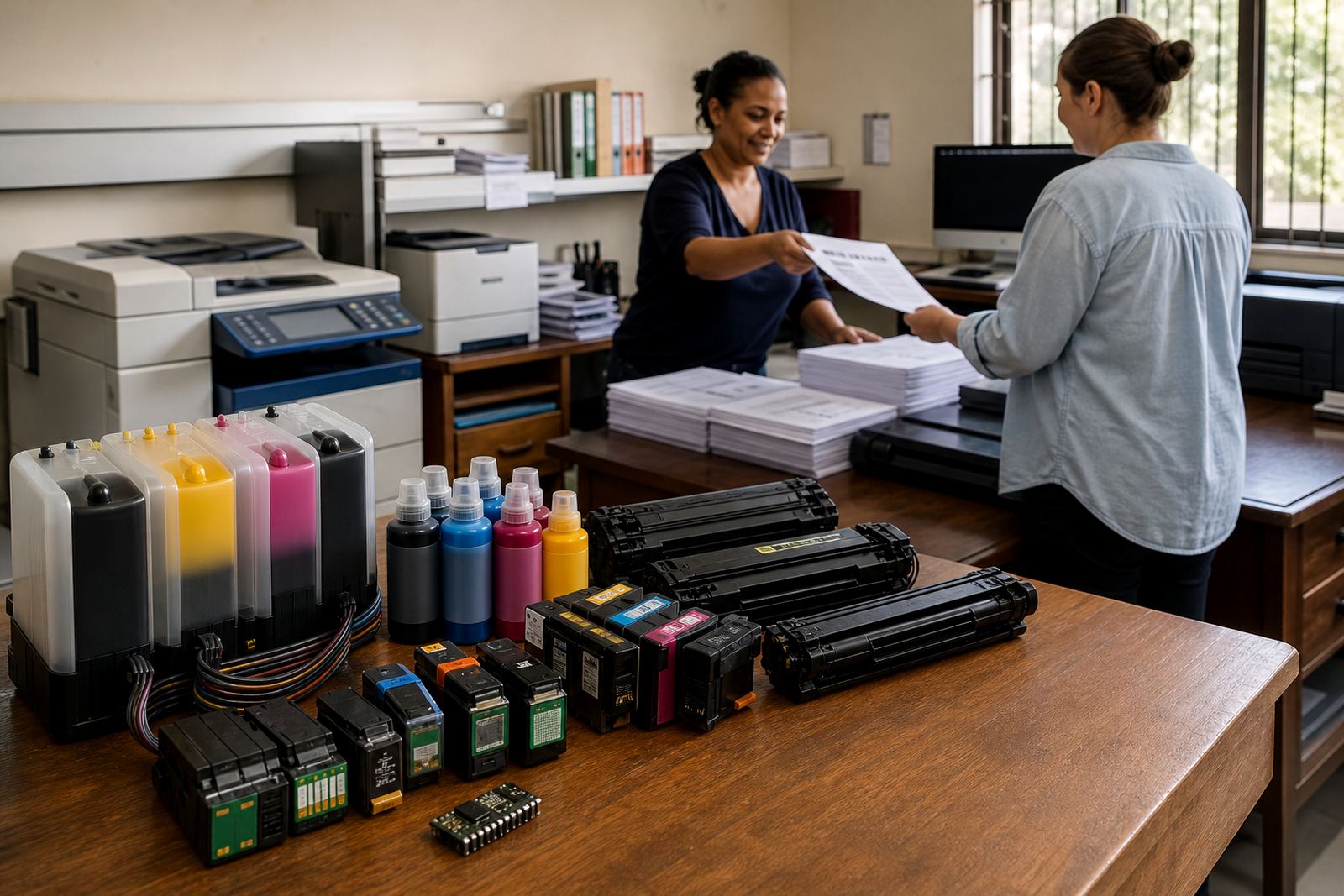
Refurbished cartridges can be a practical option when the machine is still in regular use and the print volume is steady. Bulk ink refill systems suit people who print often, because the tank setup lowers the cost per page and cuts down on empty cartridge waste. For many studios, the main job is not chasing more features, it is keeping colour consistent enough for the next proof and the next edit.
Ink choices that suit art prints and working proofs
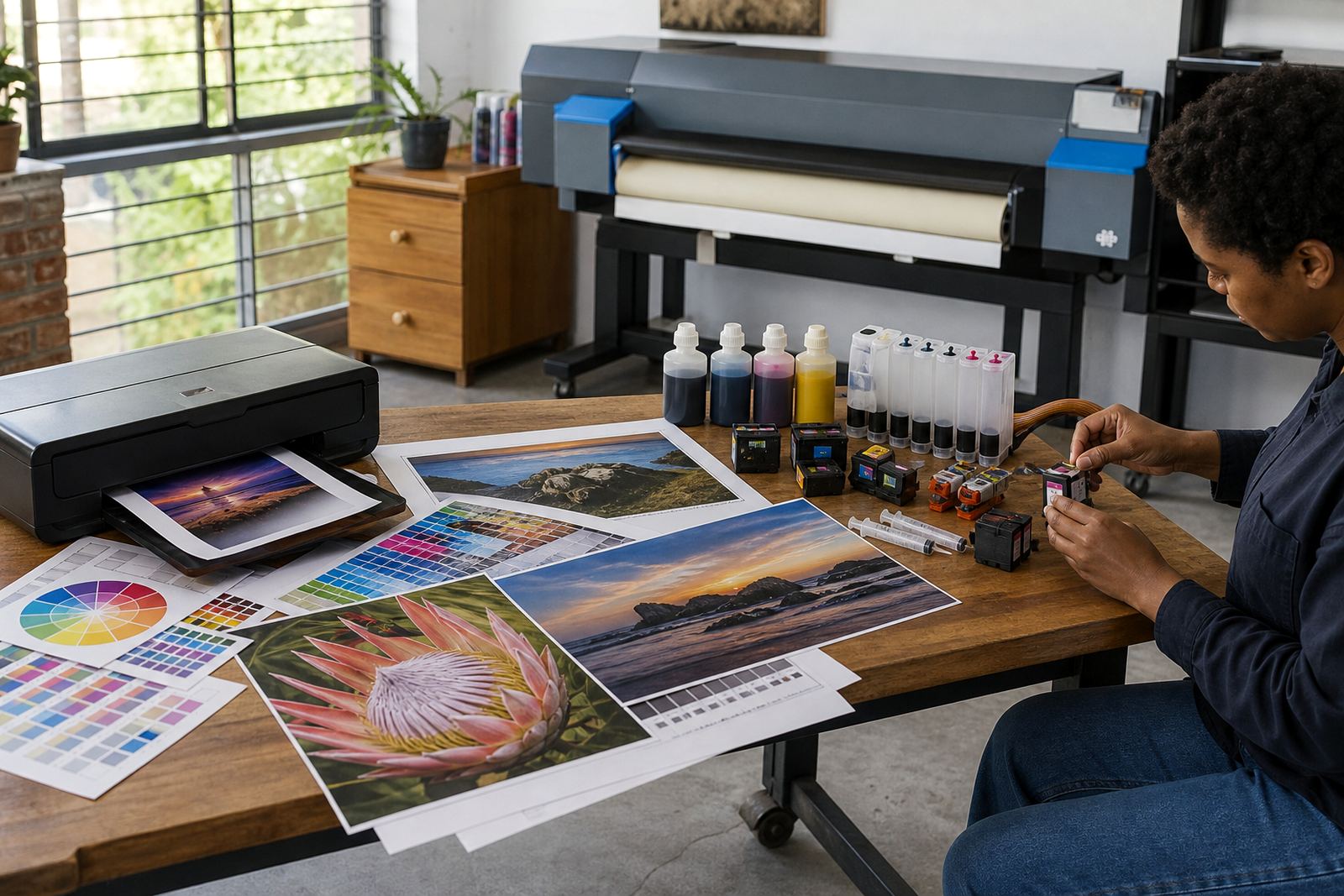
Ink type matters because different papers absorb ink in different ways. Dye ink usually gives bright colour and smooth blending on coated papers, which can suit posters, concept art and photographic reference sheets. Pigment ink is often preferred for better water resistance and sharper text or line detail, which matters when an artwork includes fine outlines, notes or layered elements.
For artists who print both colour studies and finished work, the choice may shift by printer, paper and storage conditions. A glossy proof sheet can need one approach, while a matte fine art print can need another. If a print will be handled often, framed, or stored in a portfolio, the ink and paper pairing should be considered together rather than separately.
- Dye ink for vivid colour on coated papers
- Pigment ink for cleaner lines and better handling
- Refill kits for higher print volumes and lower waste
- Empty cartridge return for studios that want less clutter
Cartridges, tanks and the parts artists tend to ask about
Most artists do not need a complicated setup, but the printer still needs the right support parts. Some machines use refurbished cartridges with reset chips or equivalent chip management, while others work better with a continuous ink supply system and refill bottles. In both cases, the printer head, feed path and ink line condition matter as much as the ink itself.
InkEx handles cartridge refill advice, CISS setup help and general chip reset guidance. We also look at leak checking, nozzle checks and printhead care, because a small clog can waste paper and colour before a job is finished. If a printer has sat unused for a stretch, dried ink in the head or line can be the thing that throws the next print off.
- Check whether the printer takes cartridges, tanks or a refill system
- Match the ink type to the paper and finish used most often
- Keep spare empty cartridges or bottles for planned refill work
- Run nozzle checks before starting a bigger print session
Studio layout that keeps the mess under control
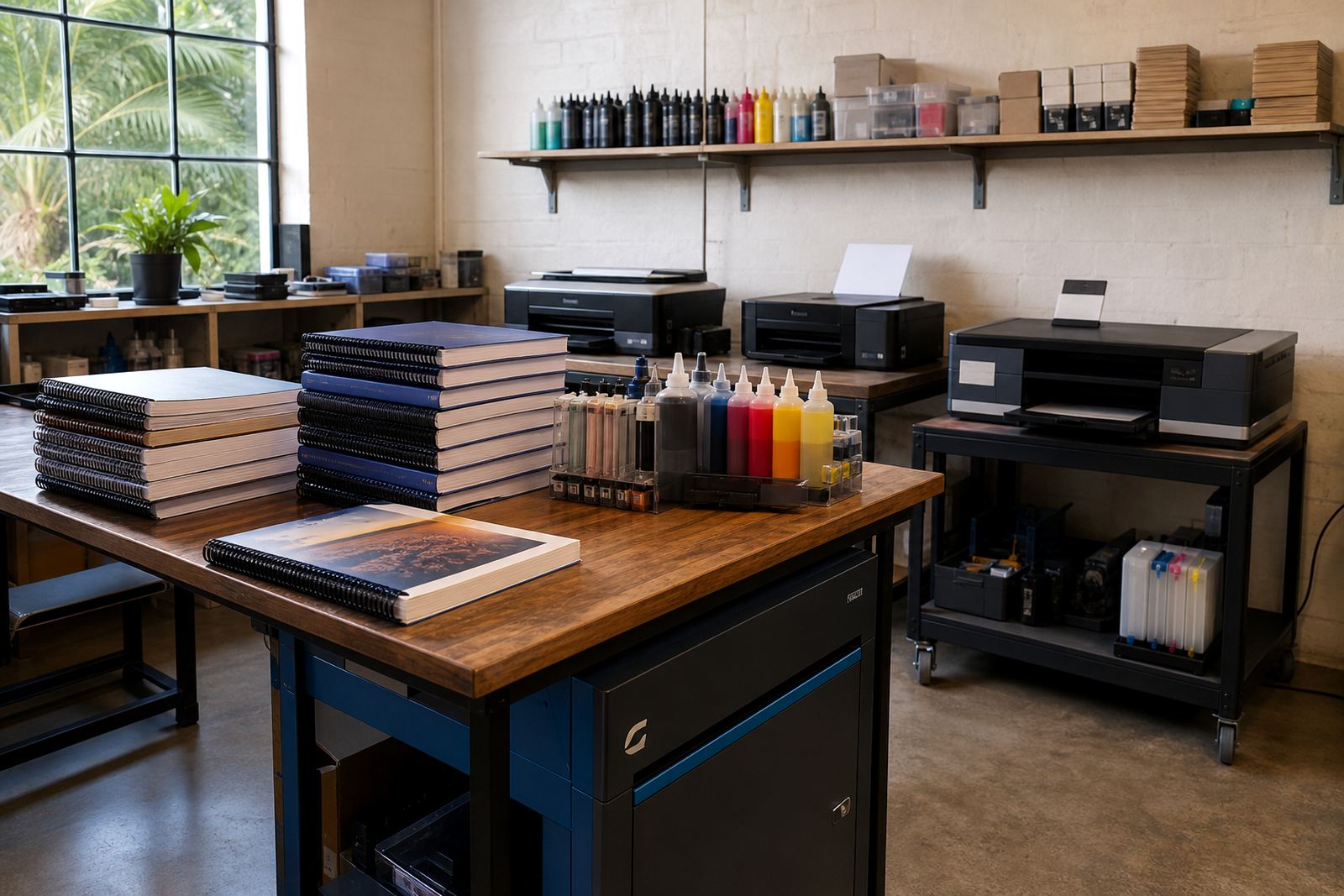
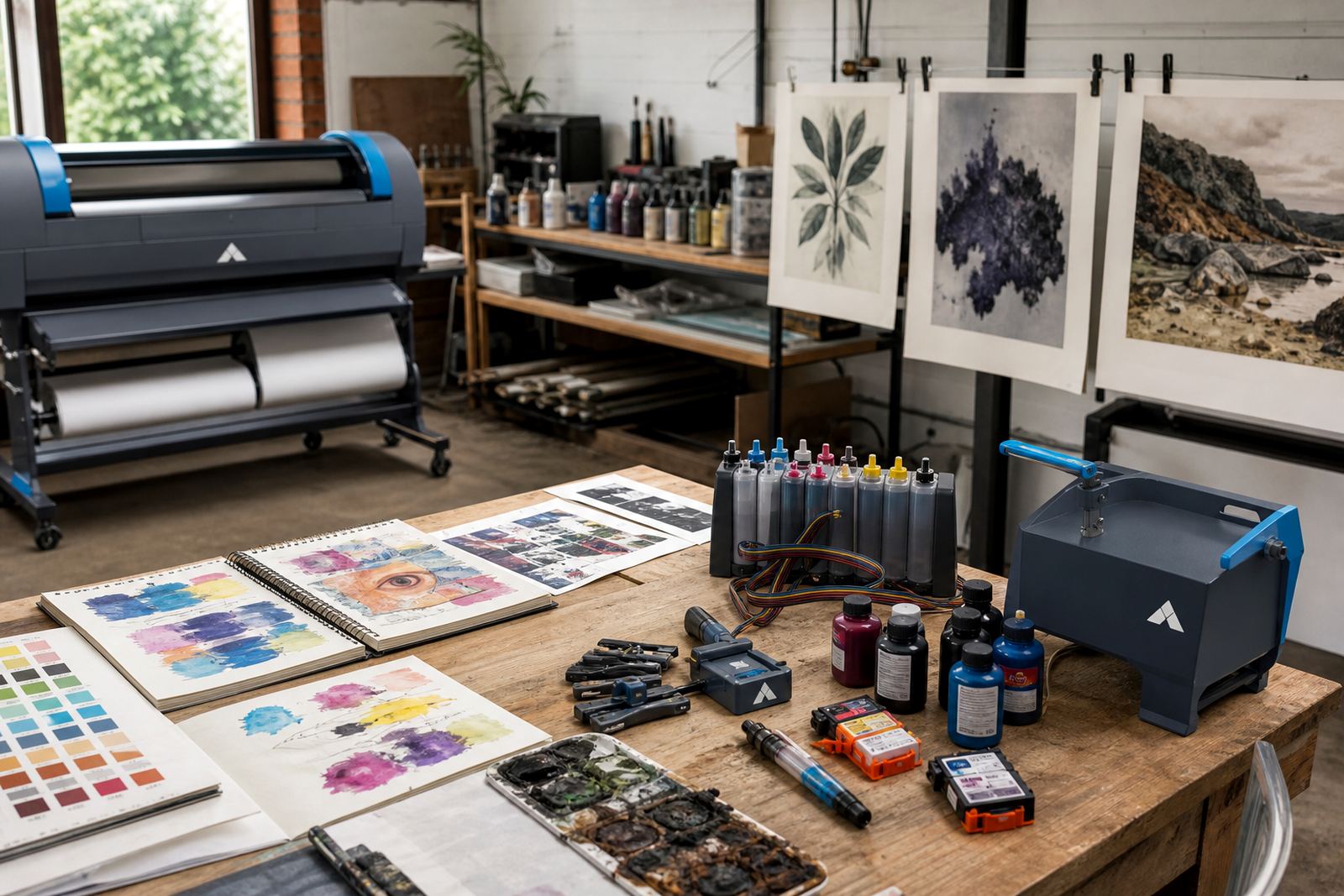
Refill work needs a steady table, good lighting and a place for towels, gloves and sealed waste. A small studio can manage with a corner cabinet and a tray, while a wider print room may need a dedicated refill bench with clearly labelled colour channels. Heat and dust are unkind to open bottles and printer heads, so the room should stay tidy and not overcrowded.
For shared studios, operator training helps reduce accidental mix-ups. The person topping up the system should know which colour sits where, how to cap bottles properly, and how to check for air in the line. Good layout is not about being fancy, it is about avoiding spills and making the next refill less tense.
Artists working from Westville, Hillcrest, Ballito or central Durban often collect supplies in person, while jobs in Johannesburg, Pretoria, Pietermaritzburg and Cape Town are usually handled by courier. That is useful when the printer is part of a wider studio setup and the order includes both ink and support items.
The mistakes that cost time and paper
The most common trouble starts with the wrong ink for the job, followed by rushed refills and loose lids. A cartridge that is not seated correctly can create streaks, while a line with air inside it may need extra attention before the printer settles. Some studios also mix inks from different systems, which can cloud the output and make troubleshooting harder.
Printhead care is easy to overlook when the printer is only used for short bursts. A nozzle check before a serious print run can save a stack of paper, and a quick leak check can stop staining around the machine. When the work matters, the cheaper path is usually the one that avoids reprints and wasted sheets.
- Do not mix ink types in the same channel
- Do not leave open refill bottles near dust or heat
- Do not ignore faint banding on early test prints
- Do not let empty cartridges pile up without a return plan
Budget ranges artists usually work with in Rand
For budget planning, artists often look at the cost of one refill cycle rather than one cartridge alone. A small refill job may only cover a single colour set, while a fuller studio order can include replacement cartridges, refill bottles, reset support and courier movement. The right budget depends on how often the printer runs and whether the machine is a home setup, a teaching studio or a print-heavy workshop.
As a rough planning guide, many artists set aside a few hundred Rand for refill support on a smaller printer, then more when a full cartridge set or a tank system needs attention. Larger format work can move into a higher bracket because of ink volume, line length and the cost of keeping colour accurate across bigger sheets. It helps to treat ink as a working material, not a once-off purchase.
InkEx can help map the likely spend against the printer model, the paper used and the type of output needed. That makes it easier to plan around exhibitions, portfolio deadlines and client proofs without buying more than the studio will actually use.
A practical order list for artists and studios
Before an order is placed, it helps to write down the printer model, the type of work being printed and the colours that run out fastest. If the setup includes a refill system, note the tank size, cartridge style and whether the printer has shown nozzle issues or leak signs. That gives the team enough to guide the order without guessing at the setup.
- Printer model and current ink setup
- Paper types used for proofing and final prints
- Any streaking, clogging or colour shift noticed lately
- Need for refill advice, chip reset help or printhead care
Our contact form is the easiest way to send those details from Westville, Durban or from further afield. The team can then work through cartridge refills, bulk ink choices and the parts of the system that affect the final print, especially where colour accuracy matters most.