
When the printer sits beside the kettle
Home businesses usually print in short runs, then go quiet for a few days, then need invoices, labels, artwork proofs or client packs in a hurry. That stop-start pattern is hard on ink, especially where cartridges sit unused and nozzles dry out. We help clients set up a way of printing that suits a home study, spare room or small back office without turning the place into a workshop.
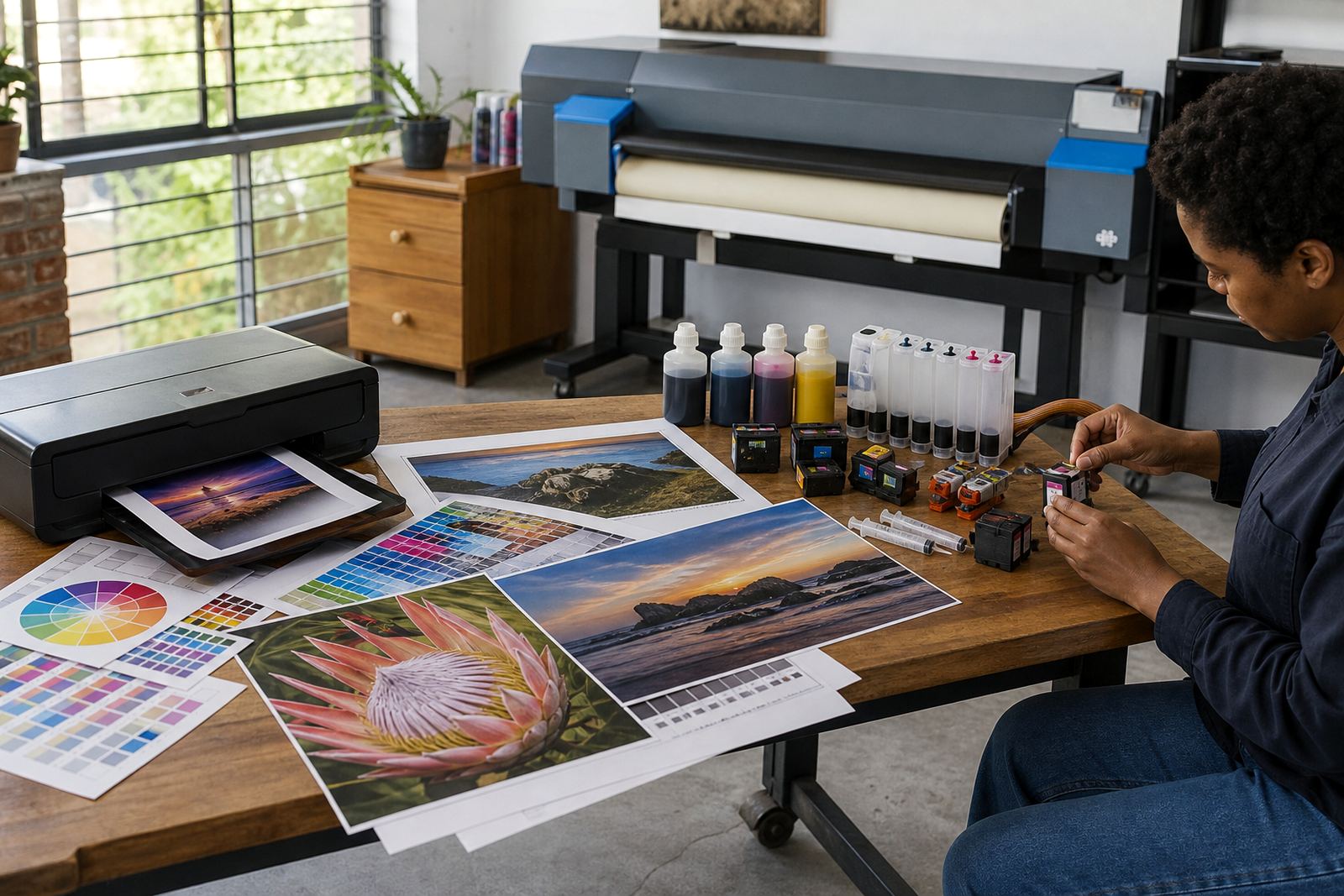
In practice that means checking the machine model, the kind of ink it uses and whether the job leans toward text, colour graphics or photo work. A home office with a light monthly load can often use refurbished cartridges for straightforward printing, while a design setup or wide-format counter may be better served by bulk ink refill systems with tighter control over running costs.
Ink choices that fit the job, not the drawer
Refurbished cartridges are cleaned, tested and prepared for reuse, which makes them a sensible option when you want lower waste and a lower outlay than buying new cartridges every time. Bulk ink refill systems, sometimes called continuous ink supply systems, move ink from larger external reservoirs into the printer through tubing, so the operator can top up ink instead of replacing cartridges as often.
For home businesses, the main choice is often between dye ink and pigment ink. Dye ink can give bright colour for flyers, handouts and many photo tasks, while pigment ink is usually better for sharper text and more durable output on plain paper. The wrong ink type can lead to dull colour, blocked nozzles or smudging, so we match the ink to the actual work, not just the printer model.
- Refurbished cartridges suit lower-volume office printing and mixed admin work
- Bulk refill systems suit steady output, proofing and higher page counts
- Pigment ink helps where text clarity matters
- Dye ink is often used for vivid colour work and photo prints
- Chip reset help can be part of certain refill routines
A small room needs a sensible layout
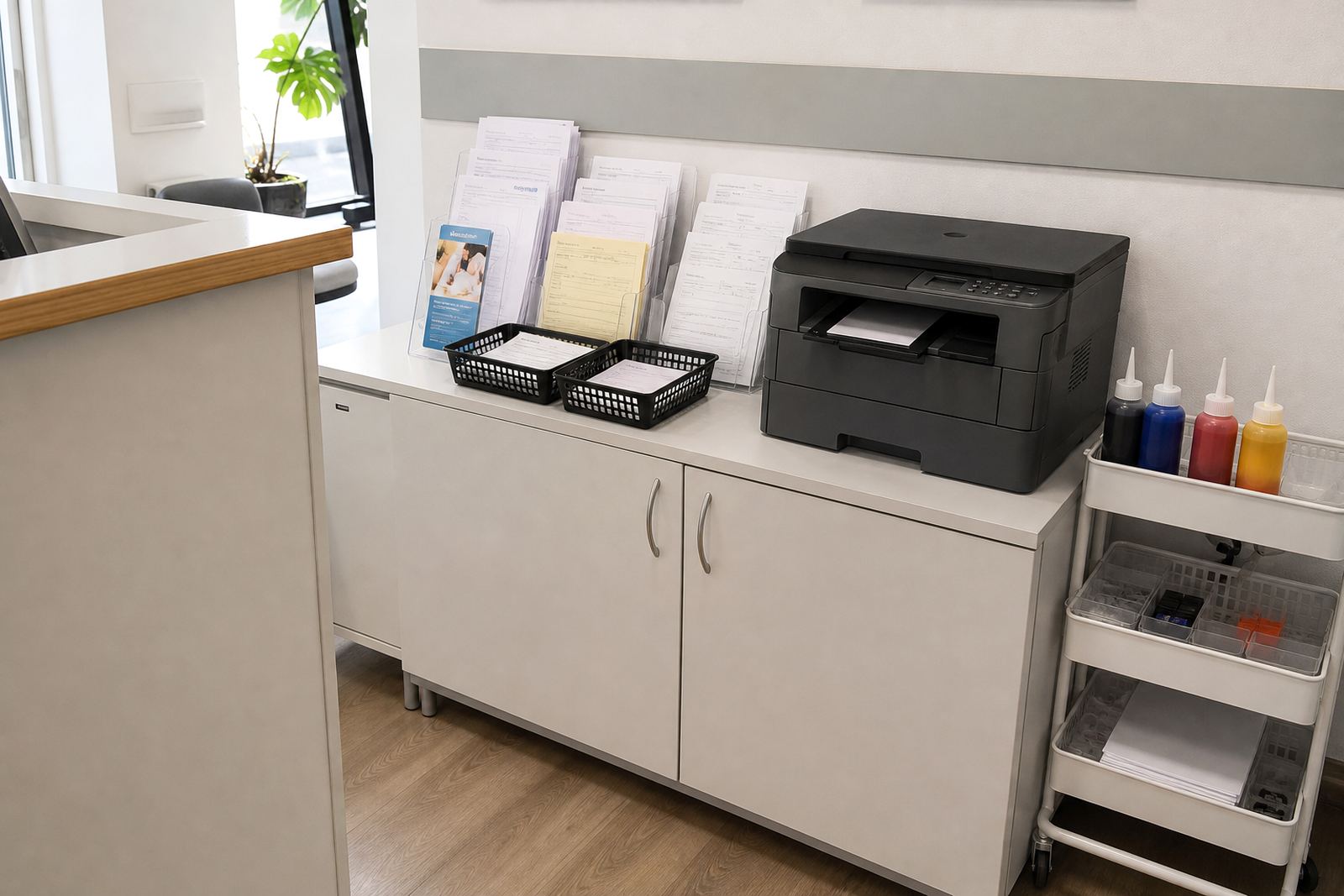
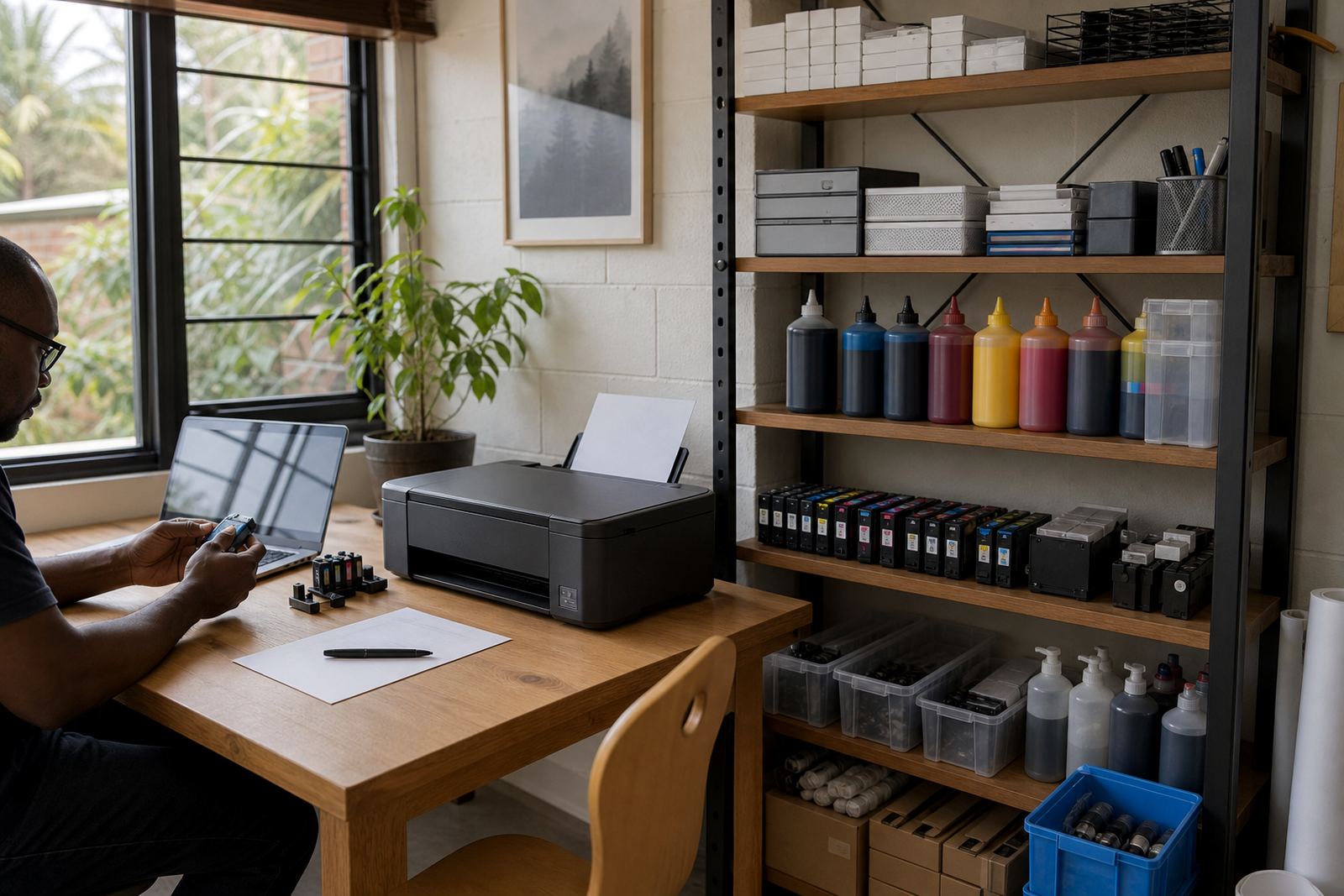
In a home setting the printer is often near paper stacks, packaging, a router and maybe a laptop dock, so the physical layout matters more than people expect. Ink bottles and cartridges need a dry shelf away from direct sun, and any refill point should stay clean enough to avoid dust getting into the nozzle area. If there are children or pets in the house, the storage spot needs to be out of reach and clearly marked.
A neat plan also helps with the courier side of the job. Empty cartridges should be sealed in a bag or container before collection or return, and labels should stay on the correct item so there is no mix-up between black, cyan, magenta and yellow. A tidy bench, a paper towel roll and a small tray for caps and plugs go a long way in a home office, especially when the printer is in daily use.
- Keep ink upright and capped when not in use
- Store refill kits where there is little dust and no direct heat
- Separate empty cartridges from active stock
- Leave a clean patch beside the printer for checks and topping up
- Keep spare paper, gloves and wipes close to the work area
The mistakes that turn cheap ink into expensive work
A common problem is using the wrong ink in a printer that was meant for another type. Another is leaving a machine idle for too long and then forcing a print run without checking the nozzles first. That is how streaks, missing colours and wasted pages start to creep in. In a home business, wasted pages cost more than the print itself because they interrupt the day and eat through paper too.
We also see people overfill tanks, skip leak checks or ignore a low-ink warning until the output turns patchy. If a printer has a chip issue, a general reset may be needed, but that should be handled carefully so the machine does not keep reporting the wrong level. Printhead care is part of the routine as well, because cleaning too aggressively can do more harm than the original blockage.
- Do not mix inks unless the system is meant for that fill type
- Run a nozzle check before a client deadline print
- Watch for slow leaks around tubes, seals and tank caps
- Keep printhead cleaning gentle and measured
- Replace damaged cartridges instead of pushing them through another cycle
What home businesses in Rand usually budget for
Most owner-run businesses want a cost pattern they can plan around. A simple refurbished cartridge order for office printing may sit in a lower entry range, while a refill kit or full CISS setup is usually more involved because it includes tanks, fittings and setup work. The real figure depends on the printer model, the number of colours, the volume printed each month and whether the machine needs chip reset support or leak correction.
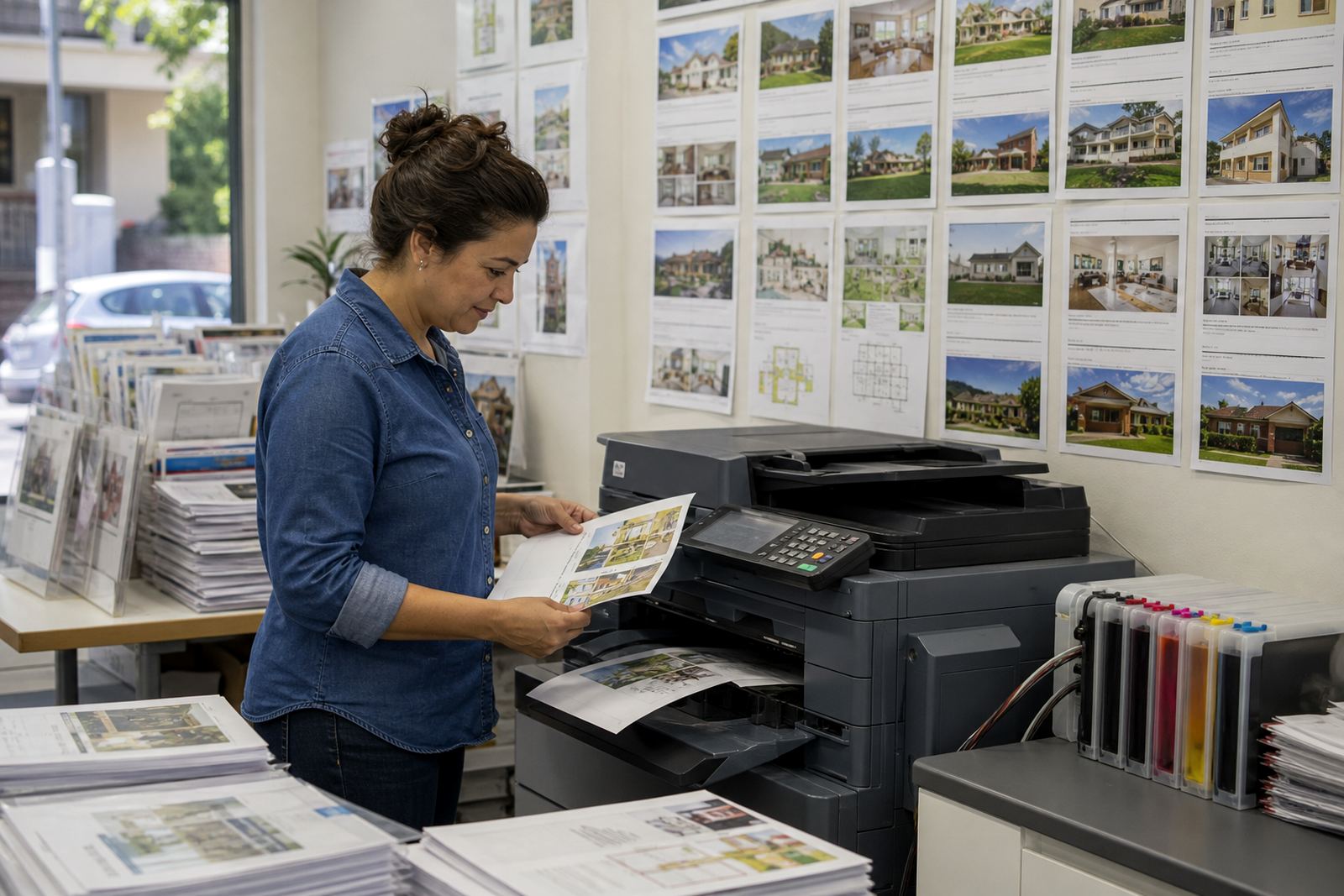
For budgeting, many home users look at three layers: the first supply purchase, the ongoing refill cost and the paper or maintenance items that go with it. A basic text-only home office may spend far less than a studio printing proof sheets, colour layouts or short-run client packs. Where wide-format work is involved, planning matters even more because one dry run on a large sheet can burn through ink and media fast.
We help clients think in practical ranges rather than guessing at a one-off figure. That includes which cartridges are worth refurbishing, when to move to bulk ink and when a printer is simply not the right fit for the workload. Where colour balance matters, especially for artwork and presentation sheets, the ink choice and the paper type should be discussed together.
Help that matches a home office rhythm
Our Westville, Durban team works with offices, studios and print rooms that need clear refill advice without the fuss of overbuying stock. Sibusiso Kotze leads the business, with Ayesha Majola on operations, Mandla Zondi on refill work, Lauren Naidoo on customer support, Johan Mabena on courier and dispatch, and Nokuthula Mabuza on accounts and orders. That mix helps us handle cartridge supply, refill planning, empty returns and the practical side of getting stock moving across South Africa.
Home businesses in Durban, Pietermaritzburg, Johannesburg, Pretoria, Cape Town, Ballito and Hillcrest often ask for guidance on the same few points: which ink type suits the printer, how to protect the printhead, when a nozzle check is worth doing, and how to keep a small stock of consumables without tying up too much Rand. If the printer is part of your income, a cleaner supply routine makes everyday printing less disruptive.