Where dye ink usually earns its keep
Dye ink is water-based colourant that soaks into coated paper and many everyday stock sheets, which is why it often suits office documents, classroom sheets, labels, proof prints and colour-rich artwork. It can look sharp on the right paper and the tones are often lively, especially for presentation pages and images that do not need long outdoor life.
For Westville offices and Durban studios, the practical point is matching the ink to the job. Dye ink is usually a good fit where indoor handling matters more than weather resistance, and where a clean colour finish matters more than heavy-duty fade resistance.
- Good for indoor colour work on suitable paper
- Often used in office printers and benchtop design setups
- Useful for proofs, flyers, school sheets and client samples
- Less suited to prints that must face sun, rain or heavy handling
A quick check before you refill or replace
Before topping up a cartridge or filling a tank, check what the printer actually uses and what the work needs. Dye ink, pigment ink and mixed systems do not behave the same way, so the first step is always the paper and print job, not just the model of machine.
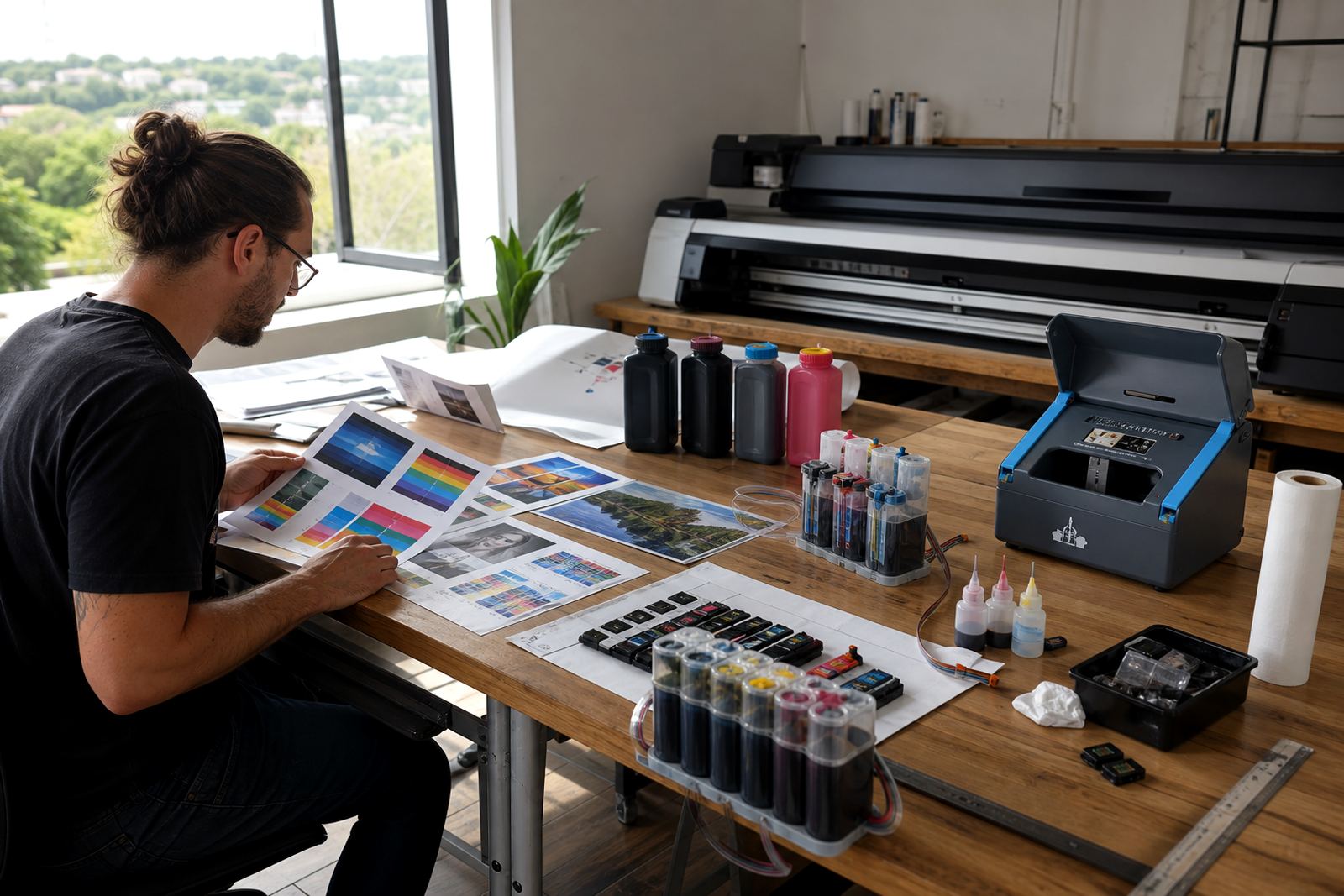
If a machine has been sitting for a while, or if a colour has dropped out after a refill, run a nozzle check and look at the pattern. A broken line often points to trapped air, a blocked head, low ink flow, or a cartridge that is not seated properly. That small check can save a lot of guesswork.
- Confirm whether the print task is indoor, archival or presentation work
- Check the paper type and coating before filling
- Inspect cartridge seating and ink flow paths
- Run a nozzle check after any refill or changeover
Refill systems that suit dye ink work
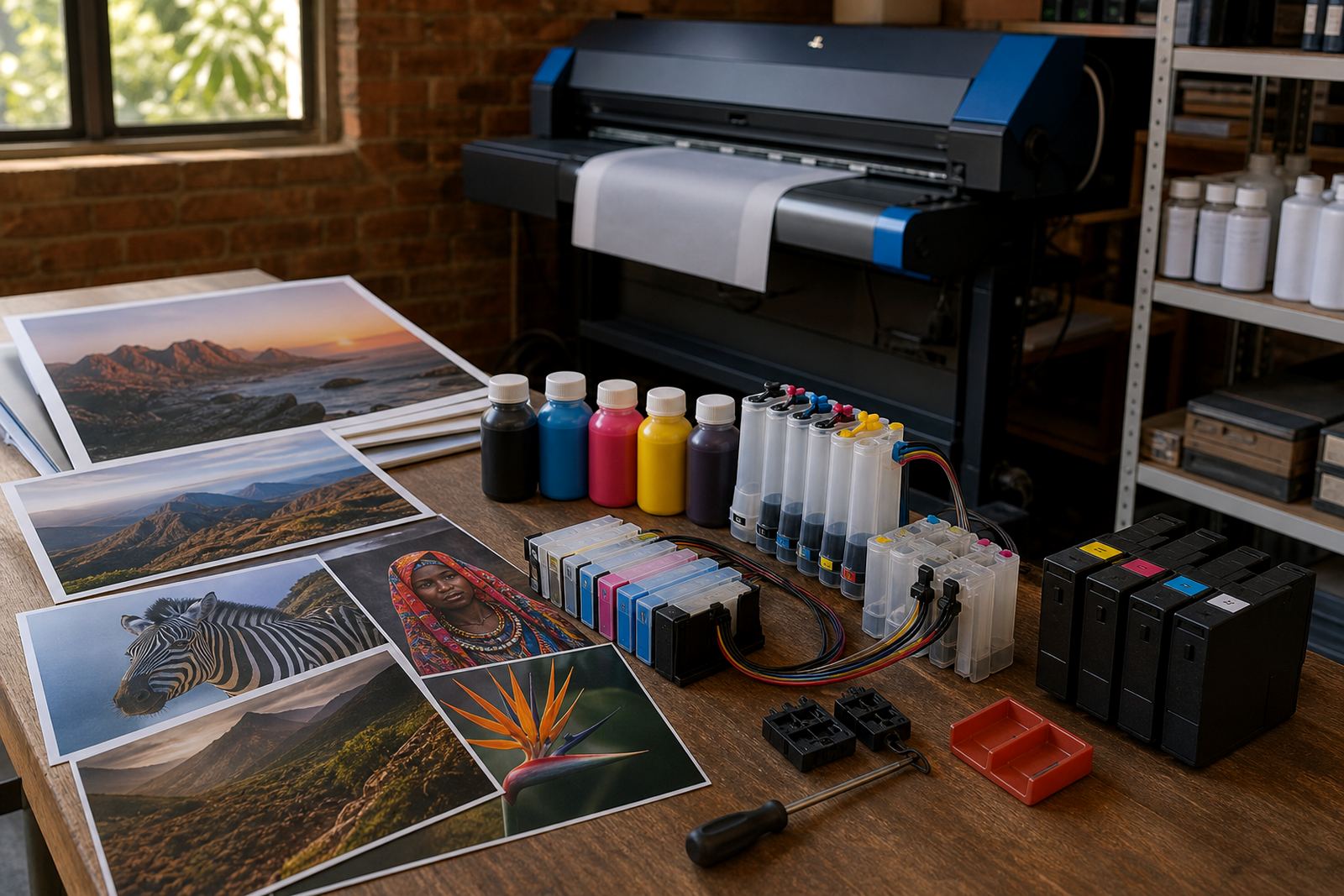
Continuous ink supply systems and refill kits can be practical where the same machine prints many pages, especially in offices and wide-format rooms that run regular colour jobs. The reservoir, tubing and cartridge path need clean handling, steady ink choice and proper priming so the system does not pull air or leak during use.
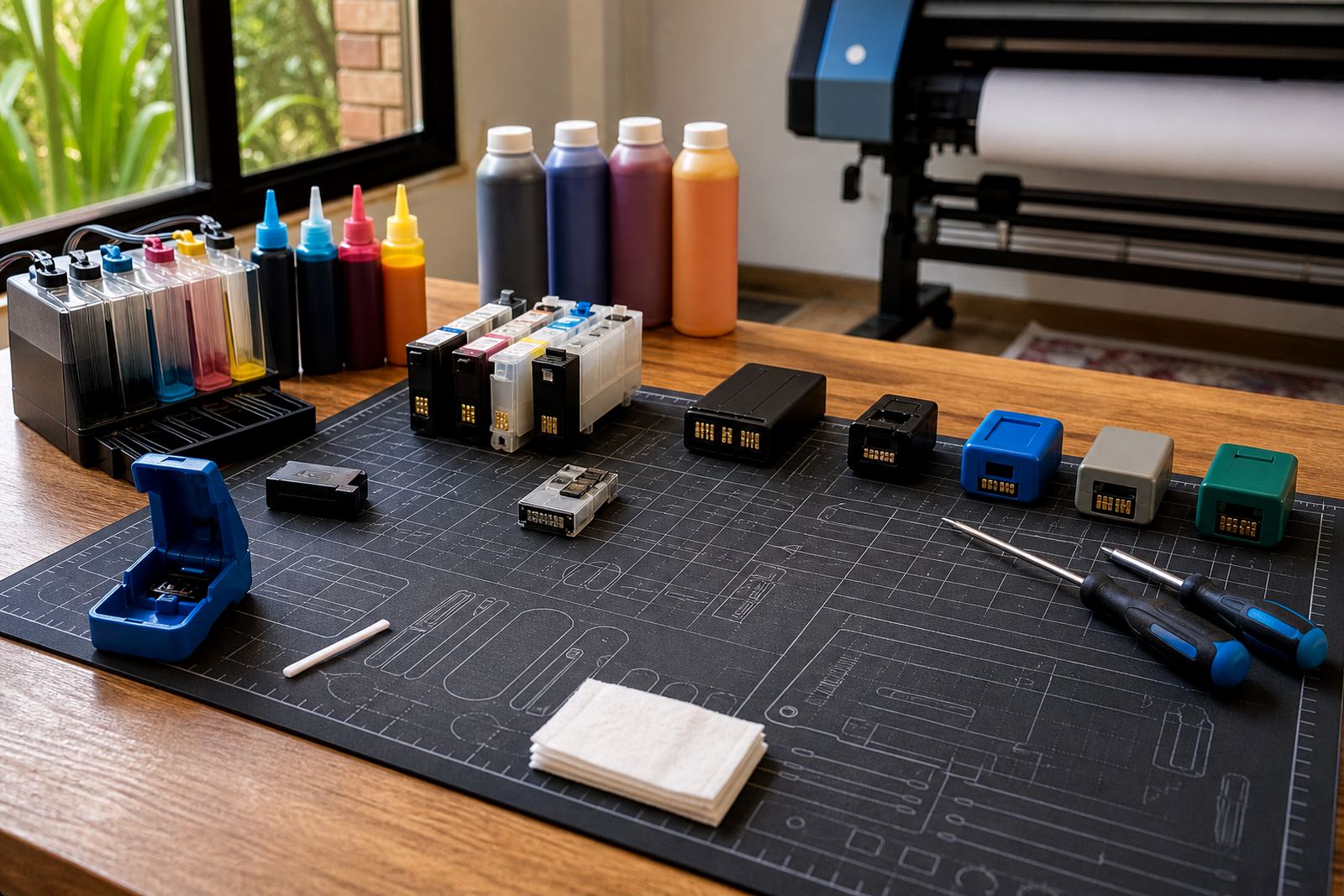
Chip reset help may be needed on some cartridge setups, not because the ink is wrong, but because the printer needs the cartridge state cleared before it will read full levels again. The reset step has to match the cartridge type and the printer setup, otherwise the machine may keep flagging an empty cartridge when there is usable ink inside.
- Use the correct dye formula for the specific cartridge path
- Prime slowly to reduce trapped air in the line
- Keep caps, seals and vents clean during filling
- Check for drips around the cartridge body and tubing joins
Printhead care when colour work matters
Dye ink generally flows well, but the printhead still needs sensible care. If the printer sits idle, the nozzles can dry out at the edges and create gaps in colour blocks or fine text. A regular nozzle check helps catch that early, and a short cleaning cycle may be enough if the problem is light.
Over-cleaning can waste ink and fill the waste path faster than needed, so use only the level of cleaning the machine asks for, then print a test sheet. If a colour still breaks up after repeated checks, the issue may be a blocked feed, wrong ink type, or an air pocket from the refill.
- Print a small test page after each refill
- Keep the printer covered where dust is heavy
- Do not leave open bottles near the fill point
- Watch for missing lines in pale cyan, magenta or yellow areas
Choosing between dye and pigment for a job
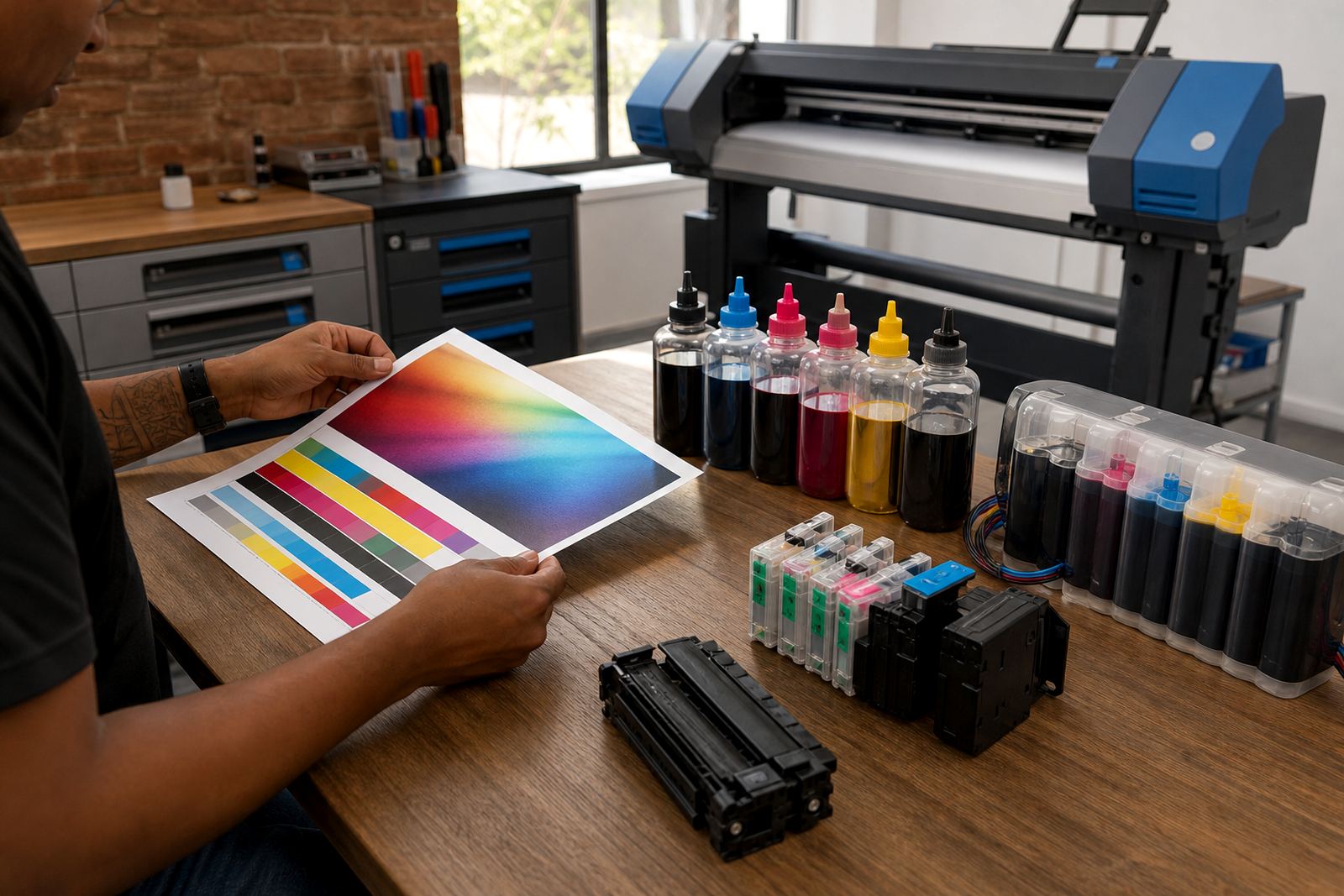
Dye ink is usually preferred when the goal is bright colour and smooth tonal blending on coated or office paper. Pigment ink is often better where the print must resist water, handling or fading for longer periods. The choice is less about general quality and more about what the sheet must do after it leaves the printer.
In a studio or print shop, that choice may change from job to job. A colour proof, school poster and office handout may all work well with dye ink, while a document set for long filing, outdoor use or heavy handling may point toward pigment instead.
- Dye ink: bright colour and smooth indoor presentation
- Pigment ink: stronger resistance for harsher conditions
- Coated paper often shows dye colour more cleanly
- The right ink depends on the final use, not habit
Empty cartridges, leaks and the bits people forget
Used cartridges should be handled with care rather than tossed in a drawer. Empty return programmes help keep housings, seals and spare parts out of the bin where possible, and they also reduce clutter around refill stations. A clean return tray makes stock control easier in busy offices.
Leak checking matters too. A small stain in the tray, around the valve or near the vent can point to a loose seal or overfilled reservoir. Colour balance help is also worth asking for when one channel looks dull, because a weak line does not always mean the ink is finished, sometimes it is flow, air or a blocked nozzle pattern.
- Keep empties separate from fresh stock
- Check seals after transport or courier handling
- Store refill bottles upright and tightly closed
- Log which colour was filled and when
A practical way to plan dye ink use
For offices in Durban, Pietermaritzburg, Johannesburg, Pretoria and Cape Town, a good plan is to match the machine to the duty cycle, then set a refill routine around actual page use. Stock planning helps when a room prints in bursts, because running short on one colour can stop the whole job. A small buffer of the active colours is usually easier to manage than repeated emergency fills.
Operator training also helps. People who handle the machine every day should know how to spot a weak nozzle test, how to close a refill port properly and when to stop if a leak starts. That kind of routine keeps the printer cleaner and makes the next service task simpler.
- Keep a separate note for each printer and colour set
- Train one person to do the first nozzle check
- Hold spare ink for the colours used most often
- Escalate repeated line breaks before more ink is added