
1. Start with the way your office prints
A CISS works best where documents move through the printer every week, not just once in a while. If the machine sits idle for long spells, ink can dry in the lines or nozzles and create avoidable cleaning work.
Look at your real print pattern first. Offices that print forms, invoices, labels or draft packs tend to benefit most, while a low-use room with one occasional print job may be better served by standard cartridges.
- Count how many pages your team prints in a normal week.
- Check whether colour pages are routine or only occasional.
- Note any printer that already shows dried nozzles or banding.
Match the ink to printer and task
Not every office document uses the same ink. Dye ink usually gives bright colour for everyday office pages, while pigment ink is often preferred where sharper text and stronger water resistance matter more.
That choice should follow the printer model and the paper used in the office. A well matched ink type reduces clogging, odd colours and repeat cleaning cycles, which can waste both time and ink.
- Use the correct ink type for the printer model.
- Keep black text jobs separate from high colour work where possible.
- Store ink bottles upright in a cool cupboard, away from direct sun.
3. What the CISS kit needs before fitting
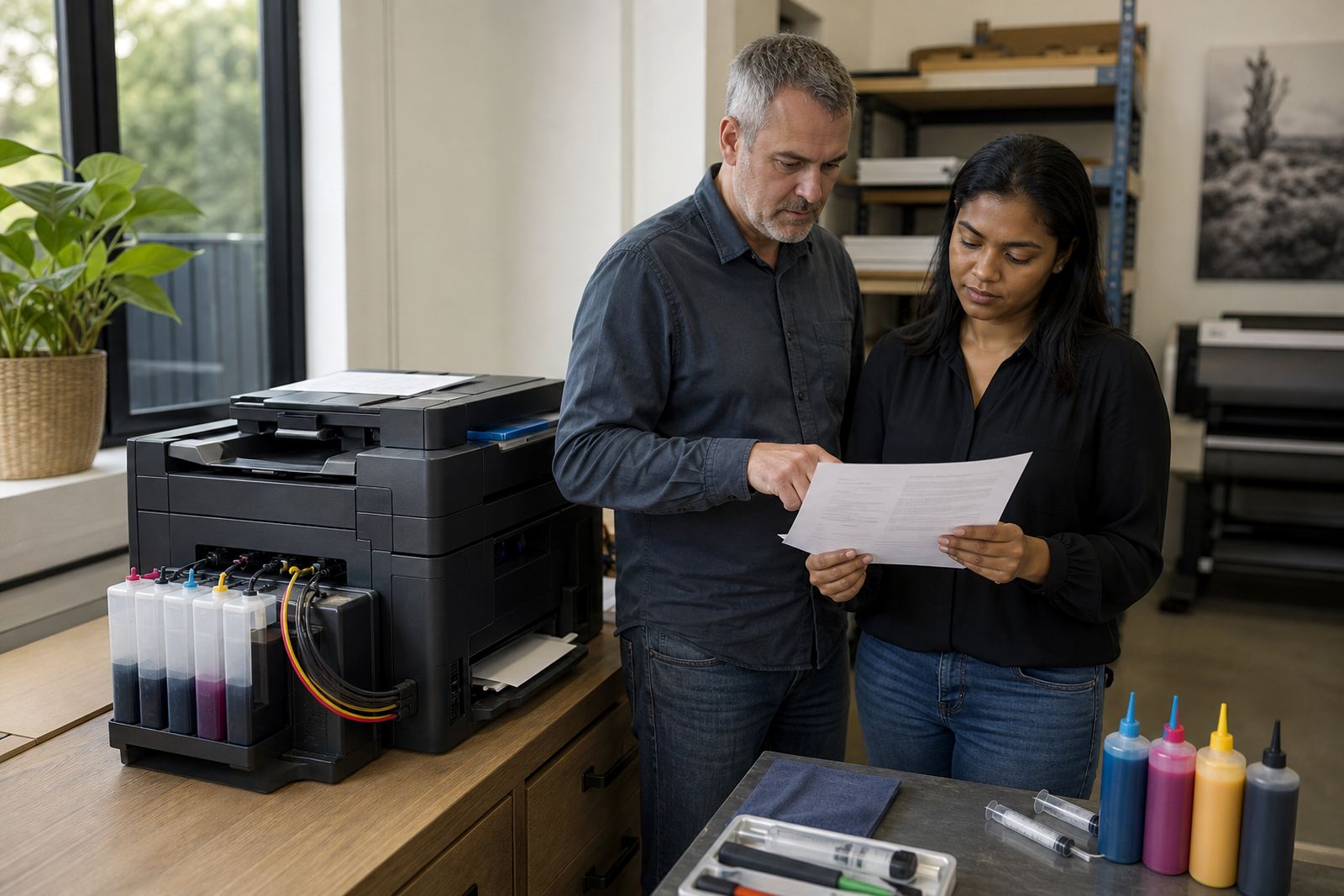
A continuous system needs a printer that can accept the tubing, ink tanks and refill path without strain on the carriage. The fit must leave enough movement for the head to travel freely, with no tube kinks or tank height mistakes.
During setup, the fill lines, priming and initial test pages matter a lot. Air in the line or a loose connector can cause missing colours, streaks or a printer that refuses to pull ink cleanly.
- Check that the tanks sit level beside the printer.
- Keep tubing tidy so it does not snag on moving parts.
- Run test sheets after the first fill and watch each colour closely.
4. Keep the printhead healthy from week to week
A CISS does not remove the need for routine care. Nozzle checks, gentle cleaning and sensible shutdown habits help stop blocked channels before they spread into larger faults.
If print quality starts to fade, do not keep running page after page hoping it clears itself. That can draw more air into the system or drag already weak nozzles into a worse state, especially on offices that print in bursts.
- Print a nozzle check before blaming the cartridge or ink.
- Use cleaning functions in moderation, not in loops.
- Keep the printer powered down properly, rather than unplugged mid job.
5. Chips, resetters and empty returns
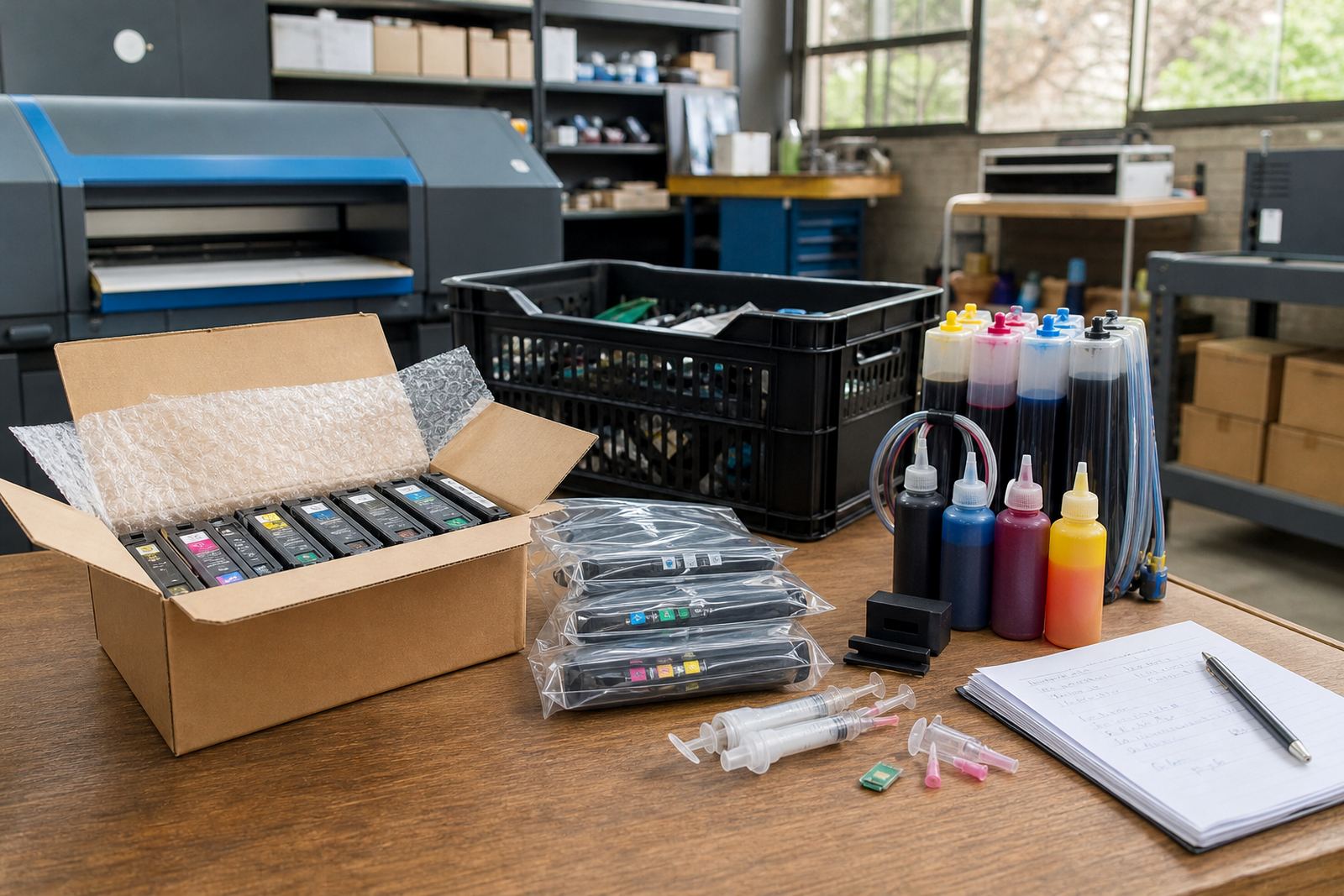
Some printers expect cartridge chip signals even when the ink supply has changed. In those cases a chip resetter or similar chip management step may be needed, depending on the model and the cartridge family.
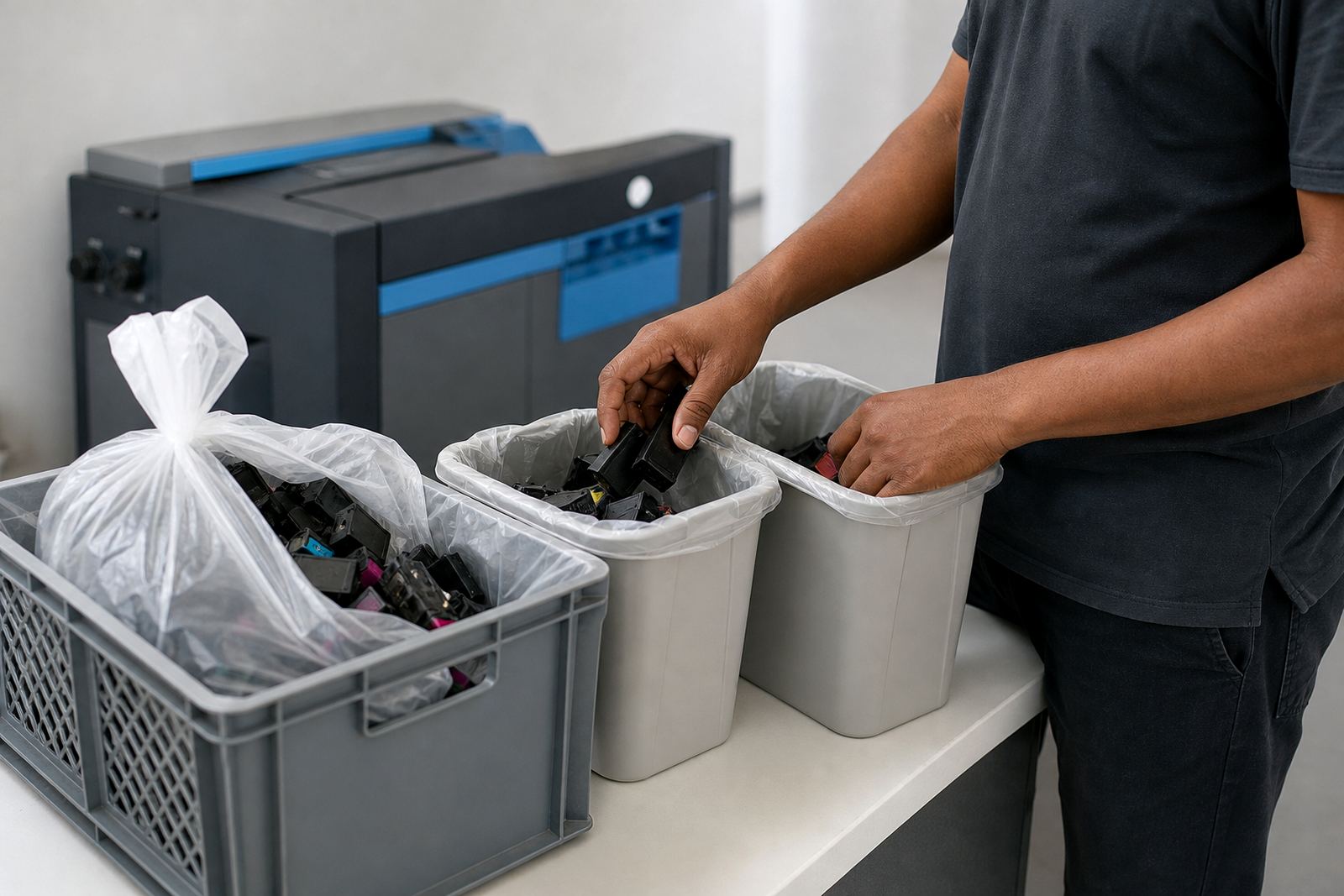
Used cartridges and emptied containers should not just be thrown away with office waste. A return habit keeps the counter clear and makes it easier to separate reusable parts, spent shells and ink residue for responsible handling.
- Keep a tray for empties instead of mixing them with paper waste.
- Label refillable units so the office does not fit the wrong one.
- Ask for help if the printer reports a chip error after refilling.
6. Build a refill routine that suits the office
Once a CISS is in place, the office needs a small routine rather than guesswork. Someone should know when the tanks are low, who checks colour balance and who logs any leaks, faint prints or paper feed marks.
Westville offices often want courier support for refills and parts, while larger teams in Durban, Johannesburg, Pretoria, Cape Town and Pietermaritzburg may want stock planning for multiple printers. A tidy routine keeps the printer ready and cuts the stop-start scramble around a deadline.
- Assign one person to watch ink levels and print quality.
- Keep a short note of any colour drift or leak check.
- Plan refill stock before the tanks run too low.