
What a refurbished cartridge is doing in the background
A refurbished cartridge starts as a used shell that can be cleaned, tested and prepared for another printing cycle. The shell is inspected for cracks, seal damage and contact wear, then filled with suitable ink and checked for fit, chip condition and flow. In practice, the aim is to keep the cartridge working cleanly rather than treating it as a throwaway item.
In an office or studio, that means a working cartridge can move through more than one life if the body is still sound. It also means the condition of the printer matters, because a clogged head, a tired wiper or poor storage can make even a fresh cartridge behave badly. Westville humidity and dusty rooms both affect storage, so sealed packaging and tidy handling matter more than many teams expect.
The refill cycle, step by step
Refill work is not just topping up liquid and closing the lid. A proper cycle checks the cartridge body, clears old residue where needed, restores the correct chip state if that system uses one, and confirms the ink matches the task. Dye inks suit crisp office colour and everyday graphics, while pigment inks are often preferred where sharper text or better water resistance is needed.
- Remove the empty cartridge with clean hands and keep the contacts dry.
- Check for cracks, worn seals, blocked vents and ink staining around the fill point.
- Clean the cartridge carefully so old ink does not mix badly with the new fill.
- Use the right ink type for the printer and the job, not whatever is on the shelf.
- Reset or replace the chip in general terms, where that cartridge design requires it.
- Run a nozzle check and a short print test before the cartridge goes back into service.
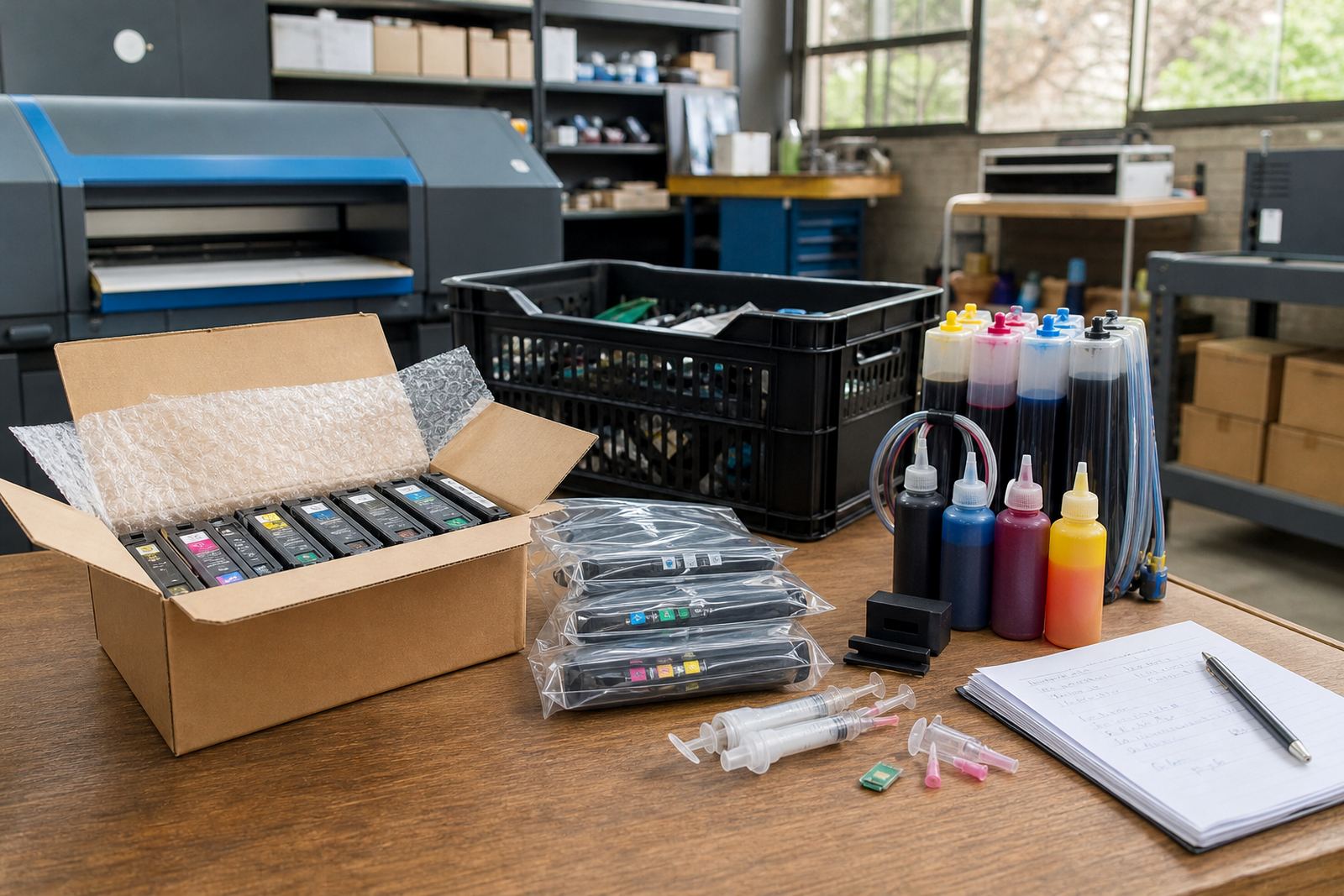
A good refill cycle also includes sensible storage between jobs. A cartridge left open on a warm windowsill can dry out fast, and a cartridge knocked around in a courier bag may leak at the worst moment. Small handling details save a lot of chasing later on.
When bulk ink systems make more sense
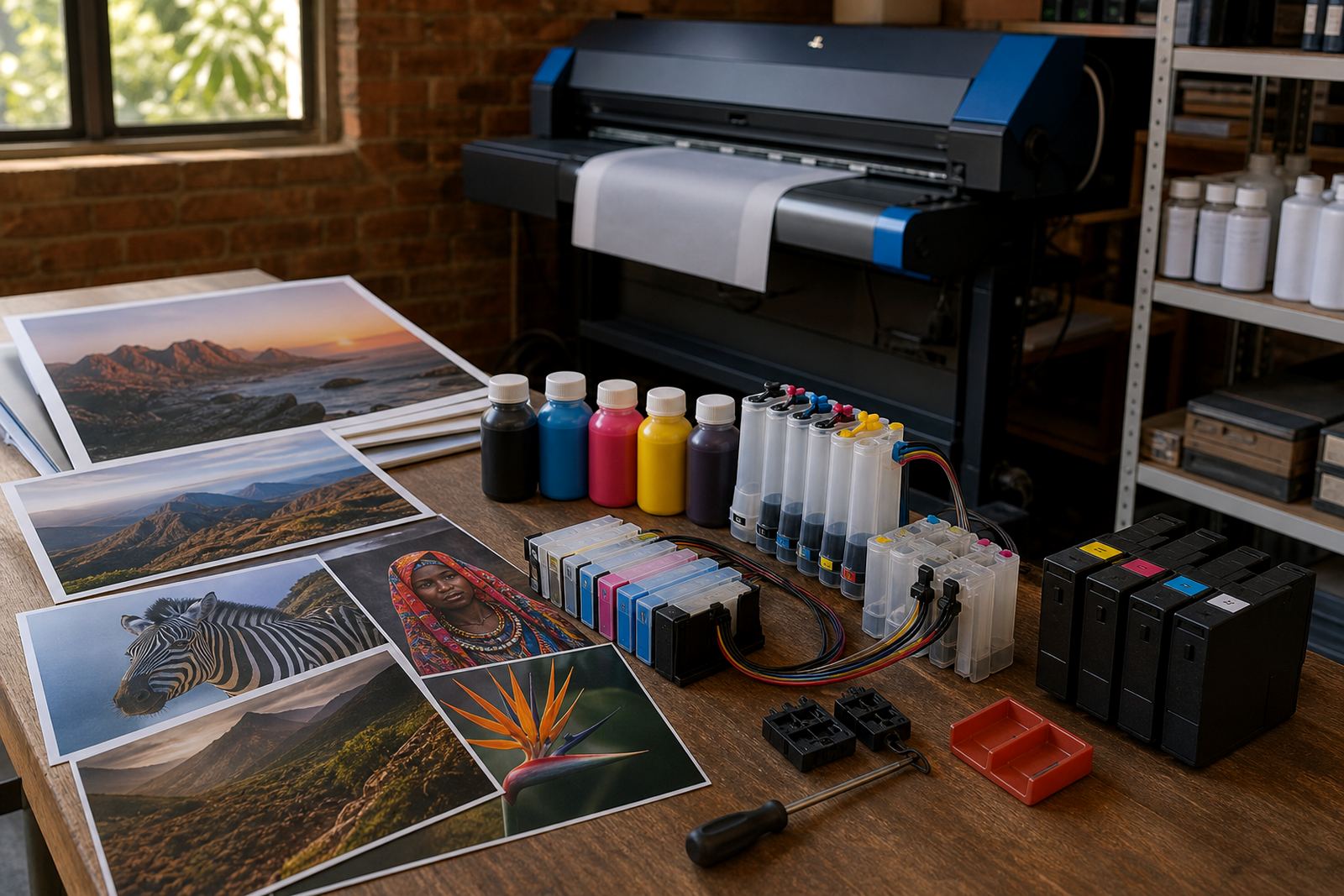
Continuous ink supply systems and refill kits are useful where the same printer works hard every week. A studio, repro room or wide-format team may move through large volumes of ink, and the refill approach reduces packaging waste while lowering the cost of frequent printing. The set-up needs tidy tubing, correct reservoir positioning and regular checks for air in the lines.
Bulk systems are not a casual fit-and-forget choice. They need operator discipline, especially where colour work must stay consistent across long runs. If the printer is moved, transported or left unused, the system should be checked before the next job starts. That extra attention is worth it when the printer is a daily tool, not an occasional one.
- Keep the reservoirs clean and closed when not being topped up.
- Watch the ink level before it drops too low and draws air into the lines.
- Use the same ink family for each channel where possible.
- Label the printer clearly if more than one operator is using it.
- Track which cartridges or reservoirs were last serviced.
Printhead care that keeps faults from spreading
Many printing complaints start with neglect, not with the cartridge alone. If nozzles are partly blocked, the printer may band, streak or miss one colour altogether. That is why nozzle checks, short cleaning routines and sensible shutdown habits matter for both refurbished cartridges and bulk ink systems.
Do not keep running a machine through repeated heavy cleans without checking the cause. A dried head, a mismatched ink type, trapped air or a poor seal can all create the same messy print. Gentle printhead care protects the machine and reduces wasted ink. If the printer is used in a coastal town like Durban or Ballito, moisture and heat can also change how inks behave during storage.
Empty returns and recycling that keep the cycle moving
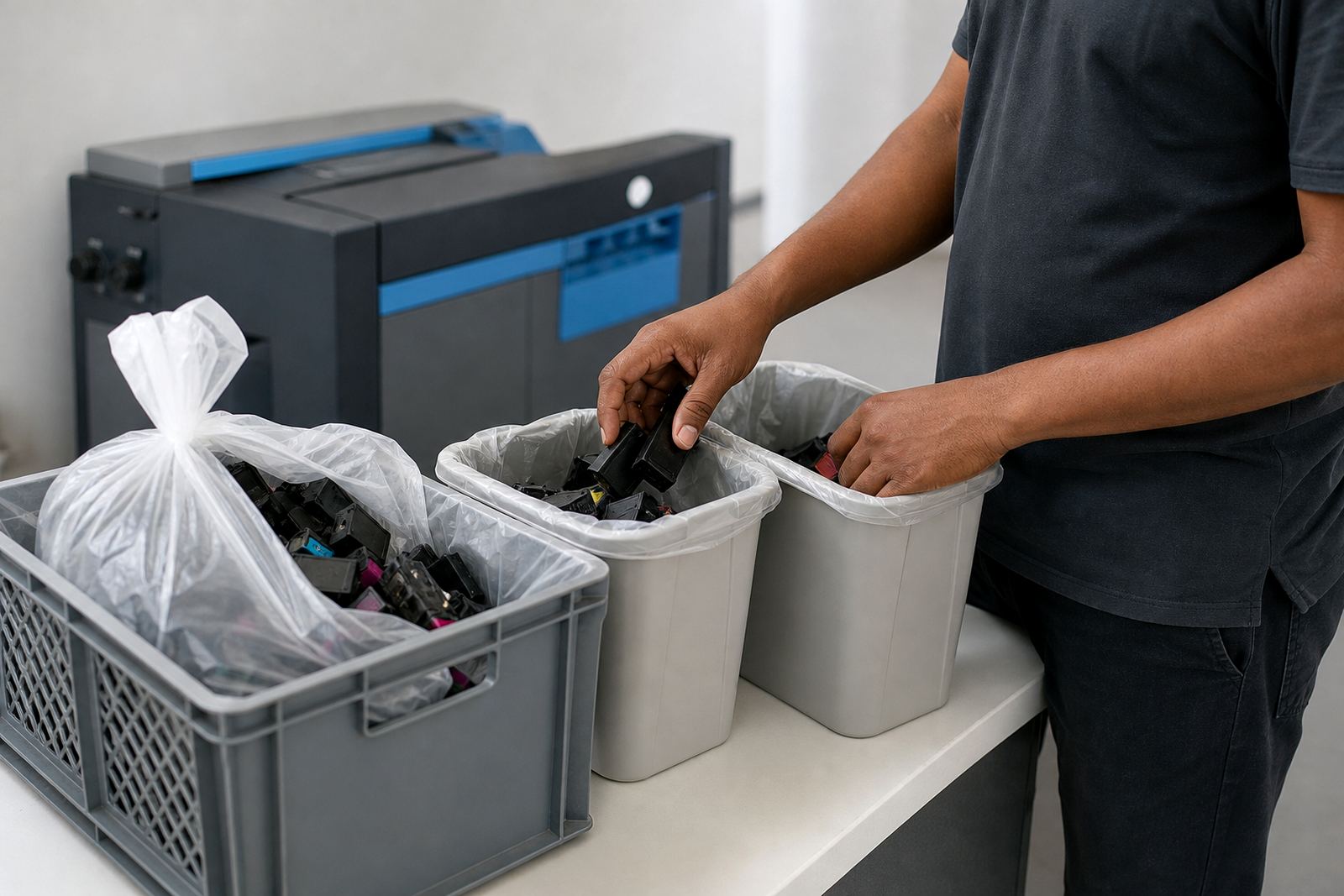
Empty cartridge returns are part of the value of refurbished supply. Returned shells can often be inspected, cleaned and sent back into service if they are still sound. That keeps usable plastic and metal out of the bin, and it also helps create a steadier supply of housings for future refills.
For return work, the main rule is to keep empties sorted and uncrushed. Mixed-in tape, damaged seals and loose ink residue can slow the handling process. A neat return tray in the office or studio makes the next collection far easier.
- Store empties upright where possible.
- Do not wash cartridges under running water unless instructed for a specific type.
- Keep the original caps or plugs if the cartridge design uses them.
- Separate colour sets from black units where practical.
- Send back only the shells that match the agreed return programme.
A working checklist before you place a refill order
Before a refill job or cartridge order is prepared, it helps to note the printer model, the current fault, the ink type already in use and whether the unit has been refilled before. That simple record saves confusion when a machine has been passed between staff or moved between locations in Johannesburg, Pretoria, Cape Town or Pietermaritzburg. It also helps when a courier delivery needs to match the right stock to the right branch.
Useful information to keep on hand includes the cartridge code, the colour set, the number of pages or the type of output, and whether the printer has been idle for a while. If the issue is a leak, a blank colour or a weak print, mention what the page looks like so the fault can be narrowed down. For office teams, a short operator note is often enough to keep the next cycle cleaner.
That is also where stock planning helps. When a business knows which cartridges move fastest, it can keep a small buffer for the common colours and avoid running everything down to the last drop. It is a practical habit, and it works well for busy studios that cannot afford a surprise changeover in the middle of a print run.