
Set one box aside before the pile starts
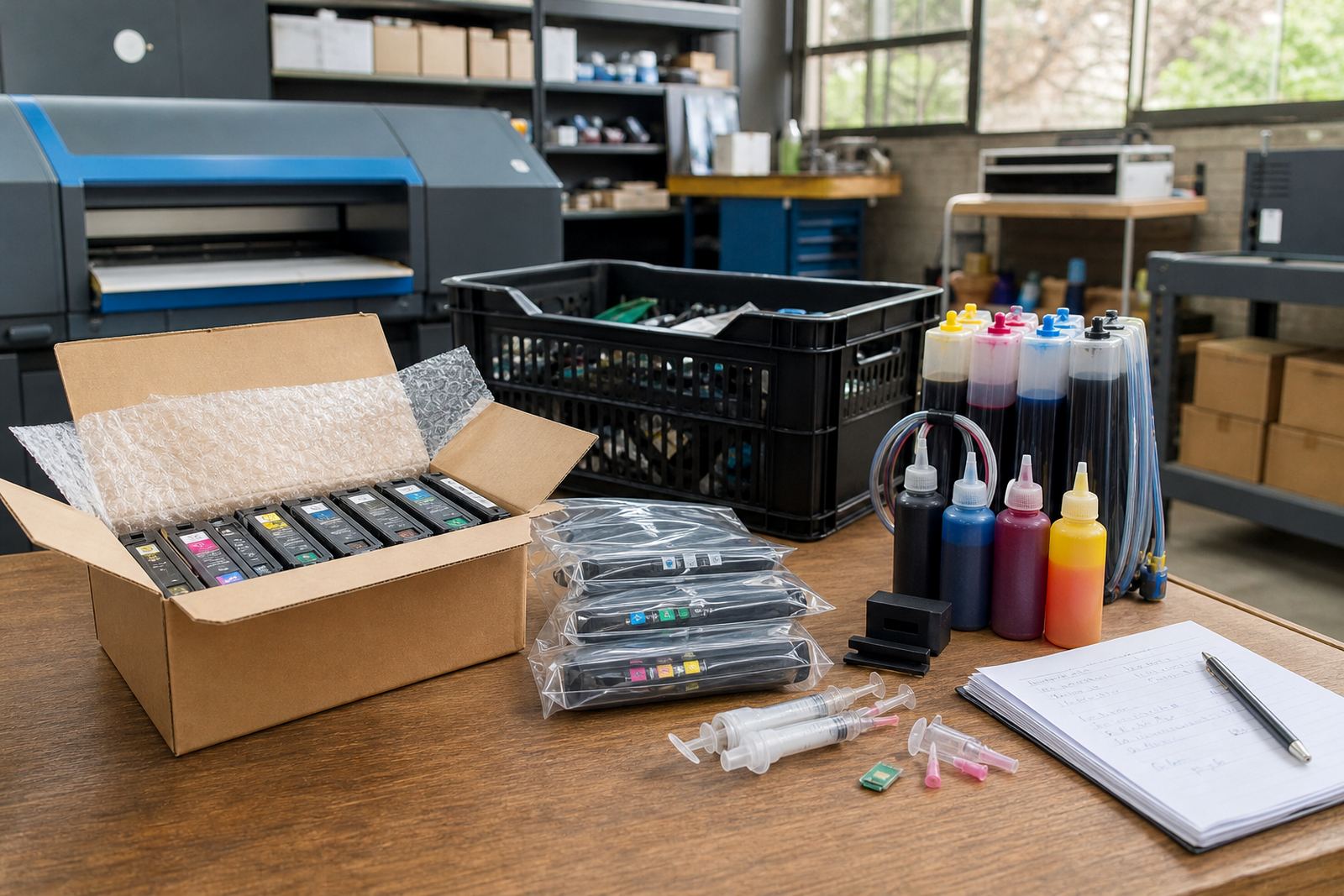
Start with a single marked box near the printer station or refill shelf. It helps if the box is rigid, dry and large enough for cartridges, seals, packaging scraps and the odd sponge or cap that comes loose during handling.
Keep the box away from direct sun, sinks and floor mops. In Durban humidity, damp cardboard softens fast and labels peel off, so a plastic tote or a lined carton works better than an open tray.
- Use one container for empties only.
- Keep the opening easy to reach but not underfoot.
- Line the box if leaks are common.
- Mark the box with the printer room or floor name.
Sort cartridges before they are passed on
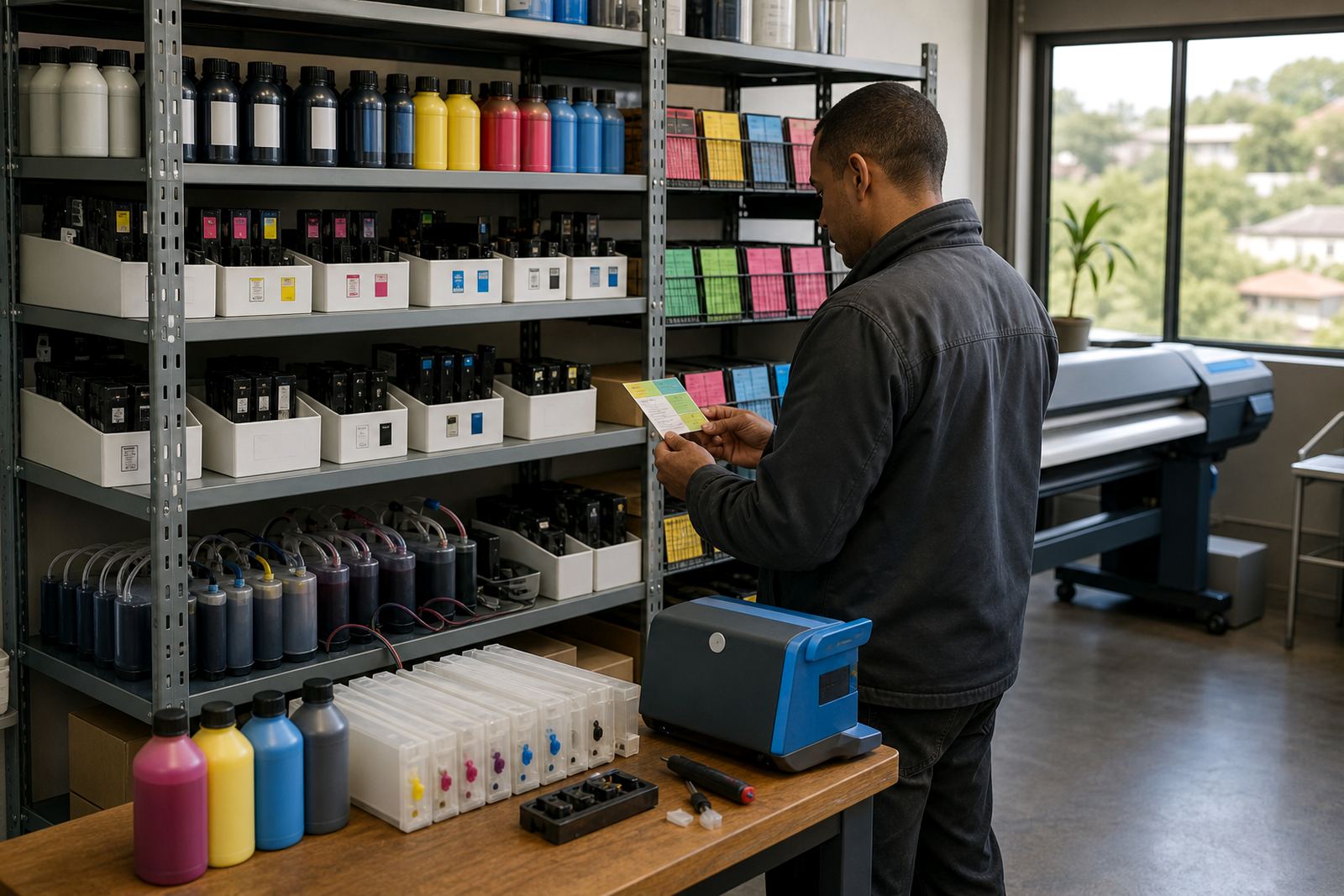
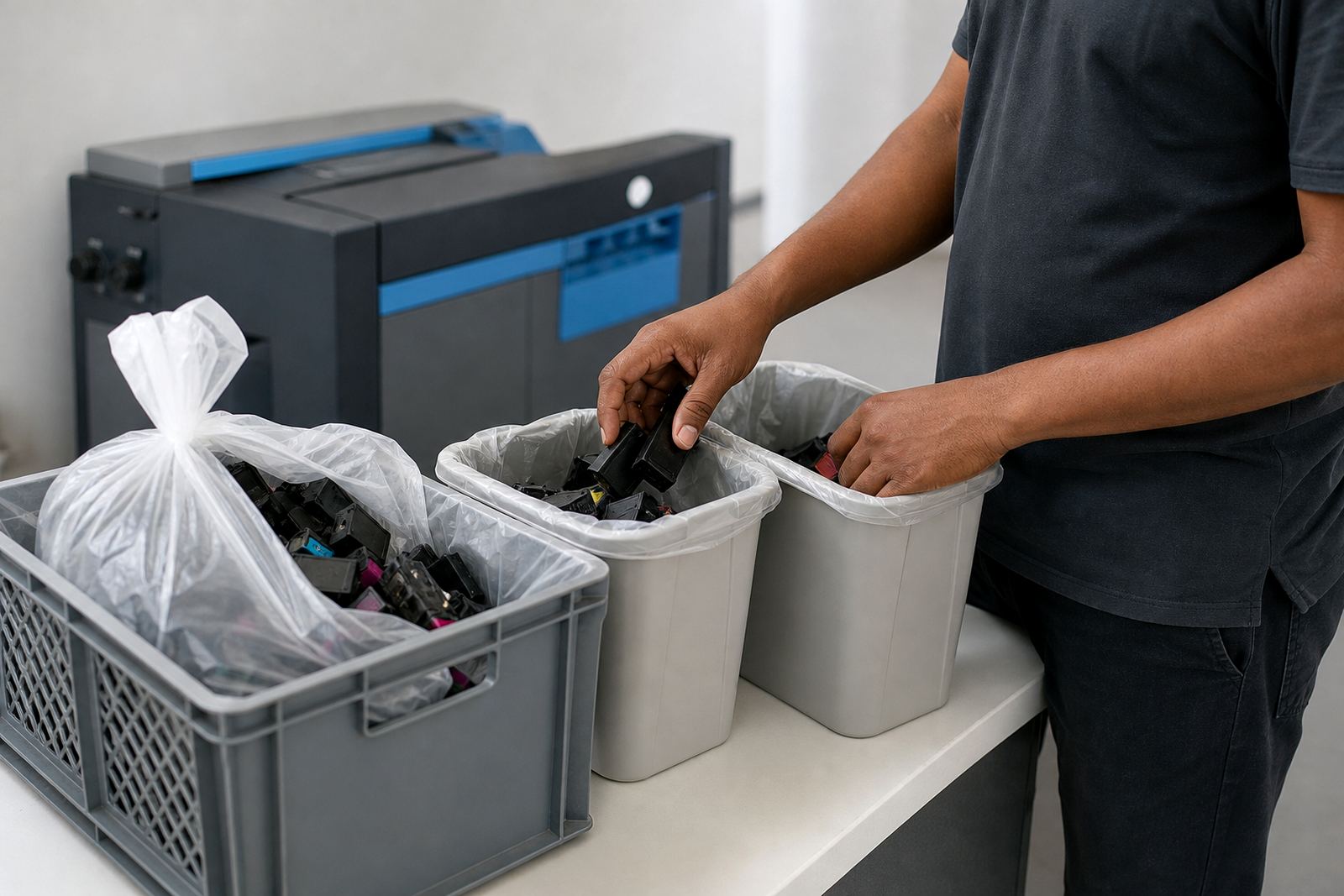
Do not throw every empty into one heap and hope for the best. Separate the units that can be refilled from the ones that are damaged, cracked or badly contaminated with dried ink. A quick sort saves time later and reduces the chance of sending unusable shells back into circulation.
Office teams often collect mixed cartridges from several machines, so a simple label on each pile helps. Keep black, colour and wide-format units apart if the sizes or fittings are different, and place any leaking item in a sealed bag before it reaches the return box.
- Refillable shells go in one section.
- Cracked or warped items go in a reject bag.
- Leak-prone cartridges need a sealable wrap.
- Loose caps and plugs stay with the matching unit.
Keep ink residue under control
Empty cartridges still carry ink in the sponge, chamber or nozzle zone. If that residue spills into the box, the rest of the stock picks up stains and odour. A simple wipe-down with a lint-free cloth is usually enough for the outside, while the contact side needs more care so the chip area and terminals stay clean.
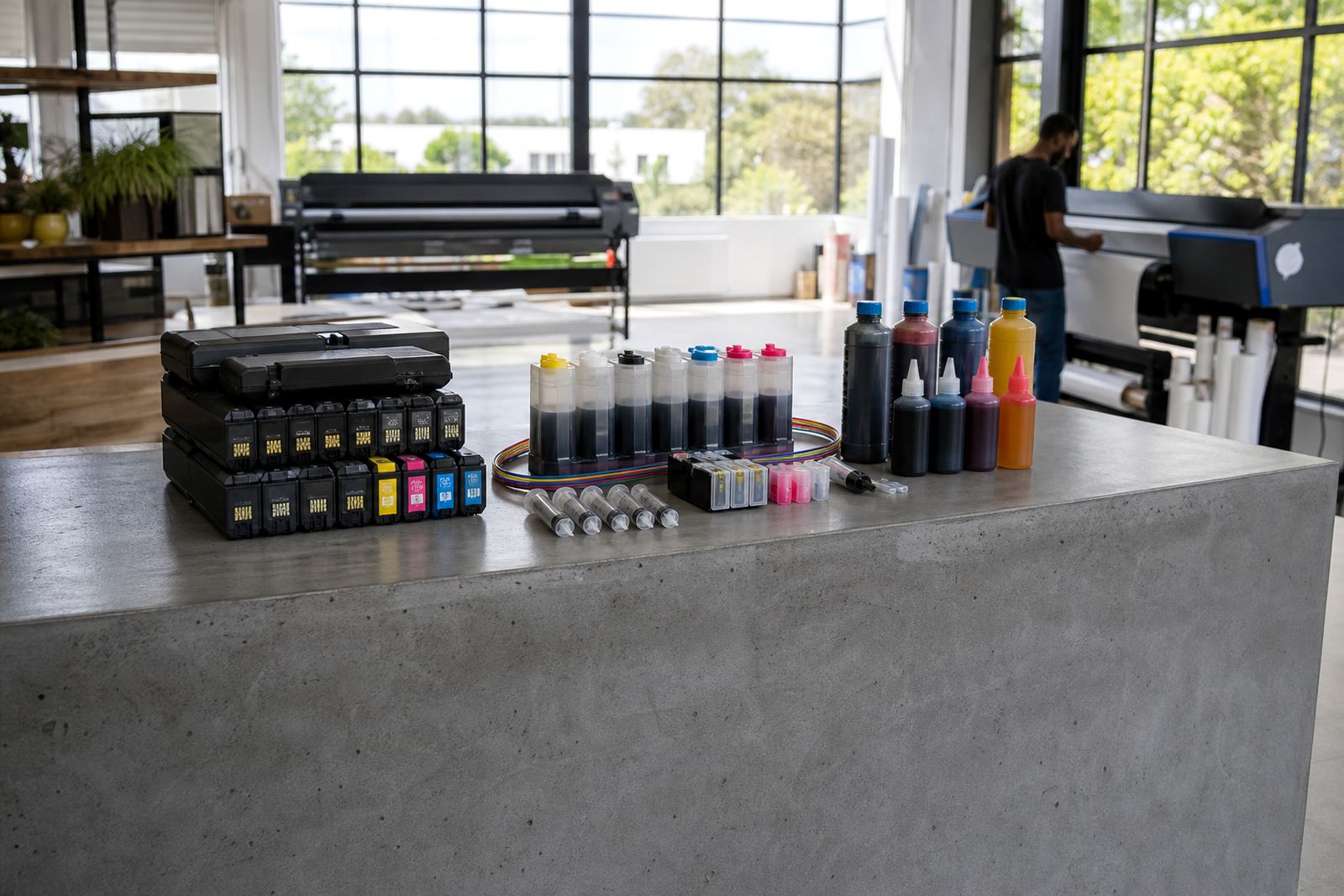
For refill kits and bulk ink bottles, close every cap firmly and stand the bottles upright. Pigment ink and dye ink behave differently, so leftover fluid from one type should not be mixed with another in the same container. That is where print quality issues start to show up later.
Make the return route easy for staff
A return routine fails when it depends on memory alone. Put the empty box where the person replacing cartridges can reach it without walking across the whole office, and fix one person to move the stock when the box reaches the set level. In a studio or print room, the cleanest habit is to empty the used items at the end of the day before fresh work starts.
If you run several departments, use a simple handover note or spreadsheet so no one guesses what has already been collected. The point is not fancy admin, just enough structure to stop used cartridges sitting on shelves for weeks.
- Nominate one collection point per floor or room.
- Assign one person to check the box.
- Record the cartridge type, count and condition.
- Move full boxes to a dry storage corner.
When to hold back a cartridge from reuse
Not every empty should go straight into a refill line. Cartridges with broken clips, burnt contacts, swollen bodies or heavy ink contamination need a separate check before anyone tries to reuse them. The same goes for units that have been dropped, crushed or left open to dust for too long.
A cartridge that keeps throwing nozzle issues may also need extra printhead care before it is returned to service. Chip reset help can be useful in general terms, but the chip is only one part of the picture. If the body is damaged, the cartridge should not be forced back into use just to save a shell.