
Start With the way your printer is used
The first check is not the kit, it is the print pattern. A small office that prints letters, quotes and invoices has a different need from a design studio that runs colour proofs, coated media and long image files. A wide-format print shop may use steady ink across several heads, while an artist might print in bursts and leave the machine idle between jobs.
If a printer sits unused for long stretches, the ink path needs more attention. Ink can settle, nozzles can dry, and a machine that prints only now and then needs cleaning habits built into the routine. For heavier daily use, a refill kit or continuous ink supply system can make more sense because the printer keeps moving often enough to stay active.
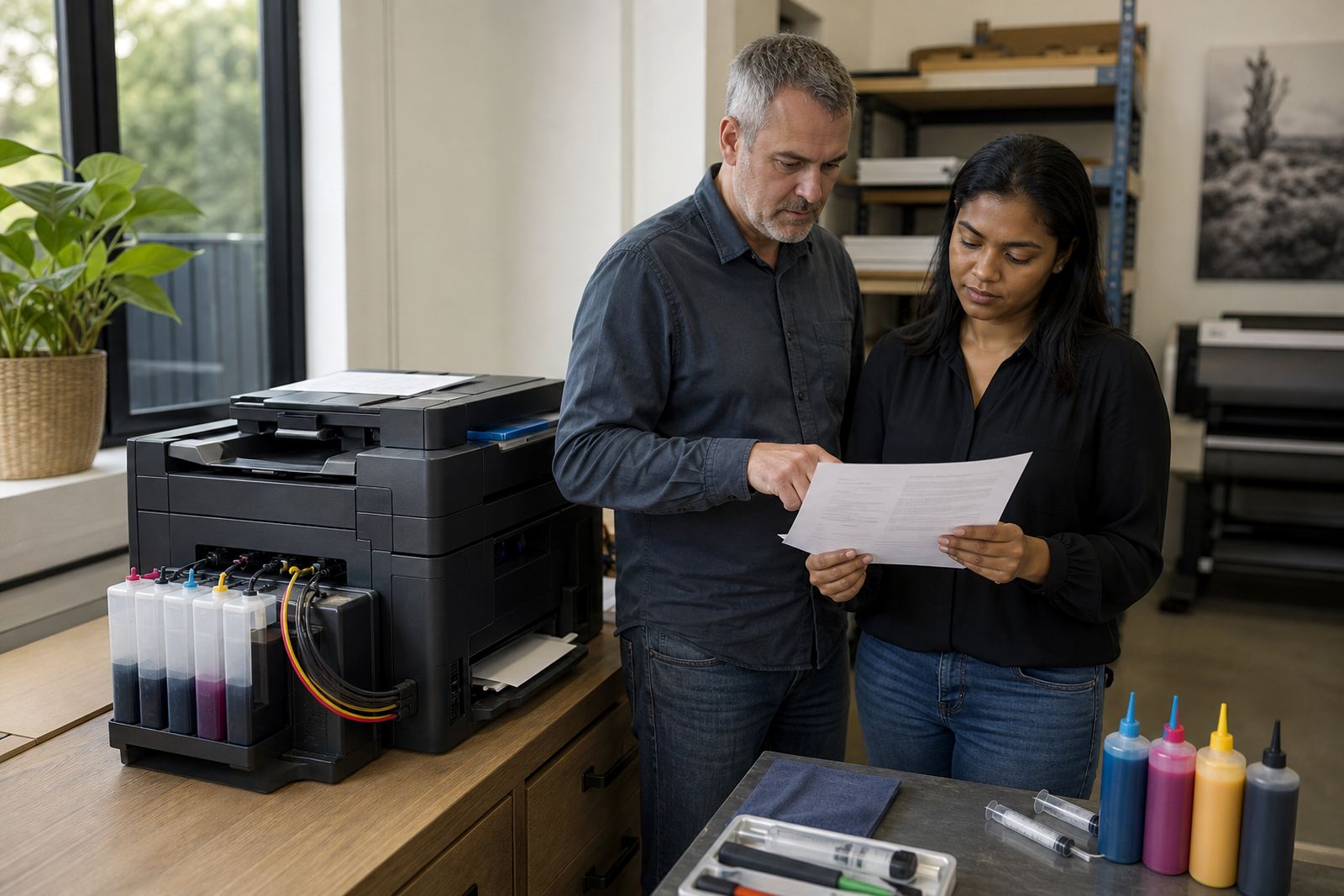
Think about who will handle the work. If one trained person manages the machine, a more involved setup can work well. If several staff members share the printer, the simplest refill method usually causes fewer mistakes.
Pick the refill style that fits the room
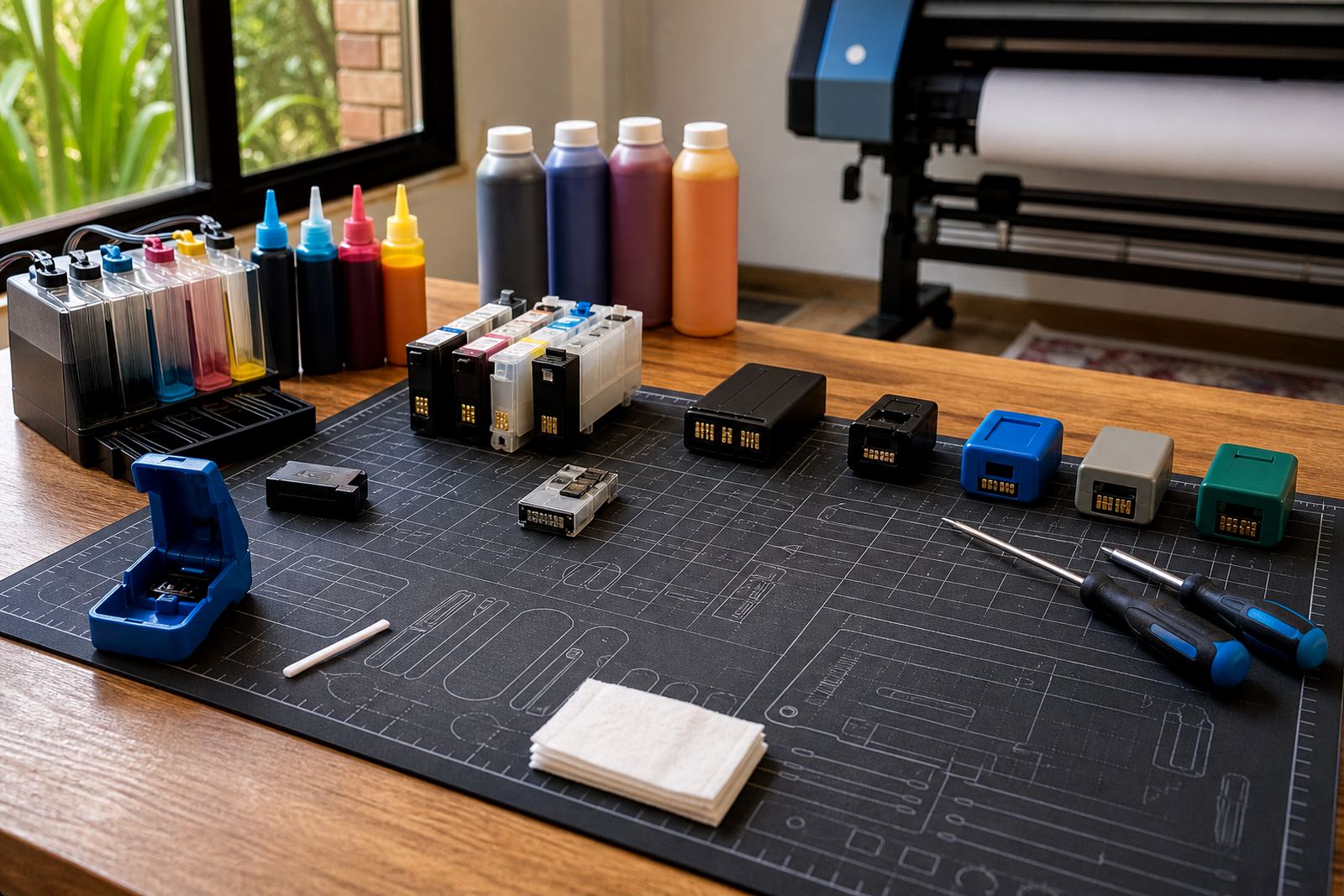
There are two common paths. One is a refill kit for individual cartridges, where empty cartridges are topped up with compatible ink and used again. The other is a bulk ink system, often called a continuous ink supply system, where larger bottles feed the printer through tubes or refillable tanks.
Refill kits suit teams that want lower running costs without changing the printer arrangement too much. They suit offices that print in moderate volumes and want to keep a familiar workflow. Bulk systems suit higher print volumes, especially where colour output is frequent and the staff have time for a more hands-on setup.
- Choose cartridges if the printer is used by many people and needs simple handling.
- Choose bulk ink if print volume is steady and ink changes happen often.
- Choose refill kits if the machine is already in service and you want to extend cartridge use.
- Choose a bulk setup if you can keep a closer eye on ink levels and maintenance.
Check ink type before you load the bottle
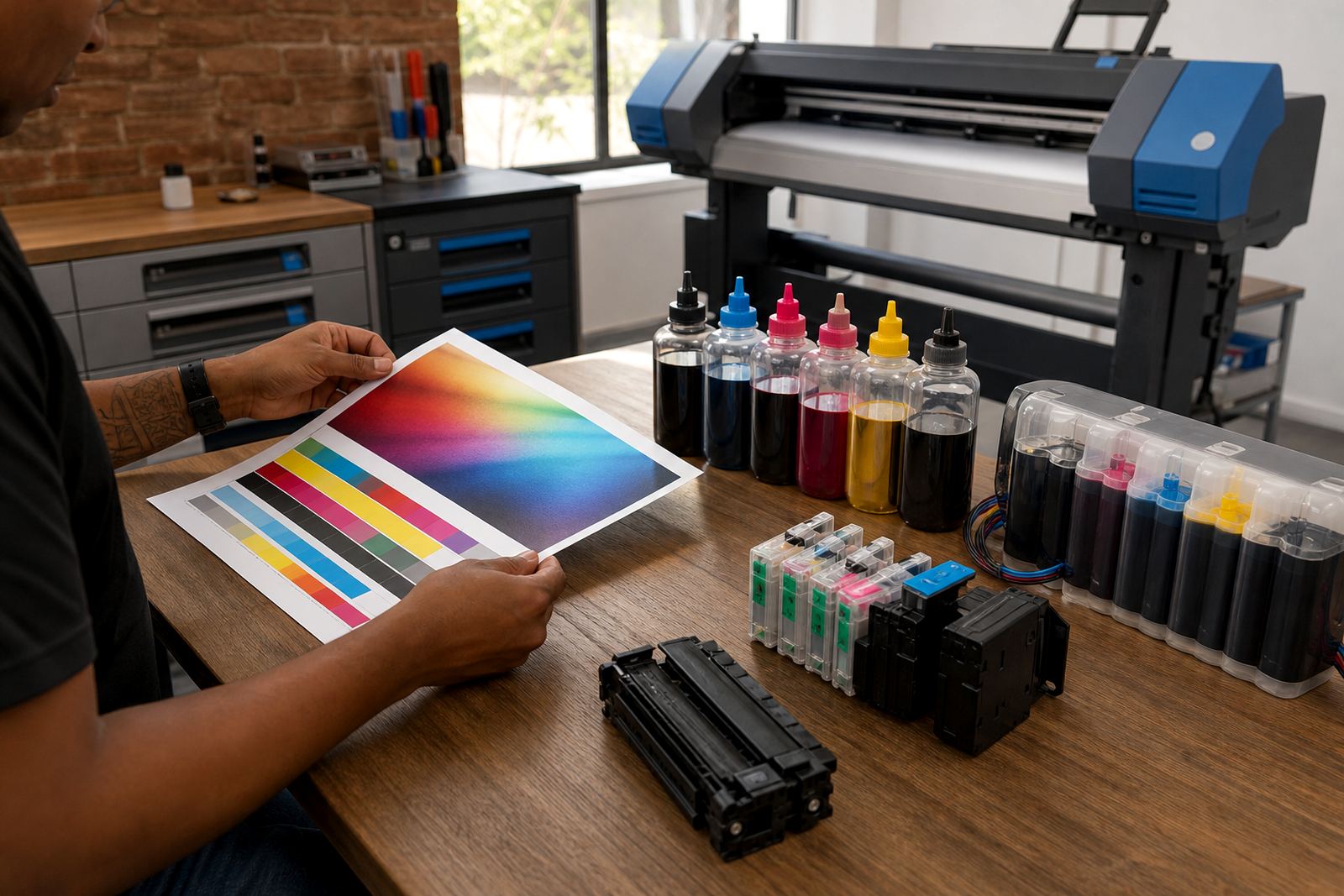
Ink choice matters because different machines and jobs behave differently. Dye ink gives bright colour and is often used for office graphics, general documents and smooth tonal work. Pigment ink is better suited to sharper text, stronger resistance on some media and prints that need more durability. The wrong type can affect colour balance, nozzle health and the finish on the page.
For design work, the main question is how the print will be used after it leaves the machine. If it is for handouts, proof sheets or internal approval, dye ink may be enough. If the print must hold up better on paper or be handled often, pigment ink may suit the task better. A mixed setup should be assessed with care, because each channel needs the right ink and the right cleaning habits.
Where colour is critical, make sure the refill kit matches the printer model and the intended paper stock. A good kit still needs the right ink, not just the right bottle and tube.
Staff time is part of the cost
Many buyers look only at the bottle and the cartridge, but staff time changes the real cost. Refilling takes a steady hand, a clean surface and some record keeping. A bulk ink system can save on repeated cartridge changes, yet it asks for more attention at the start and during use.
Ask who will do the work on a normal week. If the answer is already busy admin staff, the better option may be the one with fewer manual steps. If a technician or print operator is available, more involved refill work can be practical and easier to keep consistent.
- Count how often the printer runs low in a month.
- Check whether one person can manage refills without interruption.
- Allow space for paper towels, gloves and a clean fill area.
- Keep a note of which cartridge or tank goes where.
- Plan who checks levels, cleans spills and records resets.
Keep printhead care in the same conversation
Refill systems work best when the printhead is kept healthy. That means regular nozzle checks, proper shutdown habits and early attention when colours start breaking up. If a printer sits unused, dried ink can block lines and make cleaning cycles more frequent than they should be.
Do not treat a refill kit as a separate purchase from maintenance. The machine, the ink and the cleaning routine belong together. A good habit is to print a test page before a big job, especially where colour accuracy matters or where a deadline leaves no room for waste. If a line is missing, deal with it before the job gets larger.
Chip reset help can also matter with some refill setups. The printer may need the cartridge status cleared after refilling, and that step should be understood before the first fill. If the reset process is handled badly, the printer may report low ink or stop reading the cartridge correctly.
Use a short checklist before you place the order
A refill kit is easier to live with when the details are checked upfront. The same is true for courier delivery, especially if your office, studio or print room is outside Westville and the machine must keep moving with limited downtime.
- Confirm the printer model and cartridge family.
- Check whether the work needs dye ink, pigment ink or a mix.
- Decide if the team needs cartridge refills or a bulk ink setup.
- Set aside a clean area for filling and storage.
- Plan nozzle checks, cleaning cycles and spill control.
- Keep empty cartridges for recycling or return.
- Make sure one person knows the reset steps and fill levels.
When the list is clear, stock planning becomes easier too. You will know how many refill bottles, spare cartridges and cleaning items to keep on hand. That reduces last-minute pressure and helps the printer stay ready for ordinary work, not just the urgent jobs.
What a practical refill routine looks like
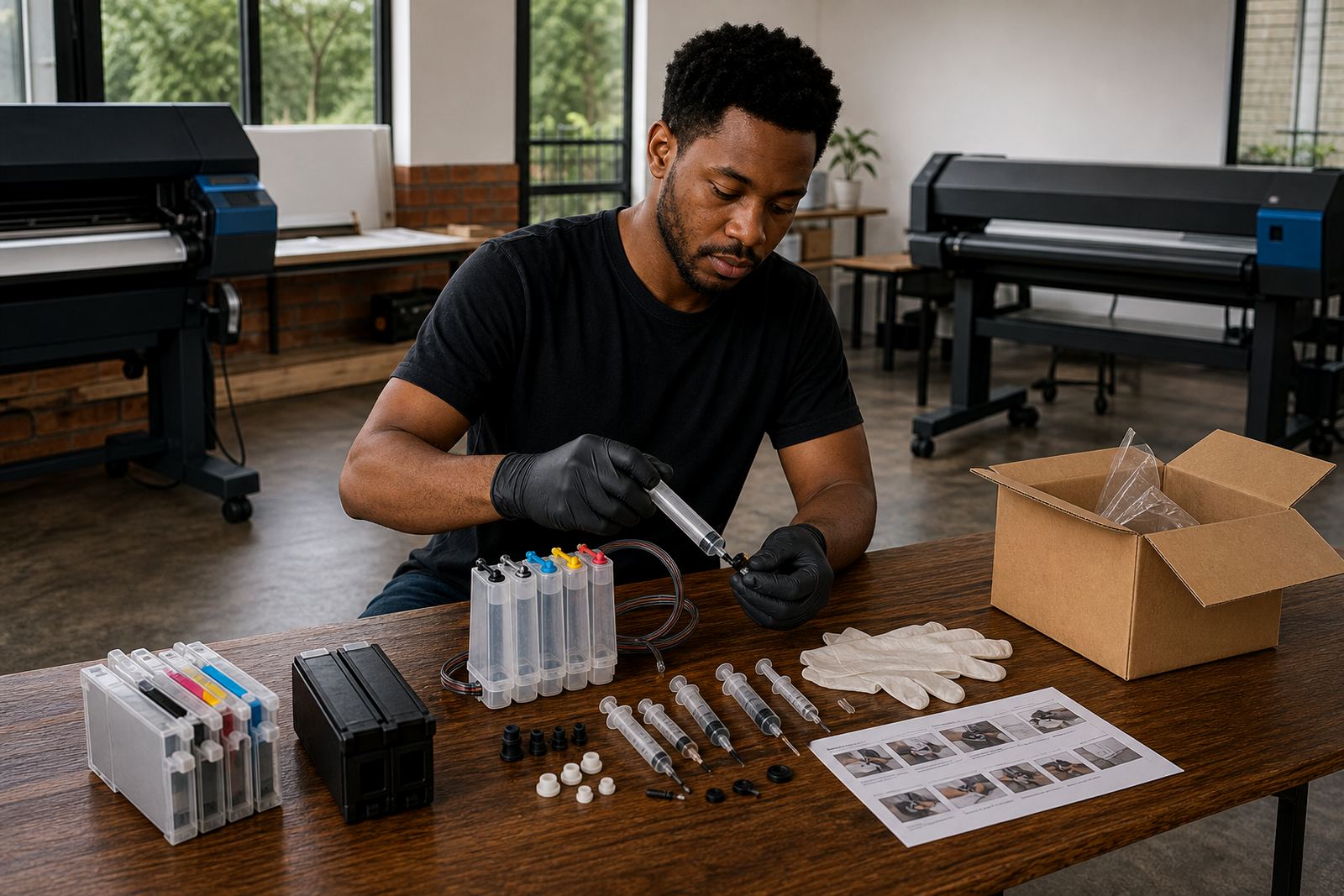
A useful refill routine is not complicated. It starts with a clean workspace, the right ink and a quick check of levels before the machine runs dry. After refilling, the cartridge or tank should be seated properly and the printer should be tested with a nozzle check or sample page.
For offices in Durban, Pietermaritzburg, Johannesburg, Pretoria or Cape Town, courier delivery can keep the flow going without forcing a trip across town for every top-up. The real value of the kit is not only lower waste, but a printing habit that matches the way your team works. When the kit suits the job, the printer is easier to manage and the empty packaging has a smaller footprint.
Used cartridges should be kept aside for return or recycling where possible. That helps keep the workspace tidy and avoids throwing away parts that still have life left in them.