
Start with the printer, not the bottle
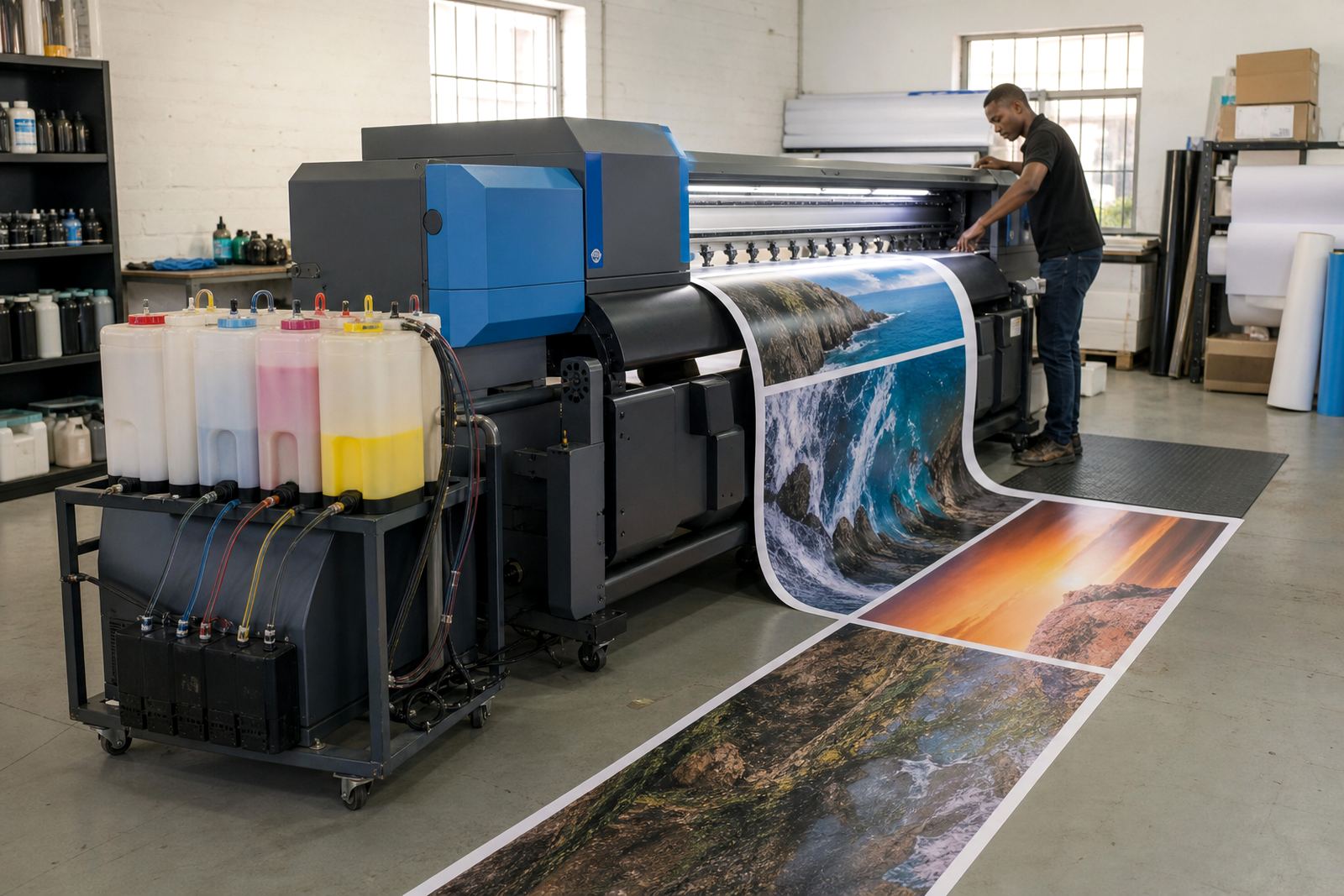
Large-format machines behave differently from small office printers. Before any change to bulk ink, check the model, the head type, whether it uses dye or pigment inks, and how often it prints. A machine that sits idle for long spells needs a different plan from one that runs most days. In Durban, humidity also matters because paper and ink can react to damp storage and open bottles, so the room conditions should be part of the plan.
A practical first pass is to look at the current print quality, then note any nozzle gaps, faint bands or colour drift. If those show up already, bulk ink will not fix them on its own. It is better to sort the head condition first, then look at the refill system and how the operator will handle it.
Questions that should be asked before the switch
These are the questions that usually matter most on a wide-format job. They help avoid mismatched ink, blocked lines and wasted stock.
- What media is being printed most often, gloss paper, matt paper, vinyl or canvas?
- Does the printer use pigment ink for durability, or dye ink for brighter indoor colour?
- How often does the machine print, daily, weekly, or in short bursts?
- Are the cartridges refillable, or will a chip resetter or similar device be needed in general terms?
- Is the printer already showing nozzle drop-out, banding or colour shifts?
- Will the empties be returned for recycling or kept for controlled refilling?
If the answers are uncertain, pause before loading a bulk system. The cost saving can disappear quickly if the wrong ink chemistry is used or if the operator has to keep clearing blocked lines.
Dye, pigment and the paper that changes the result
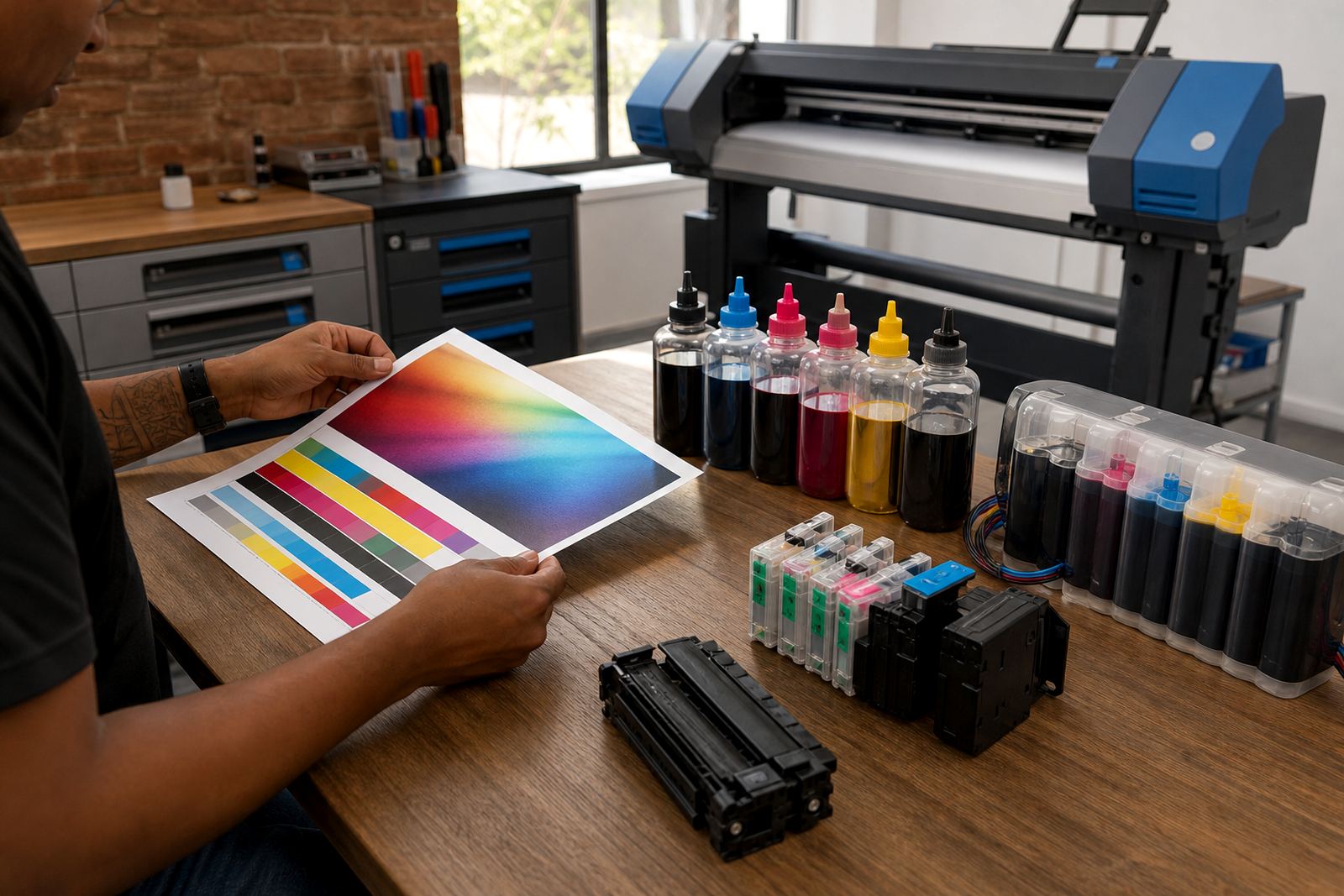
Dye ink and pigment ink are not interchangeable in practice. Dye usually gives strong colour for indoor work and presentation pieces, while pigment is better suited to sharper text, tougher handling and greater resistance to moisture on the right media. The paper or film matters just as much as the ink. A coated sheet can behave very differently from plain stock, and the first test prints should be judged on the actual media used by the shop.
For wide-format work, colour balance must also be watched across a full run. One roll may look fine at the start and drift later if the supply line is not primed well or if air is getting into the system. That is why a test strip, then a short trial print, is worth the time before full production starts.
A setup checklist for bulk ink systems
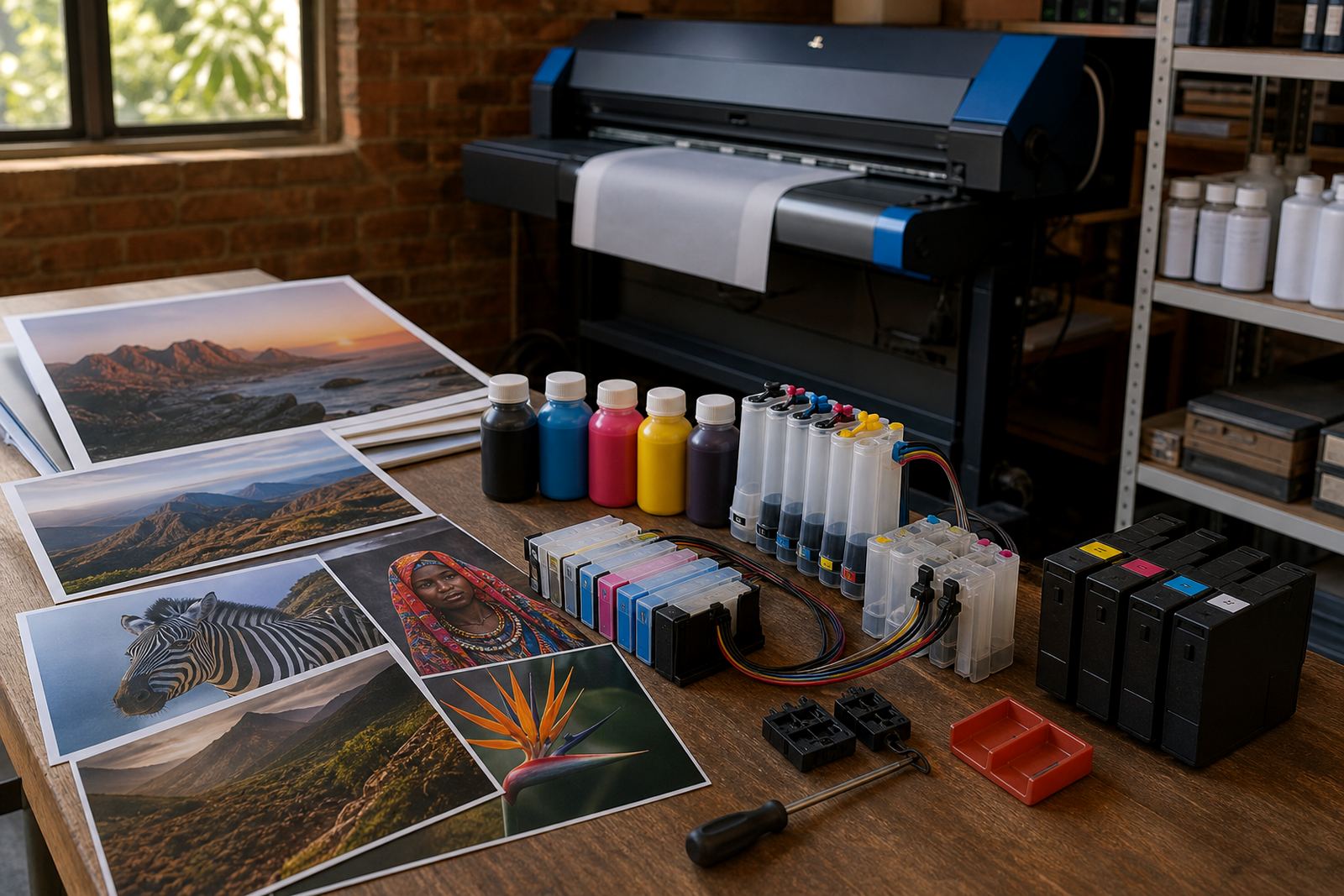
Once the printer choice is clear, the setup should be handled in a tidy order. Loose hoses, wrong fittings and poor bottle placement can lead to leaks and blocked flow. The best results usually come from slowing down and checking each part before the first full run.
- Confirm the cartridge or tank layout on the machine.
- Check that each colour path is labelled clearly.
- Prime the lines without trapping air inside.
- Inspect seals, caps and tube routing for leaks.
- Run a nozzle check before the first production sheet.
- Keep spare gloves, wipes and a clean cloth nearby.
- Record which ink type has gone into each channel.
A clean setup is easier to support later. If the machine is moved between jobs or sites in Gauteng or Cape Town, the line routing should be checked again before print work starts.
Printhead care is part of the ink choice
A bulk system only works well when the head is kept healthy. That means regular nozzle checks, sensible shutdown routines and prompt attention when lines start missing. Leaving a printer idle with half-used ink can harden residue in the head nozzles, especially where dust and humidity mix in the room. Even a simple habit like printing a small colour strip during quiet periods can help keep flow steadier.
Cleaning should stay controlled. Aggressive flushing can waste ink and put pressure on delicate parts. If the machine begins to streak, the cause may be a clogged nozzle, air in the line or a colour channel that is not feeding evenly. The right fix depends on which sign appears first, not on guesswork.
What to do with empties, spills and old stock
Wide-format teams generate waste whether they like it or not, so the question is how to manage it neatly. Empty cartridges should be set aside for return or recycling where possible. Old ink should not be mixed into fresh stock if the colour history is unknown, and bottles should be stored upright in a cool, dry cupboard. If a leak happens, wipe it early and check the line path before the next print.
For offices and studios in Pietermaritzburg, Johannesburg and Pretoria, courier movement can shake up poor packaging, so every bottle and cartridge needs a tight cap and a proper seal. The packing should be sturdy enough to handle a local delivery run without staining the carton or the media inside.
A short operator check before every larger run
Before a long print job, the operator should spend a minute on the basics. That small check can save a roll of media and a lot of time.
- Confirm the ink levels in each channel.
- Run a nozzle check and look for gaps.
- Inspect the waste area for signs of overflow.
- Make sure colour names match the filled channels.
- Check that the media is loaded squarely.
- Look for hose bends, loose caps or damp patches.
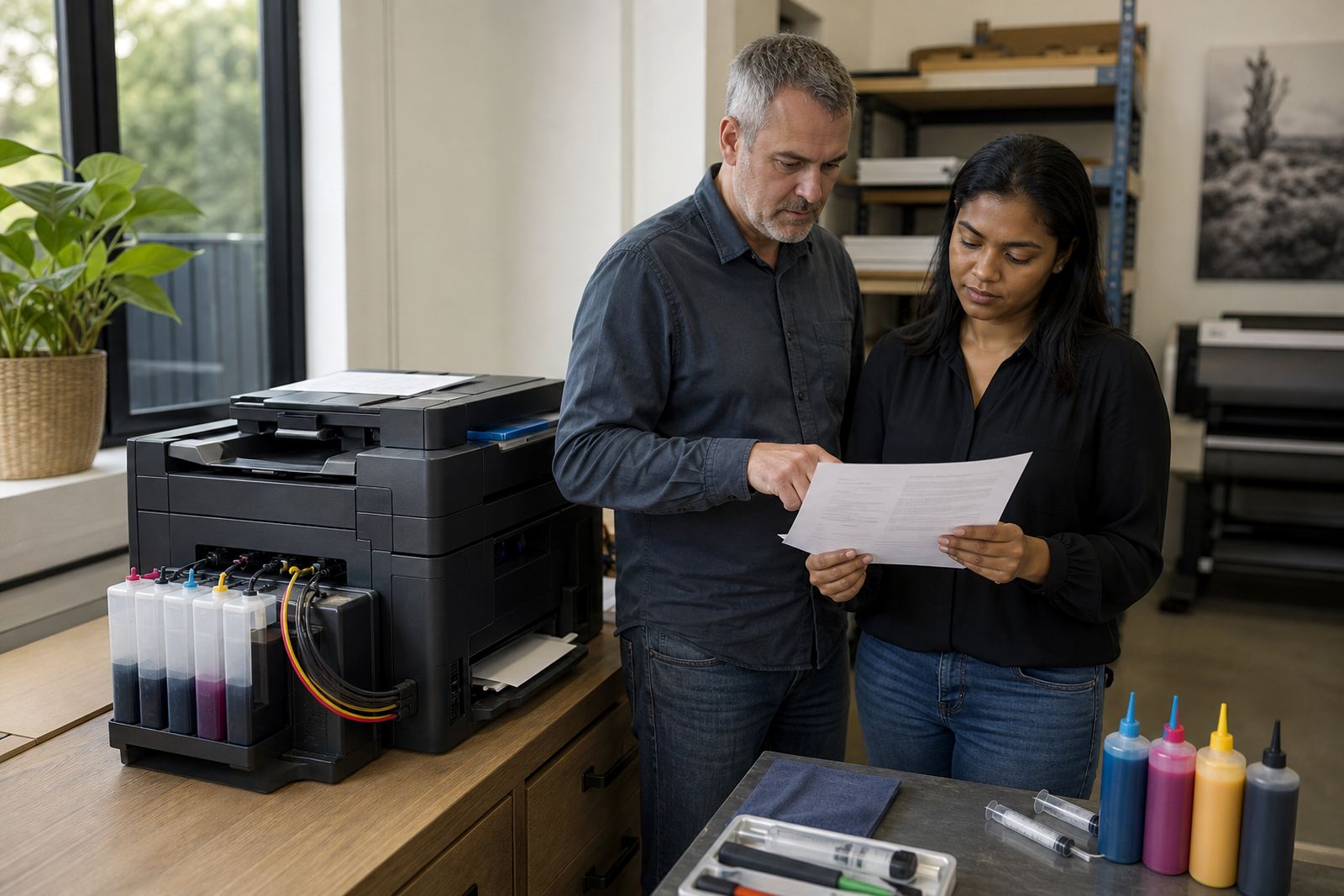
When the machine is used in a studio or print shop with several hands on it, operator training matters as much as the refill kit. The person loading the job should know what a healthy print looks like, and what the early warning signs mean before the run gets expensive.