
Start with the item that leaks first
Refill bottles and used cartridges do not fail in the same way, so they should not be packed as one loose bundle. Liquids need upright support, while empty shells need protection against cracked clips, bent contacts and scuffed chip areas. A box that looks neat from the outside can still cause trouble inside if parts are allowed to move.
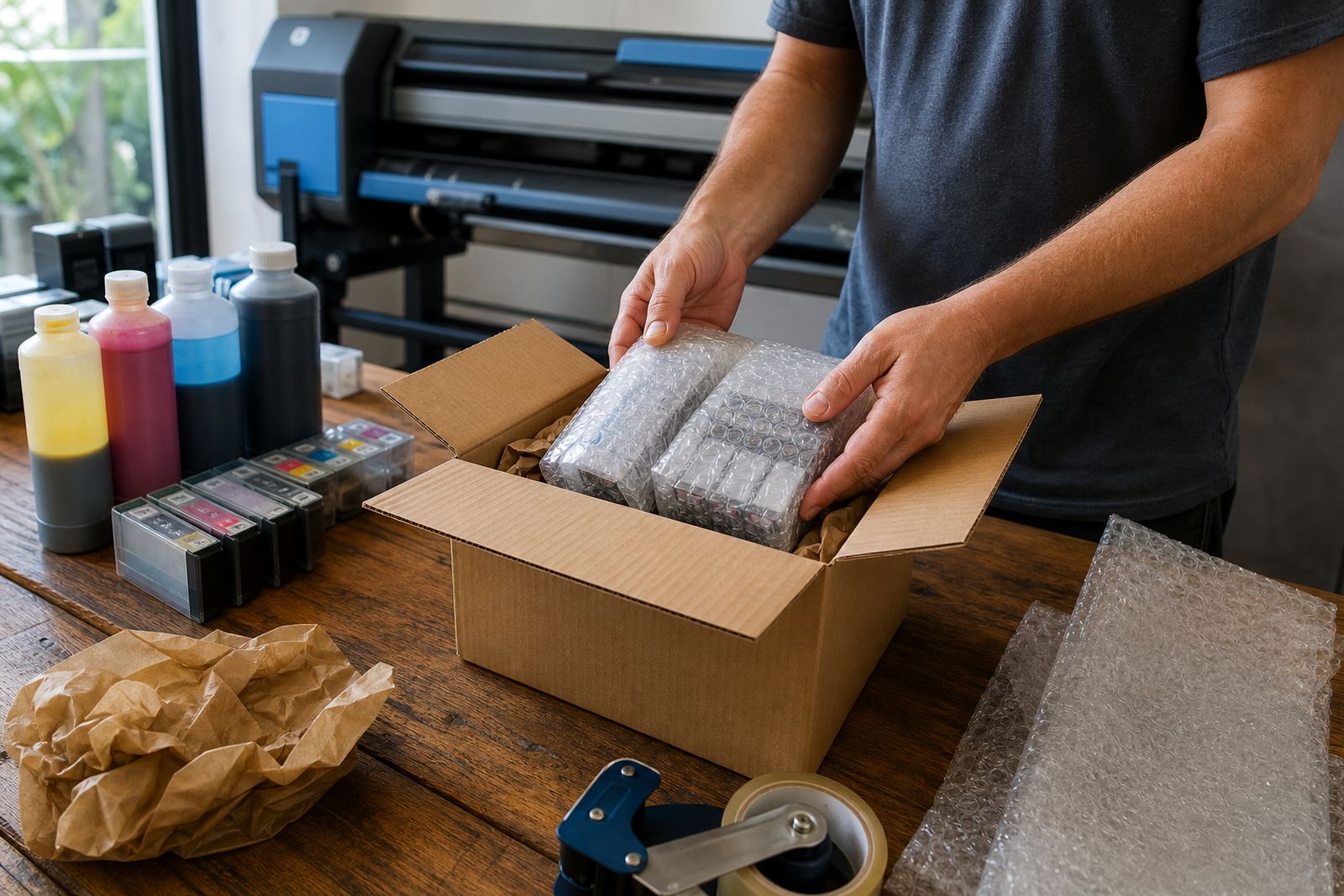
Use a carton with enough depth for padding above and below the contents. Tight packing can work for small parcels, but crushed boxes and folded lids often press against nozzles and seals. For refill kits, keep each bottle upright and separate the bottles from any loose tools or paper instructions. For cartridges, close the protective plugs or caps properly and place each unit in its own sleeve or wrap where possible.
Separate liquids from plastic and electronics
Ink bottles, chip reset tools and cartridges should never rattle together in the same pocket of a box. A chip edge can scratch a contact strip and a bottle cap can loosen if it is pressed sideways. The safest approach is to keep the liquid side and the cartridge side apart with layers of cardboard or foam.
- Place bottles in a sealed inner bag before they go into the carton.
- Wrap each cartridge in soft material so the chip face is not rubbed.
- Keep resetters, syringes and clips in a small labelled pouch.
- Use a second bag around anything that may carry a trace of ink.
That small bit of separation helps when parcels are stacked in transit. A courier bag can be turned on its side in a vehicle, and a box may take more knocks than the sender expects.
Treat empties as used parts, not waste filler
Empty cartridges still carry dried ink, dust and trace liquid, so they need a cleaner packing method than ordinary paper waste. If they are loose in a bag, the chip area can scrape against other parts and the cartridge body can crack at the seam. Where clients are using an empty return programme, the empties should be drained, wiped and packed in a dry carton with enough room to stop pressure points.
Stacking empties too tightly is a common mistake. A row of cartridges under heavy top load can warp, and warped shells do not always seat properly after cleaning or refill work. If several sizes are being sent together, place the larger units at the bottom and fill the gaps with soft paper or wrap, not hard packing chips that shift around during road movement.
Label the parcel the way a courier driver can read it
Clear labels help with handling, especially when a parcel contains both used parts and fresh ink. Mark the outside of the box with simple handling notes such as upright, fragile and keep dry. Avoid crowded labels that cover the seams or tape lines, because those are the first places a box opens under strain.
It also helps to write the sender and return details on a card inside the parcel, not only on the outer label. If the outer label is damaged, the inside note can still identify the contents and the destination. For mixed orders leaving Westville for Pietermaritzburg, Ballito or further inland, this saves time when boxes are split or repacked at a depot.
- Use plain tape over the main carton seams.
- Do not tape over bottle caps, vents or cartridge contacts.
- Place a small contents note inside the box.
- Keep the outer label flat and easy to scan.
Give refill kits a bit of breathing room
Refill kits often include more than one item, and each part needs a little space. Bottles, syringes, gloves, plugs and printed notes can all move in transit if they are dropped into a single open cavity. A divided box or padded inner sleeve stops items from rubbing against each other and keeps caps from loosening.
For dye ink and pigment ink, the packing method is similar, but pigment containers should be treated with extra care because settled material can shift if the bottle is shaken too hard. Keep the bottle upright and avoid long storage in a hot vehicle before dispatch. If a kit includes a printhead care item or nozzle cleaning liquid, seal that item well and keep it away from cloth or paper that could absorb a spill.
A Durban example that saves a parcel
A studio in Westville sends a mixed parcel to us with refill bottles, spent cartridges and a few accessories. The safest method is to pack the empties in one inner tray, seal the bottles in a separate bag and use cardboard dividers between the two. That way a corner knock does not press a bottle against a cartridge chip or leave ink on the outer box.
On longer routes to Cape Town or Pretoria, the same parcel may be sorted several times before it reaches the receiver. A well packed box stands up better to that movement than a loose bundle wrapped in tape alone. The aim is not fancy packing, just steady packing that respects what can break, leak or mark.
A last check before the driver collects
Before the parcel leaves, give it a quick shake test. If you hear pieces sliding around, the internal packing needs more support. Press the top of the box lightly and check for bulges, soft corners or damp patches. Those are the signs that a seal is not holding or that a bottle is sitting too close to the carton wall.
- Check that all caps are tight and plugs are seated.
- Make sure empties are dry before sealing the carton.
- Use enough filler to stop movement, but not so much that the box bows.
- Keep refill items and return items in separate inner layers where possible.
Good packing lowers the chance of spilled ink, cracked shells and damaged contacts. It also makes sorting easier at the other end, which is useful when a team is working through stock planning, refill advice or return handling across several branches.