
A straight run helps the system breathe properly
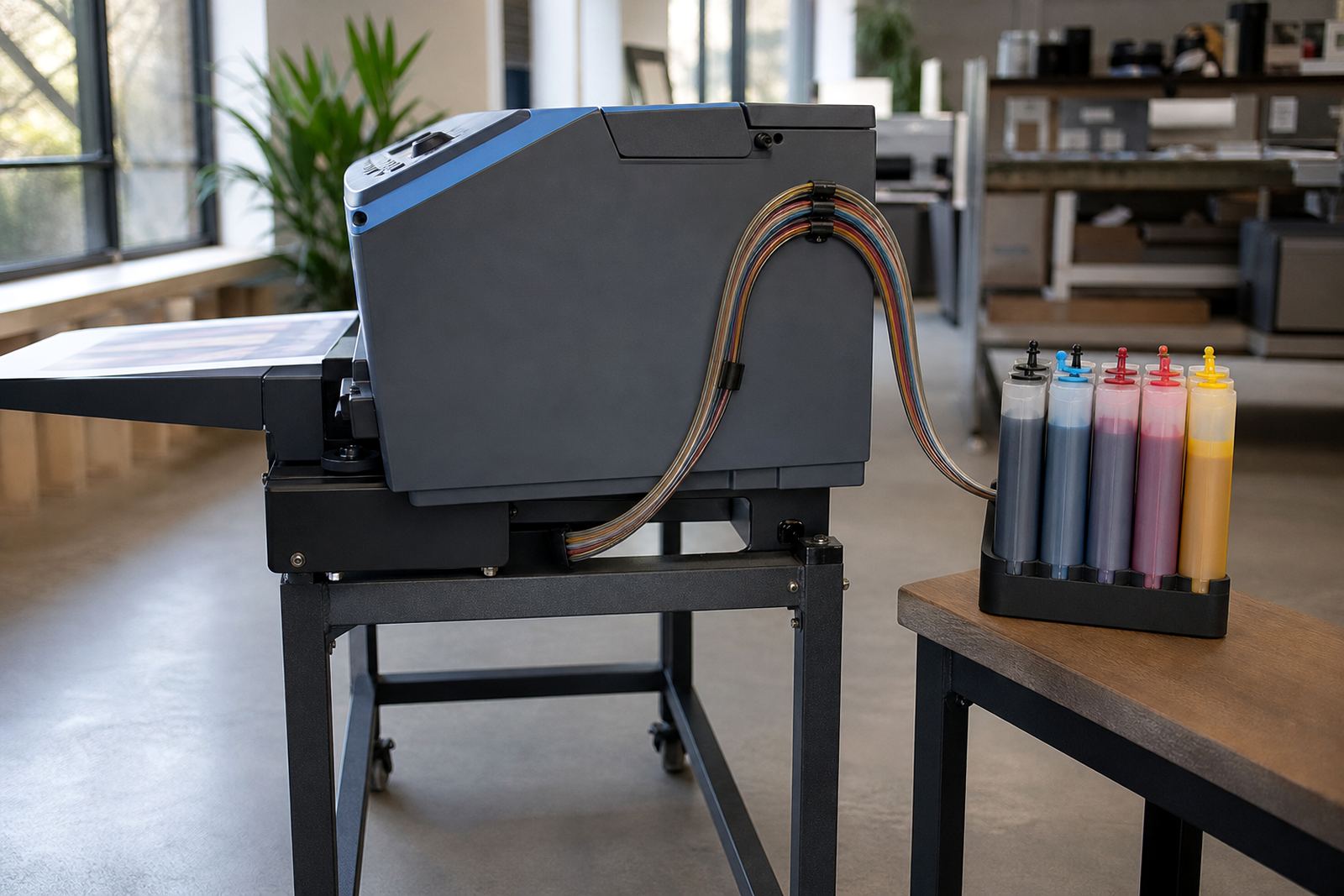
When tubing snakes too tightly behind a printer, the ink does not move with the same calm. A clean route keeps the line open, avoids sharp bends and gives the tanks or refill bottles a sensible path to the carriage. That matters on benchtop office machines and on wider units used in design studios where the printer works through long colour runs.
Ink flow depends on balance. Too much slack and the tubing can catch on panels or the tray. Too little slack and the carriage pulls against the line every time it moves. A tidy route also helps with refilling because the tubes are easier to inspect and easier to prime without guessing where a kink hides.
Where bad routing usually starts to show
Most trouble begins near the back edge of the printer or at the point where the tubes leave the bottle rack. A bend that looks harmless on day one can flatten once the unit warms up and the carriage starts moving. In humid Durban conditions, dust mixed with moisture can settle on the tubing too, which makes sticky areas harder to spot.
- Ink may feed unevenly after a long idle period.
- One colour can vanish sooner than the others on the nozzle check.
- The carriage may tap the tubing on the return pass.
- Air can creep in where a line sits under tension.
Those signs do not always point to a failed cartridge or a blocked head. Sometimes the route is the real issue, and the fix is only to lift, shorten or re-seat the line so it travels cleanly with the carriage.
The tubing should follow the printer, not fight it
A good CISS layout lets the carriage move across the page without dragging the supply line along for the ride. The loop needs enough free movement to handle full left and right travel, but not so much that the tube folds over itself. In practice, that means checking the route with the cover open and watching the full movement range, not only the parked position.
On some setups the bottle rack sits too low, which creates a long drop and encourages ink to surge or recede at the wrong moment. On others the rack sits too high and the feed line stays under pressure. The route should support a stable ink column, especially for pigment ink where settling and thicker particles can become a problem if the line is badly arranged.
Dye and pigment inks do not behave the same way
Dye ink is usually more forgiving in narrow tubing, while pigment ink asks for better discipline in the route and the maintenance. Pigment ink is valuable for documents, graphics and wide-format work where water resistance and sharper text matter, but it can settle if the system sits badly designed or underused.
That is why refill advice always has to include the ink type, not only the printer model. A route that works for one setup may create trouble on another. With both ink types, printhead care still matters, but pigment systems tend to reward more careful checks, more regular nozzle tests and less unnecessary twisting of the line.
- Keep the tube path free of tight corners.
- Match the ink type to the print task.
- Use nozzle checks before a major run.
- Watch for white gaps or colour shift early.
Chip reset help and leakage checks belong in the same conversation
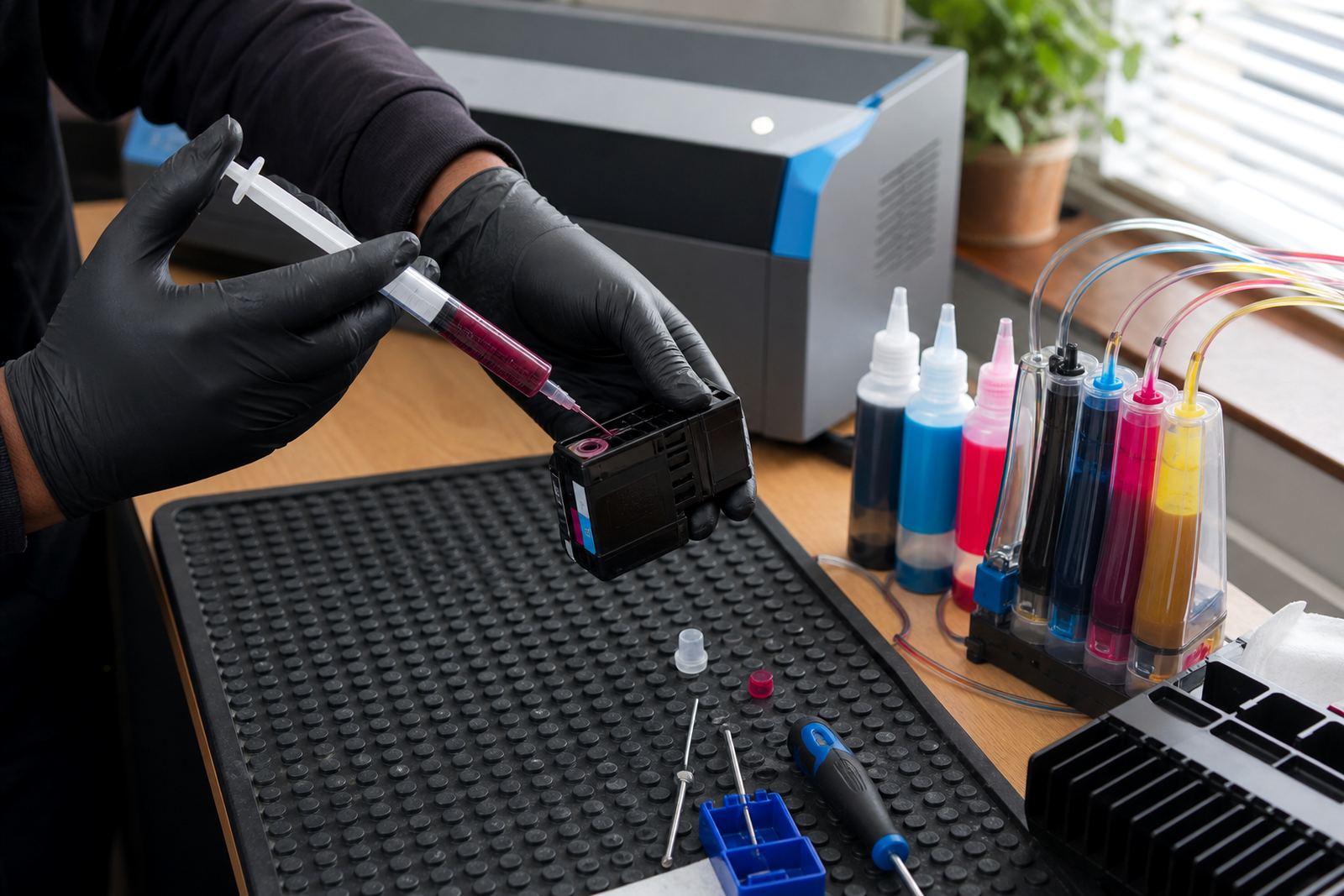
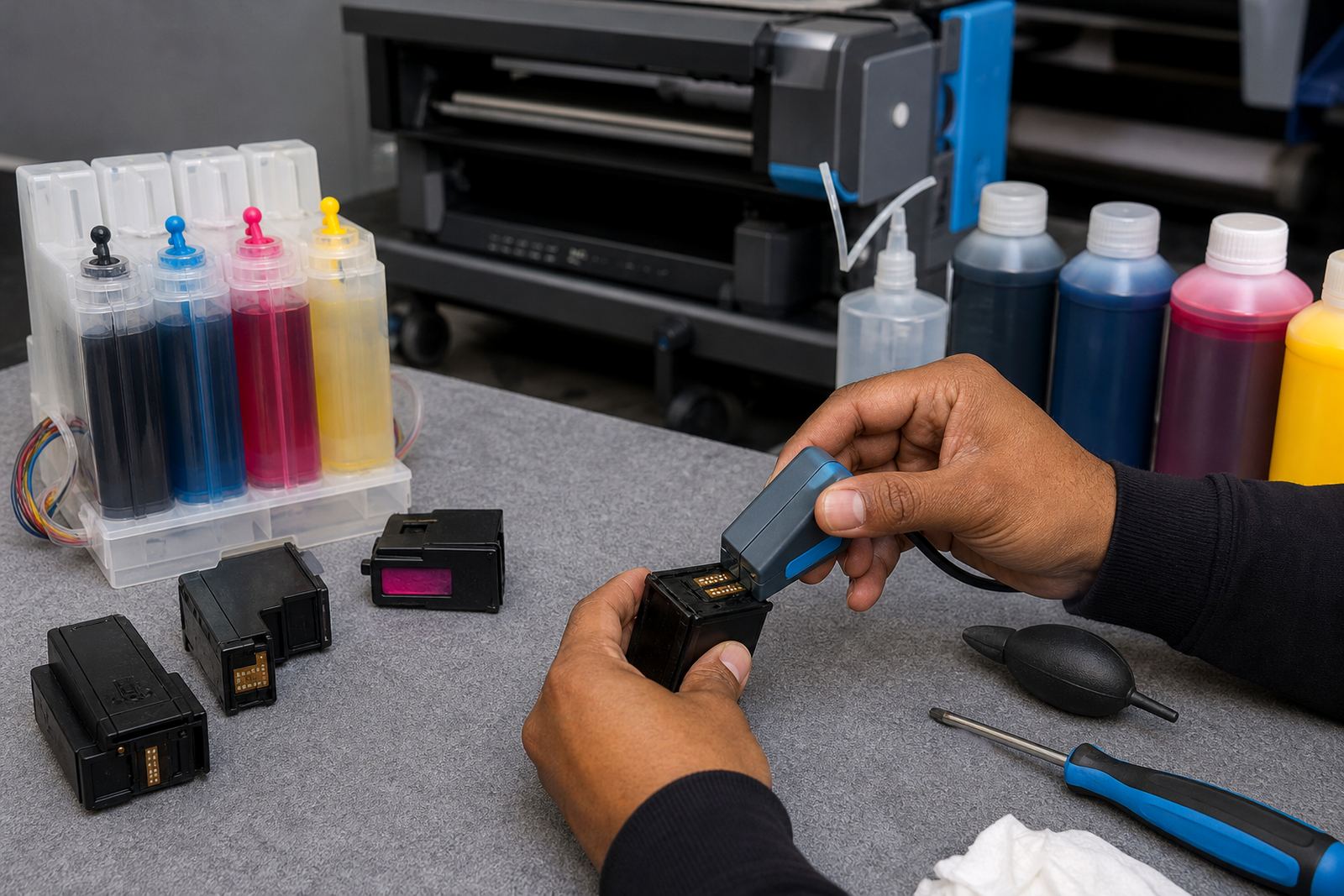
People often treat chip resetters, leak checks and tube routing as separate jobs, but they connect closely. If the cartridge or refill chamber is not seated correctly, the tubing may take strain from a poor fit. If a line leaks at a joint, the printer can pull air and show false low-ink warnings or patchy output.
A resetter only solves the recognition side of the job. It does not cure a kinked tube or a poor seal. That is why a proper check looks at the cartridge body, the tubing angle, the sponge or chamber fill, and the route from tank to head. When those parts work together, the system becomes less temperamental and easier to keep on track.
A Westville example from a busy print week
A small design studio in Westville may use a wide-format printer for proofs, posters and sample boards, then switch back to smaller office jobs later in the day. If the tubing sits too tight behind the machine, the first signs often appear on a full colour gradient or a dark block of artwork. The print looks fine at first, then a line appears where one colour failed to feed evenly.
In a case like that, we would look at the route before we touch the artwork settings. A slight lift on the tube loop, a neater bottle position and a quick nozzle check can save a wasted sheet and a frustrated operator. For teams in Pietermaritzburg, Johannesburg, Pretoria or Cape Town, the same principle holds even when the printer travels by courier and lands in a different room, different humidity and a different table height.
Empty return habits keep the whole system cleaner
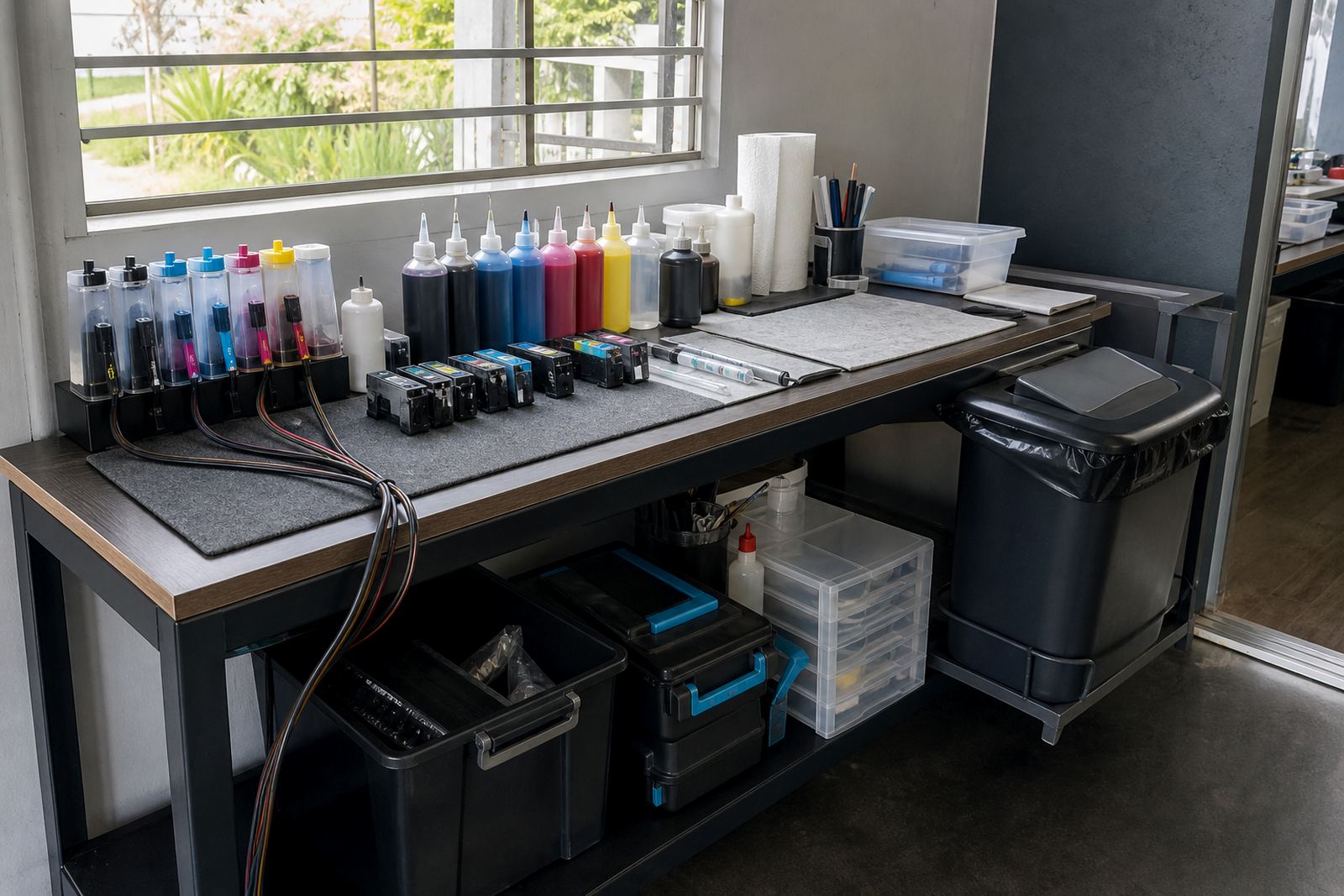
Clean routing also makes empty return work easier. If used cartridges and old containers are stacked neatly, the refill area stays easier to manage and there is less chance of cross-contamination between colours. That matters in offices where more than one person handles the printer, and in studios where people switch between short runs and long jobs.
Good habits are simple enough: route tubes with space, keep caps and seals in place when not in use, and inspect the feed path before a busy day. Those steps reduce wasted ink and help the printer settle into a steadier rhythm. The route is not decoration, it is part of the print system itself.