
Colour first, or staying power first
Dye ink is made to soak into the receiving layer fast, which is why it often gives bright colour and smooth blends on plain paper and coated media. In an office or studio that prints presentations, draft visuals or photo-rich sheets, that finish can look cleaner than people expect from an everyday cartridge.
Pigment ink sits closer to the surface and leaves fine particles behind as the liquid dries. That makes it a stronger fit where light resistance, water resistance and sharper text matter more than a glossy look. On the right paper it can hold detail well, but the colour feel is usually a little flatter than dye.
- Dye suits colour-heavy work, proofing and short-run creative output.
- Pigment suits documents that must last longer on the page.
- Paper choice matters as much as the ink type itself.
What changes on plain paper and coated stock
Most South African offices still print plenty on plain copier paper, so the first test is often not a fancy sheet at all. Dye can feather on lower-grade paper if the feed is rough or the surface is too open, while pigment usually keeps text edges firmer and more controlled.
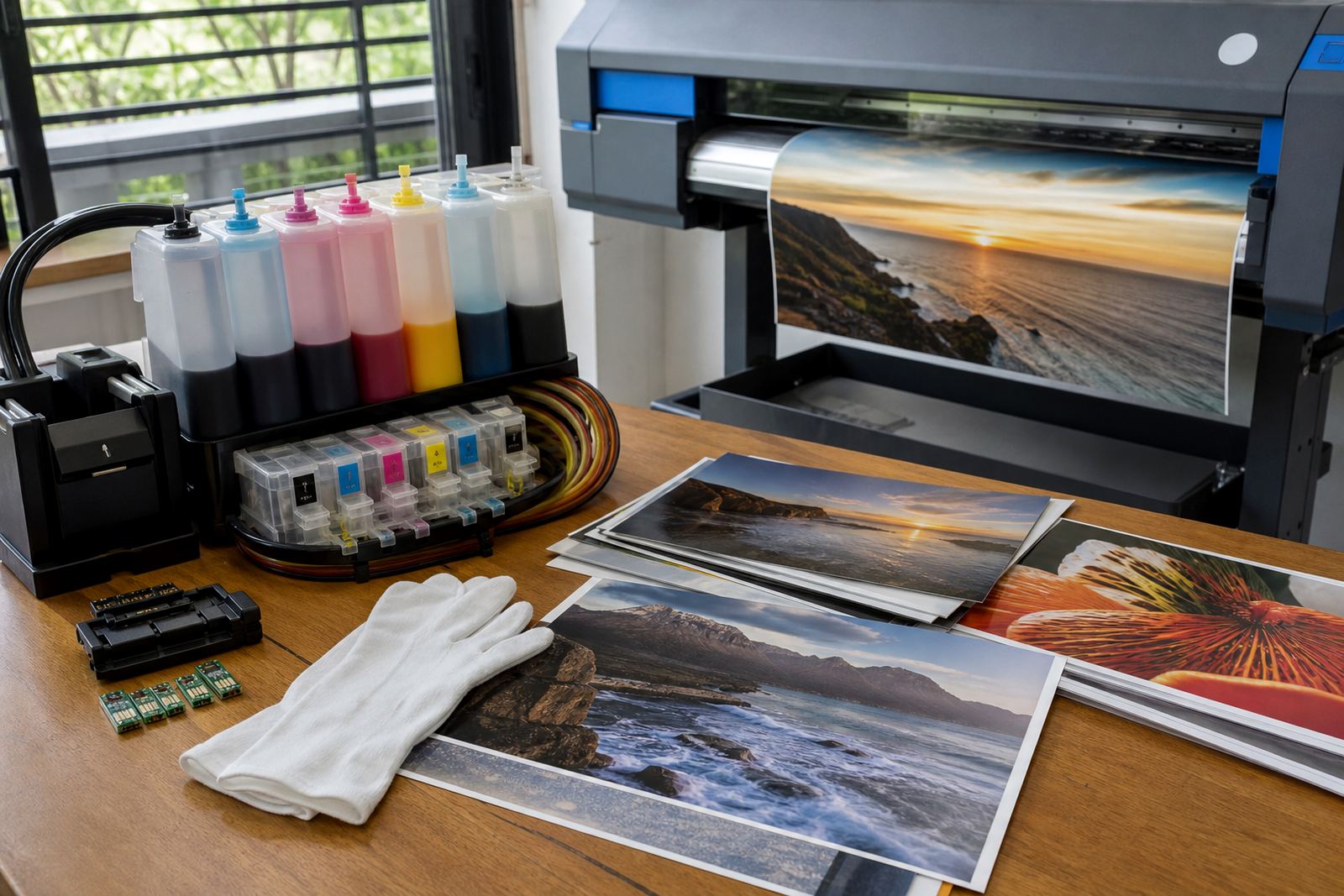
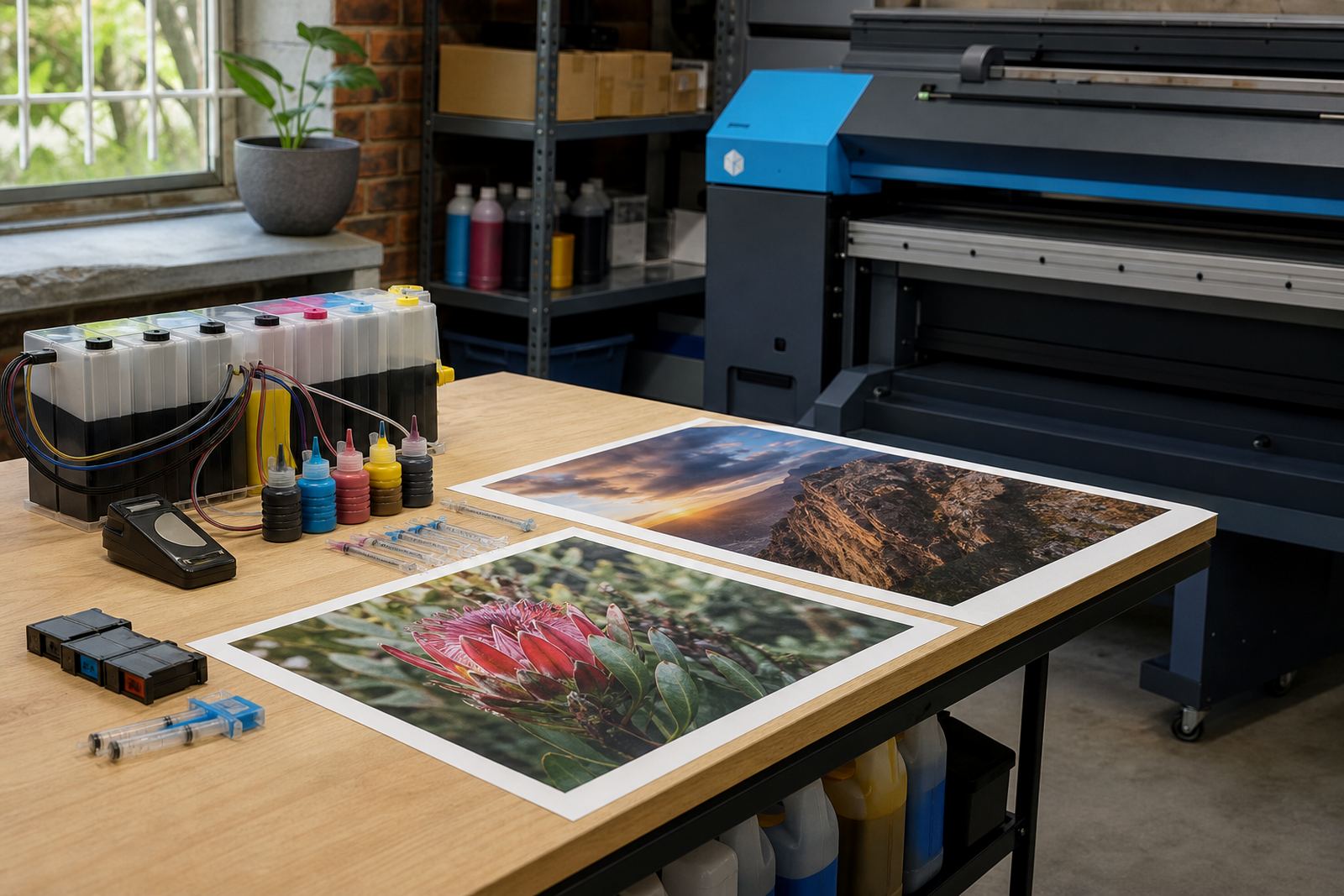
On coated photo paper, matt art paper and other treated media, dye often gives richer colour and smoother gradients. Pigment can still work well, but the result depends on the coating and the way the printer lays down ink. Wide-format users in Durban and Johannesburg often notice the difference immediately when they move between proof paper and final presentation stock.
- Plain paper: pigment often gives the tidier text line.
- Coated paper: dye often gives stronger colour pop.
- Mixing paper types in one week can justify keeping both ink types on hand.
The nozzle and printhead side of the story
Ink choice affects more than the page, it affects the machine too. Dye is usually easier to keep moving through the printhead because the liquid is lighter and less likely to clog during short idle periods. Pigment can be excellent for output quality, yet it needs steadier use and a cleaner routine because the particles can settle or dry in awkward spots.
That does not mean pigment is difficult, only that the operator must respect the cleaning cycle, nozzle checks and correct storage. If a machine sits unused in a Westville studio over a humid weekend, or in a Pretoria office with dry air and long gaps between print runs, the ink type and maintenance routine both matter.
- Run nozzle checks before a busy job, not after the first bad page.
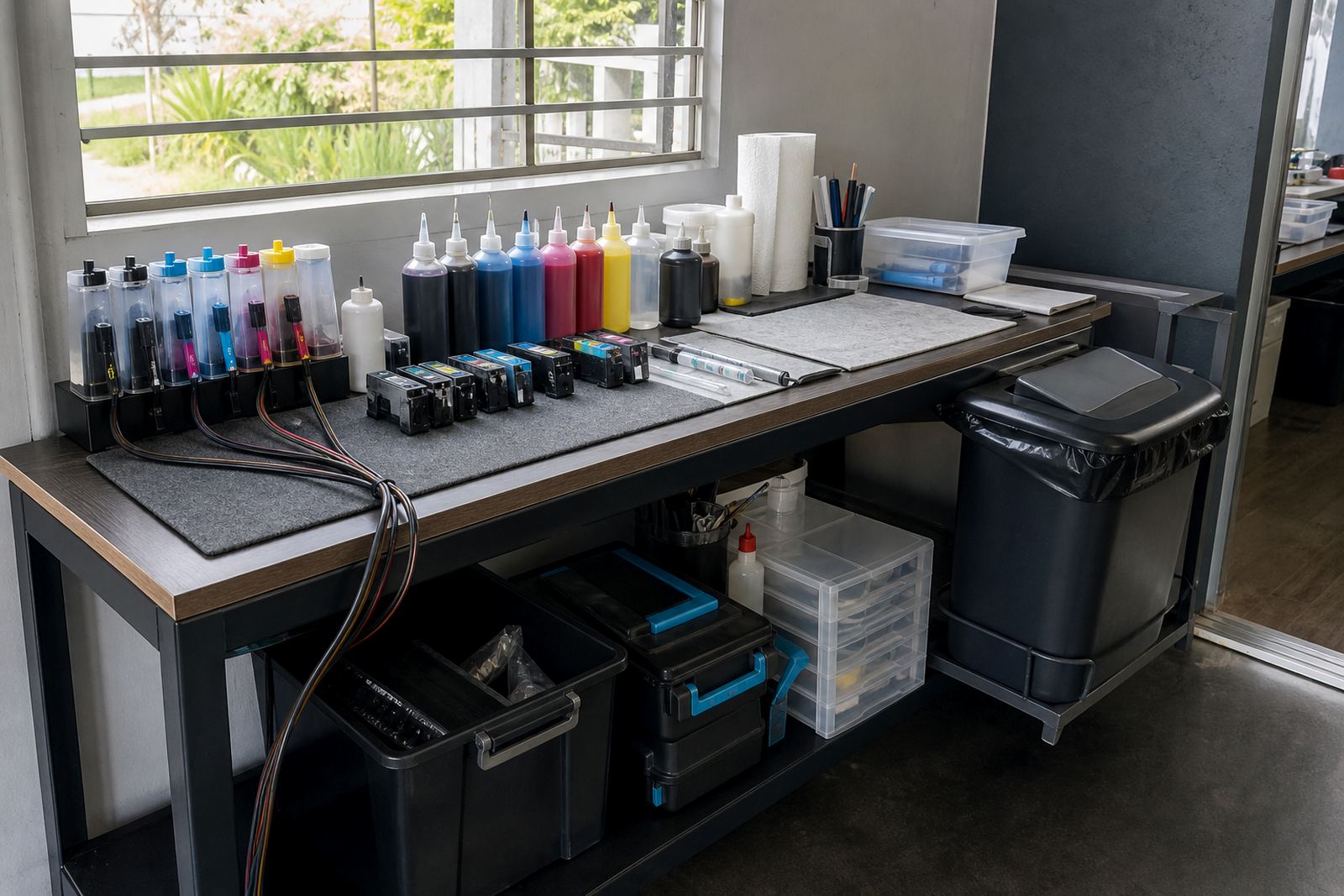
- Keep caps, lines and reservoirs clean in refill systems.
- Use the correct cleaning method for the ink type in the machine.
When bulk ink systems make more sense
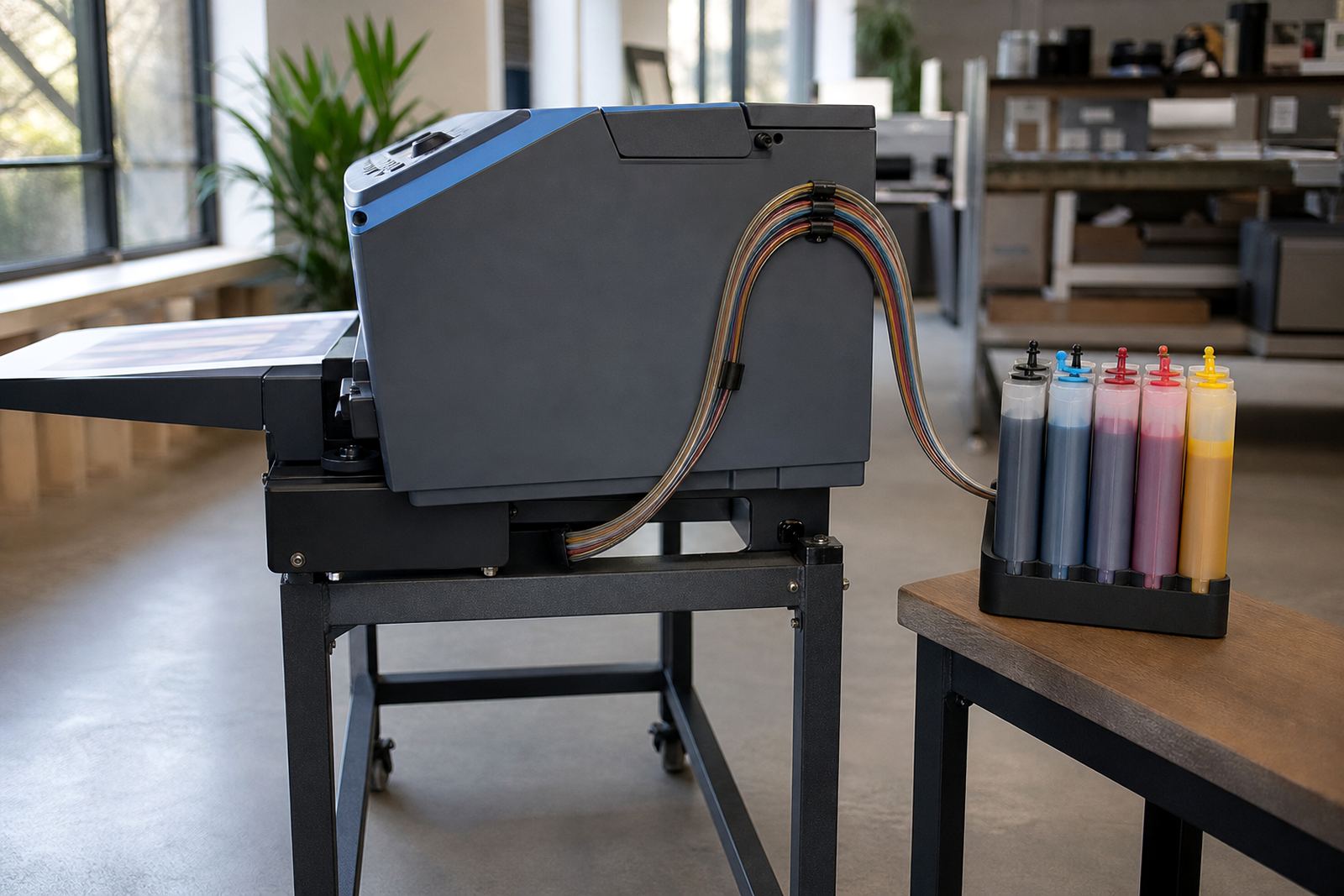
For offices and print rooms that use a lot of the same colour set, a continuous ink supply system or refill kit can cut waste and keep the shelf drawer from filling with empty cartridges. That setup works best when the team prints often enough to keep ink moving. It also helps when the operator understands priming, air bubbles and the difference between a tidy refill and a rushed one.
Bulk systems are not only about lower cost. They also make sense when the job changes from week to week and you need a steadier supply of ink for longer runs. A design studio in Hillcrest might use dye for mock-ups and pigment for final black text proofs, while a shop in Cape Town might keep a mixed plan for clients who need labels, brochures and event material.
- Bulk ink suits higher usage and repeat colour work.
- Refill kits suit controlled top-ups and careful operators.
- Empty cartridges can often be returned for reuse or recycling.
Where chip reset help and leak checks fit in
Some cartridges and refill systems need chip reset help so the printer recognises the fill level again. That is part of the ordinary support around refurbished cartridges and bulk systems, along with leak checks and simple handling advice. If the chip reads incorrectly, the cartridge may show empty when there is still usable ink inside, or it may refuse to register after a refill.
Leak checking matters just as much. A tiny seal problem can leave ink on the carriage, the paper path or the casing, and then the next print looks messy. In practice, the best results come from steady refilling, correct sealing and a quick check before a long job starts. That is true in Pietermaritzburg, Durban and any other place where a run can go from a few pages to a full stack without warning.
A Durban example with real office habits
A small Westville office that prints accounts, supplier letters and colour flyers will usually feel the difference between dye and pigment within a week. If the work is mostly internal paperwork and colour proofs, dye may keep the pages lively and the refill routine straightforward. If the office posts documents, files samples or keeps printed records for longer periods, pigment is often the safer match.
The same logic reaches wider-format print shops. A banner proof may be fine in dye, while a final line-art sheet or archived reference print may suit pigment better. Our team in Westville works through that sort of choice every day with cartridge refill advice, colour balance help and stock planning for Durban, Johannesburg, Pretoria and Cape Town. It is usually less about picking a winner and more about matching the ink to the paper, the printer and the way the job moves through the week.
A practical way to decide between the two
There is no single answer that suits every machine. Dye is often the better choice for bright colour, smooth blending and everyday creative work. Pigment is usually better for sharper text, better resistance and documents that need to hold up more strongly over time.
If you are unsure, start with the output you rely on most. Think about paper type, storage, handling, and whether the printer runs daily or in bursts. Then match the refill system and maintenance routine to that pattern. That keeps the cartridges working properly and reduces waste from half-used empties.
- Use dye for colour-heavy pages, photo proofs and smoother gradients.
- Use pigment for text-heavy work, records and tougher handling.
- Keep the printer maintained so the chosen ink performs properly.