
Dust on a cartridge becomes print trouble
Refilling starts with surfaces that are clean enough for the job. A cartridge that picks up dust at the nozzle plate or around the fill port can drag that grit into the print path, and that is where streaks, gaps and uneven colour often begin. In a place like Westville, where warm air and coastal moisture can hang around for most of the day, even a small spill can turn sticky fast.
A clean refill bench also makes it easier to see what is happening. You can spot a cracked shell, a split seal, a tired chip, or ink that is not flowing the way it should. When the area is cluttered, people rush and that is when a refill ends up overfilled, underfilled or wiped down with the wrong cloth.
Separate the clean side from the messy side
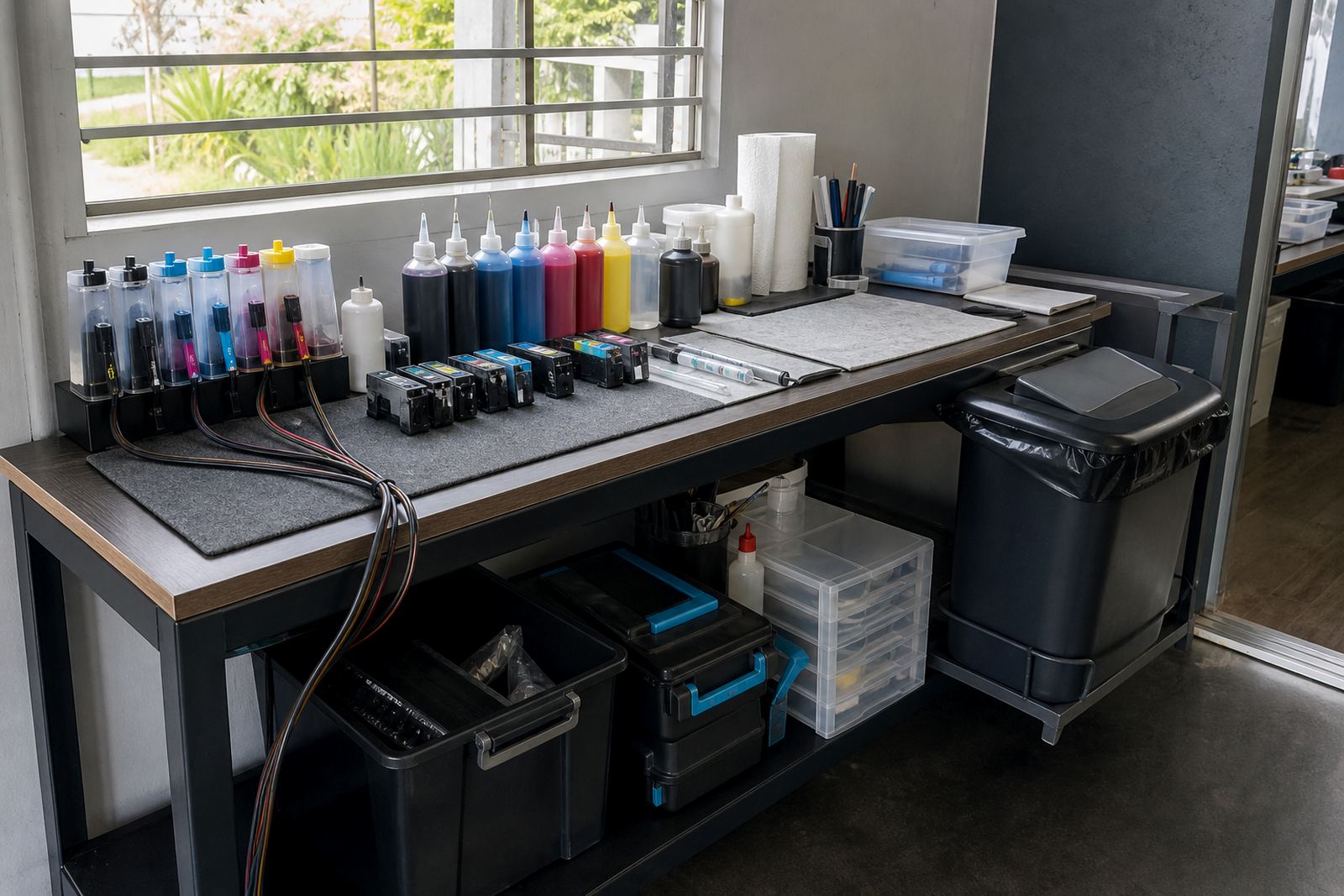
A refill room works better when the tasks are split into zones. One area should hold sealed cartridges, empty returns and packed ink bottles. Another should be used for opening, cleaning and filling. A third space can hold testing sheets, gloves, lint-free cloths and small tools. That way a cartridge does not travel through the same patch where caps are off, pads are wet and waste ink is sitting open.
- Keep bottle caps closed until the fill step begins.
- Use a dedicated tray for cartridges that have not been tested.
- Store paper towels and cloths away from ink bottles.
- Do not leave open syringes or funnels on the bench between fills.
That kind of separation is simple but it cuts down on accidental contamination. It also helps the technician keep track of which cartridges have been checked, which still need a nozzle test, and which should be sent for recycling.
Good wipe-down habits protect the printhead
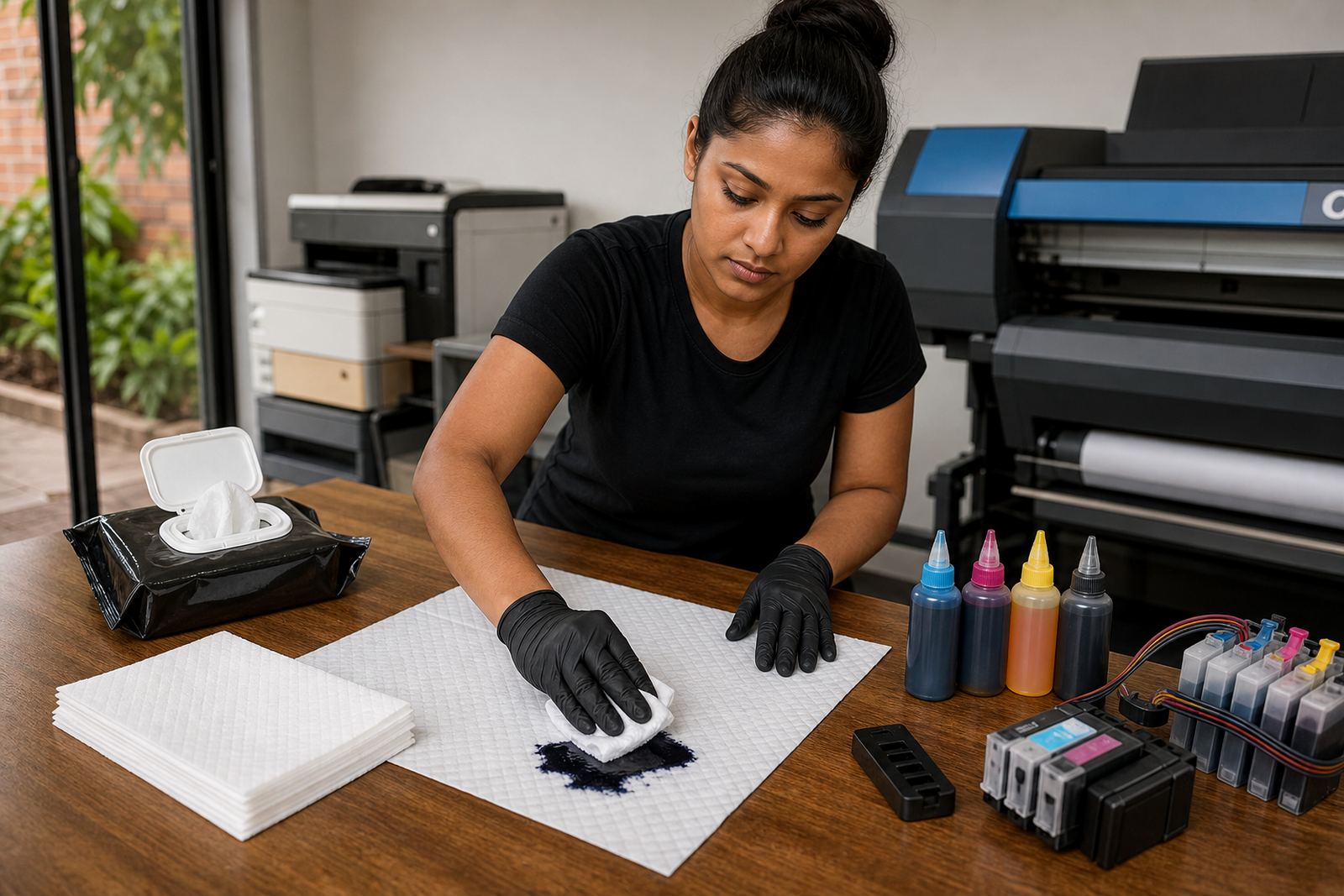
Refill work is not only about putting ink into a cartridge. It is also about keeping residue out of the printer. A cartridge with wet ink on the outside can smear across contacts, hands and printer internals. A careful wipe after filling removes loose drops from the shell, the contact strip and the nozzle area, without flooding the cartridge with cloth fibres or household cleaner.
Dry, lint-free materials are the safer choice for most routine cleaning. For stubborn residue, a technician may use a proper cleaning fluid in very small amounts, then let the part dry fully before fitting it back. That matters because trapped moisture can interfere with chip reading and can also spread to paper paths or rollers, which then leaves marks on finished pages.
Printhead care begins with this kind of discipline. Clean hands, capped bottles and a proper wipe-down routine reduce the chance of blocked nozzles, especially where dye and pigment inks are both used in the same office or studio.
Ink bottles and refill kits need their own order
Bulk ink systems and refill kits behave well when they are stored neatly. Bottles should stand upright, with labels visible and caps secured. Nozzles, syringes, hoses and air filters should stay in sealed containers or clean drawers. If pigment ink and dye ink sit together in a crowded box, someone can grab the wrong one in a rush and that can change colour output or create sediment problems in the wrong cartridge type.
Clean storage also helps with stock planning. A refill station that knows how many empties are available, which colours are low, and which kit parts are still in good condition wastes less time hunting for parts. In an office that prints invoices, reports and colour proofs, that sort of order matters because the printer usually gets used by more than one person.
- Keep pigment ink away from dusty open shelving.
- Label each colour clearly and store it upright.
- Separate test cartridges from customer returns.
- Check expiry or use-by details before opening new stock.
Empty cartridges deserve a clean return path
An empty return programme only works well when used cartridges are handled with care. If empties are thrown into a loose box with paper clips, staples, cut tape and dust, they arrive in poor condition and are harder to assess for reuse. A clean return bin or tote keeps them together and reduces mess in the refill room.
Once collected, empties should be sorted for recycling, cleaning or disposal where needed. Some cartridges can be refurbished if the shell, contacts and sponge are still workable. Others are too worn or damaged and should not be forced back into service. A careful room makes that judgement easier because the cartridges are handled in a more controlled way from the start.
This is also where chip reset help matters in general terms. Reset tools and similar small items must stay dry, organised and protected from ink mist. They are small, easy to misplace and expensive to damage with careless handling.
A Westville studio example with coastal humidity in the mix
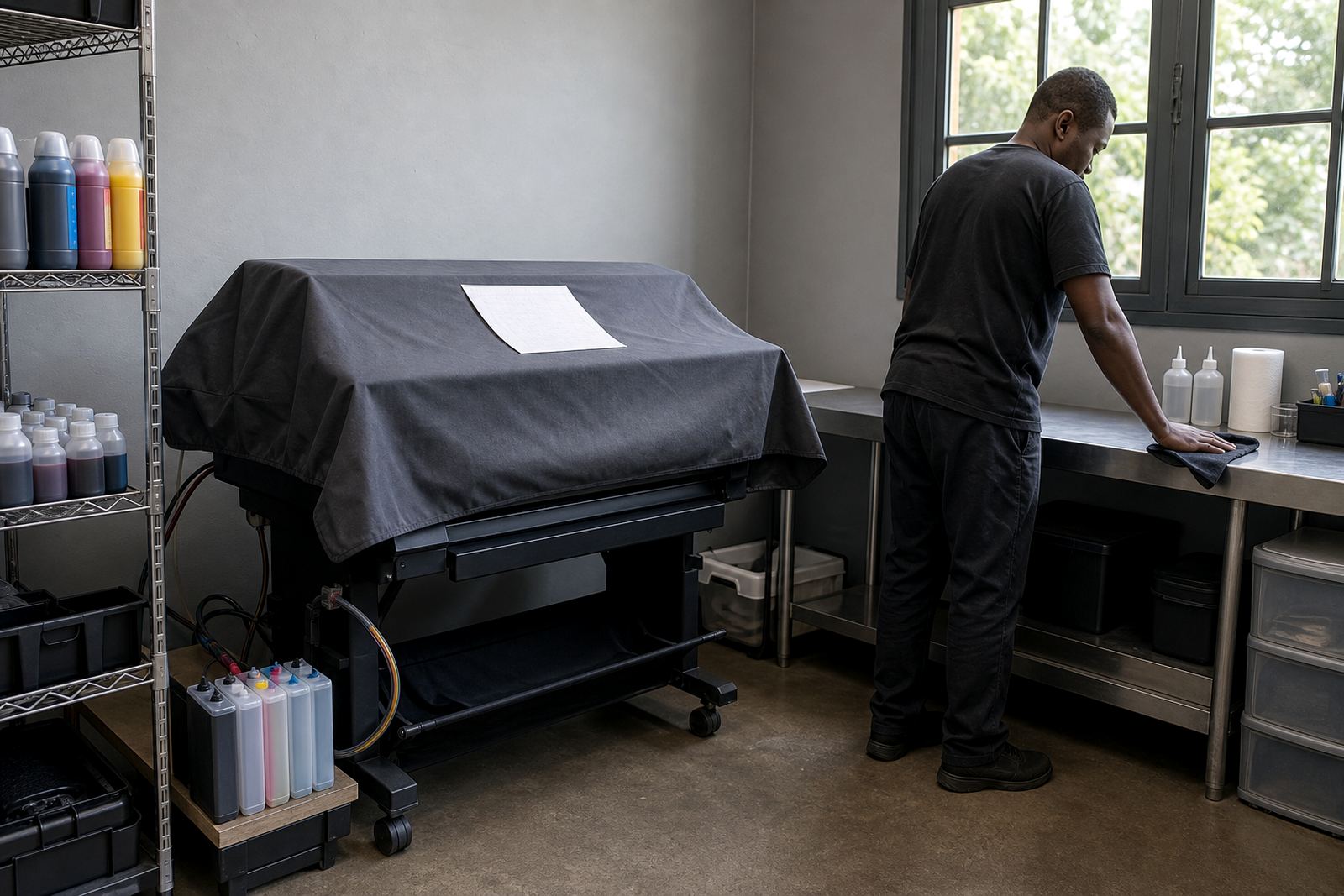
A design studio in Westville that prints colour proofs, mock-ups and presentation boards can run through several cartridges in a week. If the refill bench sits close to an open window, the room can pick up dust from passing traffic and damp air from outside. That is enough to leave residue on a nozzle plate or make labels peel on ink bottles.
In that kind of space, a cleaner routine is not difficult, it just needs discipline. One technician handles filling, another checks the nozzle pattern, and used cartridges are moved straight to the return tray. A quick look at the bench before and after each refill helps catch spills before they reach paper stock, chip contacts or printer rollers. For wide-format work, that matters even more because a single contaminated cartridge can affect a much larger print run.
Our Westville, Durban base sees the same pattern across offices, studios and print rooms. The cleaner the refill space, the less time spent fixing small faults that could have been avoided with a cloth, a lid and a little order.
Clean rooms support better output, not just cleaner floors
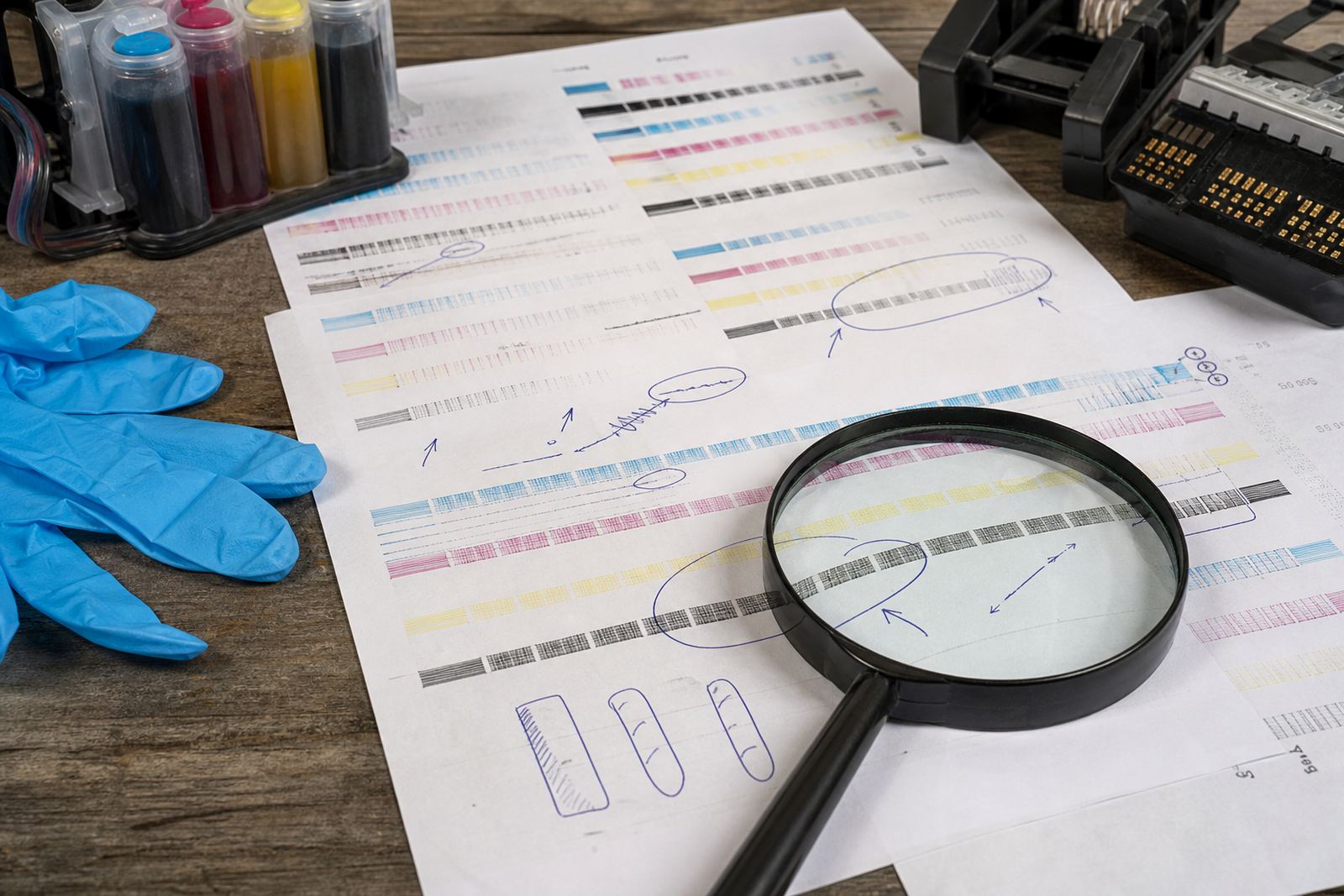
Refill room cleanliness shows up in the final print. Cleaner handling helps the cartridge feed more evenly, keeps colour balance steadier and reduces the chance of blocked nozzles or smudged pages. It also makes training easier because operators can see the steps clearly and repeat them without guessing.
For teams that refill on site or manage stock across branches, the habit pays off in small practical ways. Tools stay in place, empties are easier to count and the work area is simpler to audit. That is useful whether the job is a single office printer, a studio machine or a wide-format unit that must keep moving through long runs.
Cleanliness is not a luxury in refill work. It is part of the process, and the process is what keeps cartridges, printers and printed output in better condition.