
Where black-heavy pages quietly spend money
Most monochrome jobs are not dramatic. Reports, quotes, proofs, labels and proof sheets pile up in small batches, then suddenly a printer has to run all morning. That is where costs creep in. New cartridges bought one at a time often carry a higher cost per page than a planned refill cycle, and empty cartridges end up in drawers, boxes or bins instead of being reused.
For a Westville office that prints board packs, delivery notes and black-only copies, the real expense is not only the ink. It is the interrupted workflow, the rush to replace stock and the waste from throwing away usable cartridge bodies. A refill plan changes that pattern by treating cartridges as reusable hardware rather than single-use items.
Refill stock works best when the print load is predictable
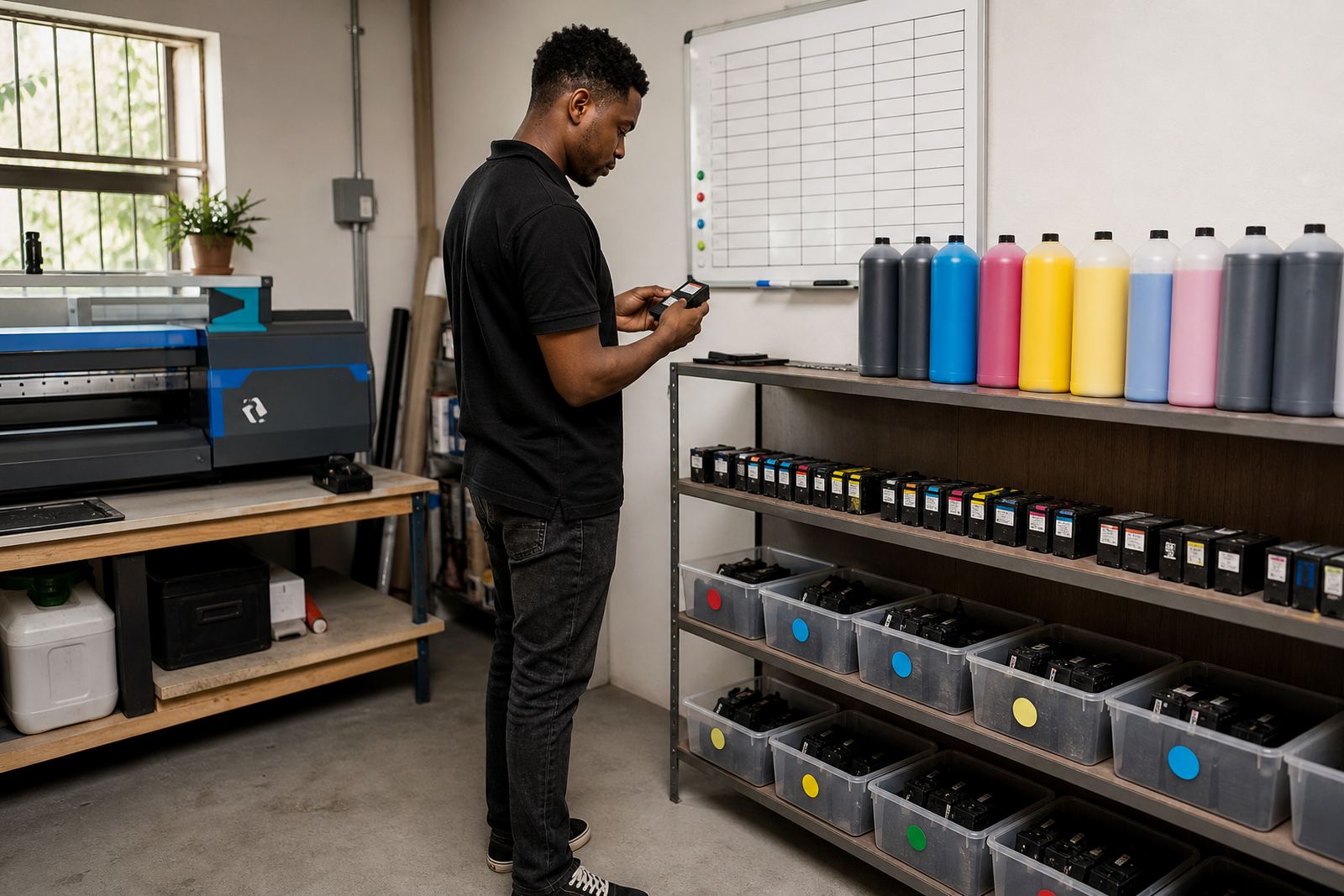
Black-heavy print rooms do better when stock follows the rhythm of the month. The team should know which printers use the most pages, which cartridge sizes move first and which machines sit idle for part of the week. That makes it easier to hold the right number of refilled cartridges and keep a small buffer for busy periods.
- Match stock to the printer fleet, not to guesswork.
- Keep one or two spare black cartridges for the busiest unit.
- Separate office printing from studio proofing and label work.
- Track which machines use standard yield or high yield units.
- Return empties for sorting and reuse where the cartridge body is sound.
Planned stock helps because you are not paying for panic buying. It also reduces the number of half-used cartridges that sit around and dry out, which can happen in air-conditioned offices or warm coastal rooms near Durban.
Ink choice matters more than many teams admit
Black ink is not all the same. Some monochrome jobs need crisp text on office paper, while others need darker output on coated sheets or proof media. Dye ink can give strong text on everyday paper and usually suits routine office work. Pigment ink is often preferred where sharper edges, better water resistance and more durable marks are needed.
Choosing the wrong type can lead to pale output, smudging or extra cleaning cycles. That becomes costly because the printer spends more time recovering than printing. In a mixed environment with accounts paperwork, artwork notes and wide-format proofing, the ink choice should match the paper and the machine settings, not just the cheapest bottle on the shelf.
Cartridge health is part of the budget too
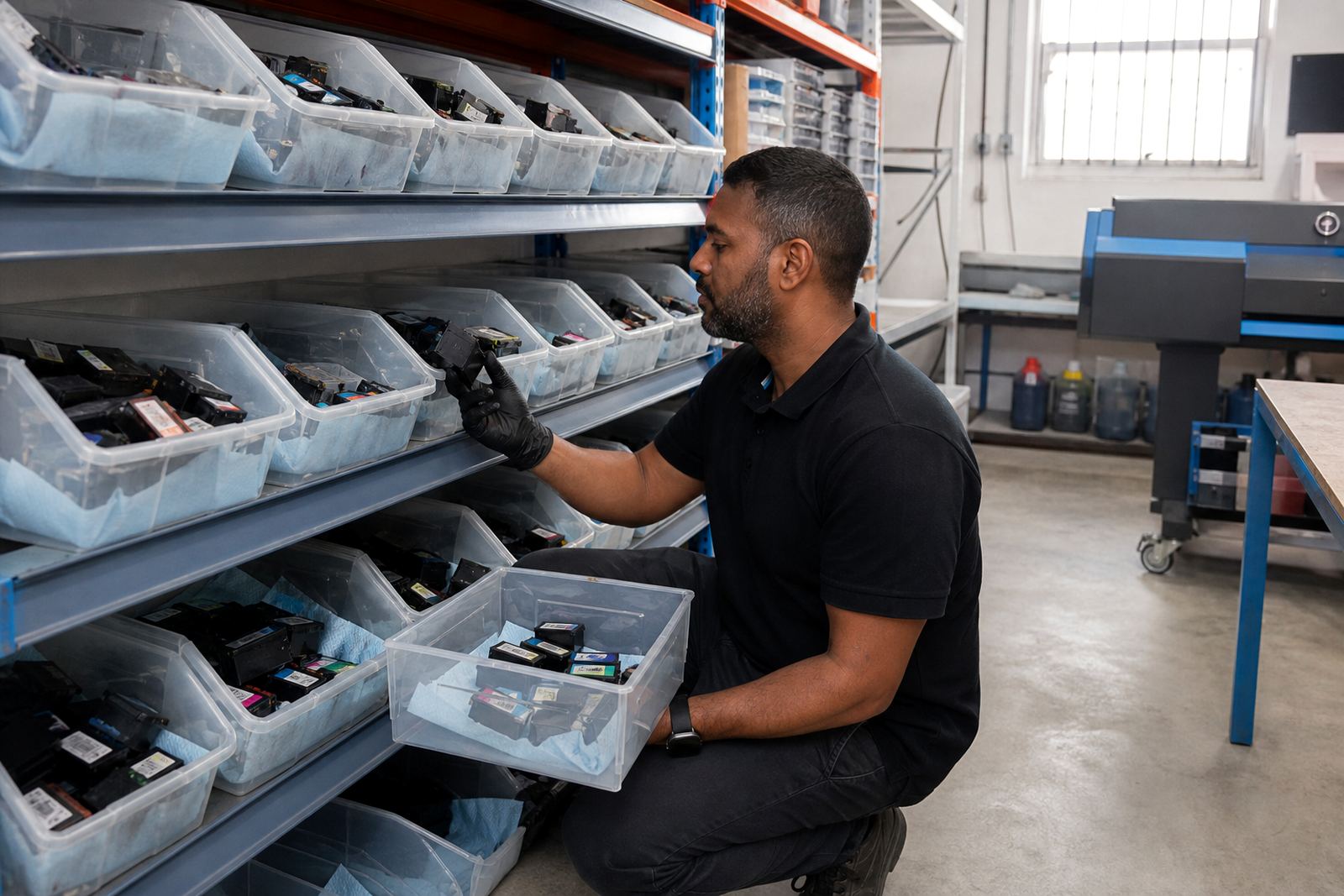
A refill strategy only works when the cartridge body is still in good condition. Worn seals, damaged contacts and cracked housings create leaks and poor recognition, which means wasted ink and more stoppages. A useful habit is to inspect empties before refilling rather than waiting until the printer starts misbehaving.
- Check for dried ink around the nozzles and contact points.
- Make sure the cartridge casing is not swollen or cracked.
- Keep the printhead clean with proper care, not rough wiping.
- Use chip reset help where the cartridge design needs it.
- Run nozzle checks after refill to spot missing lines early.
That sort of discipline is practical, not fancy. It keeps a cartridge in service for longer and cuts down on those moments when a full page of black text prints with gaps down the middle.
A local example from a Durban office with mixed print demand
Consider a small Durban office in Westville that prints invoices, meeting packs and supplier letters every week. The same office also sends out a few black proof sheets for a design studio across town. Without planning, the team might buy single cartridges as soon as one runs low, then keep a drawer full of partly used empties.
With a refill plan, the office keeps a modest black cartridge stock, stores empties in a clean dry place and uses refill advice to decide which cartridges should be rotated back into service. The result is less waste and fewer urgent purchases. For businesses sending stock between Westville, Hillcrest and Pietermaritzburg, that approach also makes courier packing simpler because the team knows what is ready to move and what still needs checking.
When bulk ink and CISS systems make sense
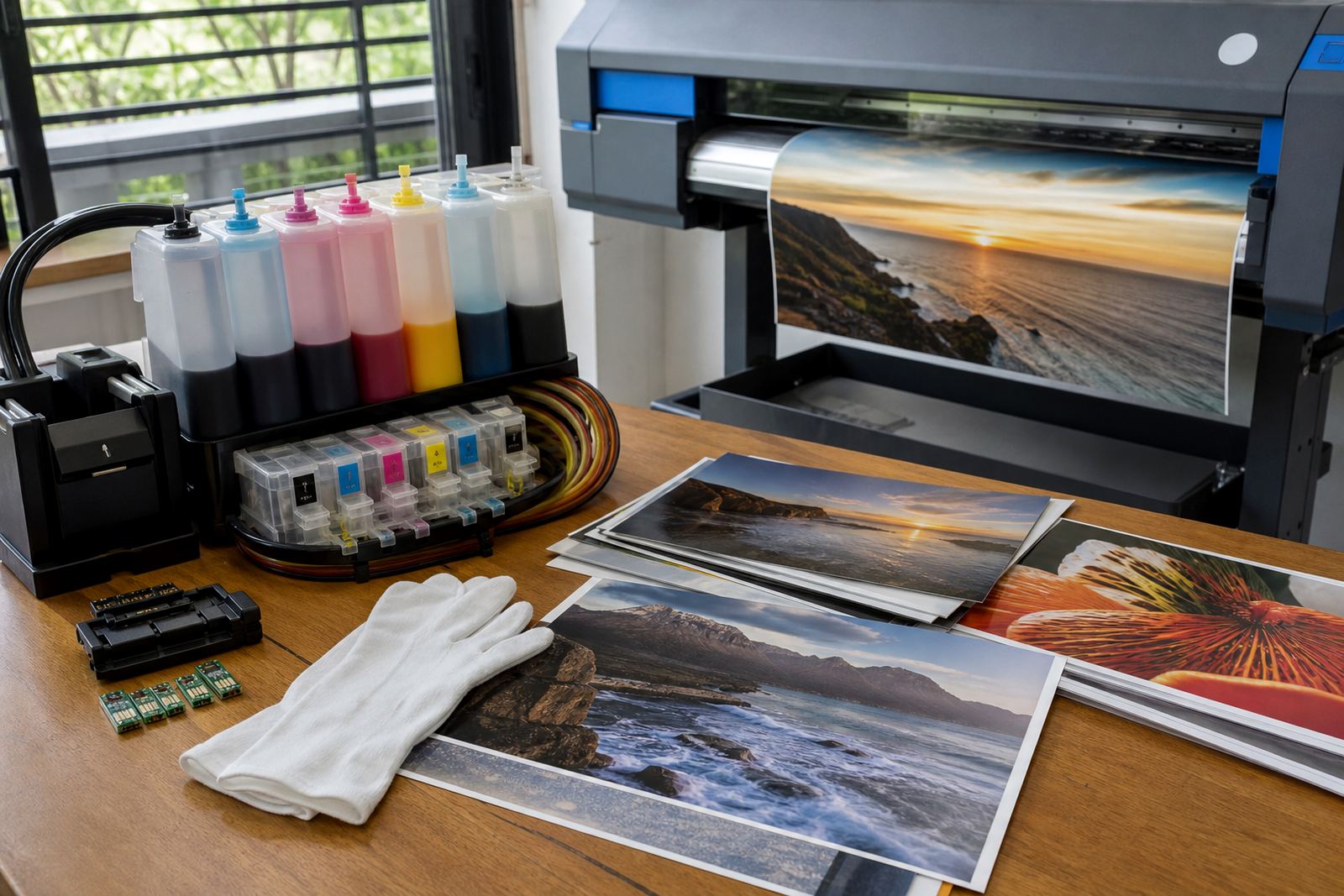
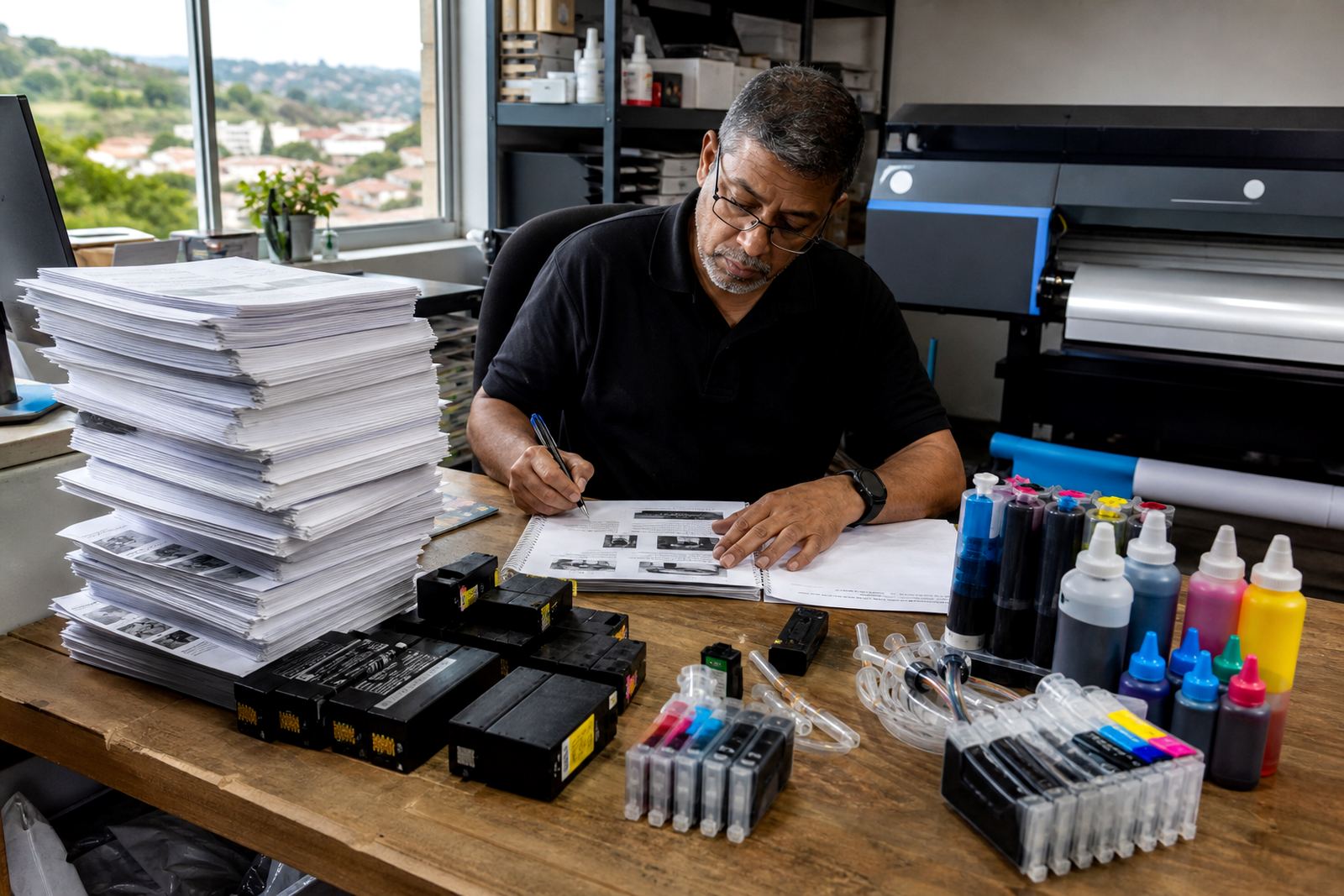
Bulk ink systems suit higher-volume monochrome printing where one printer handles steady daily output. A continuous ink supply system or refill kit can lower the per-page spend when the machine is used often and the team is comfortable with regular checks. These systems need careful setup, stable placement and a little routine attention, especially where dust, heat and coastal humidity can affect ink flow.
They are not the answer for every printer. But for wide-format print shops, production studios and offices that run long black-only jobs, they can be economical when paired with operator training and sensible stock planning.
- Use them where print volume is consistent.
- Keep the tanks level and the lines tidy.
- Do nozzle checks before long runs.
- Store spare ink upright and sealed.
- Ask for refill advice before changing ink types.
Done well, bulk ink reduces packaging waste and gives the team more control over usage. Done badly, it can cause leaks and interruptions, so the setup has to suit the printer and the people running it.