Stop the spread before it travels
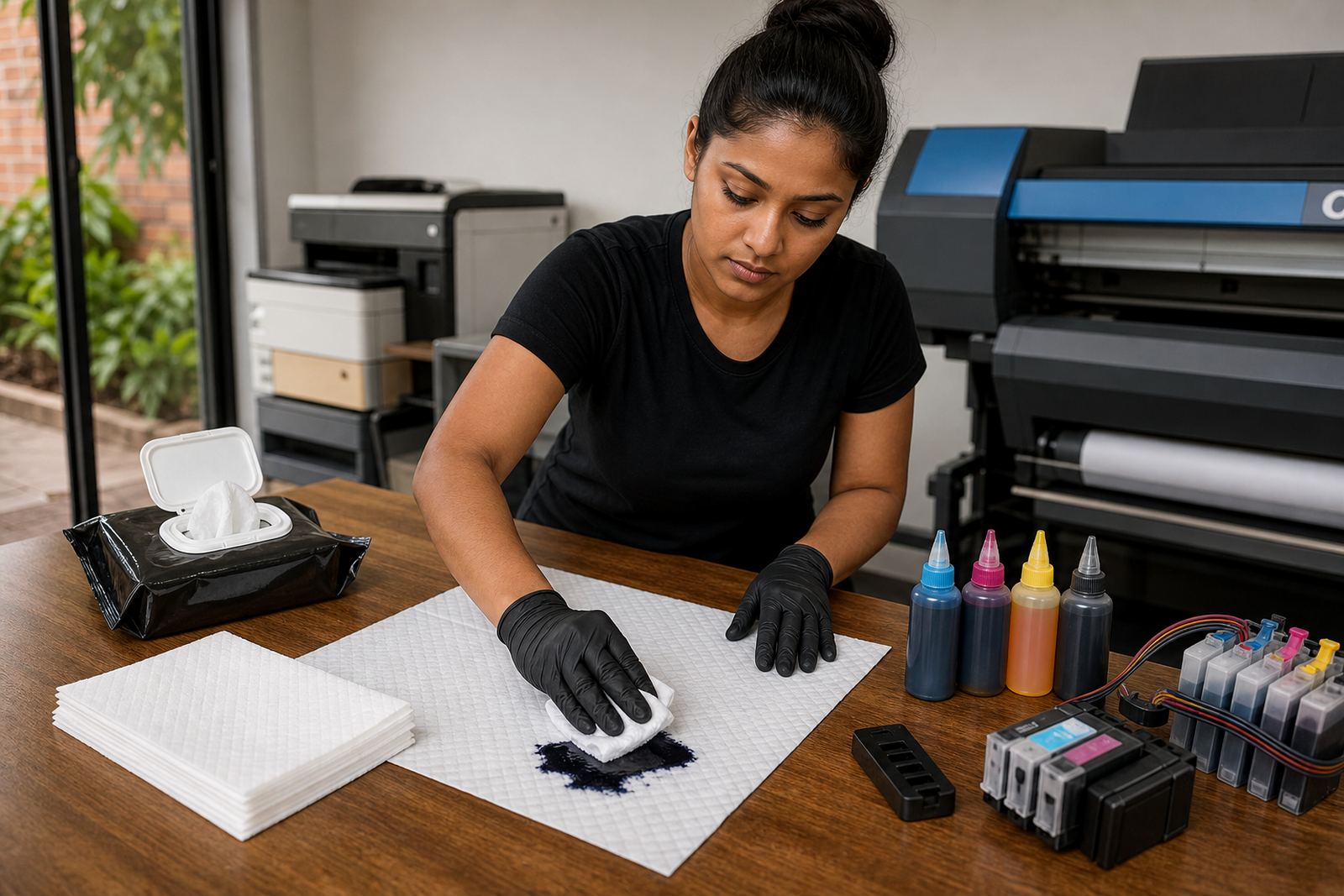
When ink lands on a bench or floor, the first job is to stop it from tracking into other cartons, tools and paper. Keep people away from the wet patch, then place absorbent paper or clean cloth around the edge so the spill does not keep creeping outward.
If the spill is near a cartridge tray or refill station, lift the loose items out of the danger zone first. Do not drag bottles across the bench, a quick wipe can turn into a wider mess if the cap is not secure.
- Keep one person on the spill and one person on stock control.
- Move paper, labels and swabs away from the wet area.
- Check whether the spill sits on a bench top, tile floor or carpet tile.
- Hold off on any refill work until the area is dry and cleared.
Protect hands, printheads and finished work
Ink can stain skin for hours and it can also end up on labels, cartridges and print media. Put on gloves before any cleaning begins and keep cleaning cloths separate from the cloths used on finished jobs. If the spill happened during a refill, cap every open bottle and close each cartridge before you touch anything else.
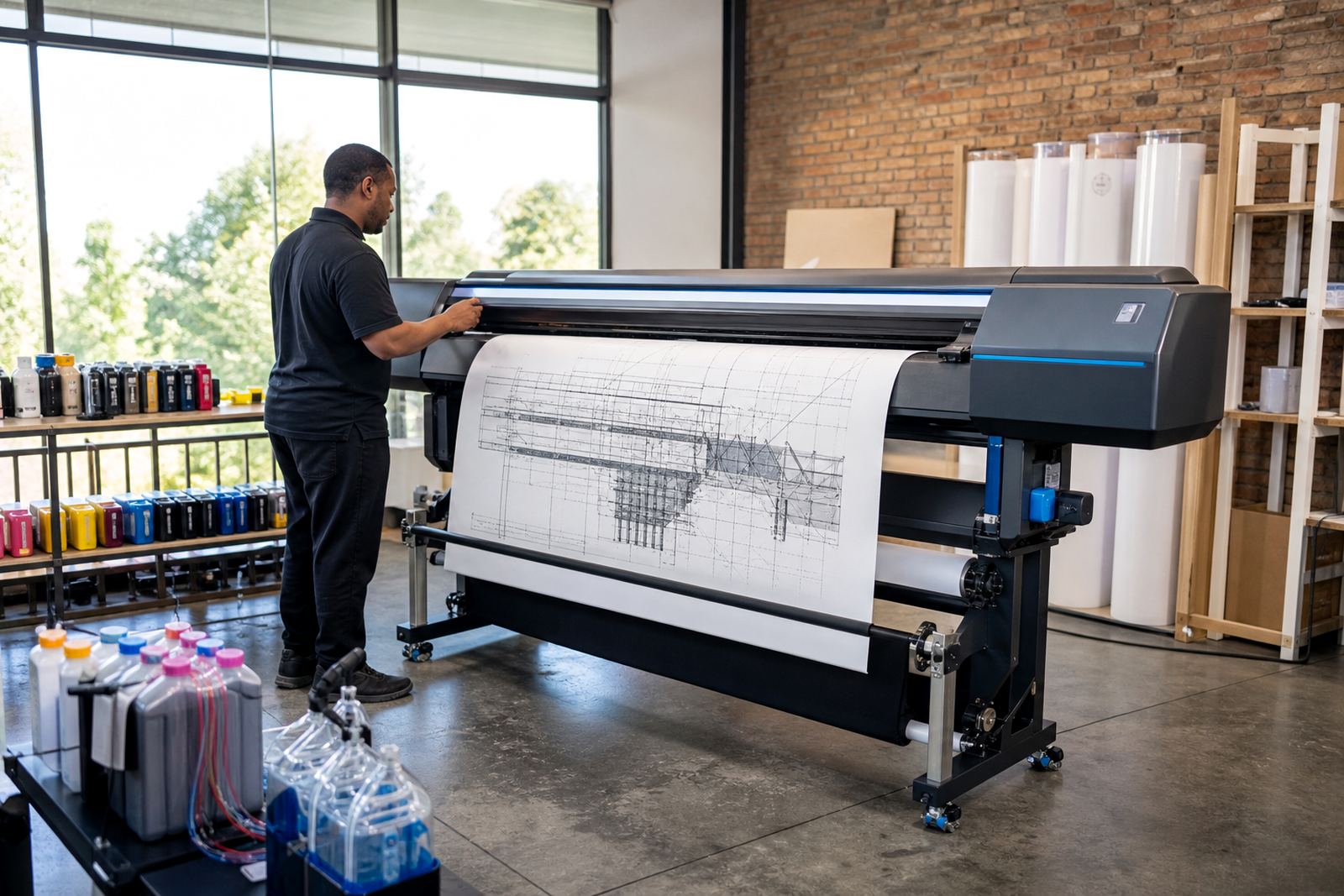
In a wide-format print shop, wet ink near a printhead station needs extra care. The area should stay still while you clean around it, because moving a carriage or wiping too close to the head can spread wet ink into places it should not go.
- Use gloves, and if the spill is large add apron protection too.
- Keep towels for cleanup separate from towels used on print work.
- Close bottle caps firmly before moving the stock tray.
- Do not touch nozzles, chips or electrical contacts with wet hands.
Match the cleaner to the surface
Different surfaces need different treatment. On sealed tiles or a painted bench, a damp cloth with mild detergent usually handles the first pass. On porous surfaces like untreated wood or carpet, blotting works better than rubbing because rubbing pushes colour deeper into the fibres.
For dye ink, fresh marks often lift more easily from smooth surfaces. Pigment ink can cling harder once it starts to dry, so the cleaning should begin as soon as the area is safe to reach. Do not mix cleaning chemicals without checking the label, and never pour solvent straight over a spill unless the surface maker allows it.
- Blot first on carpet, then repeat with clean cloths.
- Wipe sealed surfaces from the outside in.
- Use fresh water only where the surface can handle moisture.
- Rinse cloths often so you are not spreading colour back and forth.
When a refill system gets splashed
Continuous ink supply systems and refill kits need a bit more attention after a spill, because one wet connector can lead to air in the line or a dirty cartridge chip. Check the tubing, tanks and caps for traces of ink and wipe them dry before the system goes back into service. If a chip area is marked, clean it gently with a dry lint-free cloth and leave it free of residue.
Chip resetters and cartridge contacts should stay clean and dry. A dirty contact can cause poor recognition, repeated error messages or uneven ink reporting, which makes a small spill turn into a longer support job.
- Inspect tubes for kinks, drips or loose fittings.
- Wipe tank mouths and cap seals before refilling.
- Keep chips and contacts free of liquid and lint.
- If the system has taken a hard knock, stop and inspect it fully.
Sort empties, contaminated stock and waste properly
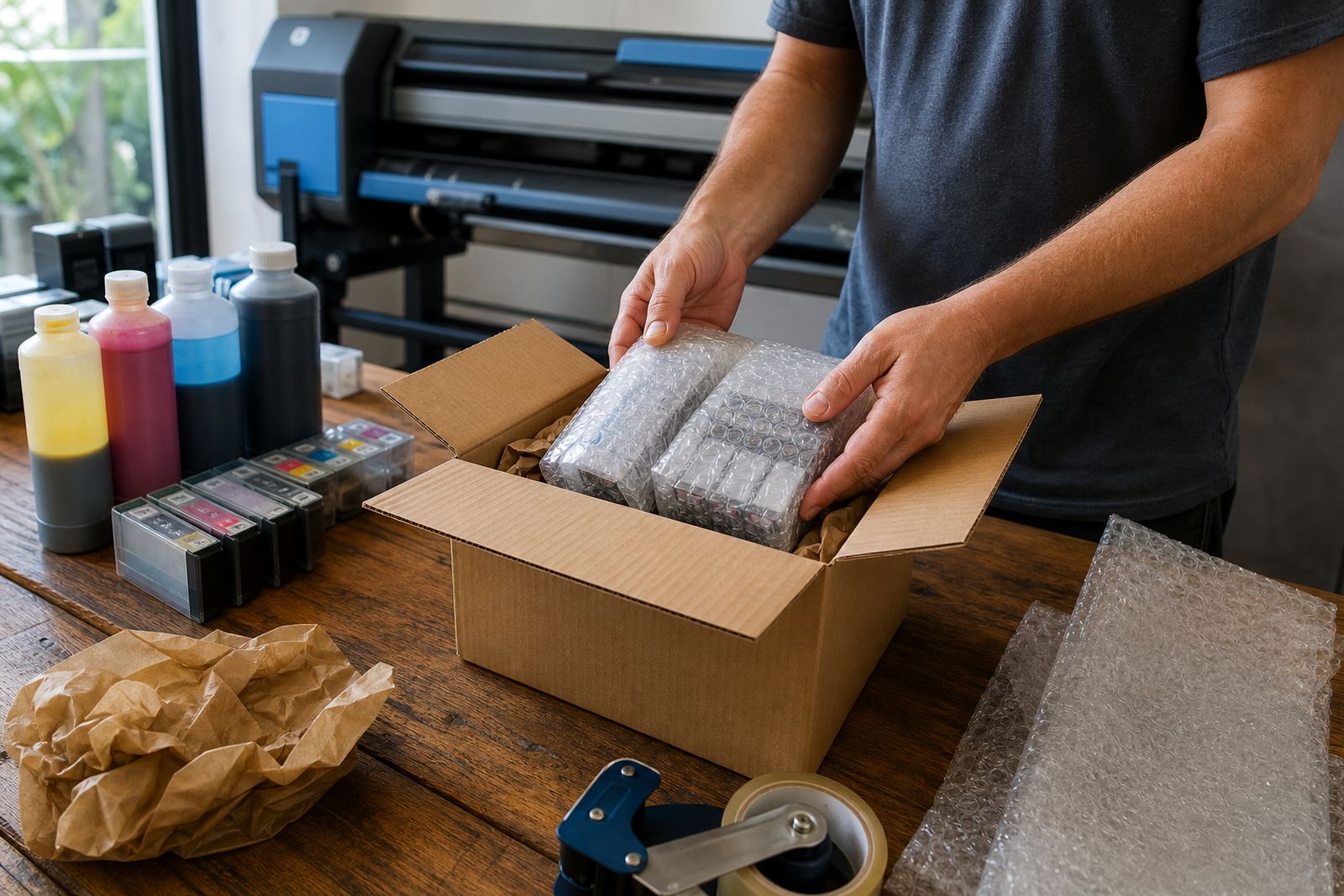
Once the spill is under control, separate usable stock from contaminated stock. Cartridges with wet labels, damaged seals or ink inside the wrong chamber should not go straight back to the shelf. The same applies to swabs, paper towels and gloves that are soaked through. Keep recycling empties apart from waste that still carries liquid, because a mixed bag can stain boxes and spill again in transit.
A sensible empty return routine keeps the refill area tidier over time. In Durban, where humidity can linger, an uncapped empty or a damp towel left in a box can smell off and mark nearby cartons. Drying, sorting and sealing matter more than many people think.
- Keep reusable empties separate from damaged items.
- Bag contaminated towels before they touch other stock.
- Let empty cartridges dry fully before storage.
- Store sorted waste in a closed container until collection or disposal.
A Westville refill room example that saves the day
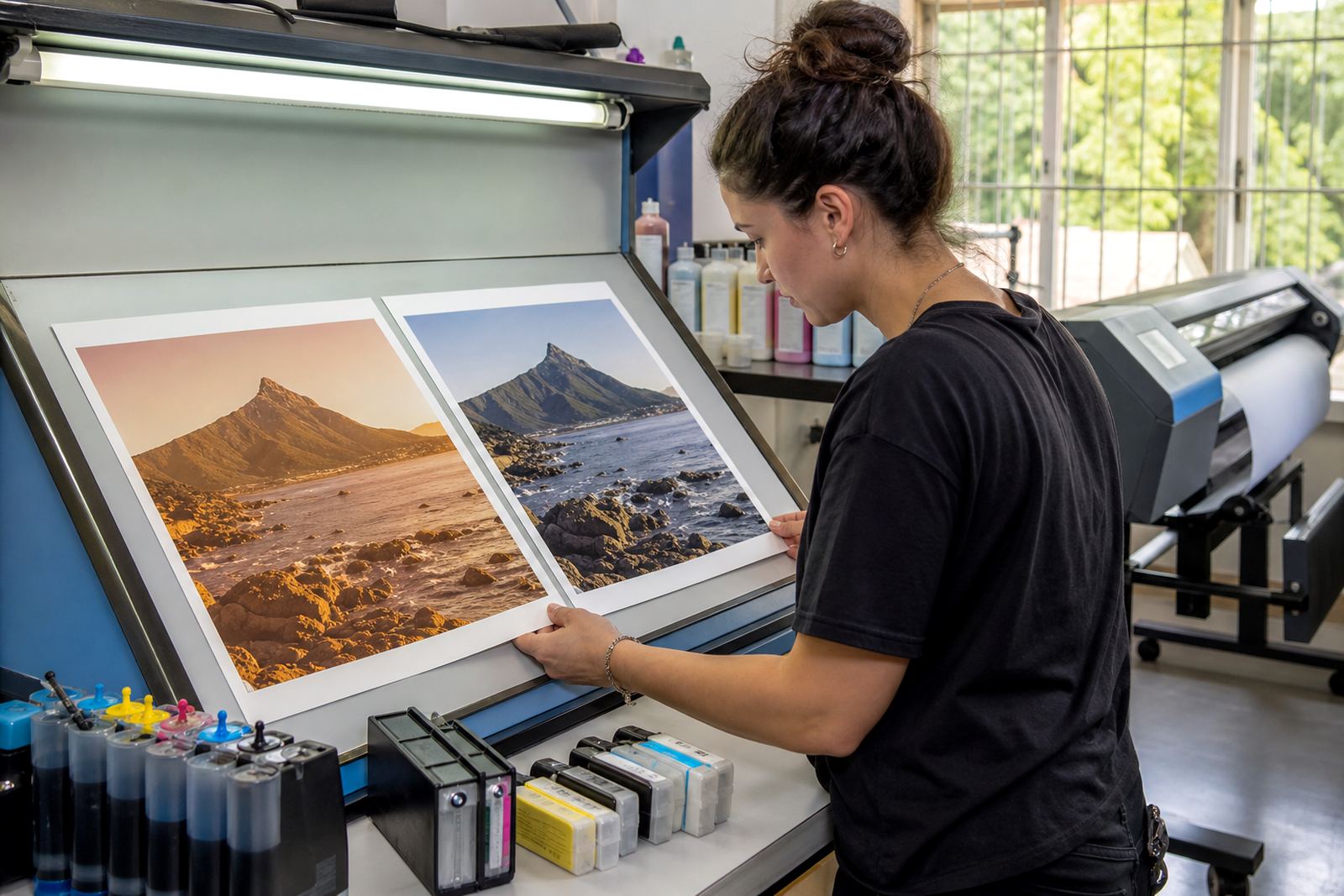
A small spill in a Westville studio can happen during a busy print run, especially when someone is topping up cartridges while another job waits on the output tray. The useful habit is to pause the whole bench, not only the bottle in hand. That pause protects artwork, labels and the floor at the same time.
In that kind of room, one person can clean, another can check stock and a third can watch the printer until the surface is dry. Once the area is clear, a nozzle check and short test print help confirm that no liquid reached the contacts or the print path. The point is not drama, it is keeping the next run from becoming another cleanup.
For offices, design studios and wide-format print shops, a tidy spill response saves paper, reduces staining and keeps refill work calmer. The quickest fix is usually the careful one, not the rushed one.