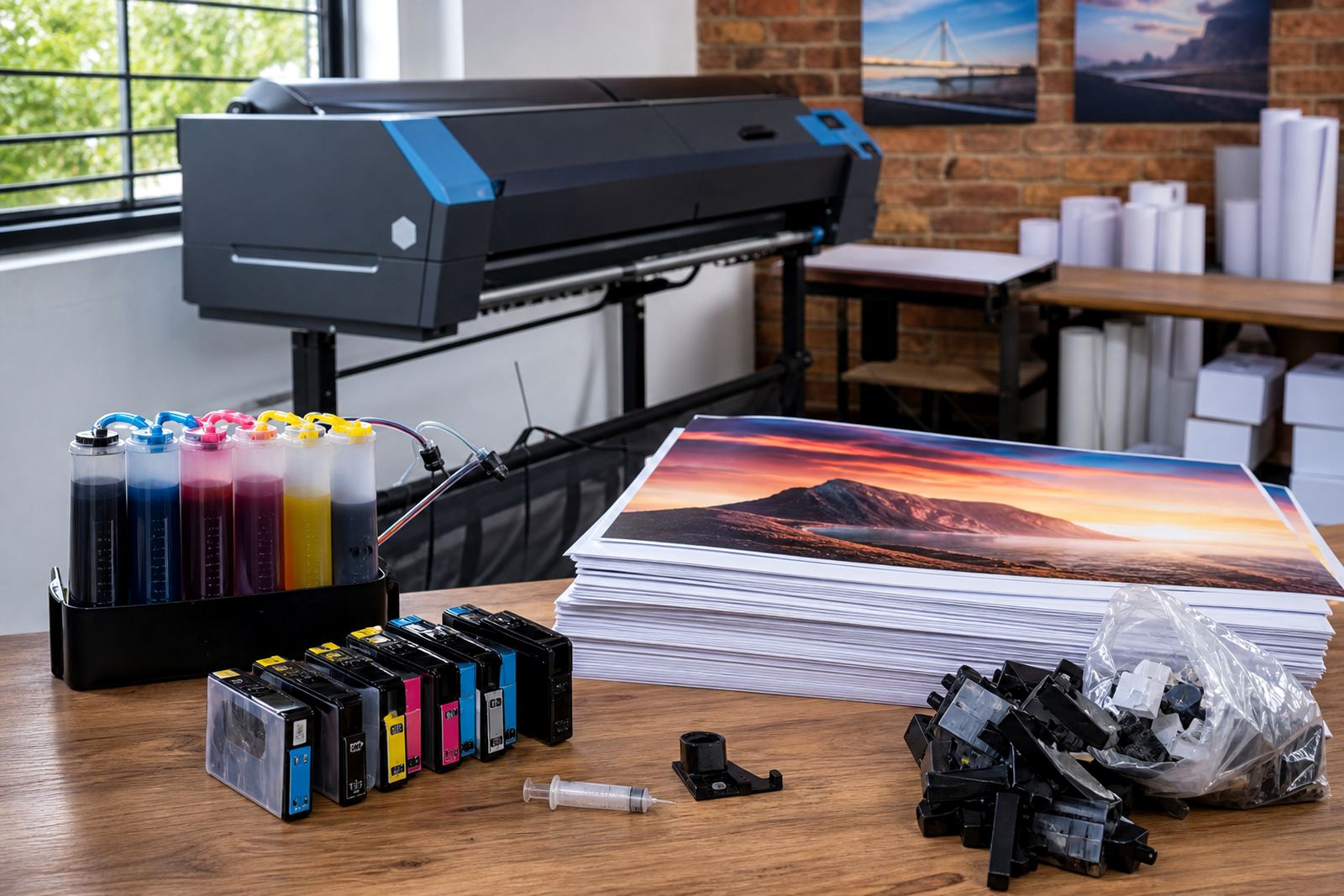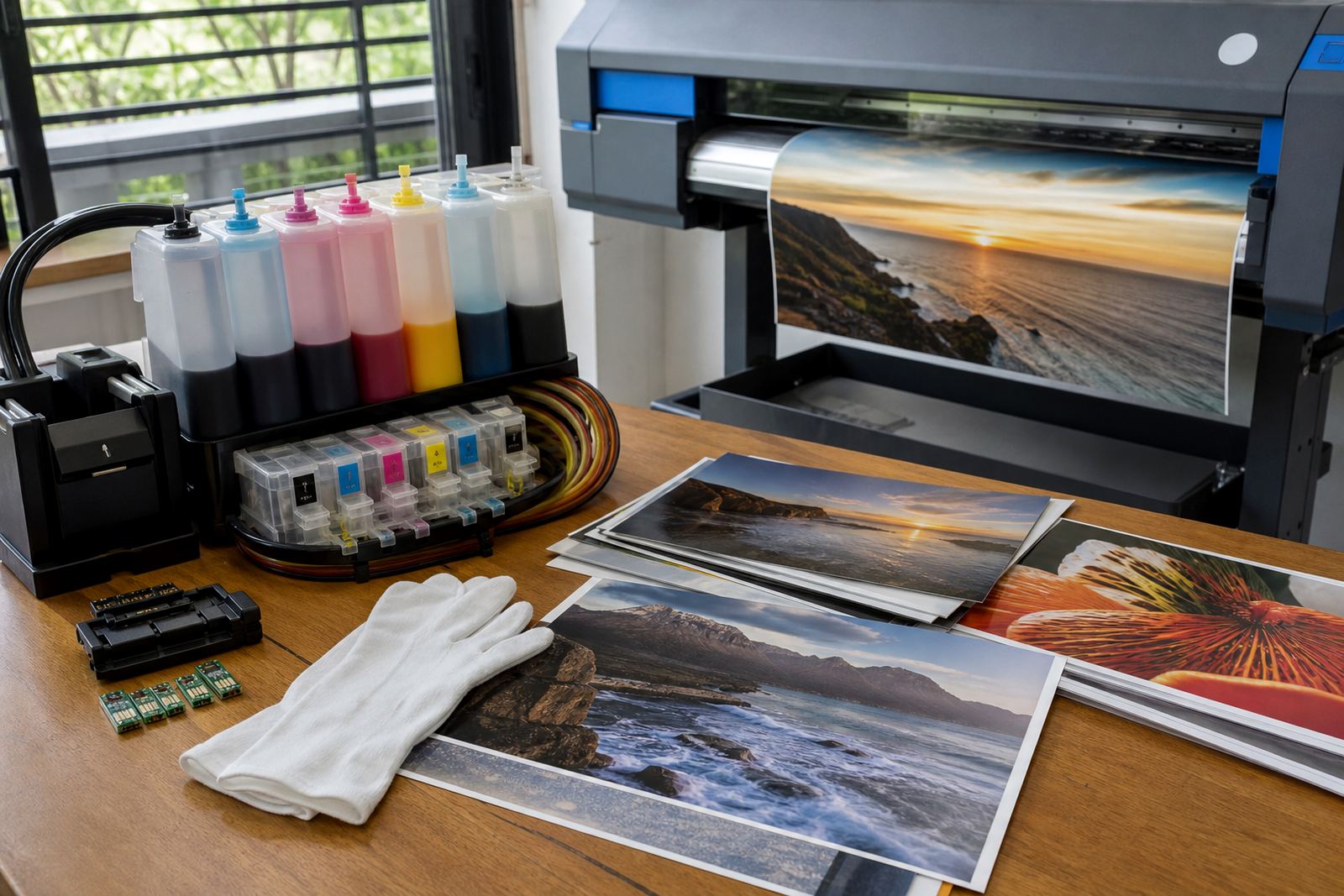

When a resetter enters the refill routine
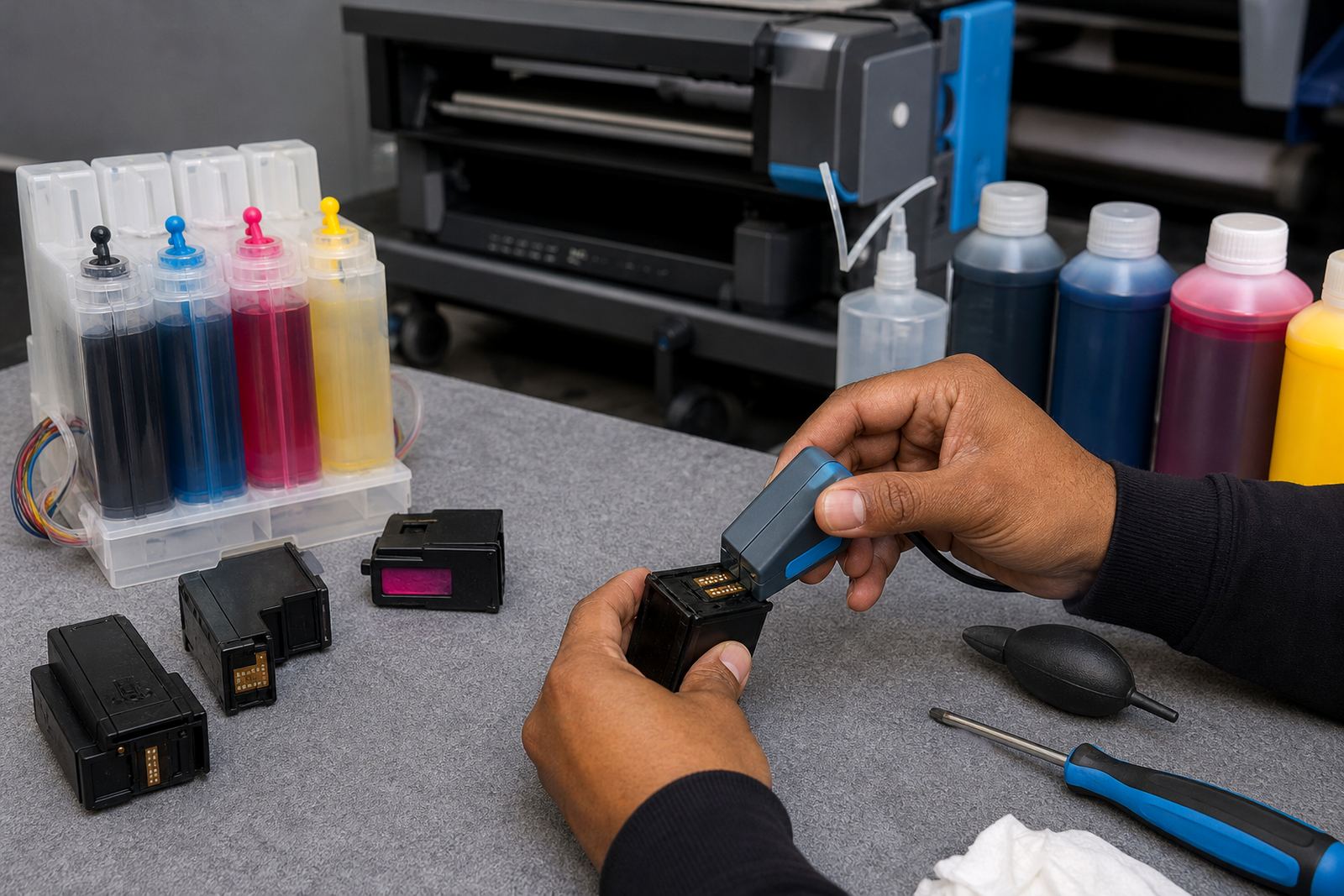
A chip resetter is usually part of the workflow when a cartridge chip keeps reporting empty after ink has been topped up. Some cartridges accept a reset tool cleanly, while others need a different approach or a replacement chip. In practical terms, the resetter is there to restore the cartridge's status so the printer can read it as ready for use again.
That matters for offices in Durban handling colour reports, studios printing proofs and small print rooms running steady daily work. If the cartridge body is sound, the nozzle area is healthy and the chip still responds, a reset can extend use without forcing an early discard. The unit is less useful when the cartridge has dried out, leaked, or suffered contact damage.
Refill jobs that usually need chip help
Refurbished cartridges often need chip attention after cleaning, refilling and testing. Refill kits for benchtop printers can also trigger low-ink warnings even when the tank or cartridge still carries usable ink. That warning does not always mean the cartridge is finished, it often means the chip needs to be returned to a usable state.
- Cartridges with refillable chips often need a reset after each top-up cycle.
- Some devices read one cartridge slot more strictly than the others.
- Wide-format machines may need separate handling for colour channels.
- Mixed ink ages can make the printer question the cartridge status.
At our Westville base, the team checks whether the chip is the real problem or only part of it. A tired contact point, dried residue or a bent edge can look like a reset issue when the fault sits elsewhere.
What a resetter does and does not solve
A resetter works on the electronic memory in certain cartridge chips. It does not fix poor refilling, broken seals or internal contamination. If the cartridge was overfilled, the air path may still be blocked and the printer can keep misreading the supply even after the chip is reset.
Ink type matters too. Dye ink and pigment ink behave differently inside the same cartridge family, especially where printhead care is part of the routine. Pigment ink can settle if a machine is left idle too long, while dye ink may show different colour behaviour on coated paper. A resetter does not change any of that, so the refill plan still needs to match the printer and the paper stock.
A Durban workshop example that keeps it practical
Picture a design studio in Westville running proofs for a client in Hillcrest. The magenta cartridge has been refilled, the print quality is fair, yet the printer still flags it as empty. In that case, a resetter may be used after checking the chip face, the contact points and the ink fill level.
If the same cartridge had leaked onto the holder, the reset alone would not be enough. The technician would first clean the contacts, test the nozzle pattern and check whether the cartridge body still seals properly. On coastal jobs around Durban humidity can also leave residue on contacts and cause a false reading, so the handling needs to be neat and patient.
Handling rules that protect the cartridge and printer
Good reset work is careful work. The chip should be dry, the contacts should be clean, and the cartridge should sit squarely in the reset tool. Pushes, twists and rushed contact often create more trouble than they solve. A steady routine keeps the chip readable and reduces the risk of damaging the cartridge edge.
- Keep refill points clean before you touch the chip.
- Wipe away loose ink before the cartridge goes back in.
- Check the cartridge latch and contact pins for wear.
- Test one cartridge at a time on mixed-colour sets.
For offices in Pietermaritzburg or Pretoria, the same basic habits apply. The machine does not care where it sits, it only reads contact quality, cartridge health and the signal the chip sends back.
When a different fix is the better call
Not every warning should be answered with a resetter. Some cartridges need leak checking, nozzle check support or a change in ink type. Others are past the point where refurbished use makes sense, especially when the chip has failed repeatedly or the cartridge body has warped.
Chip reset help sits alongside other refill services for a reason. It works best when the rest of the cartridge is already in decent shape. If the printer is struggling across more than one colour, the real issue may be blocked nozzles, dried ink or a weak electrical path rather than the chip itself. In that case, the team looks at the full refill chain instead of forcing one tool to carry the job.
Empty returns, stock planning and the next refill cycle
Resetters also fit into a wider waste-reduction routine. When empties are returned for sorting, the usable shells can be checked, cleaned and prepared for another cycle where possible. That lowers waste and keeps more cartridge bodies in circulation, which matters for offices and print shops that run a steady weekly volume.
For wider planning, it helps to track which cartridges reset cleanly and which ones keep failing. That pattern can guide stock planning, operator training and the choice between dye and pigment ink on future jobs. Our Westville team uses that information to keep refill work orderly, especially where courier deliveries go to Johannesburg, Cape Town or Ballito and the next batch needs to be packed with less guesswork.