
When the printer keeps moving, bottled ink starts to make sense
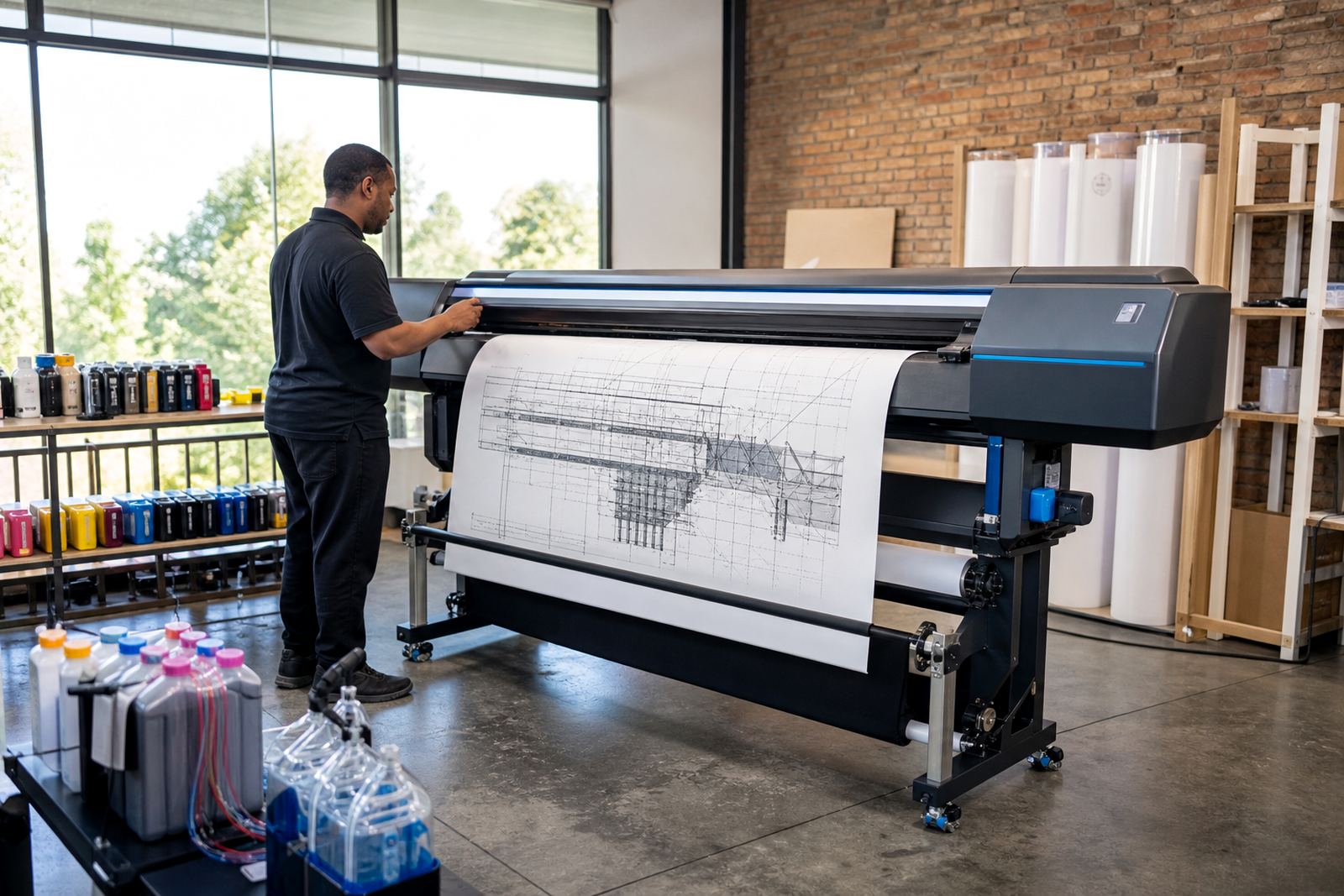
Refilling from bottles suits places that print in a steady rhythm. A design studio pushing proofs, a Durban office running reports, or a wide-format shop that keeps artwork moving through the day all face the same issue, cartridges empty too often and throwaway costs add up.
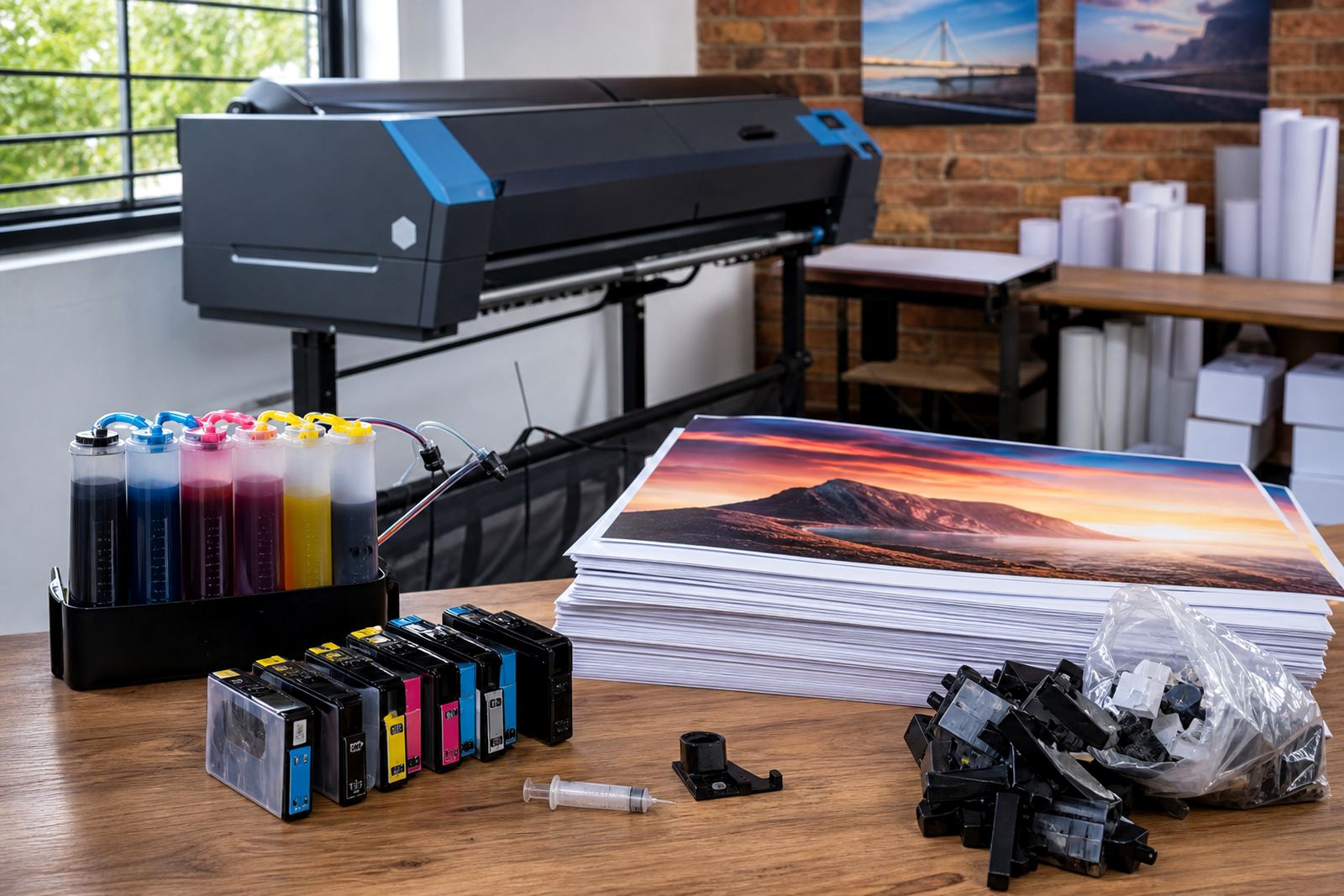
Bulk ink systems change that pattern by feeding ink into the printer from external reservoirs or refillable tanks. The printer still does the work, but the supply is held in larger containers, so there are fewer interruptions and less packaging to throw away.
In a busy Westville office, that often means fewer emergency runs for supplies and a more predictable print setup. On the practical side, the bigger supply is easier to track, especially when several people share one machine and nobody wants to be the person who finds an empty cartridge at 4 pm.
What the system actually changes at the worktable
A bulk ink setup can be a continuous ink supply system, a refill kit, or a refillable cartridge arrangement. The exact layout depends on the printer model and how often it runs. What stays the same is the shift from replacing cartridges all the time to topping up ink in a more controlled way.
The key gain is cost control over time. Offices and studios do not need to keep buying full cartridge sets when the printer is only using a portion of the housing each cycle. There is also less waste because empty cartridges can often be collected, checked and handled through a return programme or recycling stream.
- Fewer full cartridge swaps during normal work
- Better visibility of ink levels between refills
- Lower packaging waste in day-to-day printing
- More suitable for steady output than short bursts
That does not mean bulk ink suits every machine. Some printers run better with pigment ink for sharper text and more durable pages, while others do well with dye ink for brighter colour work. The right match matters more than the marketing on the bottle.
Colour work, text work and the ink choice behind both
Dye ink and pigment ink behave differently, and that difference matters in real use. Dye ink usually gives lively colour on coated media and photo work, while pigment ink is often preferred where crisp lines, better water resistance and longer page life are needed. A print shop handling proofs, invoices and short-run graphics may need a mixed approach depending on the machine and the job.
Ink choice also affects maintenance. Pigment particles can settle if a system sits idle for too long, while dye-based systems may behave differently in humid coastal conditions. In Durban and Ballito, where air moisture can be part of daily life, printheads and lines need proper attention so ink does not dry out, thicken or cause irregular output.
That is why refill advice is not just about topping up. It includes the paper type, the print frequency, the nozzle pattern, and whether the printer is used every day or only on peak weeks. The wrong ink in the wrong machine can create more trouble than the savings are worth.
Printhead care keeps the saving from turning into downtime
Bulk ink works best when the printer is treated as a working tool, not a set-and-forget box. Regular nozzle checks help show early signs of blockage, banding or colour shift. A quick check can catch a problem before it becomes a long clean cycle or a failed job.
Good practice also includes leak checking, correct installation and careful handling during refills. A small spill near the feed line can travel further than people expect, especially where several printers sit close together. Clean hands, steady filling and the right caps or seals make a noticeable difference.
- Run nozzle checks before heavy jobs
- Keep the printer in a stable, dust-light area
- Match the ink type to the machine and paper
- Do not force a cartridge or tank fitting
Remote troubleshooting can help when the issue is not obvious. Sometimes the fault is a blocked channel, sometimes a chip reset issue, and sometimes the printer simply needs a proper clean and refill sequence rather than another full replacement.
A Durban example where bulk ink earns its place
Picture a small studio in Westville that prints proofs, mock-ups and presentation boards through the week. One machine handles colour work, another handles admin pages, and both need to stay ready. In that setting, bulk ink reduces the stop-start habit of buying new cartridges every few days and gives the team a clearer refill plan.
The same logic applies in Johannesburg, Pretoria or Cape Town where a print room may have different branches or a courier-based supply line. When stock planning is done properly, the team knows what colour is running low, which empties can be returned and what needs attention before a job lands on the floor.
That is where operator training helps. A staff member who knows how to check levels, spot nozzle trouble and top up safely is less likely to waste ink or damage a printhead. It keeps the system practical instead of fiddly, which is what offices actually need.
What to keep in the drawer near a bulk ink setup
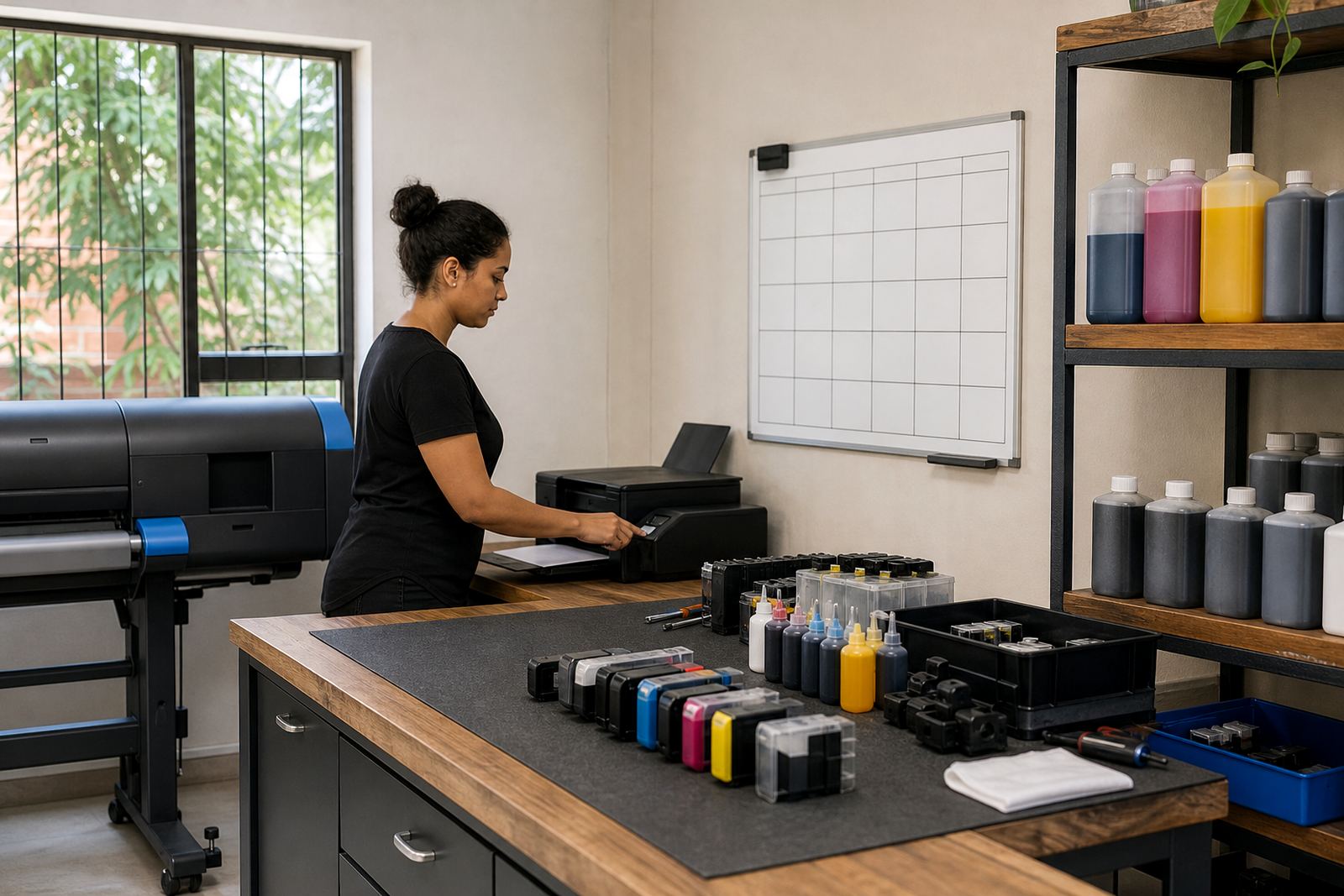
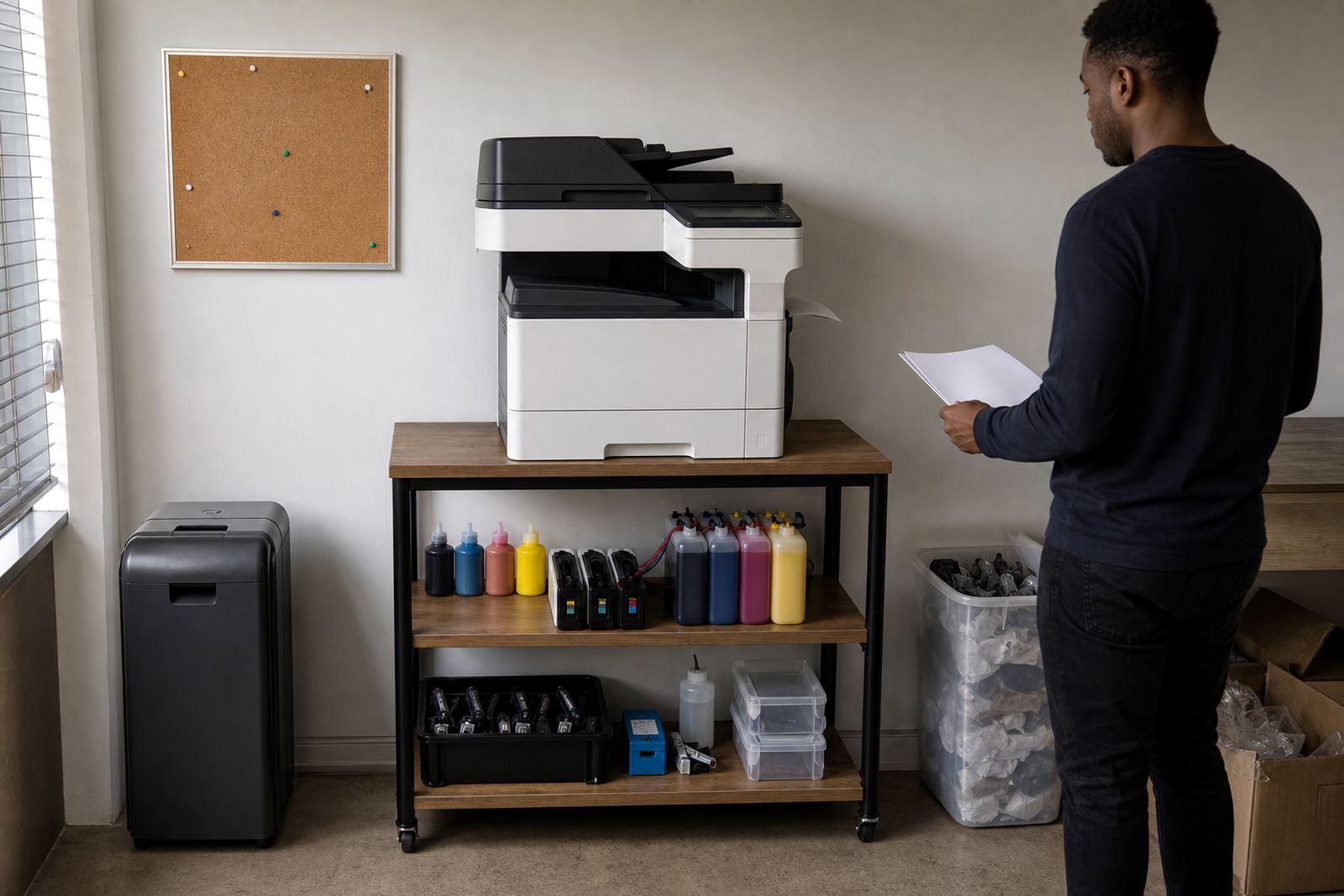
A tidy bulk ink area does not need much, but it does need the right small items close at hand. Refill work goes better when the basics are organised and clearly labelled. That matters whether the printer sits in a Hillcrest office, a Pietermaritzburg studio or a busy wide-format room in Durban.
- Correct ink bottles for the printer and the job
- Lint-free cloths for wipe-downs and small spills
- Gloves if the operator prefers cleaner handling
- Spare caps, syringes or refill fittings where needed
- Empty cartridges or tanks set aside for return or recycling
Stock planning help is useful here because bulk ink works best when there is a simple routine. If the team knows what is on hand, what needs topping up and what type of ink is inside each machine, the printer stays useful for longer and the workday is less interrupted.
For many offices and studios, the real value is not only lower waste. It is the steadier rhythm that comes from fewer cartridge changes, cleaner stock handling and a print setup that matches the actual volume on the ground.