Keep the bottle neck clean after every pour
Most storage problems start at the bottle opening. Ink left on the neck attracts dust, fibres and tiny bits of dried colour that can end up back in the bottle later. Wipe the rim before closing, then make sure the cap seats properly. A cap that sits crooked can let air in and can also leave a sticky ring around the threads.
In a Westville office or a print room near the coast, humidity can be high enough to make careless handling show up fast. Keep the filling area dry, use a clean cloth that is kept for ink work only, and avoid touching nozzle tips or syringes after they have been on a dirty bench.
- Close each bottle straight after use.
- Wipe the neck before the cap goes back on.
- Keep filling tools off dusty shelves and open windowsills.
- Never pour leftover ink back from a contaminated cup.
Seal it properly and keep air out of the system
Refill ink bottles are meant to stay sealed when they are not in use. Air exposure can thicken some inks at the top, while dust and moisture affect the consistency over time. If you use a continuous ink supply system, keep each reservoir closed when it is not being filled and check the cap gaskets for wear. A loose seal may not show itself at once, but you will notice it later as unstable flow or staining around the fill point.
For offices that print invoices, flyers or colour proofs, it helps to keep the lids together in one tray rather than scattered across counters. That small habit cuts down on mix-ups and keeps the inks in the right order.
- Do not store open bottles beside cleaning fluids.
- Label bottles clearly if several colours are kept nearby.
- Check that the cap thread is free of dried ink.
- Keep refill funnels and syringes dry between uses.
Temperature matters more than most people think
Ink does not like sudden heat, cold or direct sunlight. A bottle left on a bright window ledge can change more quickly than one kept in a dark cupboard. The same goes for a car boot on a hot Durban afternoon, where the inside temperature climbs fast and the bottle has little protection. Storage should be steady, not dramatic.
Room temperature is usually the safest middle ground for most refill inks. Keep the bottles away from radiators, laundry rooms, rooftop heat and chilled spaces that sweat when opened. If the bottle feels unusually thick, lumpy or separated, pause before using it and inspect the colour and flow first.
- Store bottles in a cupboard or drawer, not in direct sun.
- Avoid places that swing from cool to hot through the day.
- Do not leave ink in a vehicle longer than needed.
- Let chilled bottles settle before filling cartridges or tanks.
Dye and pigment inks do not age in the same way
Different ink types need slightly different storage care. Dye ink usually stays fluid and bright, while pigment ink carries fine particles that should stay evenly mixed. If pigment ink sits too long without movement, it may need gentle rolling before use so the colour settles back evenly. Shaking hard can trap bubbles, so slow movement is better.
For wide-format print shops in Pietermaritzburg or Johannesburg, this matters when a bottle is opened, used in small batches and put aside for a few weeks. The bottle should still be checked before the next fill. Look at the colour, the clarity and whether any sediment has settled at the bottom or along the sides.
- Keep pigment bottles upright and sealed.
- Roll, do not whip, before use if settlement is visible.
- Use the correct ink type for the printer and media.
- Do not top up with a different ink family unless advised.
Clean handling protects cartridges, tanks and printheads
Good storage habits are linked to cleaner printing. A dirty bottle can transfer grime into a cartridge, a refill tank or a damper line, and that is where nozzle trouble starts. For printers used in studios and offices, printhead care begins before the ink reaches the machine. Keep the bottle mouth clean, avoid overfilling and never force a dirty needle into a fill port.
If a cartridge has been sitting unused, check it before storage as well as before refilling. Dry ink around the sponge area, cracked seals or old residue can affect the next print run. In places like Hillcrest or Ballito, where some teams print less often but still need reliable colour, a neat storage routine keeps the equipment ready without extra fuss.
- Use clean tools for each ink colour.
- Wipe spills before they dry on trays or caps.
- Store opened bottles separately from empty cartridges.
- Keep filling benches free of paper dust and packaging scraps.
Use empties, labels and stock rotation to keep order
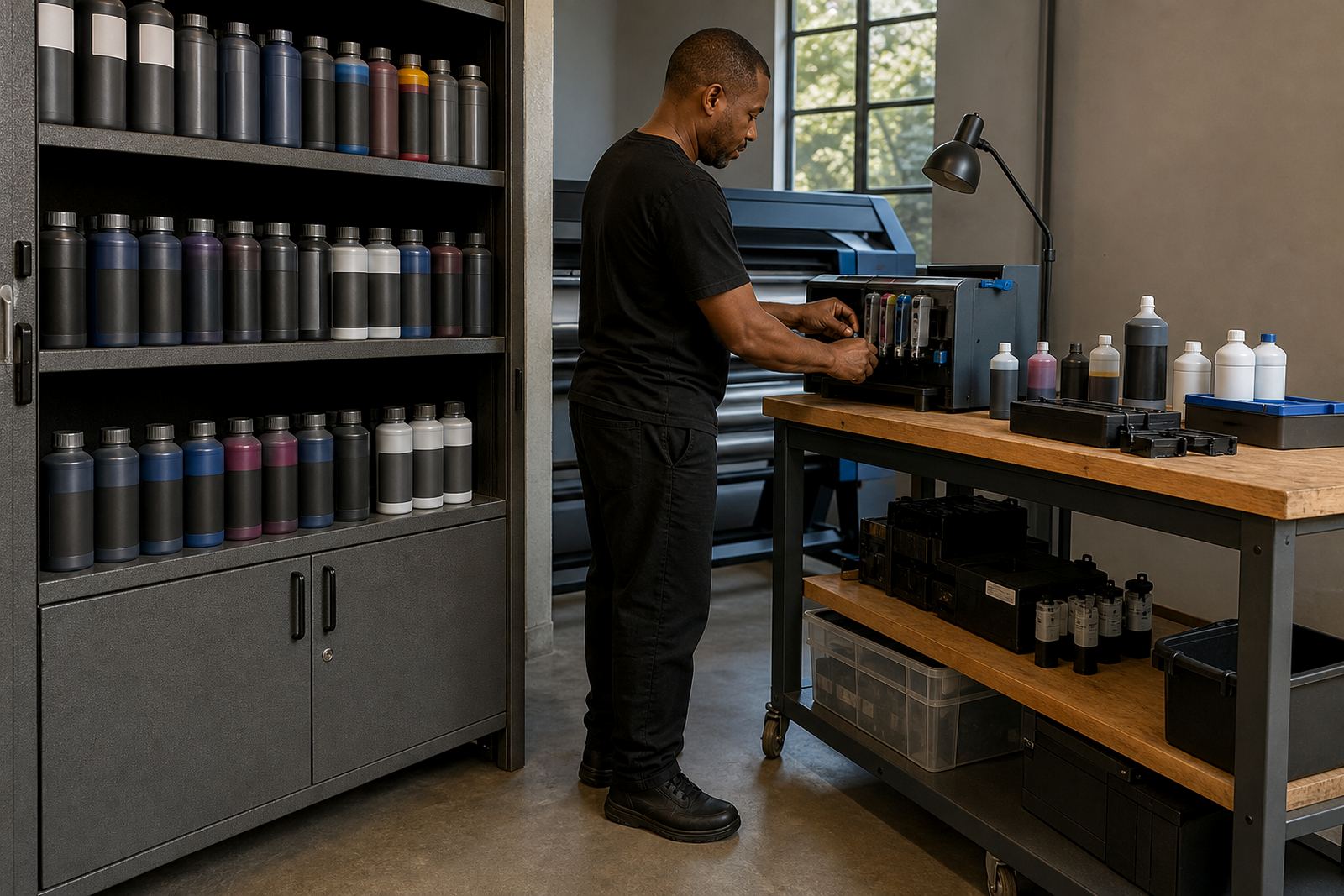
Empty bottles and returned cartridges should not be left mixed with open stock. Separate them straight away so no one grabs the wrong container later. A clear return area also helps with recycling and reduces cross-contamination between fresh ink and used parts. Write the opening date on the bottle if your team works through several colours and sizes at once.
In a busy Durban office, one shelf can hold fresh stock, another can hold empties and a third can hold bottles waiting for use. That simple setup saves time and keeps the refill area under control. It also helps if someone else in the team has to step in and handle the job without guessing.
- Keep empty cartridges in a separate tray or box.
- Mark opened bottles so older stock gets used first.
- Return caps to the correct bottles, not whichever one is nearby.
- Set aside damaged containers for safe disposal or recycling.
A Westville example from a mixed-print office
A small office in Westville may use black cartridges every day, with colour only when reports or presentation packs need a cleaner finish. If the refill bottles sit near a sunny window, the top layer can thicken and the fill point gets messy. Moving the stock to a cool cupboard, wiping the rims and keeping the tools dry makes the whole process easier to manage.
That same office may also use a refill system for larger print volumes and a separate cartridge set for occasional jobs. In that setup, one person can check the seal, another can handle empty returns and the ink stays organised instead of scattered across two or three work areas. Small habits like that are often what keeps the printer steady week after week.