
Proof sheets are only useful when the ink path stays steady
Studios that print proofs every day know the same problem: a small change in ink flow can make a good layout look wrong. When you use refurbished cartridges or a continuous ink supply system, the ink path needs the same care every week, not just when a fault shows up.
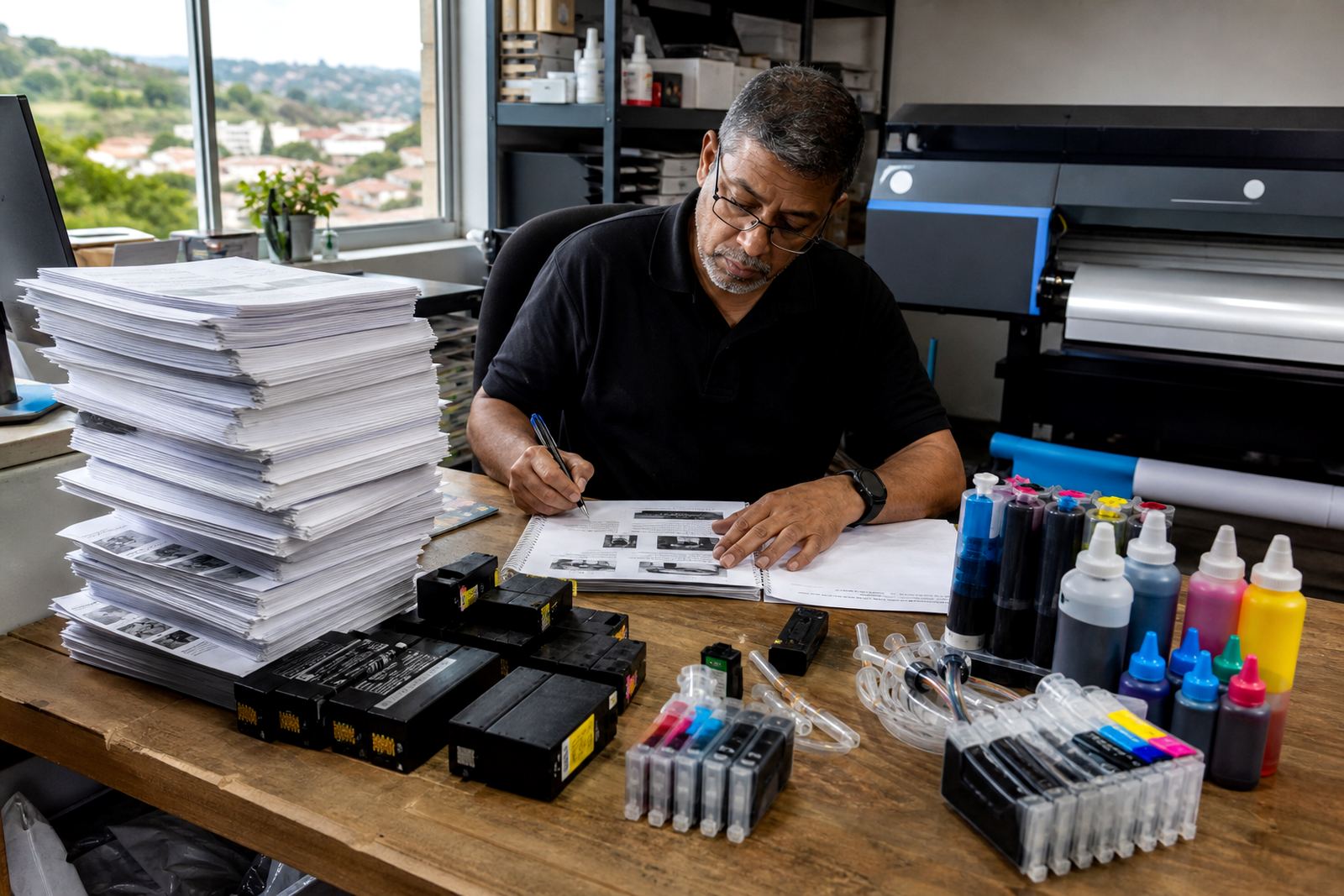
Keep the cartridge contacts clean, inspect the line from bottle to cartridge, and make sure the ink is moving without air bubbles. If a studio in Westville is checking artwork for a Durban client and the magenta starts banding, the issue is often not the file, it is a tired nozzle, a partial blockage or a refill that was done a bit too fast.
Match the ink to the job before the first proof run
Refill systems work best when the team knows which ink belongs in which workflow. Dye ink usually gives bright colour for presentations and proof sheets, while pigment ink is better for pages that must resist smudging or hold up in brighter office light. Wide-format shops often need both, depending on the stock and the final use.
- Use dye ink for indoor proofing where colour pop matters.
- Use pigment ink for text, line work and harder-wearing sheets.
- Do not mix ink types in the same cartridge path.
- Label refill bottles clearly, especially when several operators share the same station.
A studio that prints both poster mock-ups and proof packs should keep the bottles apart on the shelf and the notes beside the printer. That avoids the sort of error that takes time to trace later.
Small checks stop a messy proof session
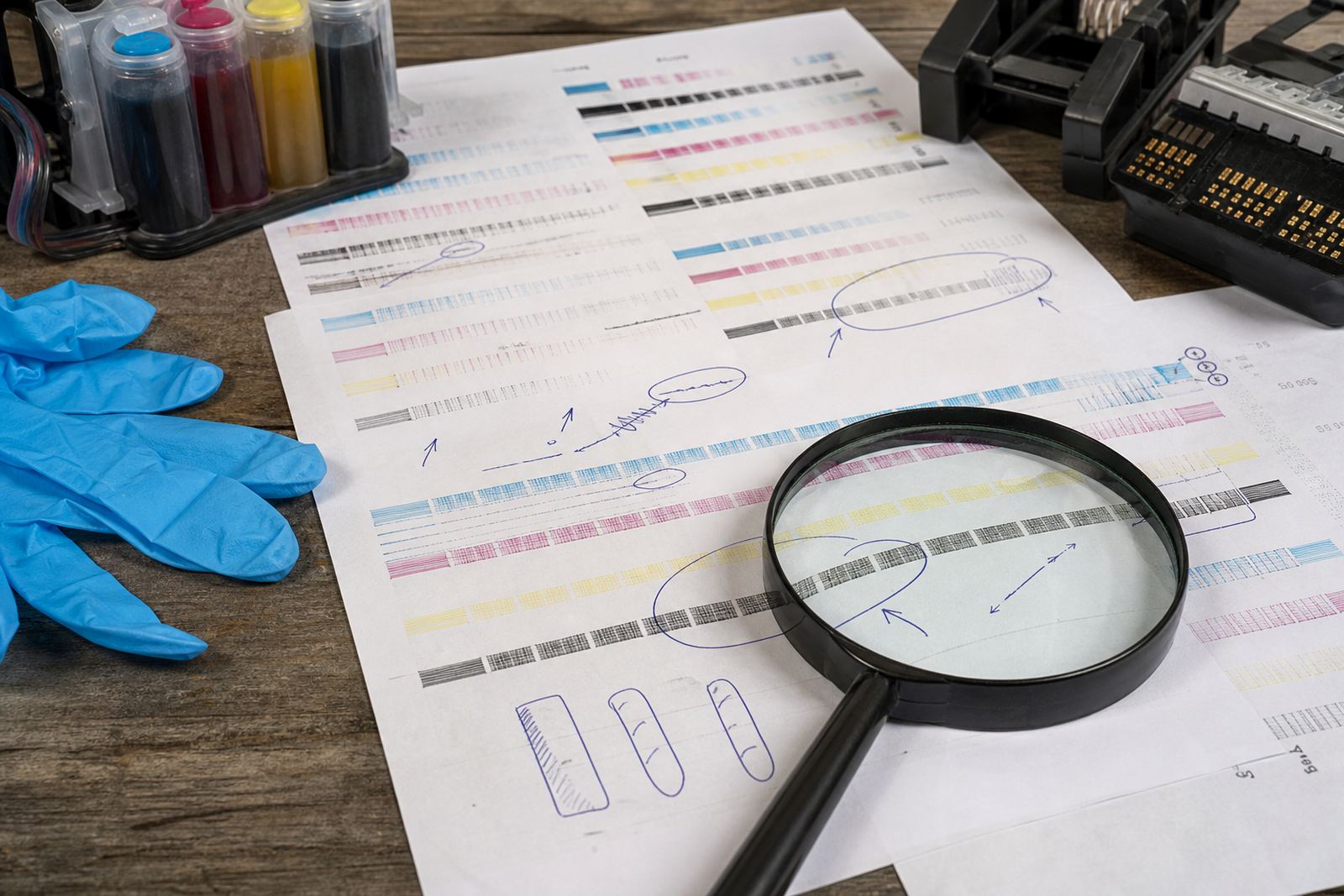
Most proofing errors show up early if the team runs a quick check before a busy batch. Nozzle checks show missing lines, patchy channels or a head that needs attention before the whole run starts. Chip reset help is also useful when the cartridge reports empty but there is still usable ink in the system.
- Run a nozzle check before each proof session.
- Wipe the cartridge seating area with a lint-free cloth.
- Look for ink residue around vents, seals and tubing joins.
- Check that the printer is not pulling air into the line.
These checks sound plain, but they save a lot of reprints. They also help a design studio keep proofing costs lower without pushing the machine harder than it should be pushed.
Printhead care is part of the studio routine
Many proofing jobs fail because the printer sits idle between bursts of work. In a studio that prints on Monday, then again on Thursday, the printhead may dry out a little if it is not exercised. Regular cleaning cycles help, but over-cleaning uses ink and can add wear, so the team needs judgement too.
Use the printer often enough to keep ink moving, and do not leave open cartridges exposed to dust. When a refill system is fitted properly, the ink stays fed evenly and the head has a better chance of staying clean. In humid Durban weather, caps and seals matter as much as the ink itself, because moisture and dust can both affect how the printer behaves.
Proofing habits that suit a busy studio floor
Good habits are built into the week, not bolted on after a fault. A studio that sets aside a short maintenance slot can keep proofing more consistent and avoid last minute panic before a client review. The point is not to overcomplicate the process, just to keep the same order every time.
- Store refill bottles upright in a cool cupboard.
- Keep empty cartridges in one marked tray for return or recycling.
- Record which printer uses dye ink and which uses pigment ink.
- Train operators to stop when a nozzle check shifts.
For a Pietermaritzburg studio sending test sheets to Johannesburg, that kind of routine helps the file, the printer and the courier all line up properly. Less wastage means less scrapping of half-finished proofs and fewer arguments over what changed.
A Westville example from a mixed proofing room
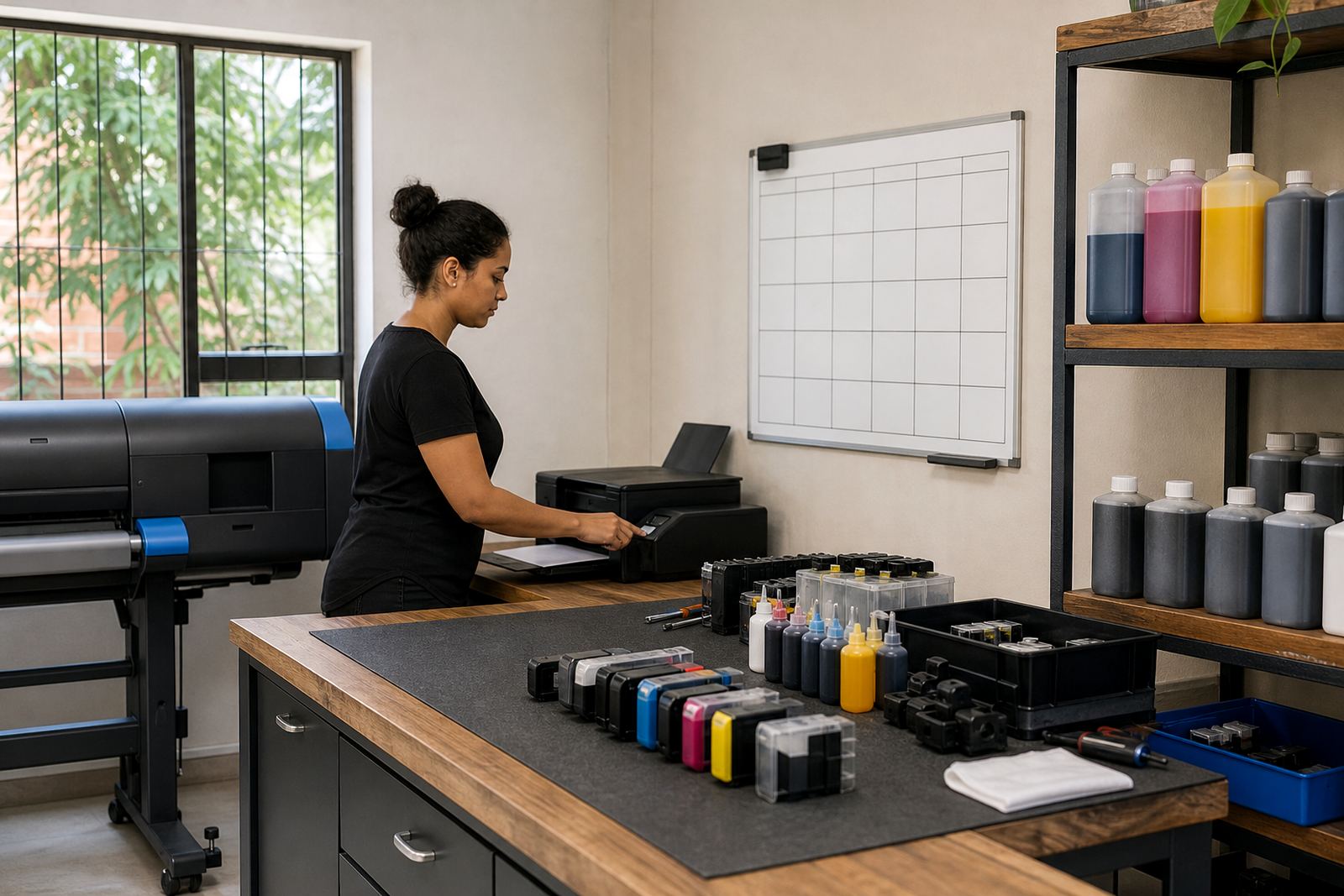
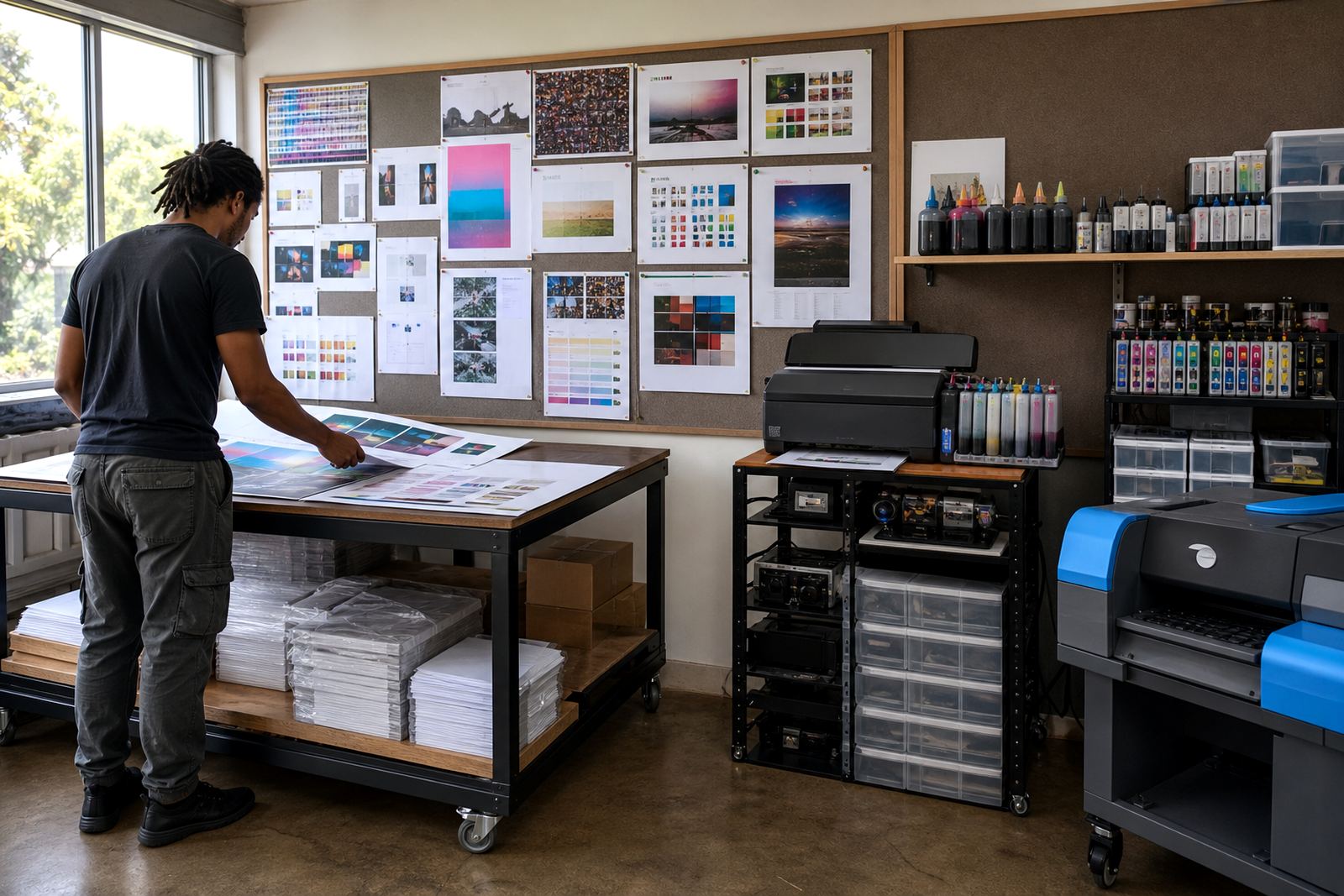
One local studio may have one inkjet for artwork proofs, another for longer document sets and a wide-format machine for poster layouts. In that mix, the refill system needs sensible handling. The team should keep the cartridges labelled, reset chips only when needed, and watch for colour drift after each refill.
That same studio may also send a roll of proof prints to Cape Town while working on a Durban brief in the morning. If the operator checks the ink lines, clears any small leak early and tests a colour patch before the full run, the final sheets are easier to trust. The work still needs judgement, but the printer is not fighting against the process.
Empty cartridges still have a job to do
Refill systems are not only about filling ink. Empty cartridges and used containers need a proper return path so they do not pile up in drawers or bins. A clean return programme keeps the bench clearer and helps the studio see which parts are reusable and which need to be set aside.
For a design team that prints proofs every week, this is basic housekeeping with a practical edge. It keeps the studio floor calmer, reduces waste and makes it easier to plan stock before a busy month. The habit is small, but it keeps the refill system working the way the team expects.