Start the week with a nozzle check, not a guess
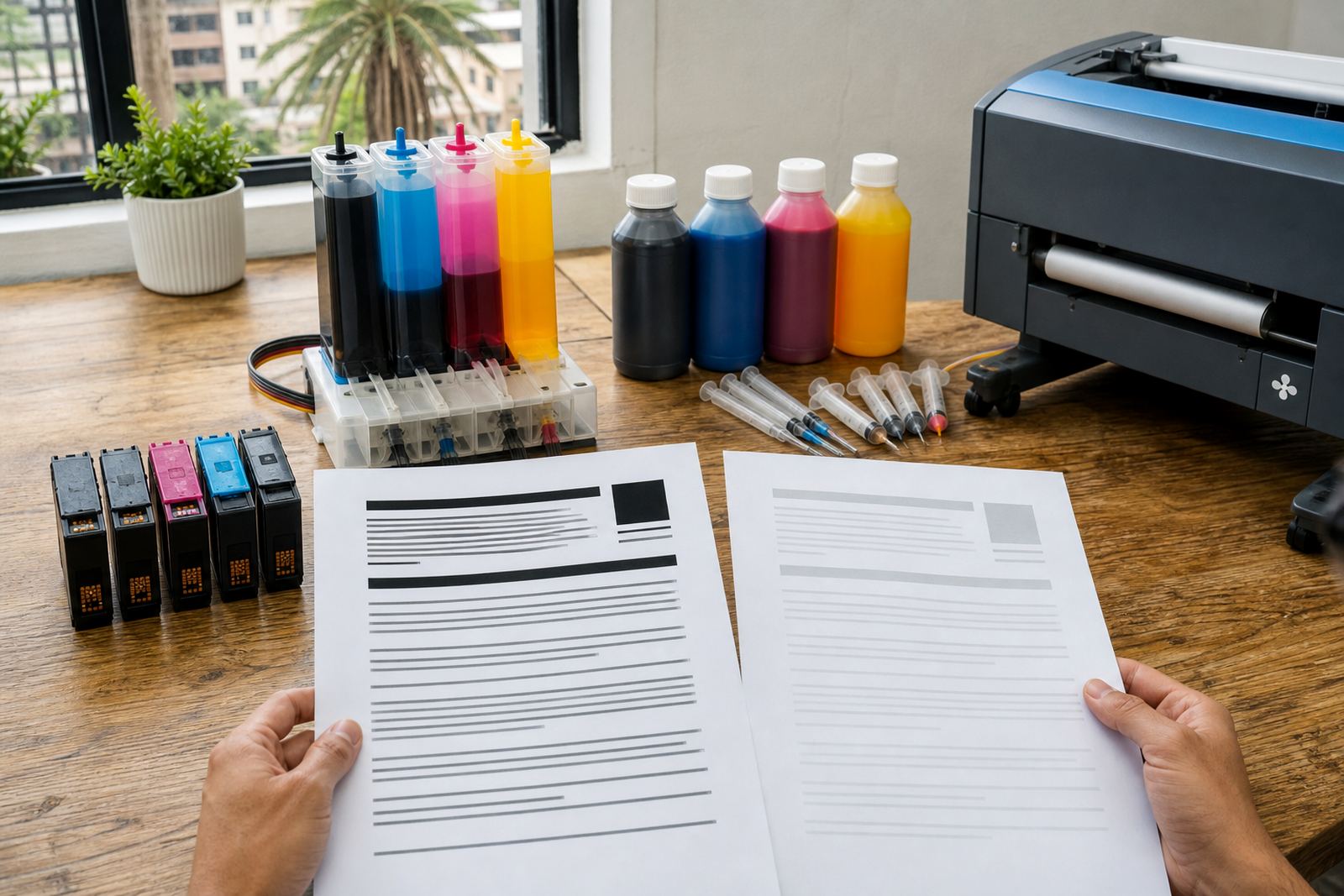
A weekly nozzle check shows whether the printer is laying down every colour cleanly before a busy stack of jobs builds up. If a line is missing or one shade looks weak, that is the moment to clean the head lightly and test again, not after three urgent jobs have already gone through.
For shared machines in Westville or Hillcrest, the first person at the machine can run a quick test page, wipe away dust around the cartridge bay and make sure the cover closes without resistance. A printer that sits near an open window, or in a room with sea air drifting in from Durban, will collect more moisture and dust than one kept in a closed office.
Give refurbished cartridges a clean route in and out
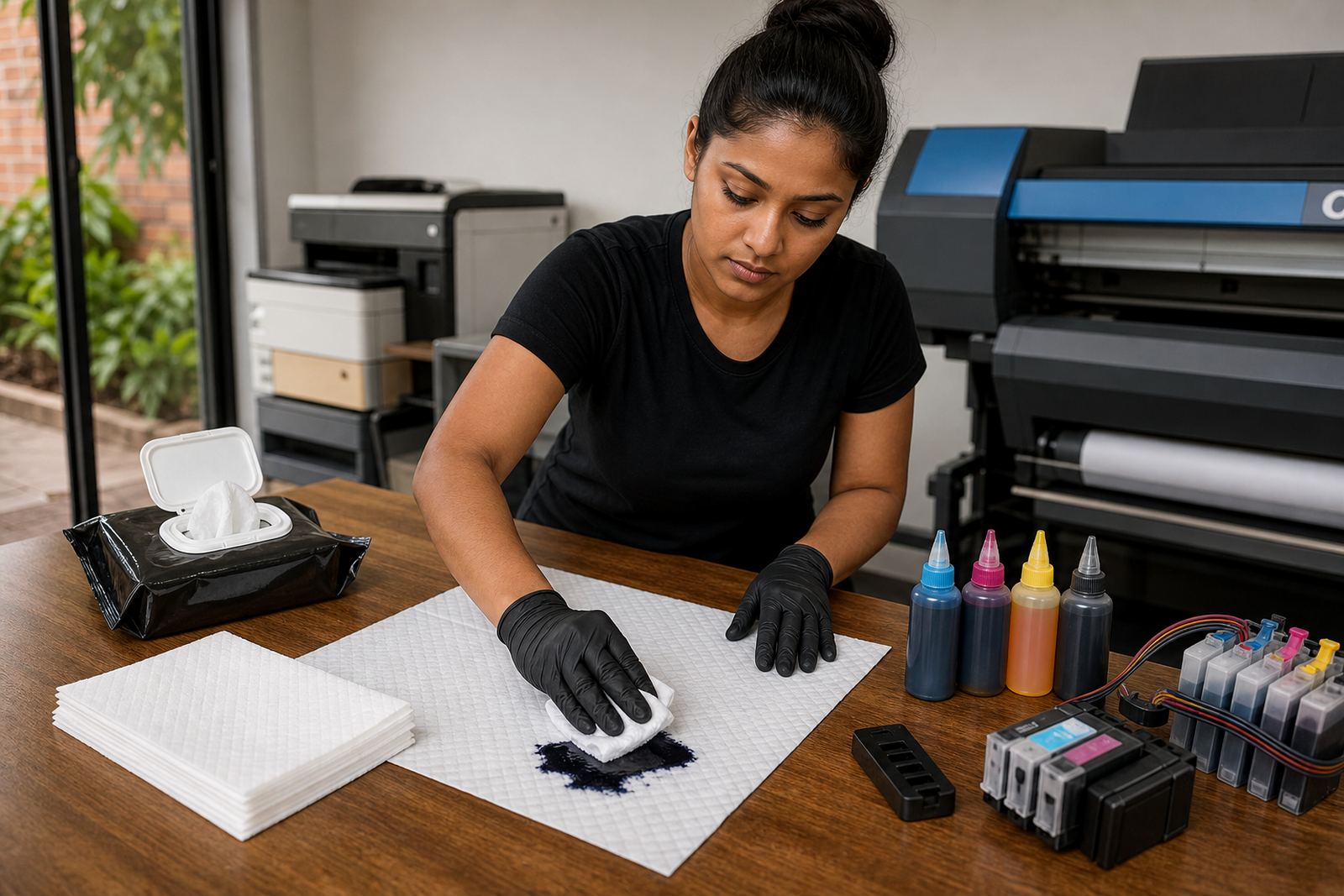
Refurbished cartridges work best when the contact points stay clean and the cartridge seats properly. A weekly check should include a look at the chip area, the seal around the cartridge body and any dried ink near the outlet. If a cartridge was removed for a long weekend, keep the nozzle area protected so it does not dry out.
- Wipe electrical contacts gently with a dry lint-free cloth.
- Check that each cartridge clicks into place without forcing it.
- Keep used cartridges aside for return or recycling instead of mixing them with waste paper.
- Do not shake cartridges hard, especially if they have been standing in warm offices.
In a Pietermaritzburg office with several people sharing one machine, these small checks stop one loose cartridge from interrupting everybody else. It also helps the team notice early when a cartridge is nearly finished, rather than discovering it mid-print.
Keep bulk ink systems steady, clean and level
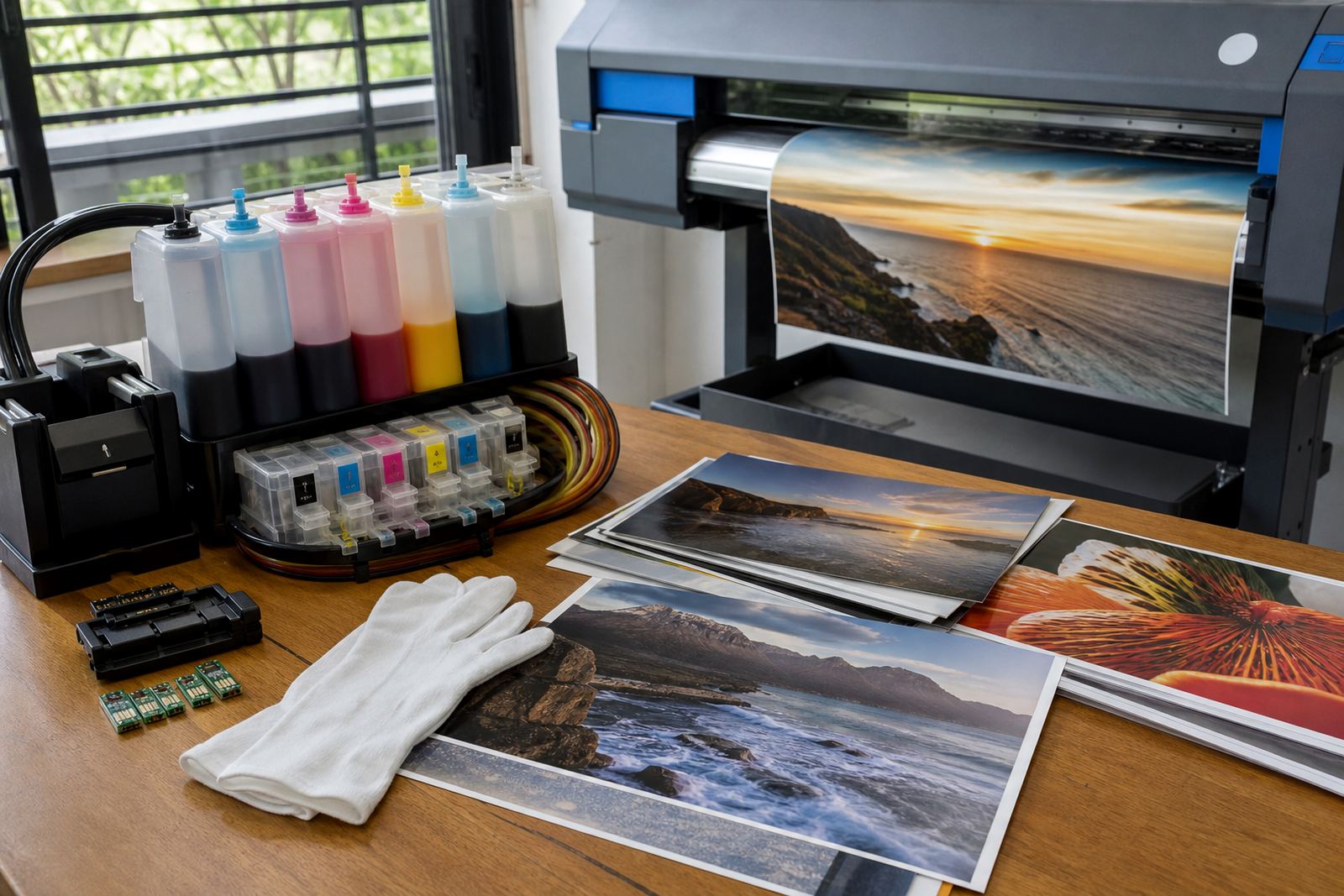
Bulk ink systems need a different rhythm from cartridge-only printers. The bottles or tanks should stay upright, the tubing should have a smooth path, and the ink level should be checked before it drops too low. Air in the line is a common reason for faint prints, splatter, or missing blocks of colour.
Dye and pigment inks each behave differently. Dye ink is often used where bright colour and smooth blending matter, while pigment ink is preferred when sharper text and more durable output are needed. Matching the ink to the job matters just as much as the printer model, and mixing types casually can cause trouble with clogging or colour shift.
- Check the tubes for bubbles after transport or movement.
- Keep refill bottles closed and labelled clearly.
- Top up before the system runs too low, not after it has pulled air.
- Store ink away from direct sun and extreme heat.
Printhead care is cheaper than replacement work
Printheads respond best to regular use and light care. A machine that sits untouched for too long can dry out, especially when a studio closes for a few days or a branch printer is only used for invoices. A simple weekly print helps keep the nozzles active and reduces the chance of hard blockages.
If lines are broken or colours are off, start with the printer’s own cleaning cycle and a fresh nozzle check. Heavy cleaning should not become a habit because it wastes ink and can strain the system. In a busy design studio in Durban, one clean test page at the end of the week can save a Monday morning scramble.
Match ink, paper and job type before the queue grows
Weekly routine is not only about the machine. The type of ink and the paper on hand should suit the work expected for the coming week. Offices usually need clear text and reliable page counts, while artists and design teams may need richer colour, better blending or a different drying behaviour. Wide-format print shops also need to watch how humidity affects coated media and drying time.
Where colour accuracy matters, run a quick sample on the paper that will be used for the job. A print that looks fine on ordinary office stock can shift when moved onto heavier or coated paper. In Johannesburg or Pretoria, where a printer may handle many hands in one week, a labelled paper shelf and a short job note can prevent wasted sheets and reprints.
Keep an eye on chips, resets and empty returns
Some cartridge systems rely on chips or reset devices to track use and recognise a refilled cartridge. These parts need careful handling, because bent contacts or rough fitting can stop the printer from reading the cartridge properly. A reset should always be done with the correct general method for the system in use, not by forcing parts together.
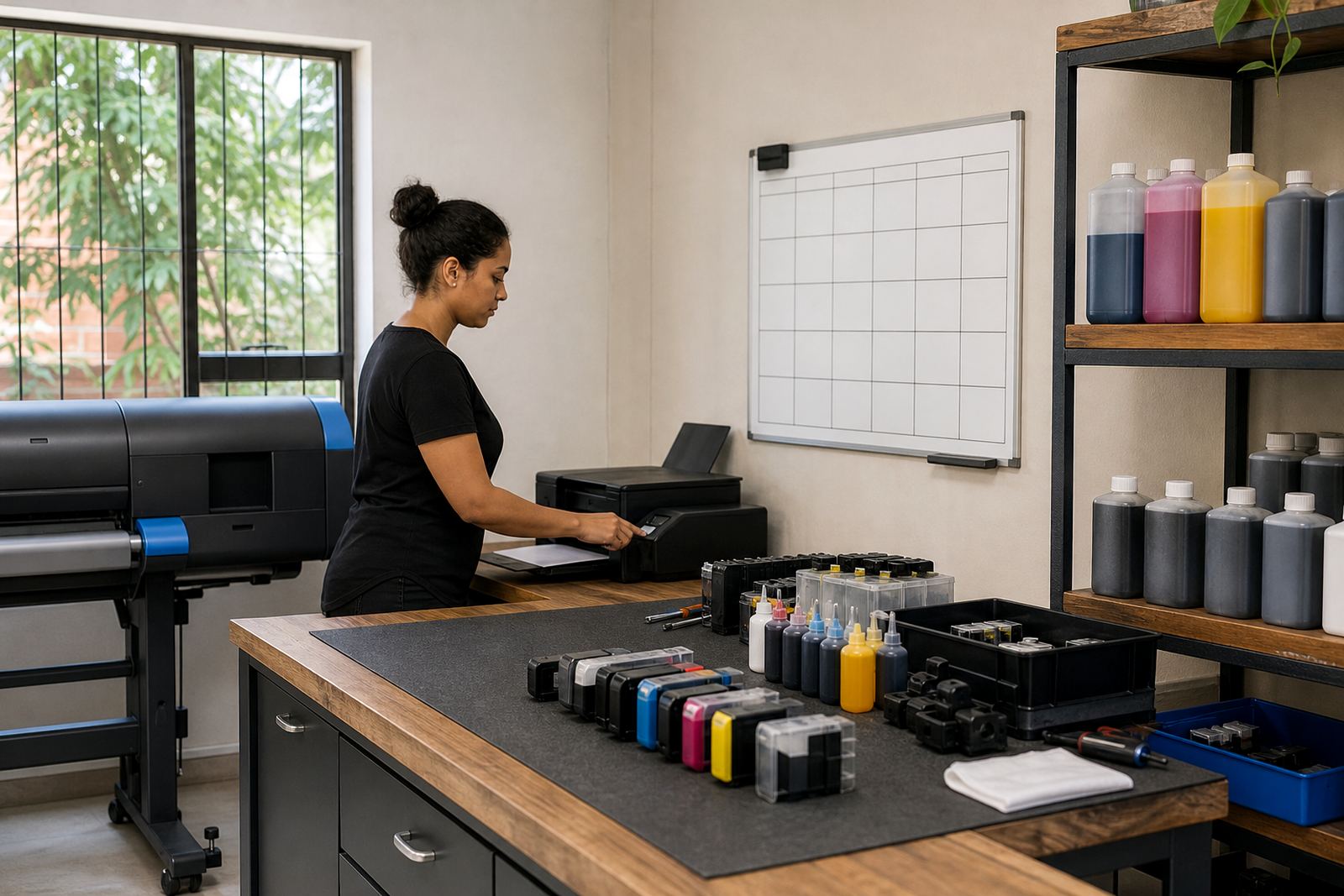
Empty returns also belong in the weekly routine. A simple return box makes it easier to gather used cartridges for reuse or recycling, and it keeps the counter clear. That matters in a Ballito or Cape Town office where space around the printer may already be tight.
- Keep a clean box for empties near the printer.
- Separate used cartridges from fresh stock.
- Label cartridges that need attention before they go back in service.
- Record recurring faults so the same issue does not keep returning.
A Durban week that runs better with one short check-in
A small architectural studio in Westville may print drawings on Monday, send client proofs on Wednesday and handle admin pages on Friday. If one shared printer serves all three jobs, the weekly routine becomes a practical habit rather than a spare task. One person checks the nozzle test, another confirms ink levels, and the last person to print clears away paper dust and closes the tray properly.
That rhythm suits refill systems too. When the printer has been running on bulk ink, a quick line check, a look at the tubing and a careful top-up keep the system calmer through the week. The aim is not perfection, it is fewer surprises and less ink lost to avoidable faults. In a workroom where every page matters, that is the kind of routine that earns its place.