
Wet Ink Finds Every Gap in the Routine
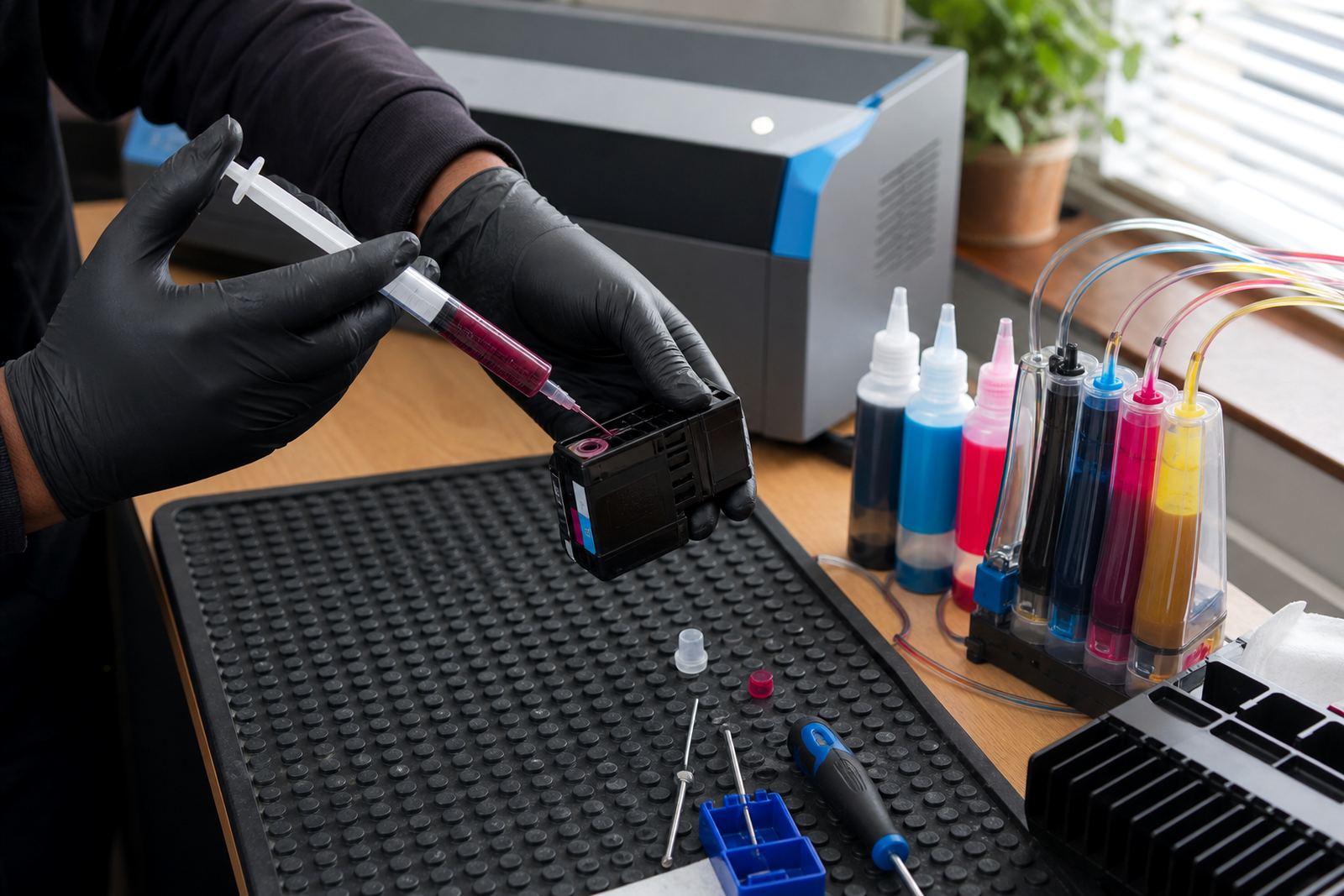
Refill work looks tidy until a syringe slips, a sponge cartridge wicks a bit too far, or a cap is lifted with wet fingers. Gloves help keep ink off skin, off labels and out of the tiny spaces where a clean refill can go wrong. They also make it easier to see if a cartridge is leaking because fresh ink stands out straight away.
In a small studio, that matters. A glove gives you a cleaner grip when you are checking a nozzle, clearing a spill, or moving cartridges between the bench and storage box. Without that barrier, the worktable starts picking up fingerprints and smears that are awkward to clean once they dry.
- Use disposable nitrile gloves for refill handling and short repair checks.
- Change gloves when ink gets on the fingertips or palm.
- Keep a clean cloth nearby for caps, tools and bottle necks.
Hands, Labels and Seal Points Need a Clean Touch
Refilled cartridges depend on small seals, vent points and chip contacts staying free of oil and grime. Bare hands leave skin oils behind, and that can affect how neatly a cartridge seats or how well a contact area stays clean. Gloves reduce that risk without making the job fussy.
They also help when you are sorting mixed stock. A cartridge with a light ink mark on the housing is easier to identify if your hands are not already stained from the last one. In office setups with several devices on the go, that kind of order saves a lot of second guessing.
- Handle chip contacts as little as possible.
- Keep cartridge openings pointed away from your body.
- Wipe the outside before the cartridge goes back into service.
Pigment, Dye and the Mess They Leave Behind
Different inks behave differently. Dye ink is often lighter to clean from surfaces, while pigment ink can cling harder and leave darker marks on gloves, cloths and fittings. That does not mean one is better in every case, it just means the handling changes with the job and the printer type.
For wide-format work and colour-critical office printing, the refill bench needs careful habits. Gloves help reduce cross-contamination between colours, and they stop one bottle cap picking up residue from another. In humid Durban conditions, a damp glove can also carry tiny marks from one cartridge shell to the next, so it is worth changing them if they feel tacky.
- Keep separate cloths for dye and pigment clean-up.
- Do not use the same glove for black and light colour work if you can avoid it.
- Store refill kits closed and upright after each session.
Printhead Care Starts Before the Cartridge Goes Back
A careful refill is only half the job. Printhead care begins with clean handling, gentle checking and a steady eye on the nozzle pattern. Gloves reduce the chance of grease, dust and loose fibres moving from your hands to the cartridge, then into the printer path.
That matters in systems that rely on regular nozzle checks or on refill kits with external tubing. If a seal is handled with dirty fingers, a small smear can travel further than people expect. A clean glove is not a cure for every problem, but it does remove one of the common causes of avoidable mess.
- Check nozzles before and after refill if the print looks weak.
- Keep suction tools and syringe tips off dirty benches.
- Use gloves when cleaning around the printhead area.
A Westville Example from a Busy Dispatch Week
A design studio in Westville may be sending proofs to clients in Durban, Pietermaritzburg and Johannesburg while also keeping a wide-format machine ready for boards and posters. On a week like that, refill work is often squeezed between jobs, and one careless stain can end up on paperwork, cartridges, or packing materials. Gloves keep the routine tighter.
They are also useful when empties are being packed for return. A glove helps keep used cartridges, caps and absorbent cloths contained, instead of leaving the bench with ink marks on every box. When the courier bag is being prepared, the clean-up is easier and the stock counts are less messy.
- Keep a glove box near the refill bench, not in another room.
- Set aside a sealed container for spent wipes and cotton buds.
- Label returned empties before they are packed for dispatch.
Safer Habits for Offices, Studios and Print Shops
Gloves are one part of a wider refill habit. Good ventilation, a stable work surface and the right ink type for the device all matter too. But gloves are the simplest protection to add, especially where different people handle stock on different days. They cut down on unnecessary cleaning and they keep the job neater.
For offices with shared printers, that also means less ink on fingers that later ends up on file covers, door handles or packing tape. In a studio, it means fewer marks on paper samples and cutter handles. In a print shop, it supports a cleaner work pattern around bulk ink, chip resets and cartridge swaps, where every small detail counts.
- Train operators to use fresh gloves for each refill batch.
- Keep spare gloves near the bulk ink station and the cartridge shelf.
- Recycle empties only after the outside has been wiped clean.