What refurbished means in real print use
When a cartridge is refurbished, the casing is inspected and prepared for reuse rather than thrown away after a single fill. The aim is to keep a sound shell in service, while replacing worn parts, clearing dried residue and checking that the cartridge can still feed ink properly. For offices in Westville or a design studio in Durban North, that can mean steady document printing without the pile of discarded empties building up on a shelf.
Refurbished units are different from a loose refill done without checks. A proper process looks at the sponge or ink chamber, the seal, the chip condition and the way the cartridge sits in the printer. If there is a leak line around the body or a cracked contact edge, that cartridge should not be pushed back into service as if nothing happened.
Inside the preparation bench
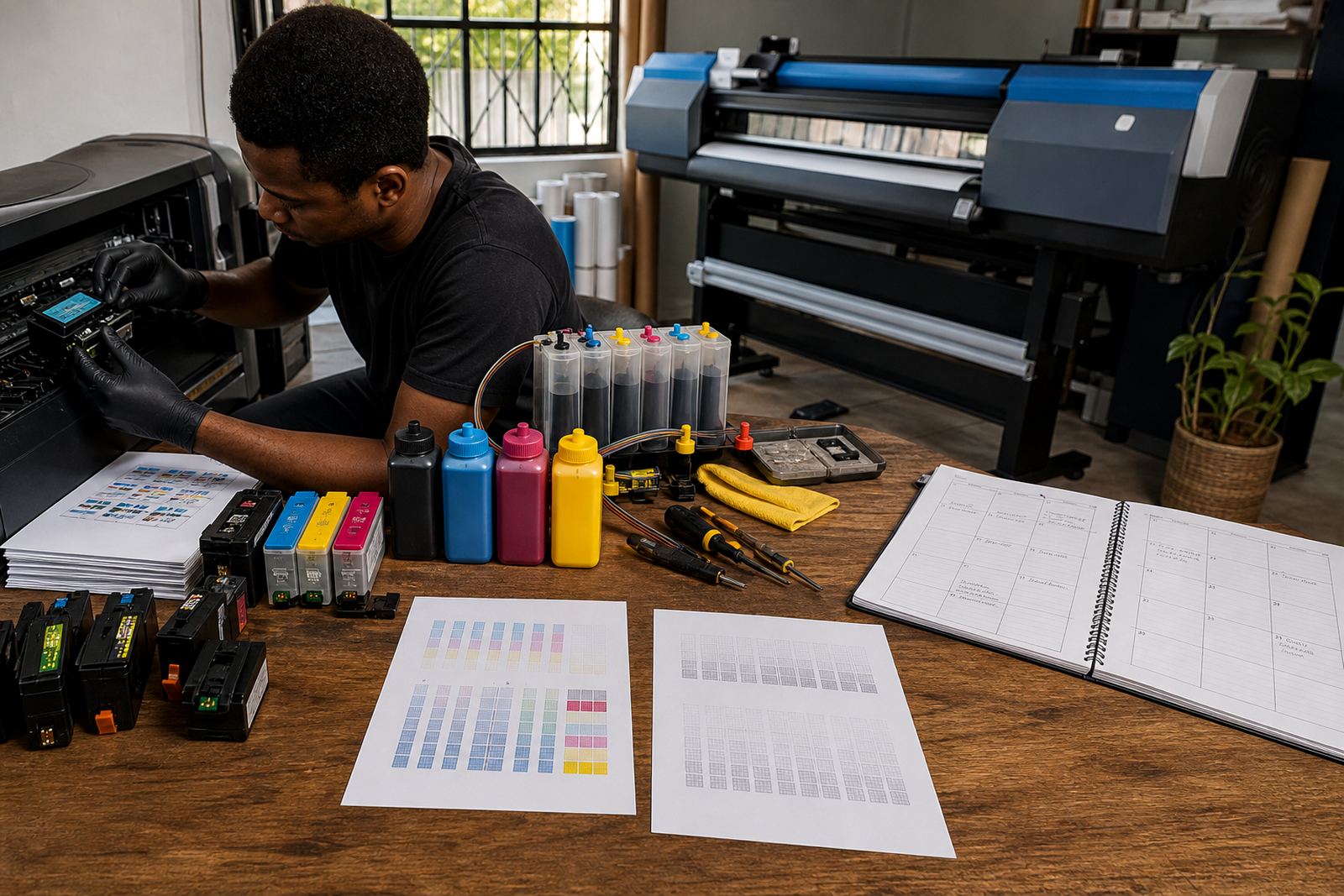
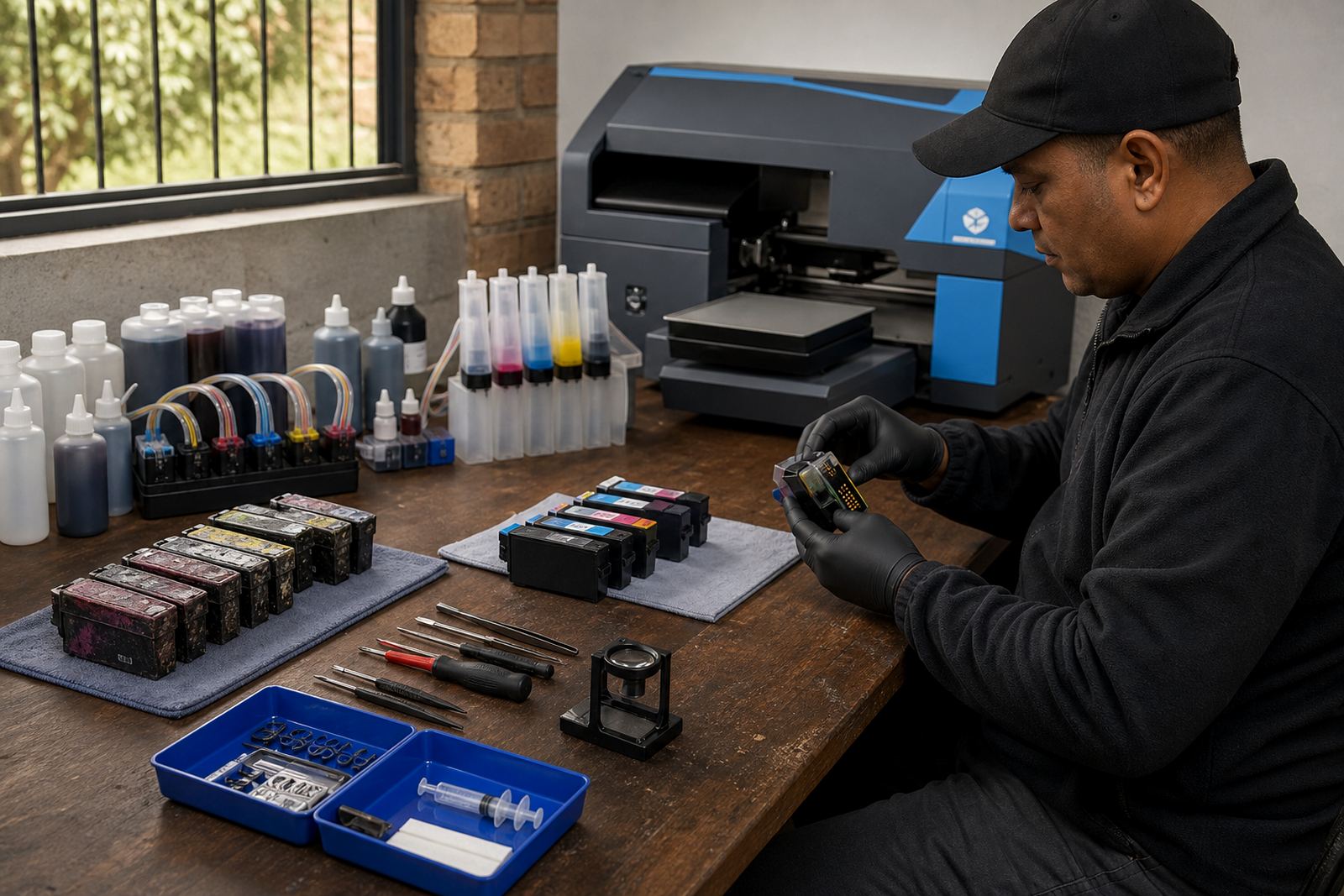
The work starts with sorting the empties. Some cartridges can be cleaned and reset, others are too damaged for reuse and are separated for recycling. Technicians remove old ink residue, inspect seals and clean the electrical contacts so the printer can recognise the cartridge properly. Chips are handled in general terms through reset or replacement methods where that is needed for the cartridge style, though the exact approach depends on the model.
- External surfaces are cleaned so old ink does not spread through the printer bay.
- Internal channels are cleared to reduce blocking and streaking.
- Contacts are checked for corrosion or grime that can interrupt reading.
- Fill points and seals are examined for leaks before the cartridge is released.
- Each unit is marked by type so the right refill path is followed later.
That process matters in humid coastal areas too, where paper dust and moisture can cling to surfaces more easily and old ink can thicken at the edges if a cartridge sits too long.
Ink choice: dye, pigment and the job in front of you
Not every refill behaves the same way. Dye ink usually gives bright colour and smooth shading for general office colour work, flyers and some photo output. Pigment ink is often used where better water resistance and sharper text matter, especially for black document printing and some wide-format applications. The printer, the paper and the final use all matter, so the right ink type should match the job instead of being chosen at random.
For a studio in Hillcrest that prints proofs, the wrong ink mix can shift colour balance and muddy fine detail. For a Pietermaritzburg office printing forms and letters all week, text sharpness and reliable flow may matter more than rich saturation. The useful habit is to stay consistent once a printer is set up for a particular ink family, because random switching can leave residue in the lines and nozzle paths.
- Dye ink suits bright internal colour work and many everyday print jobs.
- Pigment ink is preferred where water resistance and crisp text are needed.
- Wide-format systems need careful matching between ink type and printhead use.
- Mixing ink families without checking the system can lead to clogging or colour drift.
Bulk ink systems and refill kits, without the drama
Bulk ink refill systems keep larger reservoirs outside or beside the printer so the machine can draw ink as needed. They are common in environments that print often, such as small offices, studios and wide-format shops. A good setup needs correct tubing, clean bottle handling and the right priming method so air does not sit in the lines. If the system is rushed, the printer may start showing missing lines or uneven colour blocks.
Refill kits are more hands-on. They work well where a team is comfortable opening the cartridge path, topping up the correct chamber and sealing it again without spills. The hand is lighter and cleaner when the work area is prepared first. A scratched table, a bottle cap left open or a wet cloth near the contacts can create problems that have nothing to do with the printer itself.
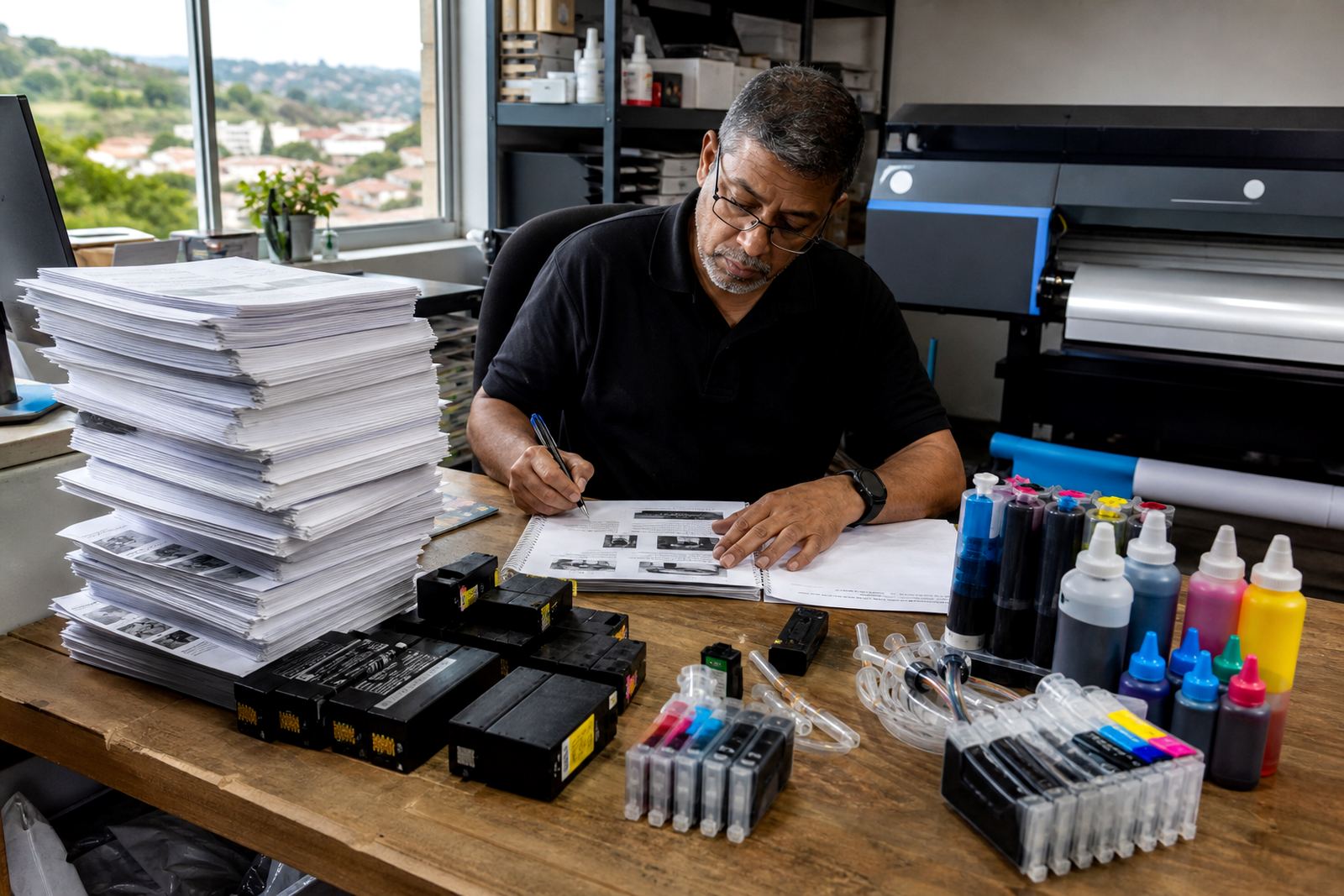
In a Westville office, a practical setup often includes spare refills on hand, a clear label on each ink type and a small log for which printer takes which cartridge. That simple habit cuts confusion when several people share the same machine.
Printhead care before the page goes wrong
Refurbished cartridges and bulk ink both rely on clean flow. If a printer shows banding, weak lines or a missing colour, the issue may sit in the nozzles, the cartridge feed or the ink path. A nozzle check is the first useful clue, because it shows whether the printer is actually firing every channel. From there, light cleaning, correct storage and the right ink choice matter more than guesswork.
Printhead care also means not leaving a printer idle for too long. Ink can dry in the nozzles, especially where air is warm and the machine is used in bursts rather than every day. If the printer is going to stand for a while, keep the cartridges fitted properly and the machine closed. That helps reduce evaporation and crusting around the ink path.
- Run a nozzle check before assuming the cartridge has failed.
- Keep printheads and contacts free of dried ink and dust.
- Use the right cleaning method for the printer class.
- Store spare ink bottles upright and tightly sealed.
- Do not leave partially used cartridges unprotected for long periods.
Empty returns, recycling and the waste trail
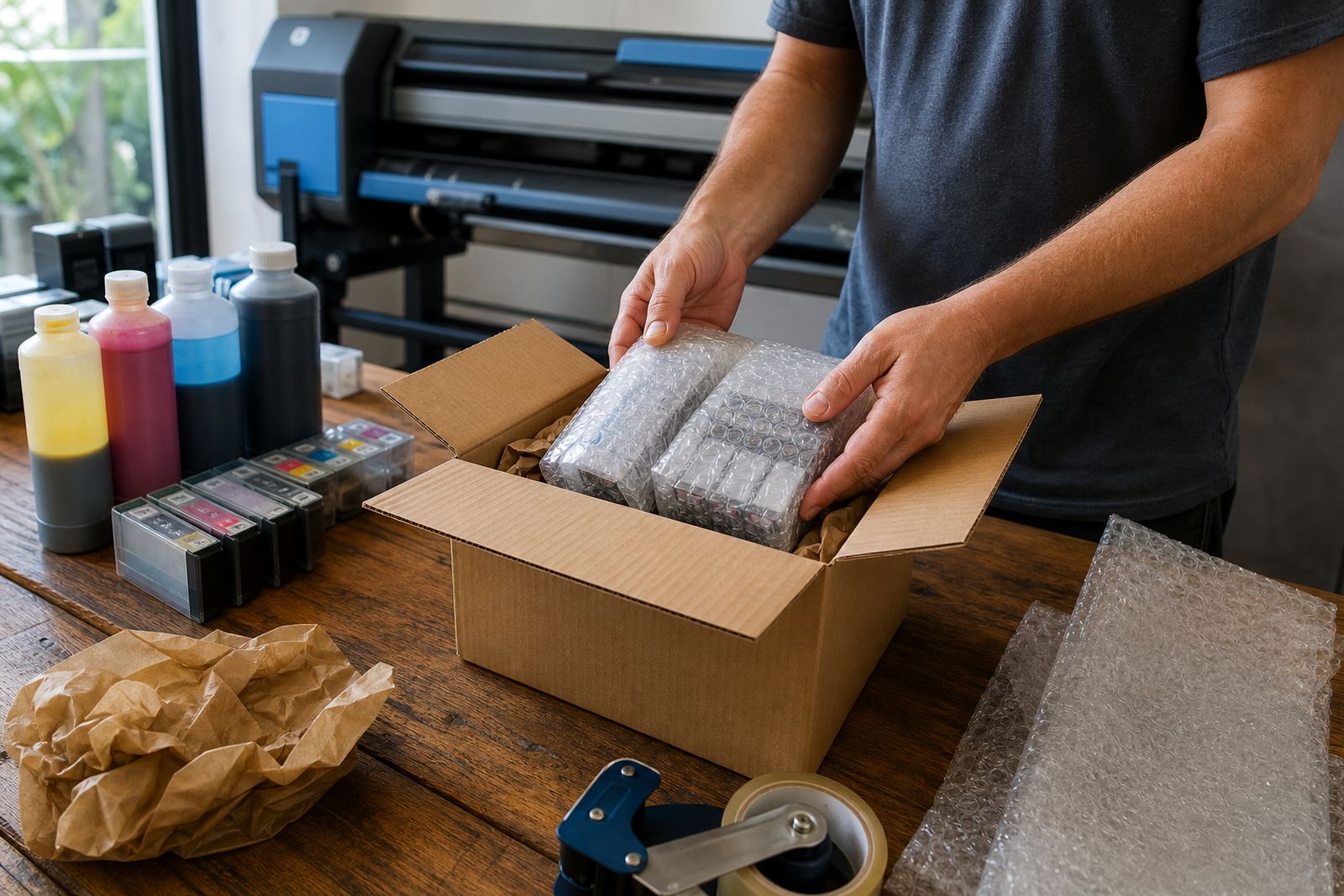
Empty cartridges do not need to become dead stock in a cupboard. A return programme helps collect used units for sorting, cleaning or recycling where possible. Some empties are reusable after proper refurbishment, while others are stripped for parts or sent into recycling streams. That keeps plastic, foam and old ink residue out of general waste where the printer room usually has enough clutter already.
For businesses in Durban, Johannesburg or Cape Town with regular printing, a return box beside the printer makes sense. Staff drop empties in one place, and the next collection or courier run can move them out with other supplies. It is a small habit, but over months it reduces confusion and keeps the print area neater.
A local example from Westville to the wider route
A Durban office that prints invoices, briefing packs and client copies does not need a fresh cartridge every time the old one runs dry. If the shell is sound, the cartridge can be cleaned, checked and prepared again. If the team also uses a wide-format machine for plans or presentation boards, the ink path needs its own care, and the refill plan has to suit that device rather than the office printer.
That is where practical advice matters. One machine may do well on pigment black with dye-based colour support, while another needs a fuller refill routine and closer nozzle monitoring. The same logic applies from Ballito to Pretoria: know the printer, match the ink and keep the empties moving back into the system instead of piling up. A short note from the operator often tells the story better than a long guess, and that saves trouble on the next print run.