Brochure runs that kept slipping off the table
The brief came from an estate office in Ballito that handled property brochures, daily admin pages and a small flow of colour documents for viewings and tenant packs. Printing had been managed in bursts, with cartridges replaced only when output started to fade or lines broke in the text. That led to interruptions, rushed purchases and uneven colour between batches, which showed up most clearly on brochure covers and agent handouts.
The office wanted a lower-cost routine without changing the way the team worked at the point of print. They needed a practical stock plan, support for mixed devices, and a clearer method for dealing with empties. The print room also needed guidance on when a refurbished cartridge made sense and when a refill system was the better route for higher-volume pages.
- Client type: estate office in Ballito
- Main output: brochure pages, admin sheets and colour handouts
- Problem area: irregular replacement, colour drift and waste from discarded cartridges
What the print room had to cope with
The office worked in a coastal setting where humidity could affect stored ink, sealed packaging and the condition of partly used cartridges. They also had more than one print demand in the same week, which meant a neat office memo could sit beside a heavier brochure run with richer colour coverage. That mix calls for a calm plan, not guesswork.
We checked the print habits, the paper types used for brochure output, and the way the office stored backup supplies. The aim was to reduce waste from premature cartridge changes, keep black text sharp and hold colour balance steady enough for brochure pages to look consistent from one batch to the next. On a job like this, printheads need a proper routine too because dried ink and blocked nozzles can waste more than the cartridge itself.
- Colour pages needed better repeatability across batches
- Spare stock had to be held in a sensible quantity
- Empty cartridges needed a return path instead of loose storage
The setup we put in place over three weeks
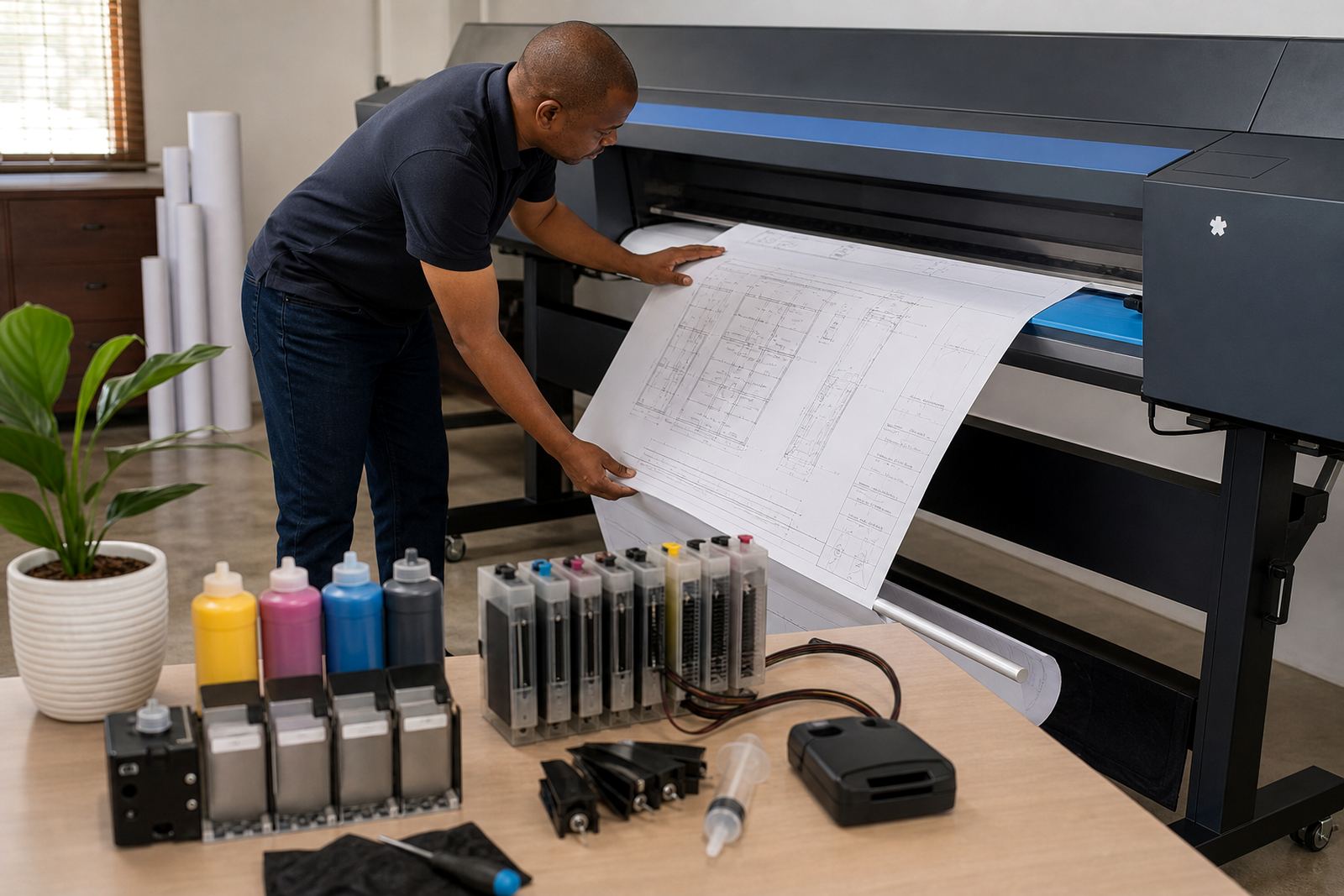
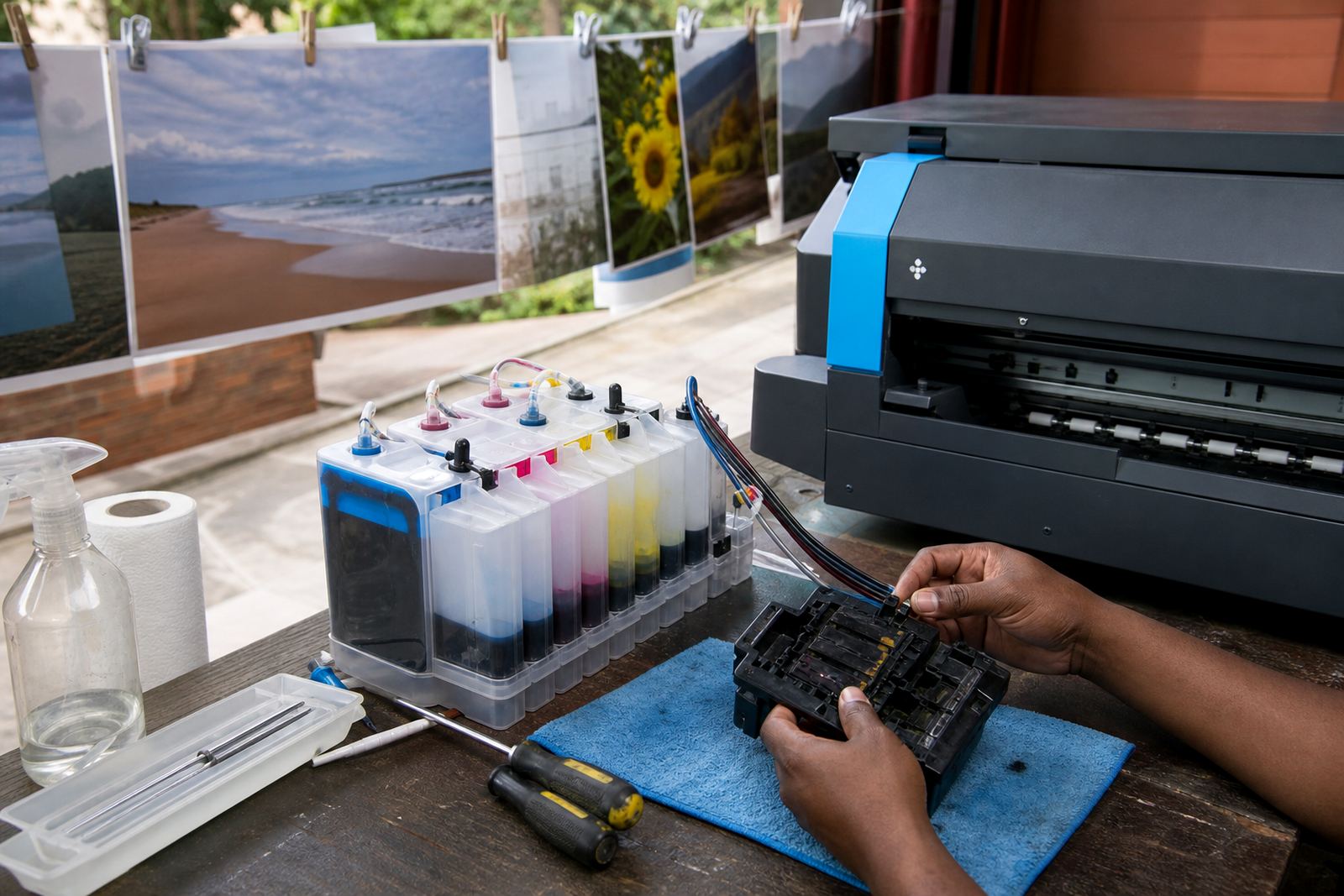
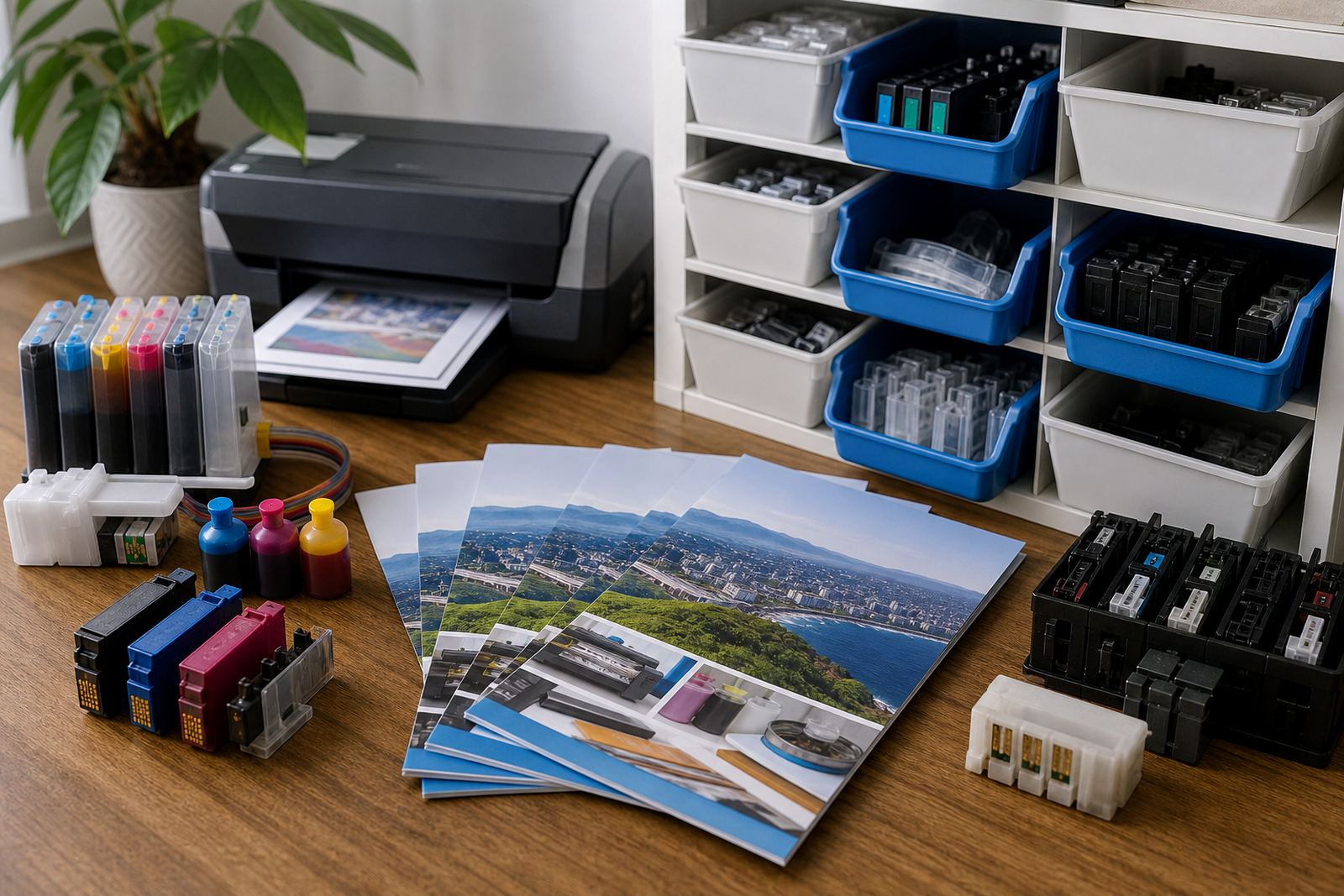
We supplied refurbished cartridges for the office printers and a bulk ink refill path for the machines that printed the highest volumes. For the brochure work, that meant black text cartridges stayed in regular rotation while colour units were managed more deliberately. Where a continuous ink supply system was practical, we helped set it up so the office could feed a machine from refill bottles rather than replace a full set every time it ran low.
We also guided the team on ink type. Dye ink gave brighter brochure colour on suitable paper, while pigment ink held up better for sharper office text and documents that needed more water resistance. The right choice depended on the job, not on habit. For chip handling, we explained resetters in general terms and how they are used to restore the cartridge reading after a refill where the cartridge design allows it. That kept the office from throwing away parts that still had use left in them.
The work unfolded over three weeks in stages. First came the usage review and stock plan. Then the refill method was matched to the printers in use. After that, we checked nozzle patterns, corrected one colour balance issue and set a simple empty return routine for used units.
- Refurbished ink cartridges for routine office output
- Bulk refill ink for higher-volume brochure and colour jobs
- CISS guidance for suitable machines
- Chip reset help where cartridge design allowed it
- Empty return planning for used cartridges
Print quality work that mattered on the floor
Brochure pages are unforgiving. If one colour leans too warm or a block of text loses clarity, the whole batch looks tired. We adjusted the office approach so the printers were not pushed on empty cartridges for too long, and we showed the team how to run nozzle checks before a brochure batch rather than after a problem appeared on paper. That small change saved a lot of reprinting.
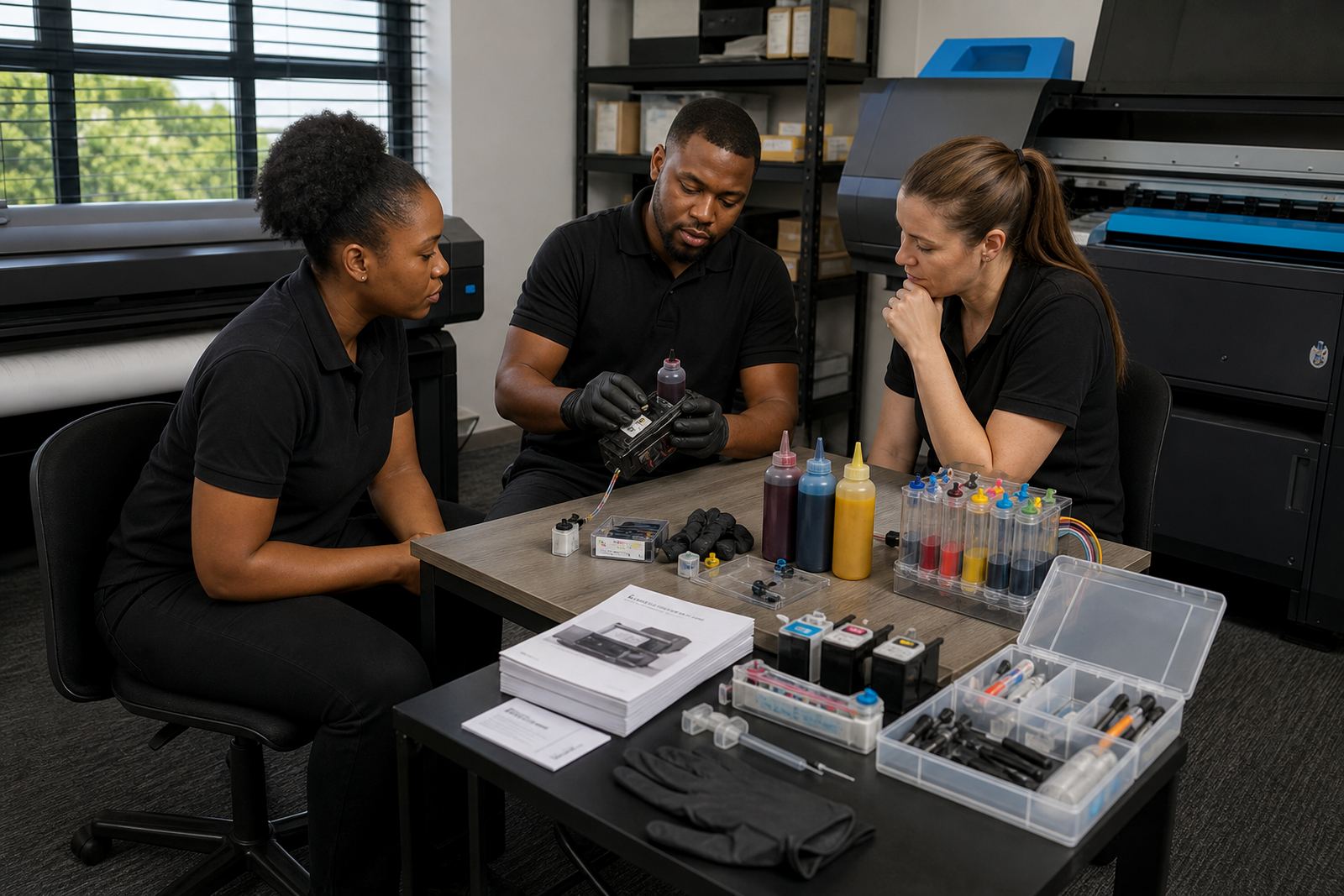
Leak checking formed part of the routine too. Refills need clean handling, sound seals and sensible storage, especially near the coast where heat and moisture can shorten the useful life of careless stock. The office also received operator training on simple care steps such as covering cartridges correctly, keeping printheads active with regular use, and not mixing ink types without checking compatibility first.
For the staff, the biggest improvement was not only lower waste but better control. They knew what to keep on hand, when to use a refurbished cartridge and when a refill bottle was the better call. The printer room stopped feeling reactive. It became part of the office rhythm instead.
- Nozzle check support before brochure batches
- Printhead care to reduce blocked nozzles and waste
- Leak checking for refilled units and stored stock
- Operator training for day-to-day handling
The stock pattern after the switch
Once the plan was in place, the office moved from ad hoc buying to planned holding. That meant fewer emergency buys, fewer partly used cartridges lying around and a neater flow from empty unit to refill or return. The brochure work also became easier to schedule because the team could see what was on hand before a print run started.
Colour output became more even across batches, and black text held up properly on admin pages and property packs. The office also had a cleaner system for empties, which reduced clutter in the print area and made order tracking easier for accounts. A small detail like this matters in a busy estate office because the printer is part of the daily pace, not a separate job.
- Planned stock holding replaced last minute cartridge buying
- Brochure colour stayed more consistent across runs
- Empty cartridges were tracked instead of left in trays and boxes
What we would repeat on a similar office project
We would start the same way again by looking at print patterns rather than guessing from the machine model alone. Offices often mix letterheads, brochure inserts and colour copies in a single week, and that mix decides whether refurbished cartridges, refill kits or a CISS path gives the best result. The Ballito office showed how useful it is to match the print method to the actual workload.
We would also keep the empty return routine in place from the start. It is easier to manage cartridges when they move through one clean path instead of being stored in drawers, bins and boxes. For a coastal office, we would keep the advice on storage, seal care and refill handling practical and brief so the team can use it without slowing down their day.
In the end, the job was less about a single print run and more about how the office keeps paper moving through the months. That is where the savings and the cleaner workflow showed up.
Key facts
| Project | Ballito estate office brochure and admin print support |
|---|---|
| Location | Ballito, KwaZulu-Natal |
| Timeline | 3 weeks |
| Cartridge format | Refurbished ink cartridges and refill-ready units |
| Ink options | Dye ink and pigment ink guidance |
| Support included | CISS setup help, nozzle checks, leak checking and empty return planning |