
The brief from a busy Pietermaritzburg print room
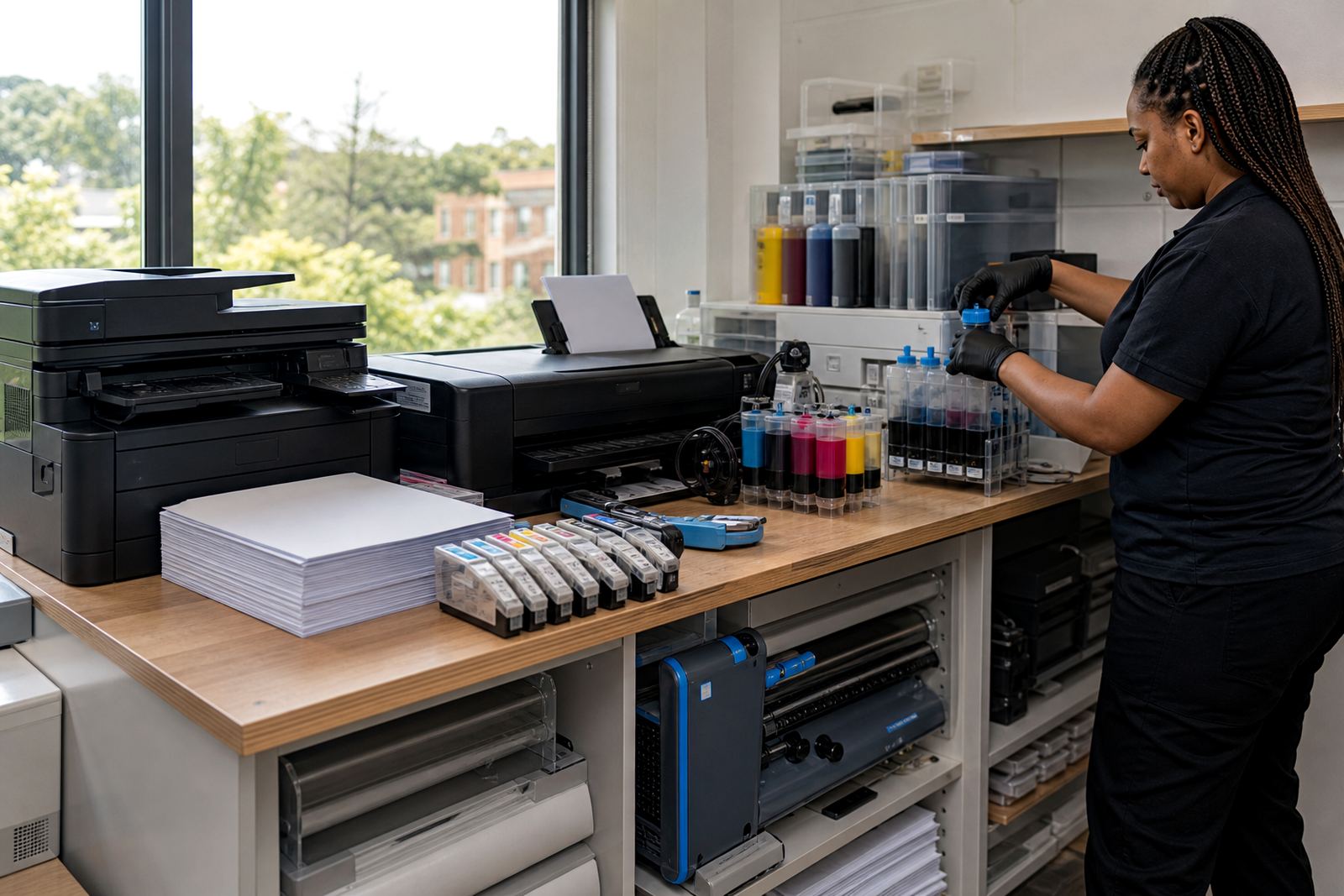
The client was a training centre in PMB that prints class packs, attendance sheets and colour handouts through the week. Their team wanted a cleaner way to manage ink use, with less waste from disposable cartridges and fewer interruptions when a printer sat idle for a few days.
The brief was not only about supply. They needed a practical handover for staff who would refill, check nozzle health and keep colour output steady across different document types. The room had more than one printer in use, so the method had to be easy to repeat and easy to supervise.
- Refill kits for everyday office printing
- Guidance on dye and pigment ink use
- Basic printhead care and nozzle checks
- Empty cartridge return handling
What made the job less ordinary
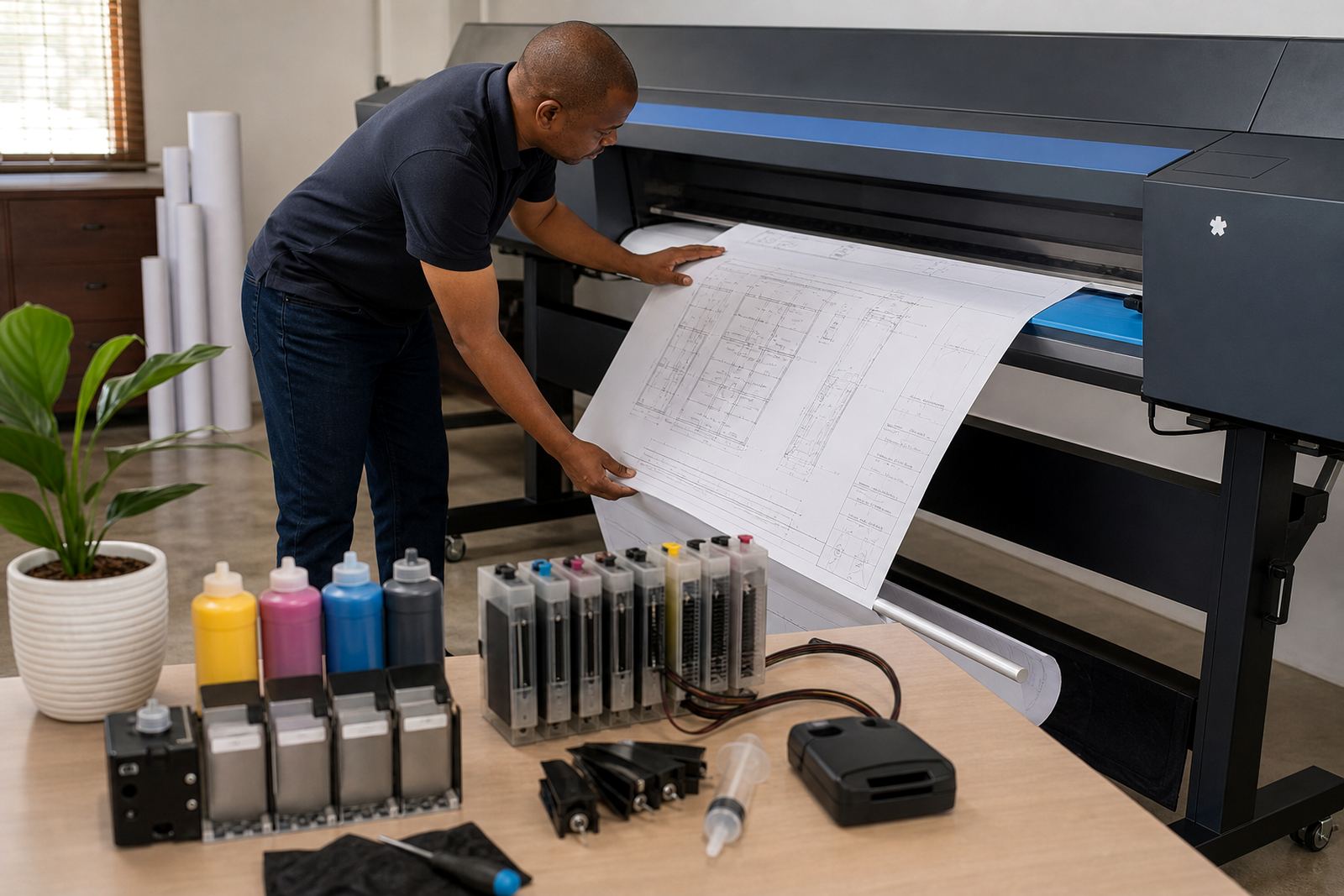
The site printed both text-heavy notes and colour teaching material, so the ink choice had to suit mixed output. That meant separating routine office pages from work that needed stronger colour stability, and explaining where dye ink fits best and where pigment ink holds up better on coated or brighter stock.
We also had to work around staff turnover in the printing area. If only one person knows the process, the whole routine gets fragile. The training had to leave behind a clear sequence for filling, priming, checking and storing cartridges. One step missed, and the next print run can show streaks or faded patches.
- Mixed text and colour output on the same devices
- Multiple operators, not one dedicated technician
- Need for a repeatable refill and check process
The kit and method we put in place
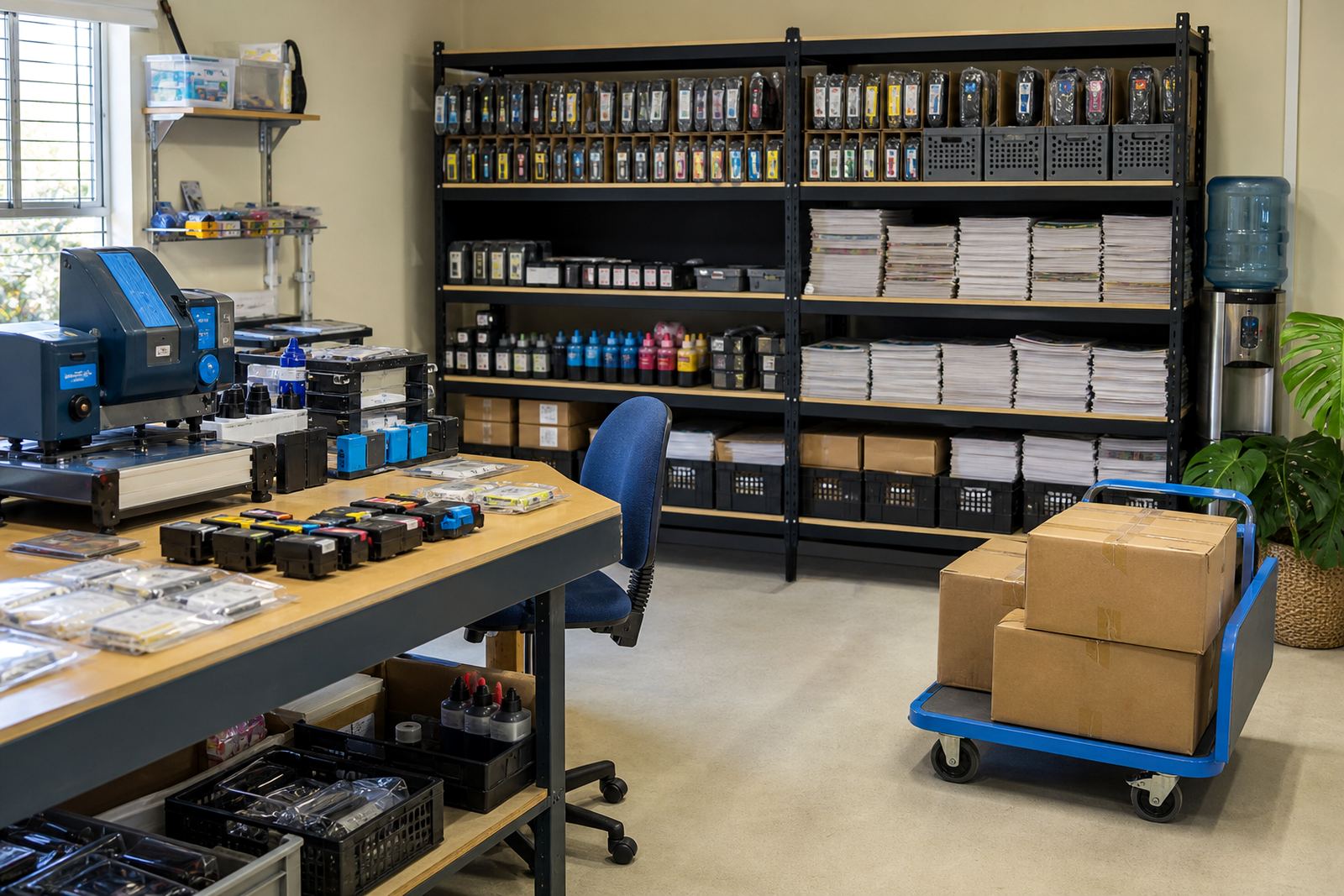
We supplied refurbished cartridges suited to the printers in use, together with bulk ink refill kits and the small consumables needed for controlled top-ups. Where a cartridge design needed it, we included general chip reset help so staff could clear the usual low-ink prompts after refilling.
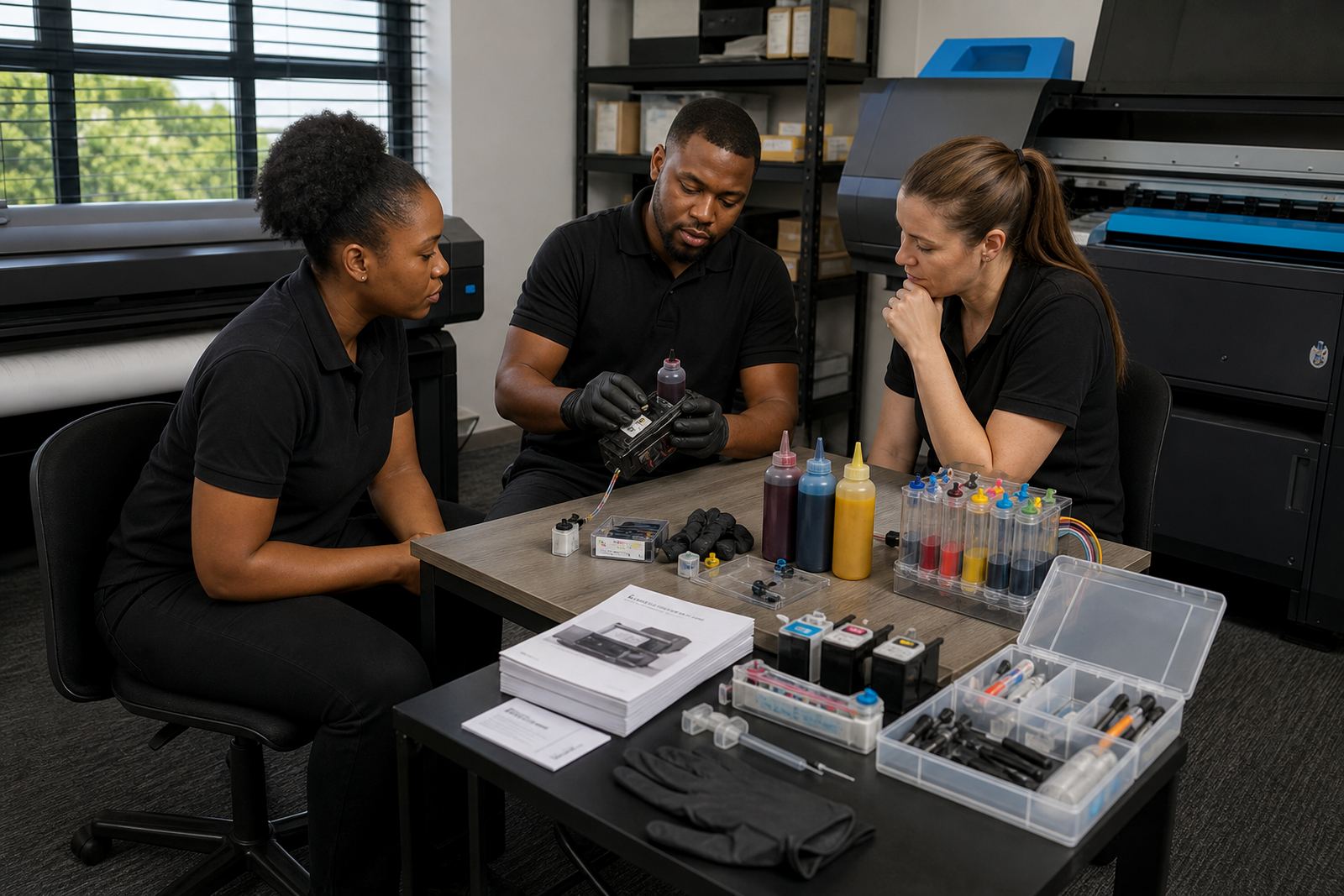
The handout set covered the full route from empty to ready. That included safe opening, filling by measured amount, wiping the contacts, letting air settle and running a nozzle check before the next job. We also covered leak checking, because a small spill in a tray can spread onto labels or paper stacks before anyone notices.
- Refurbished cartridges matched to the print room devices
- Bulk ink refill kits for office and studio use
- General chip reset guidance where relevant
- Leak checking and nozzle check support
Three weeks from first review to staff handover
The work ran over three weeks. The first stage was review and stock planning, with the team noting which cartridges were in regular rotation and which ones only served peak print periods. In the second stage we supplied the refill kits and the first batch of refurbished cartridges, then tested the routine on actual office jobs.
The last stage was staff training. We showed the operators how to keep the fill levels even, how to handle printhead care, and how to spot early signs of colour drift before a run went wrong. The handover was practical, not classroom-heavy, because the room still had work to do while we were there.
- Week 1: review of printer use and stock flow
- Week 2: supply of cartridges and refill kits
- Week 3: staff training and process handover
What changed after the switch
The first result was less waste. Empty cartridges were no longer treated as one-time items, and the team had a clear path for returning empties and preparing the next refill cycle. That mattered in a training setting where pages come and go in batches, sometimes with a quiet gap in between.
The second result was steadier output. Once staff learned the nozzle check steps and the colour balance habits, they could catch light banding or muddy tones before a handout stack was printed. The room also became easier to manage because the refill process sat in one repeatable routine rather than several half-remembered habits.
- Lower cartridge waste from repeated refills
- Cleaner colour control on handouts
- Better habits around nozzle checks and storage
What we would keep in the same setup
For a PMB training centre, the strongest part of the setup was the combination of supply and instruction. Refurbished cartridges on their own can help, but a room gets more value when the staff know how to use them properly and when to stop and check the printhead before damage sets in.
We would keep the same approach for similar education or office sites in Durban, Johannesburg or Cape Town where printing is routine but not high volume enough to justify constant cartridge replacement. The practical detail matters more than a glossy pitch. If the team knows how to refill, clean and monitor ink use, the machines stay in circulation for longer and the paper output stays fit for class work.
- Keep the refill routine simple enough for multiple staff members
- Pair supply with printhead and colour guidance
- Use empty return handling from the start
Key facts
| Project type | Training handout printing support with refill kit rollout |
|---|---|
| Client type | Training centre |
| Town | Pietermaritzburg |
| Timeline | 3 weeks |
| Supplied items | Refurbished cartridges, bulk ink refill kits, chip reset guidance, empty return handling |
| Core training points | Nozzle checks, printhead care, leak checking, ink type guidance, colour balance help |