
A small office that prints from the kitchen side of the house
The client was a home business in Centurion doing labels, quotes and admin packs from a spare room and a tight work area off the living space. Printing was mixed, with sharp black text on invoices, light colour work for labels, and the odd urgent reprint when a page pulled through with streaks or faded bands.
Buying new cartridges every time was pushing the monthly spend higher than it needed to be, and the waste basket was filling fast. The brief was practical, no drama, no extra gadgets that would sit on a shelf unused.
- Reduce cartridge spend without losing print quality
- Move to manual refill kits with clear colour separation
- Keep everyday printing clean enough for client-facing work
- Cut down on empty cartridge waste and awkward disposal
What made the switch worth doing in Centurion
The site had a mixed-use printer setup, so the first job was to match the ink type to the way the machine was actually used. That meant separating dye ink for brighter general colour work from pigment ink where sharper text, better water resistance and better line definition were needed.
We also looked at cartridge condition, chip handling and how the printer reacted after refills. A refill system only works well if the cartridge is still healthy, the nozzles are clean and the operator knows how to spot air in the lines or a colour that is starting to fade unevenly.
- Manual refill kits for the cartridge range in use
- Chip reset help where the cartridge system needed it
- Leak checks before a refilled cartridge went back into service
- Printhead care notes for the day-to-day operator
The setup we supplied and the way it was handled
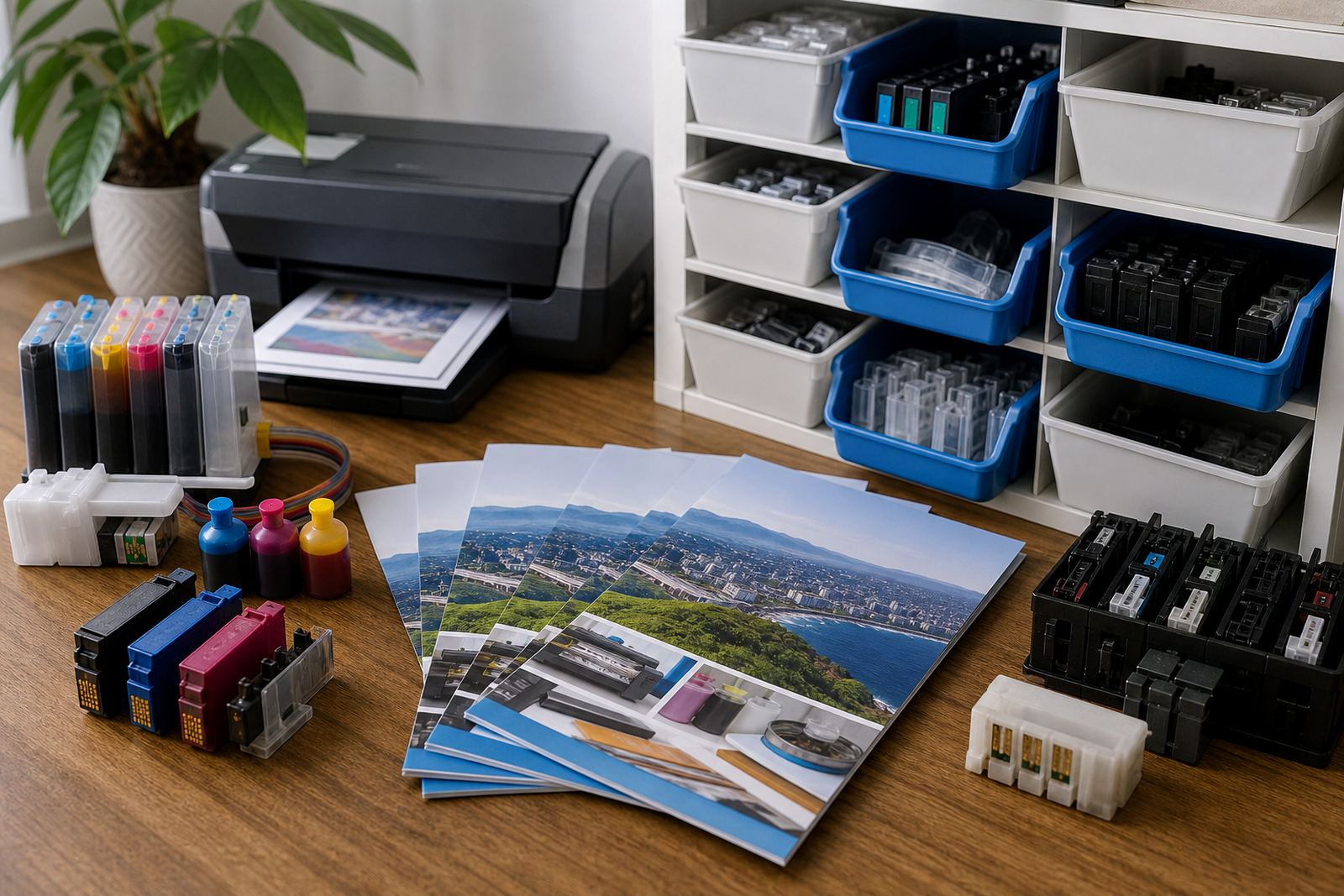
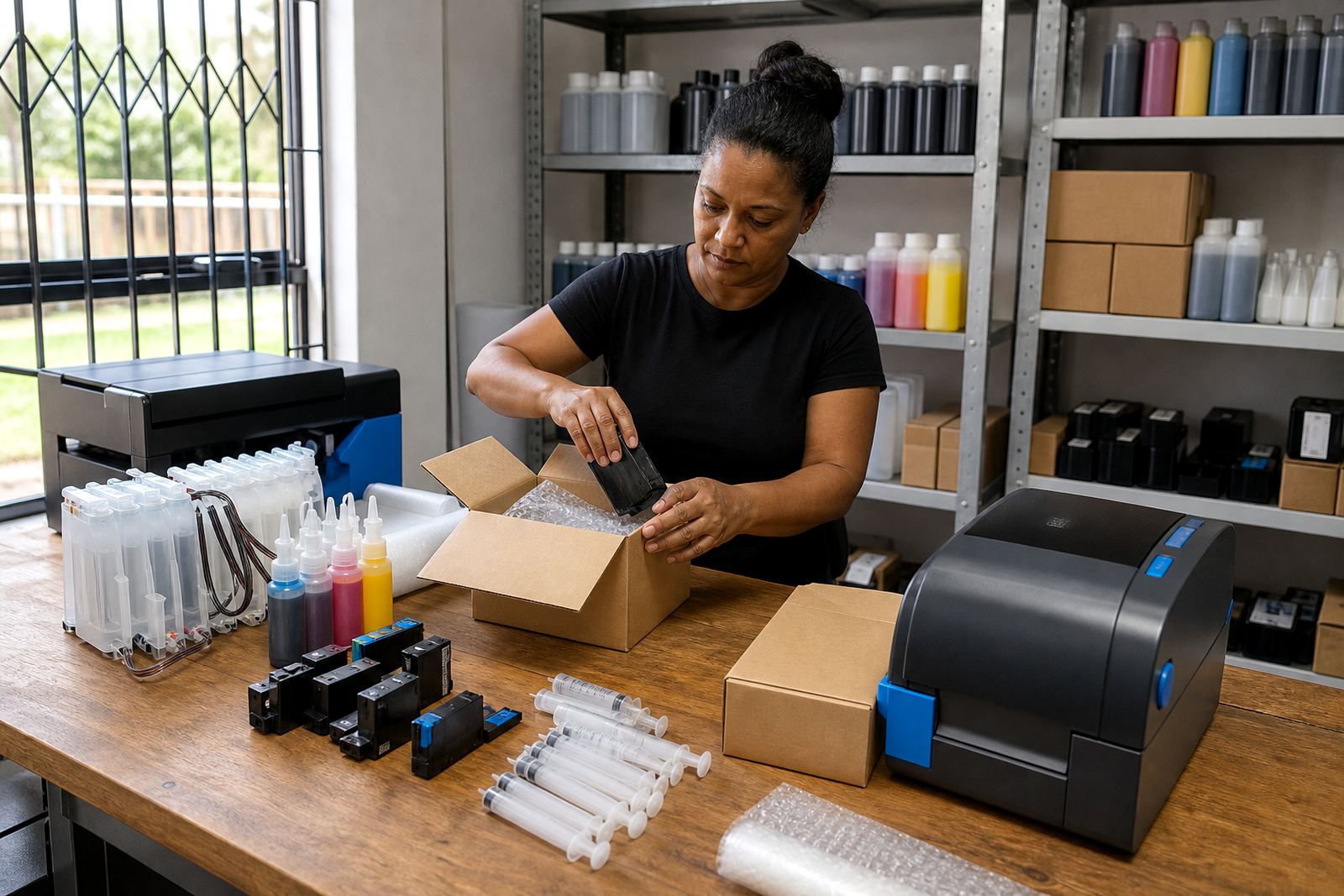
We supplied manual refill kits suited to the office’s print pattern, together with ink type guidance and basic operator training. The refill bench was kept simple: gloves, cloths, seal checks, a clear filling order and a place for empty cartridges to be stored until they were ready to be returned or recycled.
The home office also needed help with nozzle checks and colour balance, because a label run that looks fine on screen can drift once it reaches paper. We showed them how to spot blocked nozzles early, when to run a clean, and when a cartridge was past the point of a sensible refill.
- Refill kits labelled for black and colour channels
- Printhead care and nozzle check support
- Colour balance checks for small label batches
- Empty return guidance for used cartridges
Two weeks of practical change, not a full shutdown
The project ran in a short, staged way over two weeks so the client could keep printing while the changeover happened. The first week covered assessment, cartridge matching and the first refill cycle. The second week dealt with cleaning routines, minor chip reset issues and a few print tests on different paper stocks.
That pacing suited a home business. It meant the operator could keep the admin side moving, then adjust the printing side without having to stop work for a full day. The refill habit settled in once the process was written down in plain language and the storage area was arranged properly.
- Week 1: assessment, refill kit selection and first refills
- Week 2: print testing, nozzle checks and handling tweaks
- Remote troubleshooting for small issues after setup
- Courier delivery for replacement stock and refill items
What changed after the cartridges were no longer disposable
The most visible change was waste reduction. Empty cartridges were no longer being treated as one-use items, and the client had a clear routine for keeping shells, caps and refill parts in order. The second change was cost control, because manual refilling made the monthly printing spend easier to manage.
There was also a quieter improvement in output consistency. Once the team had a better feel for ink choice, nozzle checks and refill timing, there were fewer interrupted print jobs and less guesswork when a black page or a colour label came out looking thin.
- Cleaner day-to-day handling of empty cartridges
- Less waste from single-use cartridge buying
- Better control over colour and text output
- More confidence with routine maintenance
What we would repeat on a similar home-office job
We would keep the same calm rollout, because a home business needs tools that fit the room, the workflow and the printer already on the table. The useful part was not only the refill kit itself, but the way the operator learned to manage leaks, verify colour and recognise when a cartridge should be retired.
We would also keep the storage and recycling side in the plan from the start. That makes the workspace tidier and keeps used cartridges from drifting into random drawers and boxes. For Centurion home offices, that sort of order matters more than fancy extras.
- Keep the refill process simple and written down
- Match ink type to the paper and the job
- Build in nozzle checks before long print runs
- Set aside a return box for empties from day one
Key facts
| Client type | Home-run label and admin operation |
|---|---|
| Town | Centurion |
| Project length | 2 weeks |
| Main change | Manual refill kits |
| Key focus | Lower running cost and less waste |
| Service scope | Refill advice, printhead care, chip reset help, colour balance guidance |