
The brief from a busy Hillcrest admin room
The school office handled reports, letters, consent forms and colour notices that had to print clearly on ordinary office paper. The team wanted lower running cost, fewer last minute cartridge runs, and a cleaner way to keep empties moving instead of stacking them up in a cupboard.
The brief also included simple handling for staff who were not print technicians. That meant clear guidance on when to use a refurbished cartridge, when to clean a printhead, and how to spot the early signs of a blocked nozzle or a leaking cartridge before the machine starts wasting ink.
- Client type: school administration office
- Town: Hillcrest, Durban
- Supply route: Westville dispatch with courier delivery
- Print environment: daily mono and colour office printing
The constraints in the office itself
The school needed a practical setup that would not upset the people who already managed registers, stationery and parent communication. Their printers had to keep working through the week with no complicated handover, and the staff needed ink that matched the job rather than a single one-size-fits-all fill.
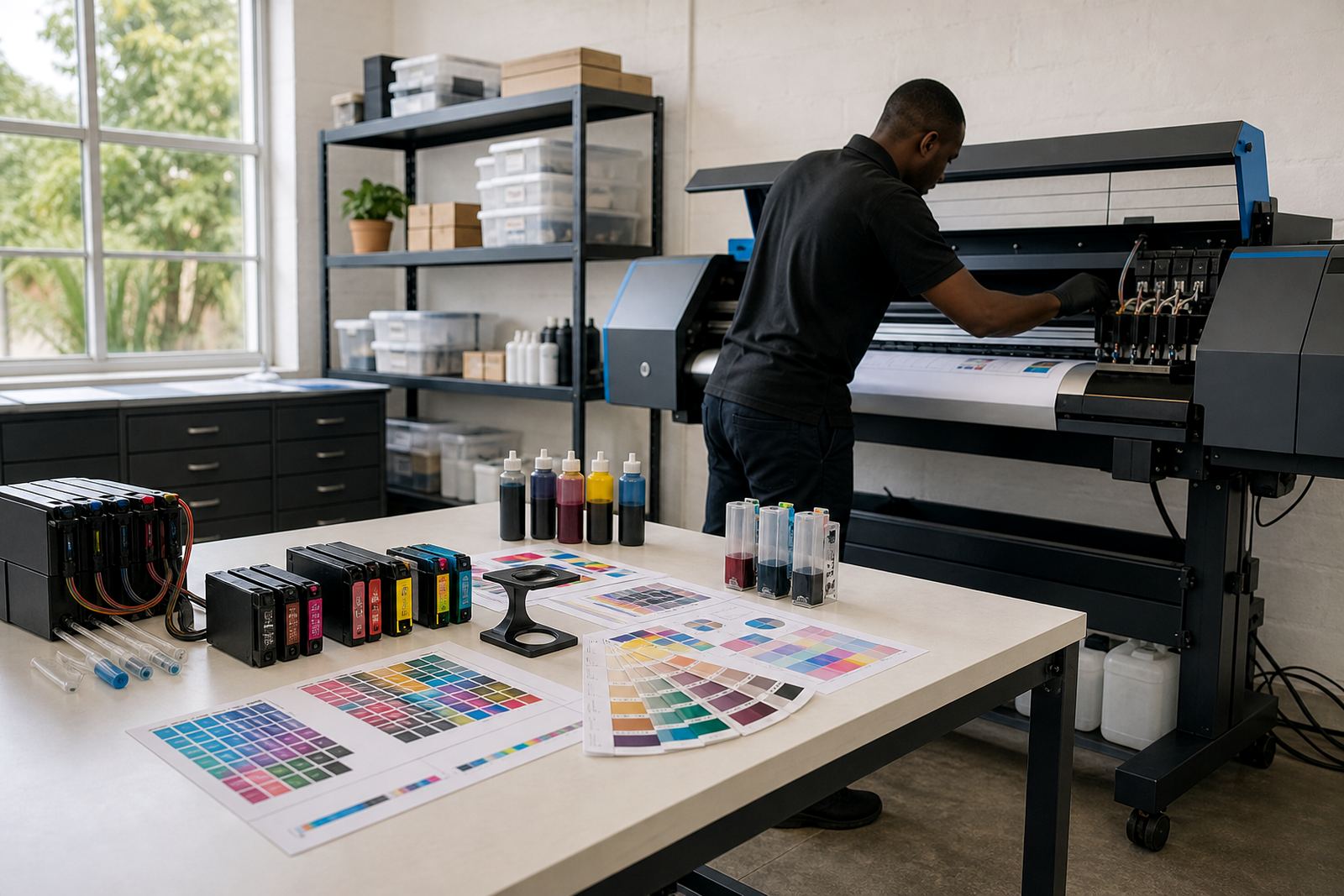
We also had to work around mixed print demand. Some pages carried dense black text, while others used logos, coloured headings and small graphics. That meant taking care with ink type guidance, because dye ink can suit brighter office colour work, while pigment ink is preferred where sharper text, stronger water resistance and better document durability matter.
- Mixed print volumes across office tasks
- Need for clear instruction, not technical clutter
- Empty cartridges had to be collected and tracked
- Staff needed support with nozzle checks and basic care
What we supplied and set in motion
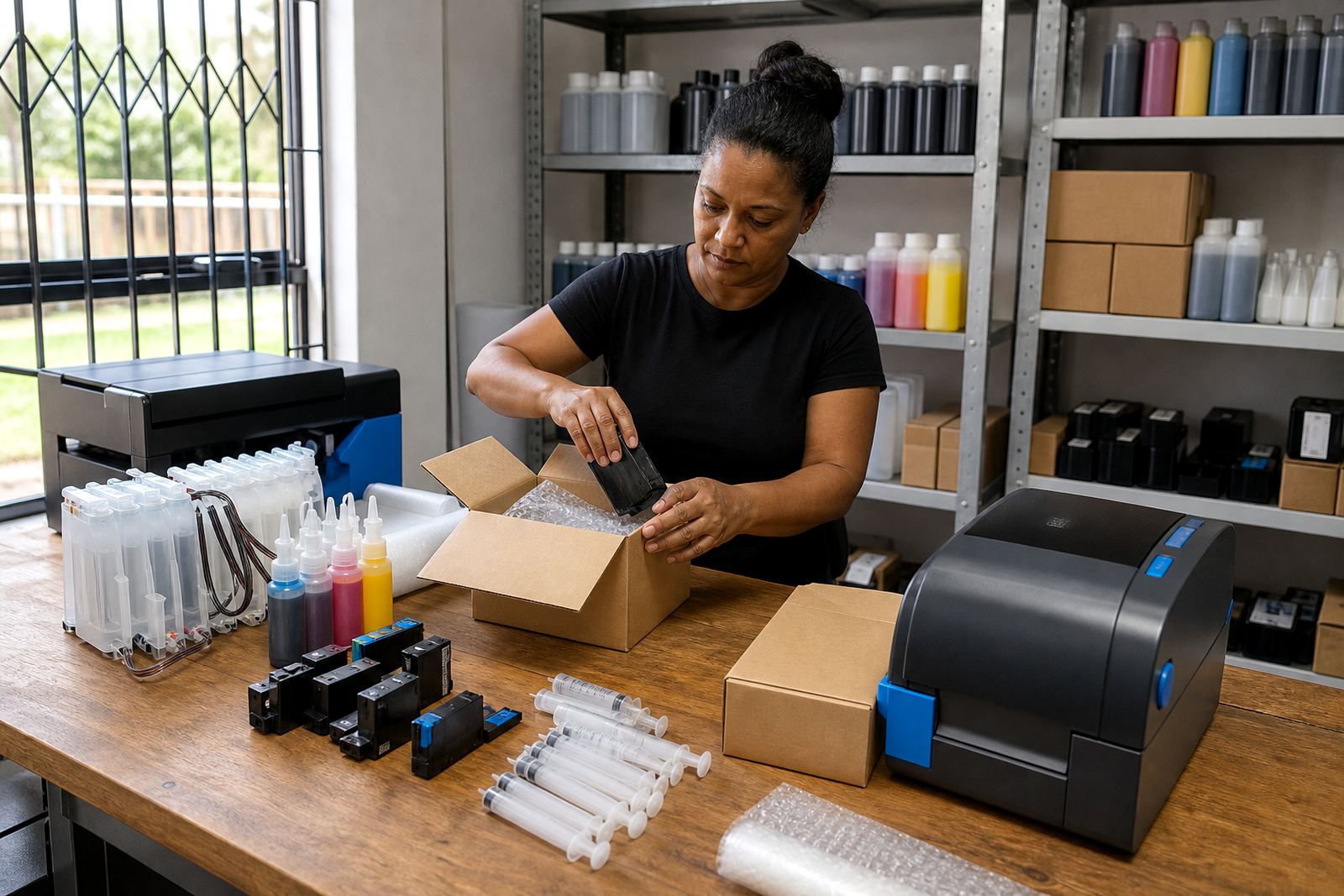
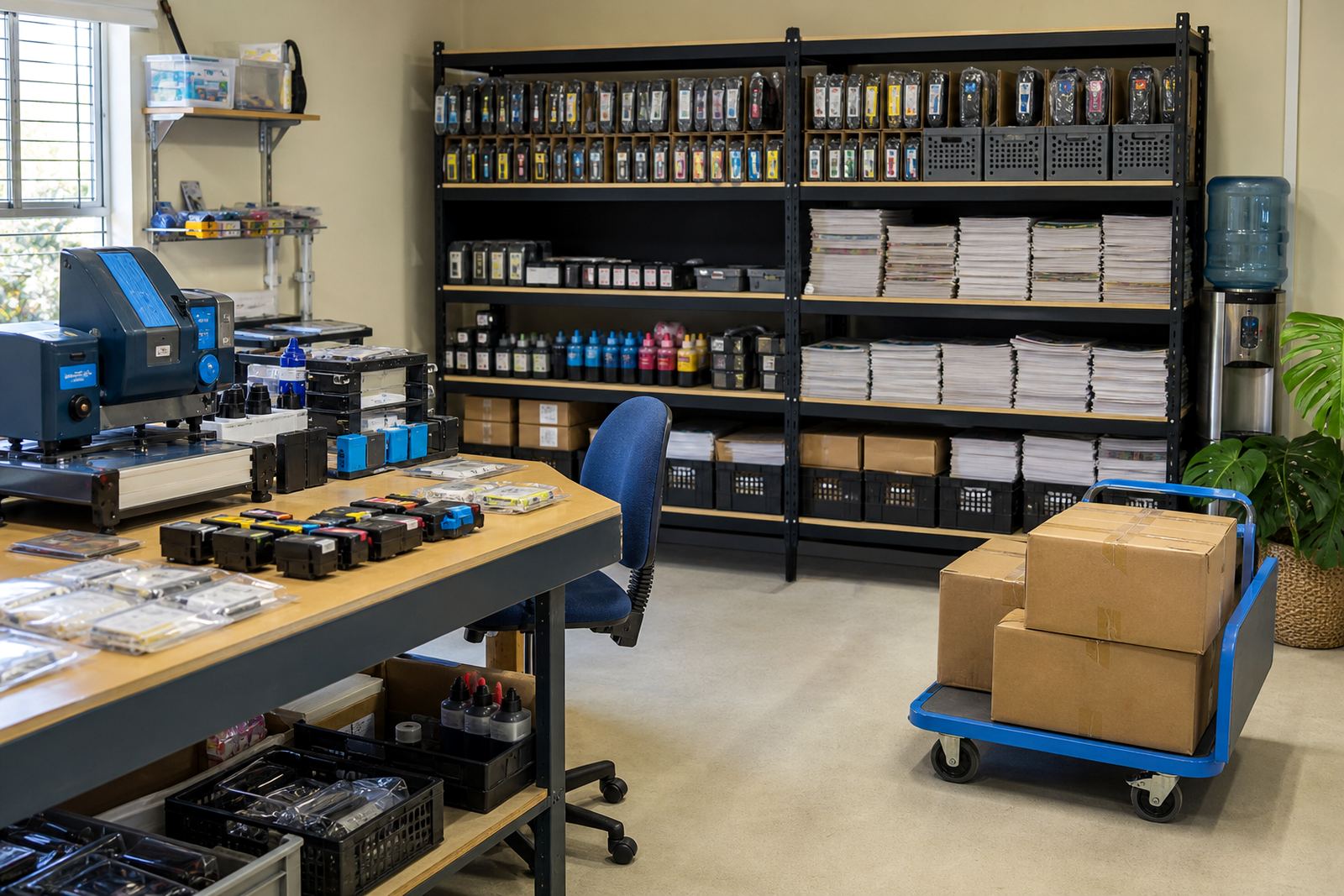
We supplied refurbished ink cartridges matched to the printer range already in use and put an empty return programme around them. Each return was checked for condition, cleaned where needed and sorted for reuse or recycling, which cuts waste and keeps usable shells in circulation for longer.
Where the office needed refill support, we added bulk ink guidance and refill kit handling for the machines that suited that route. We also covered chip reset help in general terms, because some cartridge systems need a reset step before the printer will recognise the refill state. That part was explained plainly so staff did not guess their way through it.
The setup included:
- Refurbished cartridges for daily office printing
- Bulk ink refill guidance for suitable printers
- Printhead care notes and nozzle check support
- Leak checking before cartridges went back into service
- Empty return sorting for reuse and recycling
The work over three weeks
Week one was the assessment. We looked at the printer mix, the types of pages being printed and the cartridge models that were draining the budget fastest. That gave us the baseline for what could move to refurbished supply and what could stay on a refill path.
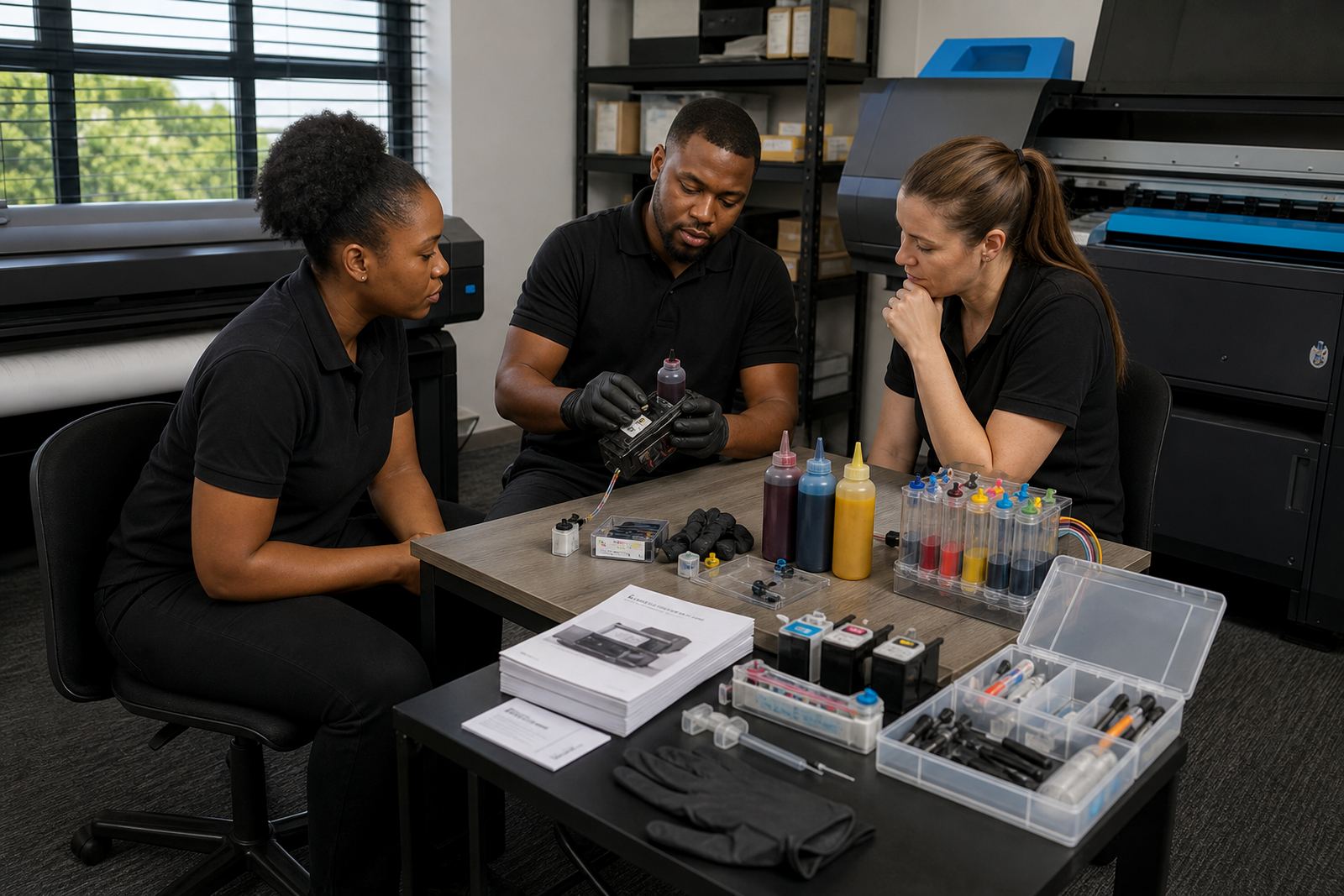
Week two covered the first round of supply, staff handover and a few remote checks while the team tested their normal print jobs. During that stage we explained how to handle nozzle checks, when a light clean was enough and when a cartridge or head needed closer attention. The office did not need a flood of instructions, just the right bits.
Week three was the tidy-up phase. Empties were collected, the return list was updated and we adjusted the stock mix so the office had a steadier margin between the first order and the next one. Nothing fancy, just better order and less waste.
- Week 1: printer review and cartridge mapping
- Week 2: supply fitment and staff guidance
- Week 3: empty returns and stock correction
The change the office noticed
The first difference was fewer interruptions from unexpected empty cartridges. The office also had a clearer line between everyday printing and specialist attention, which helped stop small print faults from turning into bigger ones. Staff were less likely to overfill, swap the wrong cartridge or ignore a nozzle issue until text started breaking up.
There was also a cleaner waste trail. Used cartridges went into a return cycle instead of ending up mixed with general office waste, and that suited a school setting where storage space is tight and nothing should sit around longer than needed. The admin team had a better grip on what was in stock and what had to be ordered next, and that is the bit people feel most during term time.
- Steadier printing through the school week
- Less waste from discarded empties
- Clearer handling for office staff
- Better stock awareness for admin ordering
What we would repeat for a similar school office
We would use the same early mapping of printer models and the same plain training for the people doing the actual printing. In a school office, the process works best when staff can tell the difference between a refill issue, a cartridge fault and a printhead problem without needing a long manual every time.
We would also keep the empty return routine in place from the start, not as an afterthought. That makes the waste side easier to manage, and it keeps the office from building up a hidden pile of shells that still have value. For a Hillcrest office, that combination worked because it was modest, direct and easy to carry through term after term.
Key facts
| Project | Hillcrest School Office |
|---|---|
| Town | Hillcrest, Durban |
| Project timeline | 3 weeks |
| Supply type | Refurbished ink cartridges and bulk ink support |
| Support included | Printhead care, nozzle checks and chip reset help |
| Logistics | Courier delivery from Westville with empty returns |