
The morning rush was the pressure point
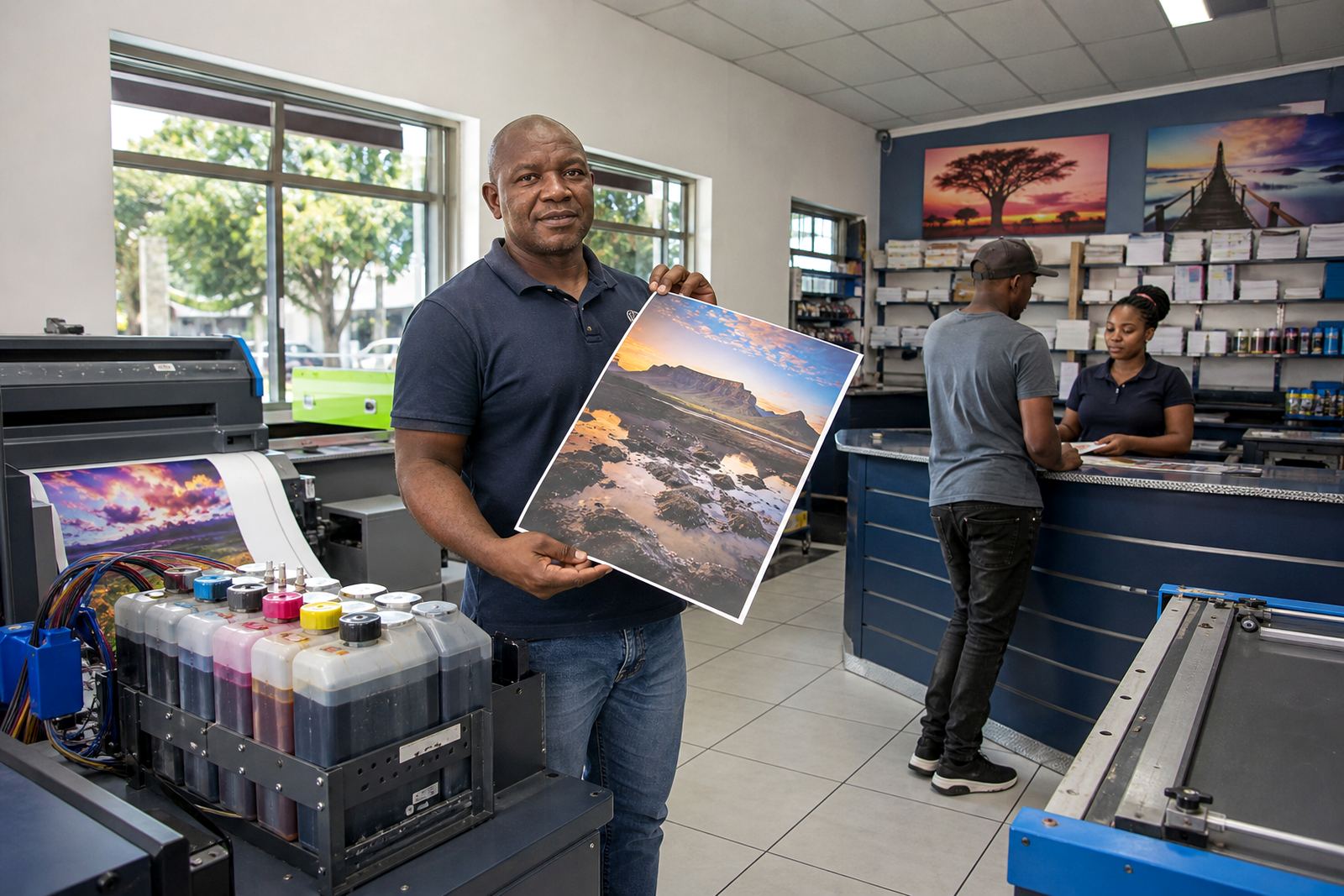
The shop was handling copying, scanning, school projects and short-run print work in one busy front area. The problem was not a lack of machines, it was the rhythm of the day. When ink supply dropped part way through a rush, staff had to stop the queue, fit another cartridge, test print, then clear a jam or faint line before the next customer could move forward.
The owner wanted a lower-cost supply pattern that would suit a copy shop in Pinetown, where the work comes in bursts and the printer gets used by more than one operator. They also wanted less empty cartridge waste, clearer stock control, and support that would help staff tell the difference between dye and pigment ink use cases without guessing.
- Daily copying and document print work
- Short colour jobs for notices and handouts
- Heavy front counter use by more than one operator
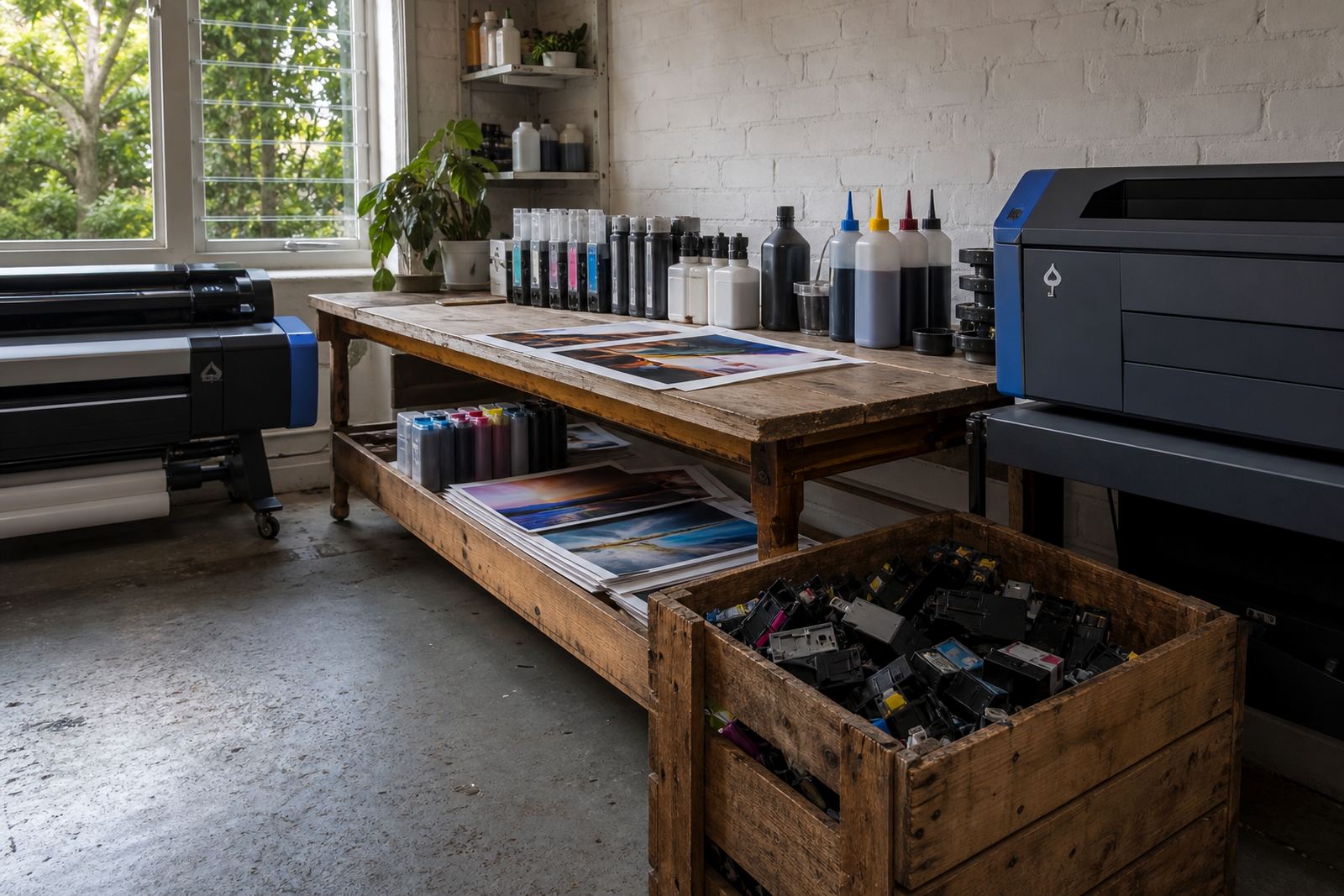
- Empty cartridges building up in the back room
What the brief needed to cover
The shop did not want a complicated setup that would slow the team down. They needed a practical bulk ink supply plan that could be explained to new staff, with refill guidance, nozzle checks, and enough printhead care to keep lines clean. The brief also asked for chip reset help in general terms, because the team wanted to understand warning lights and cartridge status without treating every alert as a fault.
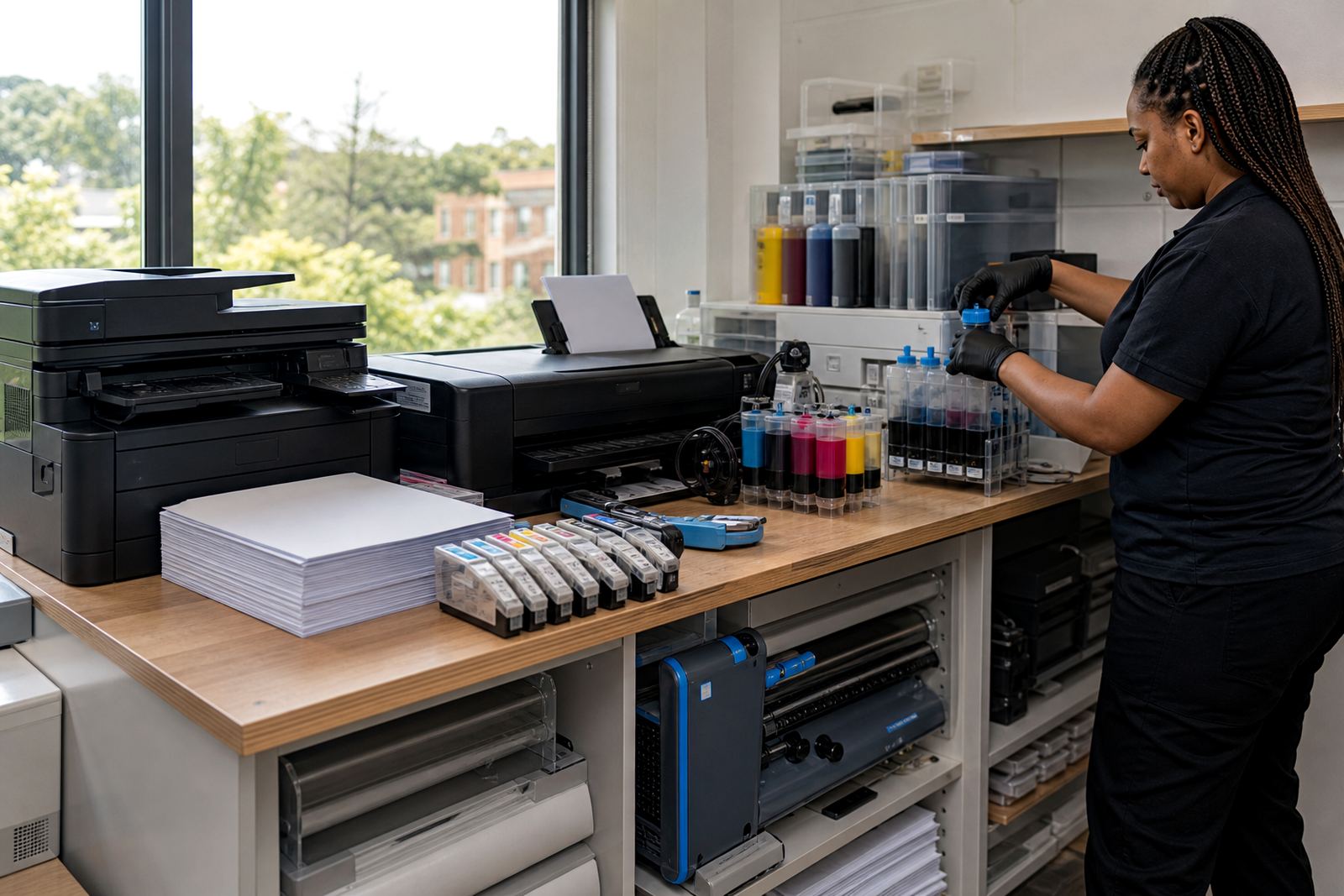
The space was tight, so storage had to stay neat and easy to count. Ink bottles, refill kits and cartridge stock had to live where staff could reach them without crossing the public counter, and the system needed to suit the type of prints the shop actually produced rather than a broad office setup.
- Bulk ink supply for regular print volume
- Refill advice for staff who rotate duties
- Chip reset guidance in general terms
- Clear separation of dye and pigment use
- Support for nozzle checks and leak checking
How the supply plan was put together
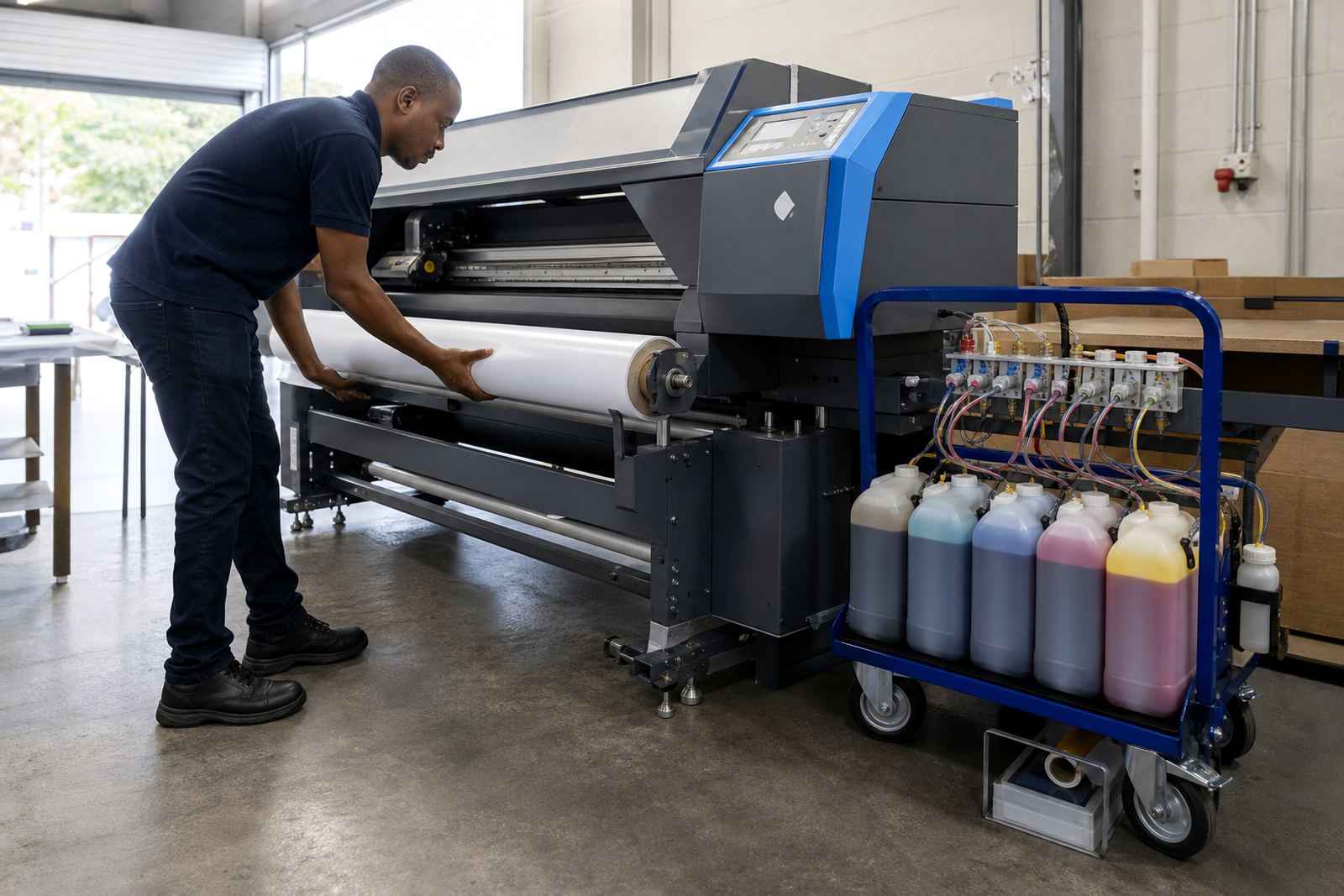
We set up a bulk ink supply approach built around the machines already in use, with refill kits matched to the cartridge format and print behaviour on site. Where colour work needed sharper resistance to smudging on plain paper, pigment guidance was set apart from dye ink use, while other jobs stayed on the lighter dye side where it suited the print routine better. That split helped the team match the ink to the job instead of using one mix for everything.
The handover also covered printhead care, because blocked nozzles were causing patchy output after idle periods. We showed the team how to run nozzle checks, watch for faint banding, and handle small cleaning cycles before a job went out the door. Empty cartridges were sorted for return and recycling rather than kept in loose boxes. The courier side was arranged for replenishment runs to Westville and for delivery support further afield when the shop needed stock moved to other branches or held for the next dispatch.
- Refill kits prepared for the machine type on site
- Dye and pigment ink guidance given by job type
- Nozzle check steps explained to floor staff
- Empty cartridge return set up for recycling
- Courier delivery arranged for stock movement
A three week rollout around the counter
Week one was spent checking the machines, the cartridge pattern and the job mix at the Pinetown counter. Week two was used for setup, refill handling and a short training run with the staff who did the busiest shifts. Week three focused on live use, watching for leaks, colour drift and any issues that showed up after several rounds of copying and small format printing.
The timing mattered because the shop could not close a front counter just to learn a new supply method. We kept the setup practical and the notes short, so staff could work through the process between customers. A few small adjustments were made to stock placement and refill storage once the team had used it in a real rush period. It was a tidy change, but not a dramatic one, which is usually what makes it last.
What changed on the floor
Once the bulk ink supply settled in, the shop saw fewer interruptions from empty cartridges and fewer last minute swaps during the morning rush. Staff had a clearer sense of when to run a nozzle check, when to top up, and when a cartridge should be recycled instead of kept around for another uncertain refill. That reduced the stop-start feel at the counter and made the team more comfortable handling colour jobs.
The owner also liked the lower waste angle, because the empty return programme kept used cartridges out of general rubbish and gave the back room a cleaner look. There was less panic buying of replacements too, since stock planning helped the team see what needed to be on hand before a busy stretch. The copy shop did not turn into a different business, it just ran with less friction and less dead stock sitting in a cupboard.
- Fewer stoppages during busy periods
- Cleaner stock control behind the counter
- Better colour handling on everyday jobs
- Less waste from discarded empty cartridges
- More confidence with refill and reset steps
What we would repeat on a similar shop fit-out
We would keep the same order of work: inspect the machines, match the ink type to the print mix, train the operators, then watch how the system behaves in real use. That sequence suits a copy shop better than a long theory session because the problems show up in queues, not in a quiet room. It also makes the refill routine easier to repeat when staff changes.
We would also keep the guidance plain on leak checking, nozzle checks and printhead care, since those are the parts that save time later. For shops in Durban, Pinetown and nearby towns, humidity and busy foot traffic can make stored stock and open bottles behave differently from a quiet office. A practical plan, decent labelling and a sensible return path for empties go a long way when the counter has to keep moving.
For the Pinetown team, the main lesson was that a bulk ink system works best when it is treated as part of the shop routine, not as a one-off install. Once the operators know how to read the print, handle the refills and sort the cartridges, the whole setup becomes easier to live with.
Key facts
| Client type | Copy shop |
|---|---|
| Town | Pinetown, Durban |
| Project focus | Bulk ink supply for daily counter printing |
| Timeline | 3 weeks |
| Core support | Refill advice, printhead care, nozzle checks and stock planning |
| Supply scope | Refill kits, cartridge guidance, empty return handling and courier delivery |