
A Westville proofing room with steady colour work
The studio was in Westville, Durban and its work was built around short proof runs, layout checks and client amendments. The team printed often, but not in huge batches, so they needed a refill pattern that kept colour output predictable and reduced the waste that builds up when cartridges are replaced too early.
The brief was practical. Keep the office printers and proofing machine supplied, reduce interruptions between jobs, and make it easier for the studio manager to track what was in use. Coastal humidity was part of the picture too, because opened ink and partly used cartridges need cleaner handling in Durban than they do in a drier inland office.
- Client type: design studio
- Town: Westville, Durban
- Use pattern: regular proof printing and short runs
- Main need: a managed refill routine with less waste
What the studio asked us to sort out
The setup had a mixed workload. Some jobs needed clean blacks and sharp line work, while others leaned on strong colour blocks and accurate neutrals for client review sheets. The team also wanted clearer guidance on when a cartridge should be refilled, when a nozzle check was worth running, and when printhead care mattered more than simply adding more ink.
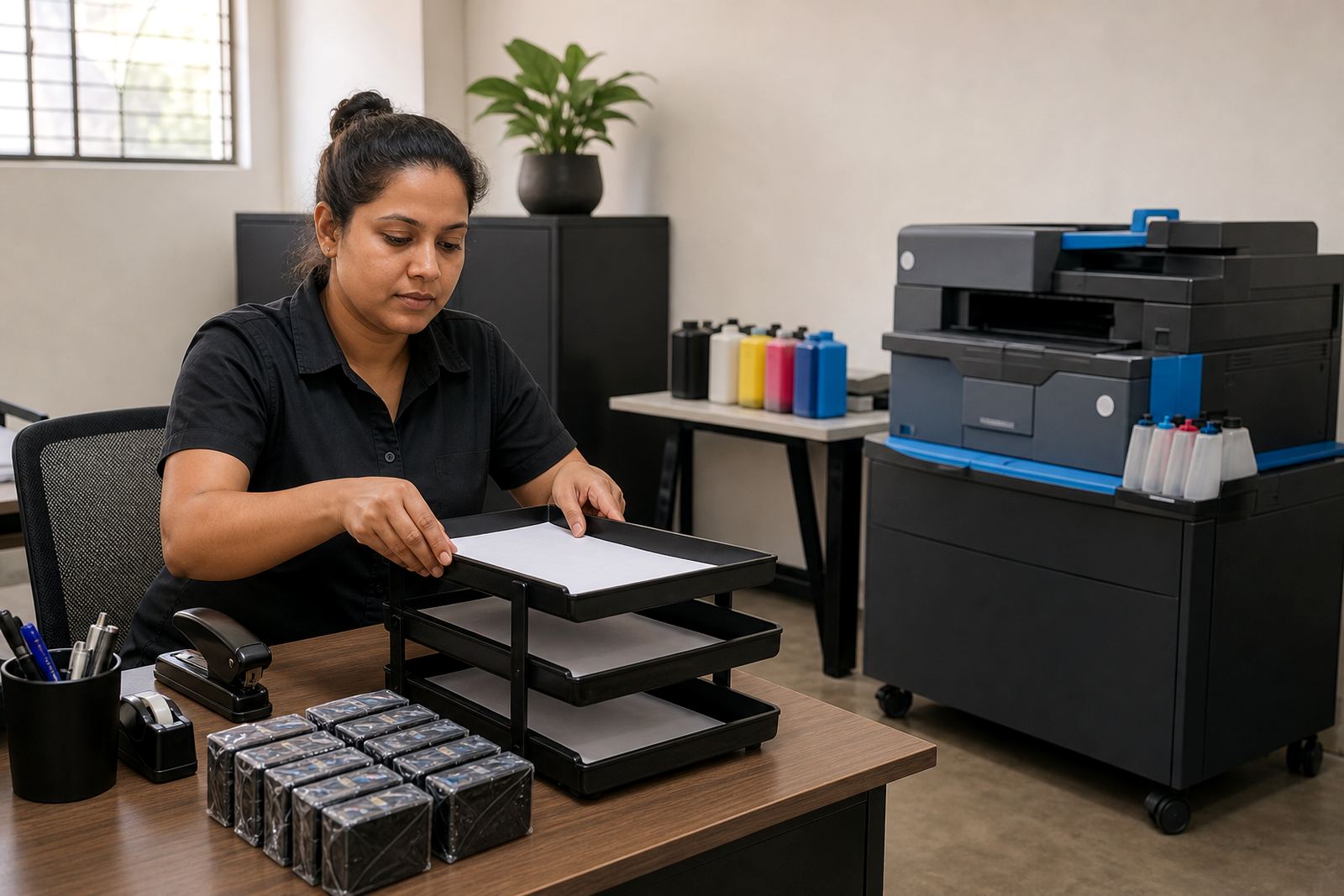
There was one more constraint. The studio did not want a shelf full of spare cartridges that sat for months and dried out. They wanted a live system with a sensible stock count, refill advice and a way to recycle empties without letting them pile up in drawers or cupboard corners.
- Cartridge refills for daily proof work
- Bulk ink guidance for regular colour output
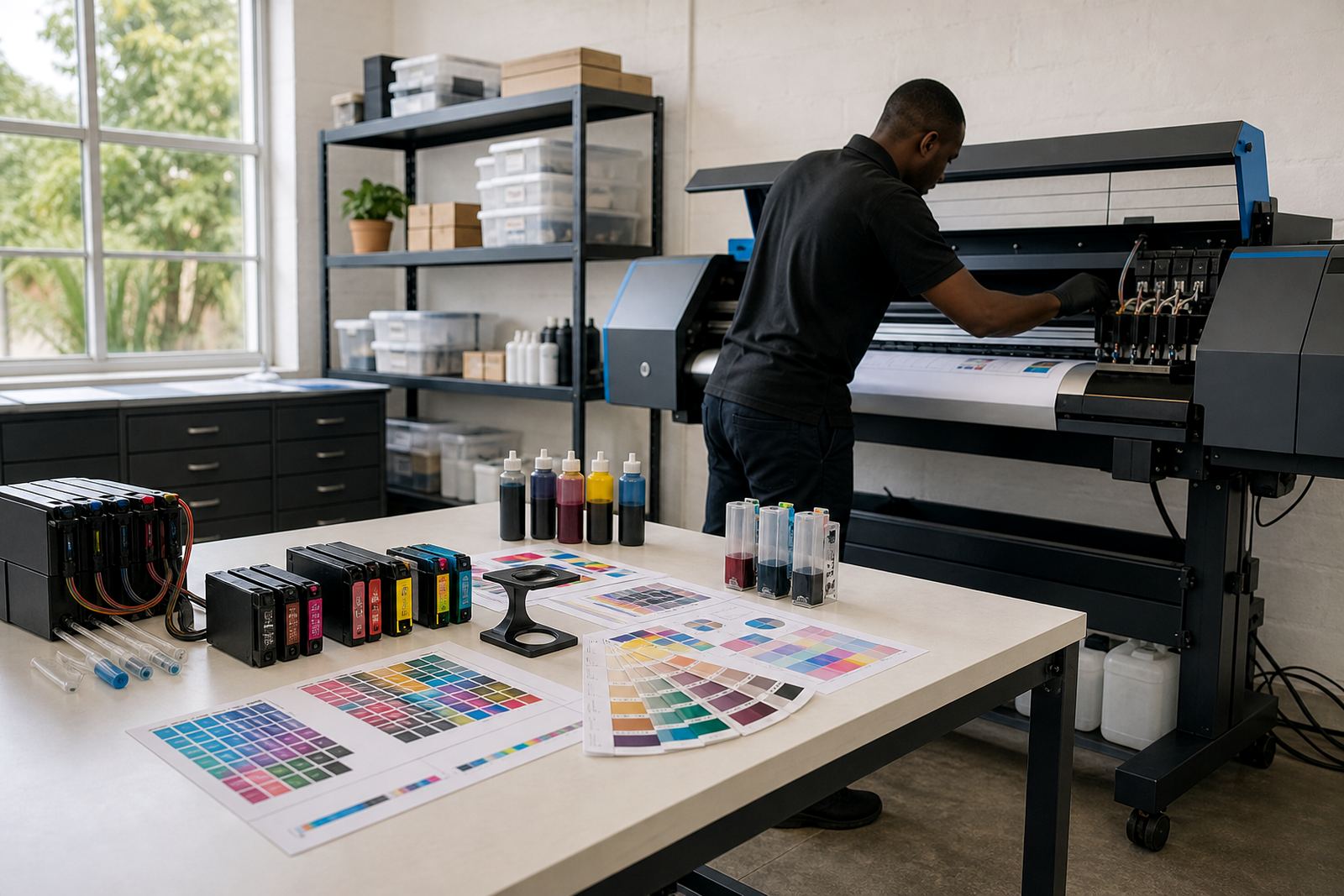
- Nozzle check support for test prints
- Empty return handling for used cartridges
The refill plan we put in place
We supplied refurbished cartridges matched to the studio's printer range and added bulk ink options for the unit that handled the heaviest colour load. The work was not only about supply. We also went through refill advice, ink type guidance and chip reset help in general terms so the team understood what each step did and when to stop forcing a cartridge that was past useful life.
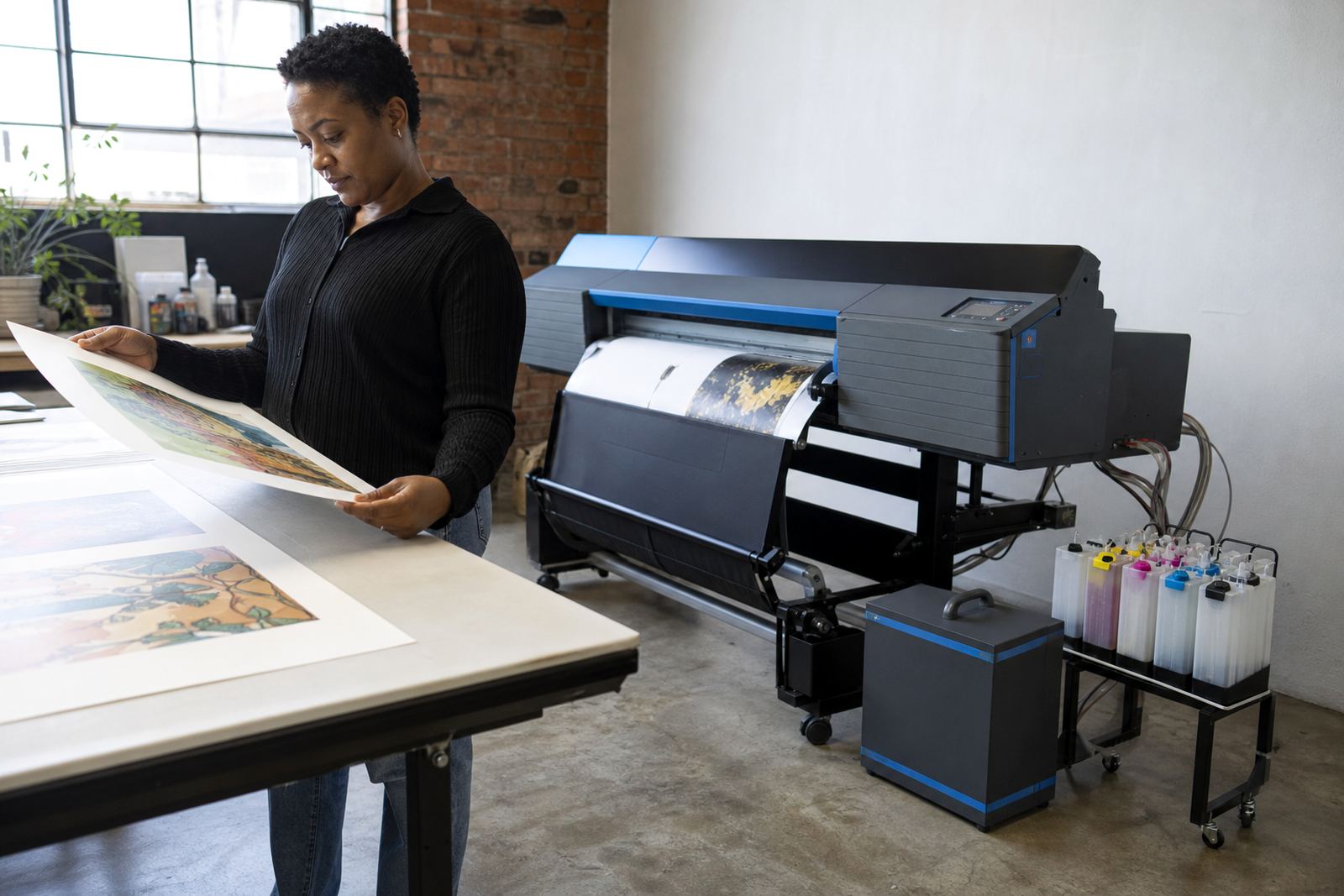
For the wide-format side, we kept the guidance separate. That work needs different ink behaviour, especially where a printhead is sensitive and a bad nozzle pattern can turn into wasted media. Dye ink and pigment ink were explained in practical terms, with the studio using the right type for the task rather than mixing habits across machines.
- Refurbished cartridges supplied for office and studio printing
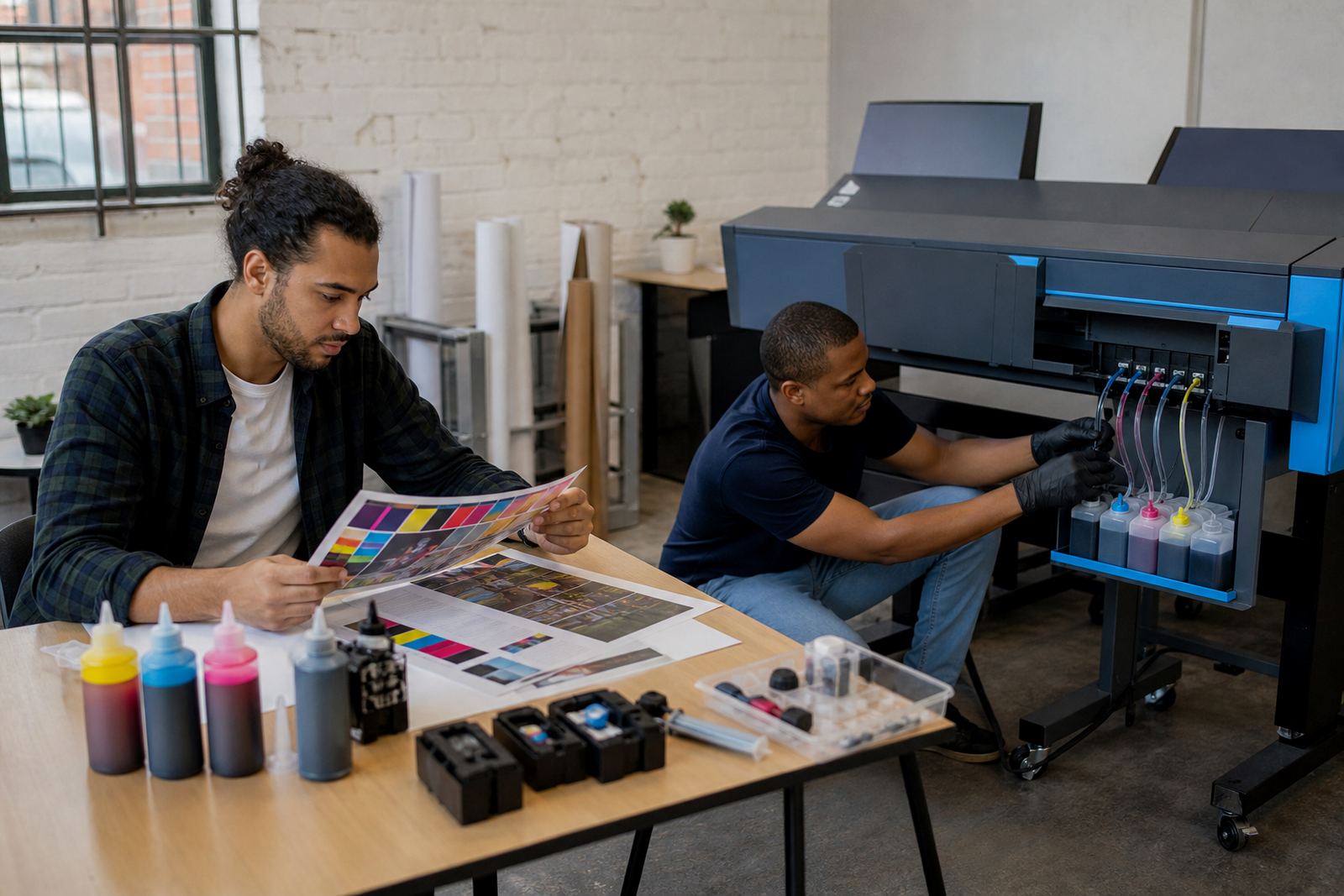
- Bulk ink refill support for higher-volume output
- Printhead care and nozzle check support
- Colour balance help for proof sheets and mock-ups
Week-by-week handling across the job
The rollout took place over a few weeks. In the first week we reviewed the current cartridge pattern, checked the machine mix and mapped which printers were being used for line work, colour proofs and wider-format output. That gave the studio a better stock picture before anything was refilled or swapped.
In the following weeks we moved through setup support, operator guidance and a cleaner replenishment rhythm. The refill technician worked through leakage checks and chip reset steps where needed, while dispatch kept the stock moving to Westville and the other Durban side branches without the team having to buy everything in one burst.
- Week 1: printer mix and usage review
- Week 2: refills, checks and setup support
- Week 3: stock planning and operator training
- Week 4: routine settled into the studio's weekly workflow
What changed on the floor
The biggest change was consistency. Proof prints stayed closer to the expected colour, so the team spent less time reprinting because of clogged nozzles, weak blacks or a cartridge that had been left too long after its last use. The studio also cut down on the clutter of half-used stock, which matters when a small room handles both creative work and admin.
Another gain was control. With the empty return programme in place, used cartridges had a defined path instead of sitting around until someone had time to sort them. The team knew which items could be refilled, which ones needed to be set aside and how to keep the printheads cleaner between busy periods. It was a quieter kind of improvement, but very real in day to day work.
- More stable proof colour across repeat prints
- Less waste from unused cartridges being discarded early
- Cleaner handling of empties and refills
- Better stock planning for colour and black ink
What we would repeat on a similar studio job
We would keep the same sequence. First check the usage pattern, then separate office printing from proofing and wide-format work, then set the refill routine around that split. It avoids the common mistake of treating every printer the same. A studio that prints sample pages for clients does not need the same cartridge rhythm as a studio that only prints the odd invoice and memo.
We would also keep the training close to the machines, not in a long general talk that no one remembers later. Showing the team how to run a nozzle check, when to stop pushing a weak cartridge and how to store open ink properly saves time later. It also helps in humid Durban conditions where poor storage can make a small issue turn into a bigger one.
- Keep machine types separated by task
- Use short operator training tied to real printers
- Track empties and stock together
- Match ink type to print job, not habit
Key facts
| Project type | Design studio refill support and stock control |
|---|---|
| Town | Westville, Durban |
| Timeline | Handled over 4 weeks |
| Main supply | Refurbished cartridges and bulk ink |
| Support included | Printhead care, nozzle checks, chip reset help and colour balance guidance |
| Logistics | Courier delivery and empty return handling |