
What printhead care covers in a working shop
Our printhead care service looks at the full ink path, not only the symptom on paper. That means nozzle checks, visual inspection of the cartridges or tanks, ink compatibility guidance, and a basic assessment of whether the head needs cleaning, priming or closer attention.
We work with benchtop office printers, design studio units and wide-format machines that depend on steady ink flow. If a head is starving for ink, drawing air or carrying dried residue, the print can show broken lines, weak colour, banding or missing channels.
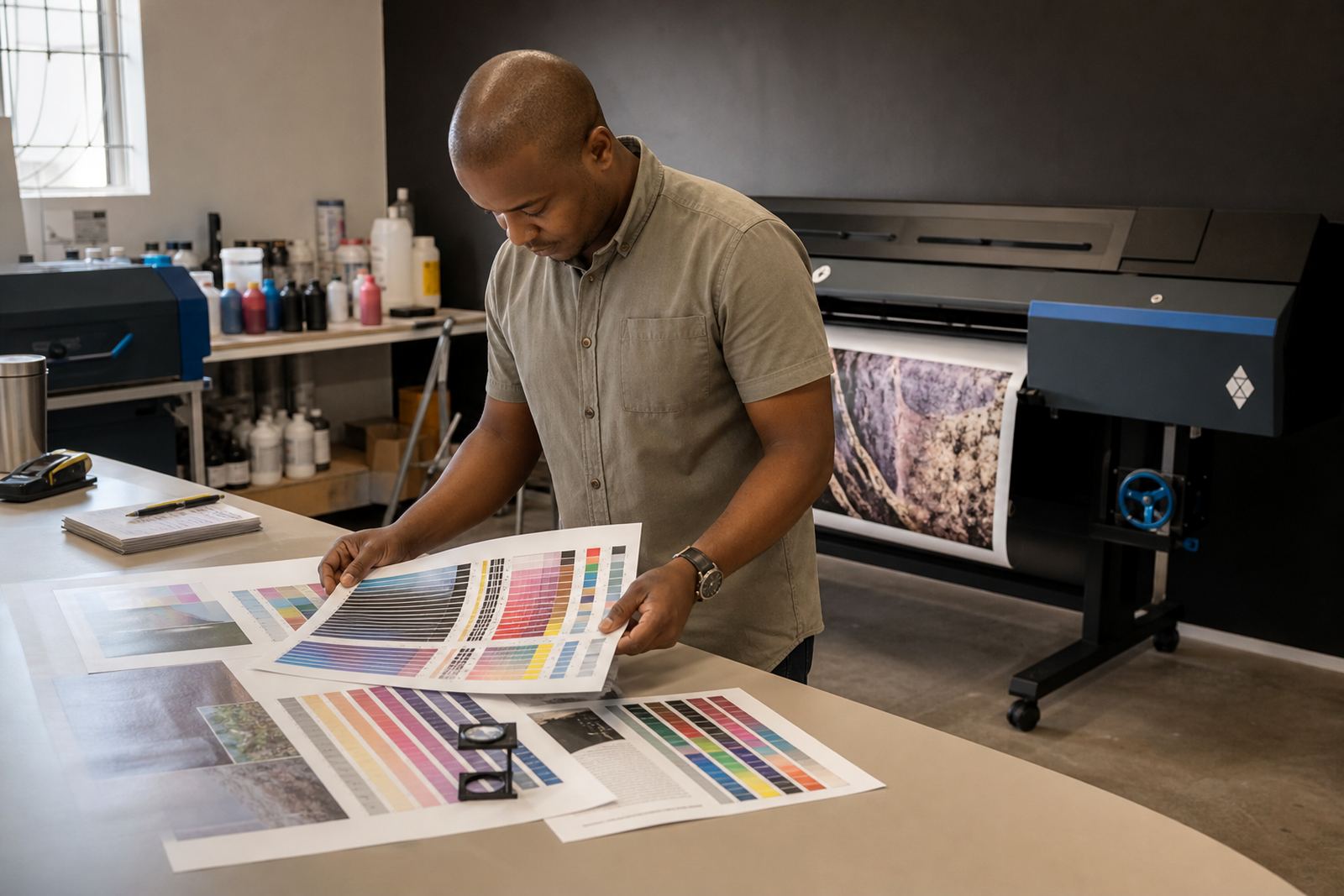
- Nozzle check reading and pattern review
- Cleaning advice for dried pigment or dye ink
- Ink path checks for air gaps and leaks
- Guidance on rest periods after heavy use
- Notes on when a deeper service is sensible
Cleaning routines that protect the head
Good printhead care starts with the right cleaning routine for the ink in use. Dye ink usually clears more easily, while pigment ink can leave tougher residue if the machine sits for too long or if cleaning is overdone. Too many aggressive cleans can pull unnecessary ink through the system and still leave the same blockage in place.
We show operators how to keep the head wet without flooding it, and how to avoid the habit of repeated cleaning cycles when a proper nozzle check would tell the real story. A small pause between checks can help the machine settle, especially after a refill or a cartridge swap.
- Use the printer's own cleaning cycle sparingly
- Run a nozzle check before repeating a clean
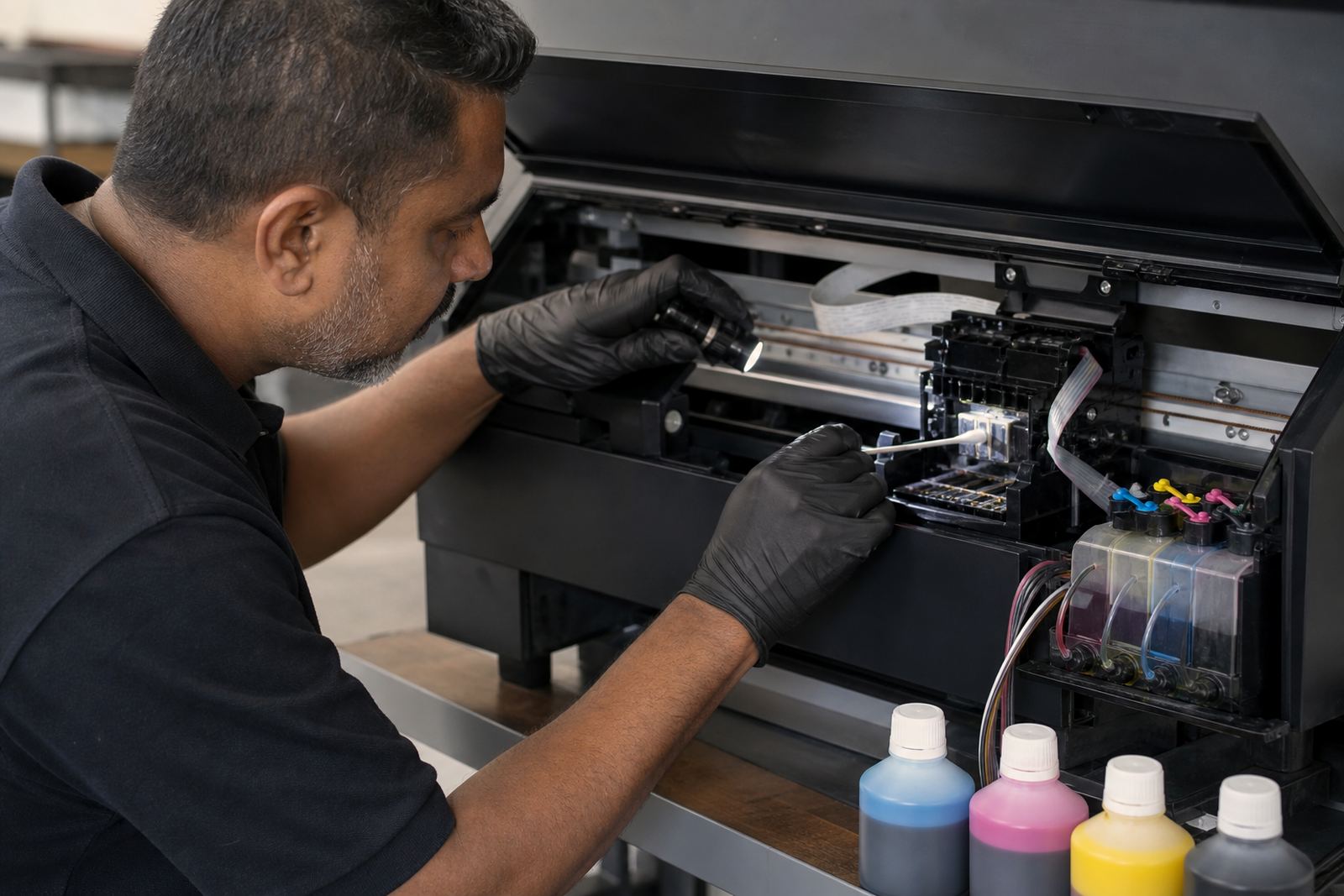
- Keep caps, wipers and contact areas clear
- Wipe only where the maker intended
- Let the machine rest after long print runs
Common faults we look for before damage spreads
Printhead trouble often starts with a small issue that gets ignored. A loose cartridge chip, a poor seal, low ink in a line or trapped air can all trigger broken output. In Westville and across Durban, humidity can also affect stored cartridges and refill bottles if they are kept open or left in poor conditions.
We look for the signs that point to avoidable damage rather than wear alone. If a head has been run dry, hit by debris or washed repeatedly with the wrong fluid, the damage can move beyond cleaning and into replacement territory.
- Streaks, gaps or missing colours on test prints
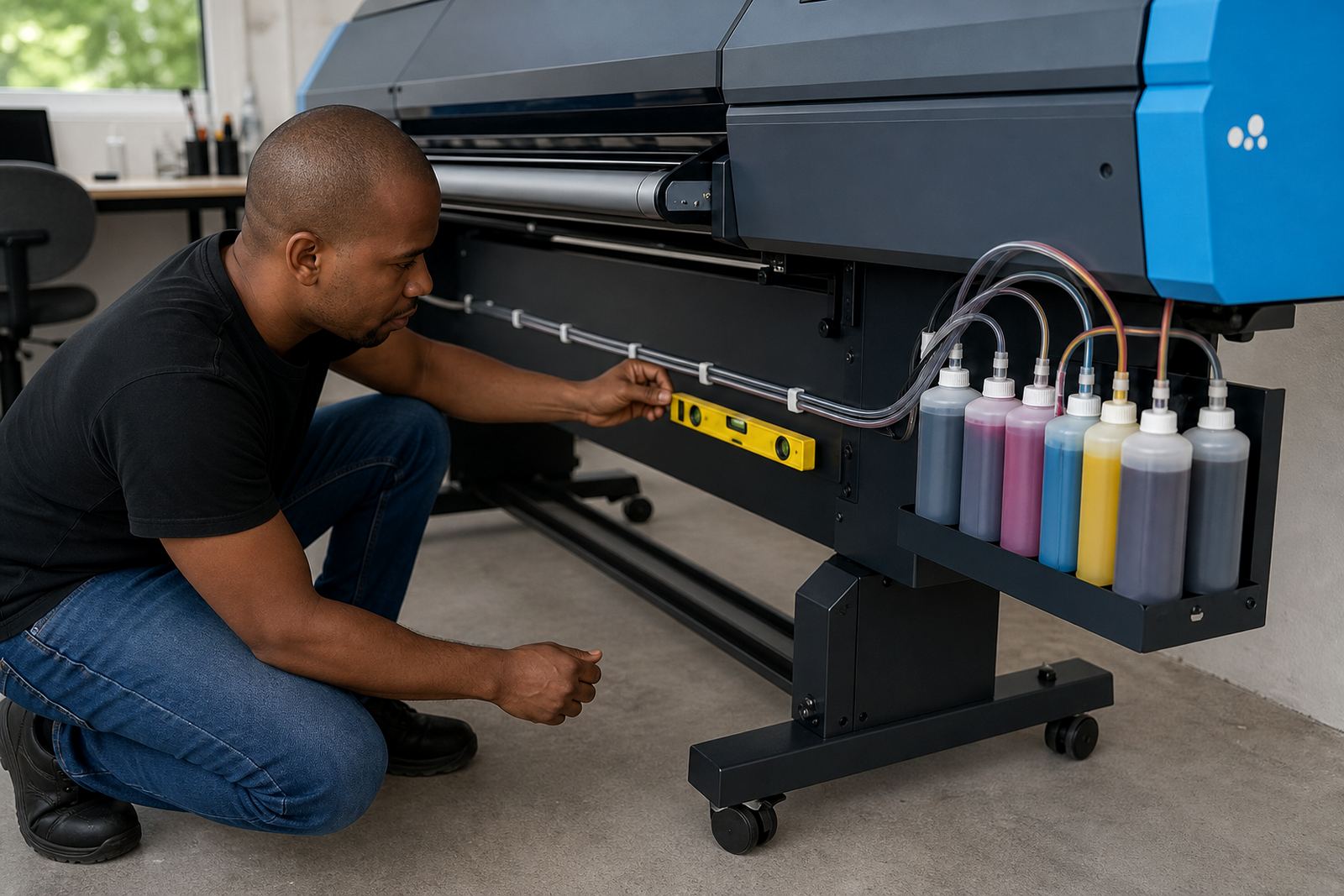
- Air ingress in continuous ink supply lines
- Blocked nozzles from dry residue
- Dirty contacts that confuse chip reading
- Leaks that spread ink onto the carriage area
How we handle a printhead care job
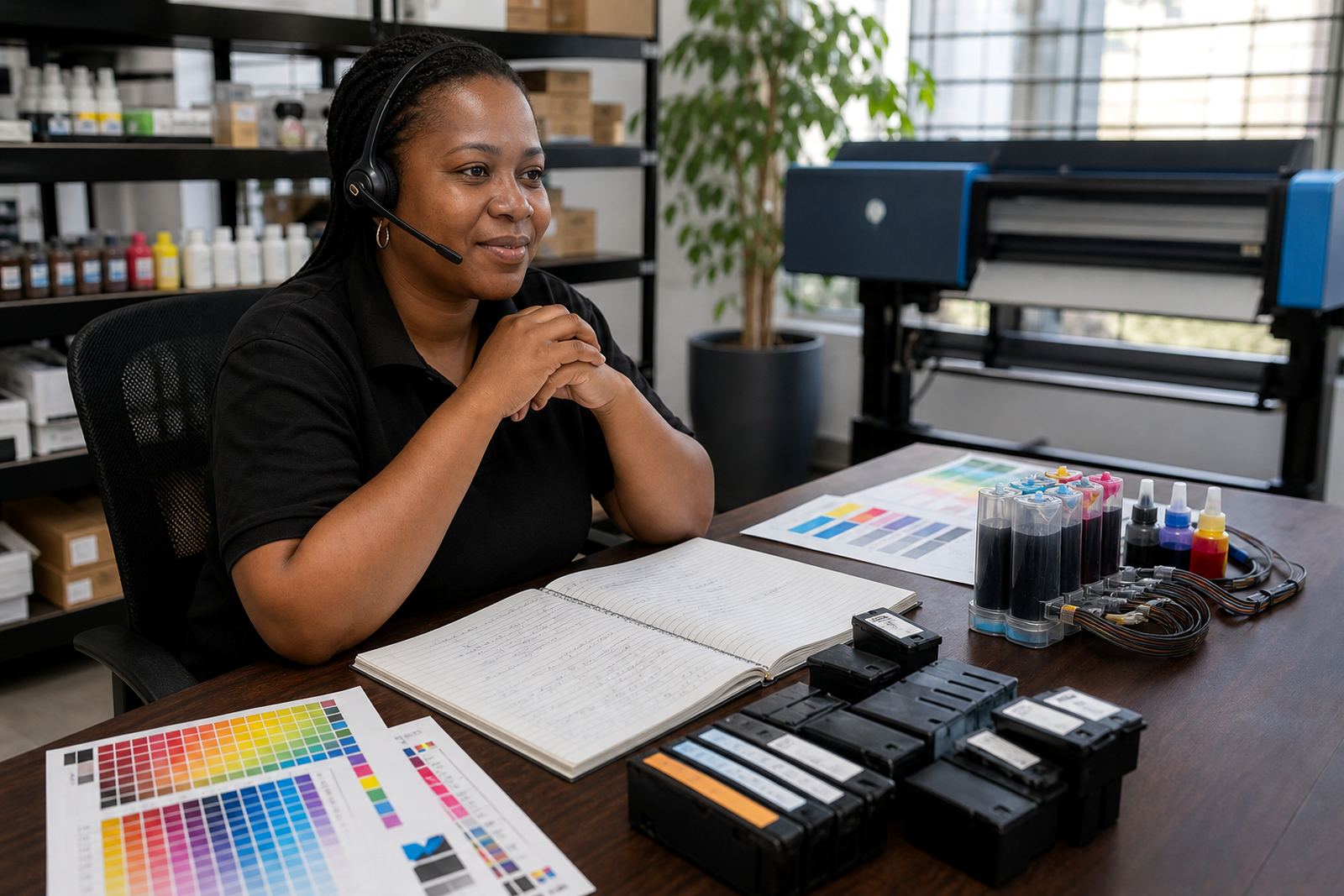
We usually begin with the machine details, the ink type and the symptom pattern. From there, the technician checks the nozzle test, reviews the cartridge or tank setup, and decides whether the issue is likely to clear with cleaning support or needs hands-on attention.
If the system uses refillable cartridges, a continuous ink supply setup or a reset chip, we also look at the supply side. A head can be blamed for poor output when the real problem is an empty reservoir, a poor seal or incompatible ink. That is why the first step is always to separate head trouble from ink delivery trouble.
- Identify the printer model and ink system
- Review the print sample or nozzle pattern
- Check seals, vents, contacts and line flow
- Set out the safest cleaning path
- Explain what to watch after the service
Turnaround, pricing approach and practical specs
Turnaround depends on the make, the fault and whether the machine needs a deeper strip down or a simple clean and reset. Pricing is quoted after the issue is checked, because a blocked nozzle set, a leaked line and a damaged head are not the same job at all. We keep the scope plain so you know whether you are paying for advice, a clean, parts or setup correction.
For offices and studios that run daily jobs, we can plan the work around the printer's actual use pattern. Wide-format machines and heavier colour devices often need more careful handling because their ink channels are larger and more sensitive to poor storage or rushed refills.
- Support for dye and pigment ink systems
- Benchtop and wide-format printer checks
- Refillable cartridge and CISS guidance
- Chip reset help in general terms
- Leak checking and ink path review
Aftercare for better output and less waste
After a printhead care visit, the goal is steady output rather than repeated rescue work. We explain how to store refill ink, how to keep empties in order for return or recycling, and how to spot early warning signs before a line drops out completely. That keeps consumables in use longer and lowers the pile of wasted plastic and dried cartridges.
Operators in Johannesburg, Pretoria, Cape Town and Pietermaritzburg often need the same practical habits once the machine is back in daily use. Keep the caps closed, avoid mixing ink types, do a nozzle check before big jobs, and do not leave a printer unused for long stretches if the setup is prone to drying.
- Store ink bottles upright and sealed
- Recycle empties through the return programme
- Do a nozzle check before critical print runs
- Keep spare cartridges clean and labelled
- Report recurring banding before it becomes a bigger fault
Key facts
| Service area | Westville, Durban and courier delivery across South Africa |
|---|---|
| Supported setups | Refurbished cartridges, refill kits and continuous ink supply systems |
| Ink guidance | Dye ink and pigment ink support |
| Faults covered | Nozzle checks, leaks, air gaps and dirty contacts |
| Aftercare | Rest periods, cleaning routines and printhead care advice |
| Collection support | Empty return programme and recycling guidance |